
Year by Year
Explore Year by Year articles from the most modern historical year back to the oldest.
3,295 Articles Archived

Magna Carta
Archived: 26 September 2026
In 1215, Ireland remained politically fragmented: King John controlled ports, towns, castles and lordships, while Irish kings and kindreds retained power. Magna Carta concerned England, but John’s crisis affected Ireland, prompting efforts to raise revenue and reconcile magnates, notably Walter de Lacy. Royal rule relied on fines, hostages, castles and negotiated claims, while frontier insecurity persisted. Geoffrey de Marisco became justiciar. Irish forces under Áed Ua Néill defeated Ulster’s settlers. New Ross gained limited shipping rights, Cratloe was granted, and Armagh’s archbishop attended Lateran IV. Warfare, commerce, church reform and regional rivalries showed Ireland connected to John’s dominions yet divided.

Mide Castles
Archived: 26 September 2026
Irish annals portray 1214 as a period of contested lordship rather than national unity. Anglo-Norman castles at Clonmacnoise and Durrow provoked Cormac Ó Máel Sechlainn’s raids, involving cattle seizure, burning and attacks on church resources. Ualgarg Ó Ruairc raided settler-held Carbury, while deaths among Connacht lords and churchmen marked shifting local authority. Ulster records, though chronologically disputed, describe plunder at Derry, castle-building at Coleraine, resistance to settlers and destruction at Carlingford. Ecclesiastical communities remained influential yet vulnerable. Dublin received authority for commercial infrastructure. King John’s papal settlement formally included Ireland, but did not establish uniform control over its competing regions.
Athlone Castle
Archived: 26 September 2026
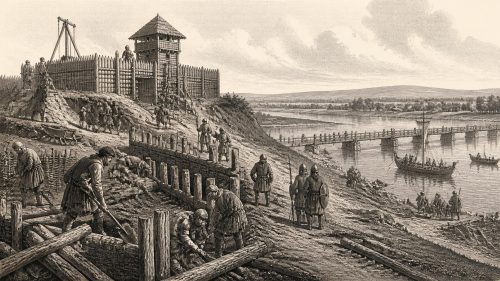
In 1213, King John’s submission of England and Ireland to Pope Innocent III altered the lordship’s international status, while Henry of London became archbishop of Dublin and justiciar. Royal and settler forces campaigned in Mide, defeating Cormac Ó Máel Sechlainn’s allies and building castles at Athlone, Birr, Durrow and Kinnitty to control crossings and routes. Cormac nevertheless recovered influence, illustrating frontier instability. Ulster saw Gaelic feuds, Anglo-Norman attacks, church plundering, Coleraine Castle’s construction and Áed Ó Néill’s raids. Clerical deaths highlighted enduring ecclesiastical centres. Ireland remained politically plural, as castles, warfare, alliances and royal administration reshaped contested regions across Ireland.

Clones Castles
Archived: 26 September 2026
In 1212, royal efforts to extend King John’s Irish lordship through castles, taxation and military campaigns met persistent resistance. John de Gray’s northern offensive built Clones and Cáel Uisce castles, but forces associated with Áed Méith Ua Néill and other Gaelic leaders defeated raiders and destroyed both strongholds. Seaborne warriors from Galloway and the Isles ravaged Derry and Inishowen, aided by Cenél Conaill. In Meath, Cormac Ua Máel Sechlainn defeated English forces, while Munster and Desmond saw fort-building and dynastic conflict. Administrative records reveal expanding royal finance, yet authority remained uneven, shaped by alliances, tribute, churches, raids and regional rivalries.

Athlone Tower
Archived: 26 September 2026
In 1211, King John’s Irish lordship remained fragile despite his previous campaign against the de Lacys. John de Gray, royal justiciar, sought to consolidate control through castles, garrisons, revenue collection and alliances, as recorded in the Irish Pipe Roll. At Athlone, Richard de Tuit and eight others died when a new tower collapsed, highlighting frontier tensions and disputes over church land. In the north, Áed Méith Ua Néill repelled foreign forces at Narrow Water, demonstrating organised resistance. Irish rulers negotiated through hostages and temporary agreements. Royal power expanded through administration and fortification, but Ireland remained a patchwork of competing jurisdictions.
John's Expedition
Archived: 26 September 2026
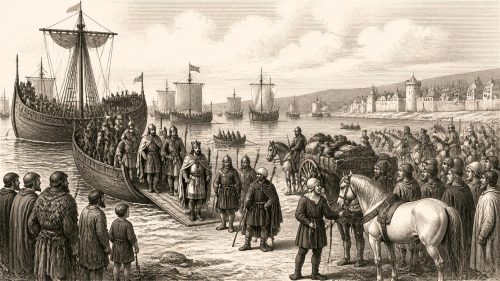
In 1210 King John launched a 63-day expedition to Ireland, asserting authority over Anglo-Norman magnates and seeking alliances with Gaelic rulers. Landing at Waterford, he received Donnchadh Ua Briain and Cathal Crobhdearg Ua Conchobair, then advanced through Dublin, Meath and Ulster. Walter and Hugh de Lacy were dispossessed; Carrickfergus fell to royal forces, while Man suffered punitive attack. John expanded administration, installed John de Grey, promoted castles and a bridge at Athlone, and supported royal coinage. Yet hostage-taking damaged relations with Connacht, Gaelic submissions remained conditional, and regional conflicts continued. The campaign strengthened royal control but left divided politics unresolved.

Contested Borderlands
Archived: 26 September 2026
In 1209, Ireland remained politically divided between King John’s lordship, centred on Dublin and Anglo-Norman estates, and competing Gaelic dynasties. John de Grey, acting justiciar, strengthened royal administration, while Dublin’s developing castle symbolised expanding governance. The later tradition of Black Monday recalled settlers’ vulnerability beyond the city walls, though its details are uncertain. Warfare in Inishowen between Ó Néill and Ó Domnaill forces demonstrated contested northern borderlands. In Desmond, Finghin Mac Carthaigh’s killing during a booty dispute triggered succession change; Breifne likewise saw rival Ó Ruairc claimants. Ecclesiastical deaths and everyday economic obligations underscore communities affected by unstable, negotiated power.

Meiler's Capture
Archived: 26 September 2026
In 1208, conflict within the Anglo-Norman lordship undermined royal authority in Ireland. William Marshal’s allies captured justiciar Meiler fitz Henry at Thurles, prompting King John to restore Marshal’s lands and appoint John de Grey. These settlements strengthened supervision but did not end rivalry among colonial magnates. Gaelic rulers remained independent actors: northern dynasties fought and later negotiated, while English influence shaped succession in Breifne. In Munster, dynastic disputes involved Limerick’s English community and church guarantors, despite breaches of protection. Ecclesiastical life continued amid violence and uncertainty. The year revealed a fragmented Ireland, governed through local alliances, force, charters and negotiation.

Ardnurcher Siege
Archived: 26 September 2026
In 1207, King John’s Irish government faced armed opposition from Anglo-Norman magnates and continuing Gaelic rivalries. Justiciar Meiler fitz Henry’s disputes with the Lacys and William Marshal escalated into warfare across Leinster and Meath. Hugh de Lacy’s allies besieged Ardnurcher for five weeks, captured Firceall and forced Meiler from Ireland. Raiding and successions reshaped northern and western lordships, while Cathal Crobhdearg redistributed Connacht territory. Churches at Lismore and Armagh suffered attack, prompting ecclesiastical appeals to England. John promoted control through coinage rules, land grants and fortification, but these measures exposed rather than resolved fragile authority, foreshadowing his later 1210 intervention.

Meath See
Archived: 26 September 2026
In 1206, Ireland remained divided among Gaelic kingdoms, Anglo-Norman lordships, church lands and towns under uneven royal influence. Bishop Simon Rochfort transferred Meath’s see to Newtown beside Trim, aligning ecclesiastical authority with a colonial centre. King John negotiated Connacht’s status with Cathal Crobderg, without settlement. A castle was built at Cork, while Desmond faced succession conflict after Domnall Mór Mac Carthaig’s death. Raids in Tyrone and Ciannachta destroyed churches, crops and cattle but failed to secure submission. Annals also record widespread human and livestock losses, clerical deaths, and Armagh’s appeal to England against settlers, revealing contested, localised power and negotiation.
Some records do not yet have a verified historical year and are awaiting chronological placement.