Reunion Negotiations(c.1890s)
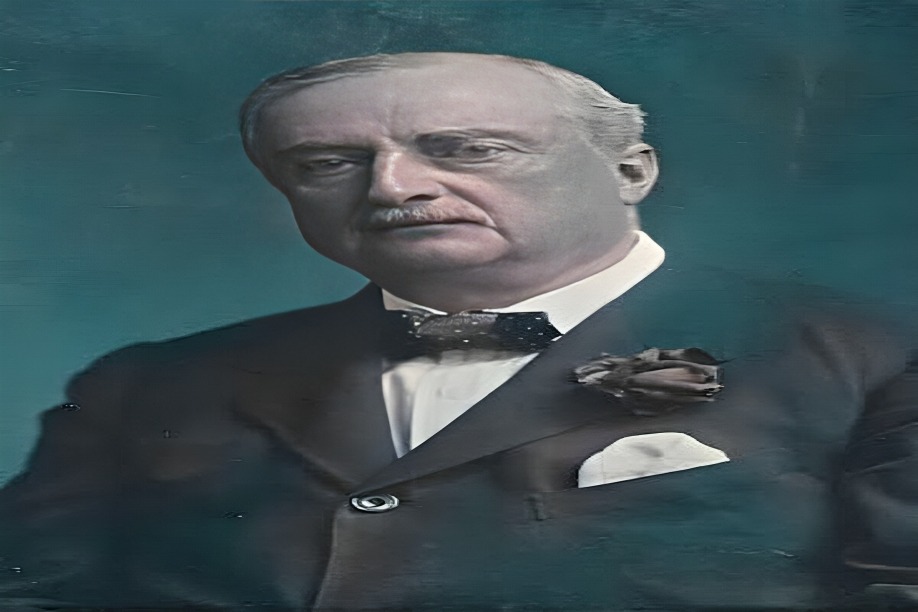
John Redmond’s Parnellite followers opened formal communications with their former anti-Parnellite opponents as pressure intensified to repair the divisions created by the fall of Charles Stewart Parnell. Since the parliamentary split of 1890, Irish constitutional nationalism had broken into competing groups whose leaders differed over authority, organisation and political strategy. Redmond led the principal Parnellite body, John Dillon commanded much of the anti-Parnellite majority, and Timothy Healy exercised influence through a separate following. Years of rivalry had weakened nationalist discipline at Westminster and frustrated supporters who believed that factional quarrels were obstructing Home Rule and land reform.
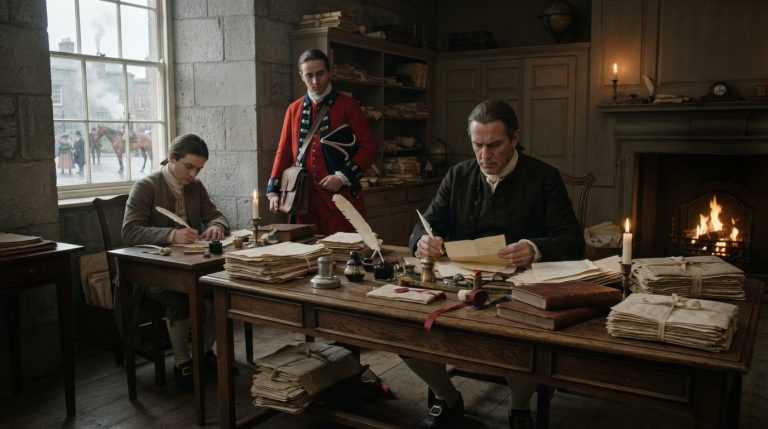
On 24 July 1899, Redmond wrote from the House of Commons to Dillon and Healy, asking whether they would agree to convene representatives of the Irish National Federation and the Irish National League for the purpose of discussing nationalist reunification. Dillon replied on 26 July that he had long been prepared to confer with Redmond or any other Irish nationalist MP and urged cooperation inside Parliament. The exchange did not settle the leadership question, nor did it remove the personal suspicions accumulated during the previous decade, but it provided a documented basis upon which more substantial negotiations could proceed.
The discussions were influenced by forces beyond the parliamentary factions themselves. William O’Brien’s United Irish League, founded in 1898, had begun turning agrarian discontent and impatience with political division into an organised national movement. Its growth threatened established MPs who could no longer assume that loyalty to older organisations would protect them from local challenges. Reunion therefore offered both a means of restoring nationalist effectiveness and a defence against displacement by a vigorous popular organisation. Redmond’s followers had to consider whether continued separation preserved the Parnellite tradition or merely surrendered political influence to men capable of organising the countryside more successfully.
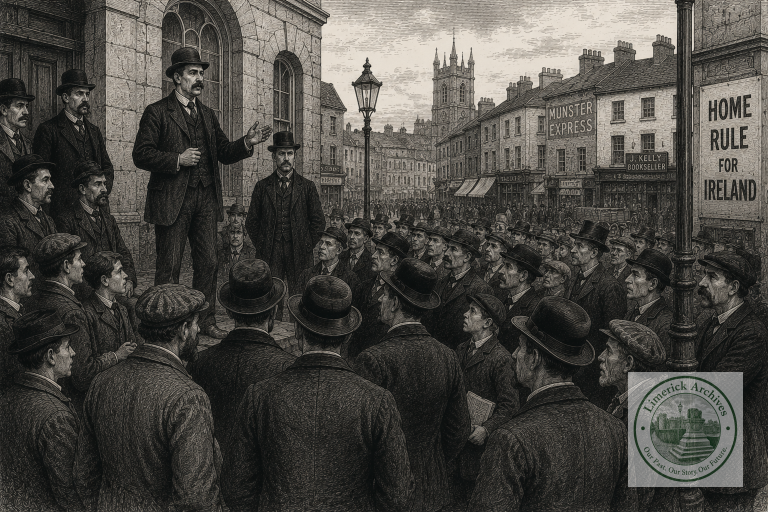
The negotiations also held importance for Limerick, where political participation had recently broadened under the Local Government (Ireland) Act of 1898. The creation of Limerick County Council and the democratisation of urban and rural authorities gave many more householders an opportunity to influence public affairs. No surviving evidence establishes a distinct Limerick role in this particular exchange between Redmond, Dillon and Healy, but local nationalist voters had an obvious interest in its outcome. Parliamentary reunion promised that concerns involving land, local administration, public works and Home Rule might be represented by a movement no longer weakened by competing leaderships and electoral rivalries.
Agreement remained difficult because the factions disputed more than personalities. They differed over party control, election funds, candidate selection and the authority that the expanding United Irish League should exercise over MPs. Nevertheless, the opening of direct discussions helped prepare the settlement reached on 30 January 1900, when the parliamentary sections reunited after almost ten years of formal division. Redmond subsequently became chairman of the reconstructed Irish Parliamentary Party. The reunion restored a recognised national leadership, though it did not permanently end disagreements among Redmond, Dillon, Healy and O’Brien over whether policy should be directed from Westminster or shaped by organised opinion throughout Ireland.
Primary Sources
- John Redmond to John Dillon and T. M. Healy, 24 July 1899, copy letter proposing a meeting of the Irish National Federation and Irish National League to discuss nationalist reunification, John Redmond Papers, National Library of Ireland, MS 15,182/2/1.
- John Dillon to John Redmond, 26 July 1899, letter declaring his willingness to confer regarding reunion and parliamentary cooperation, John Redmond Papers, National Library of Ireland, MS 15,182/2/2.
- Philip Bull, “The United Irish League and the Reunion of the Irish Parliamentary Party, 1898–1900,” Irish Historical Studies, vol. 26, no. 101, May 1988, pp. 51–78.
- National Library of Ireland, “John Redmond and the Irish Parliamentary Party,” 1916 Exhibition historical collection.
- Martin Walsh, Limerick Local Government 1899–1942: An Online Exhibition Commemorating the 125th Anniversary of the Local Elections, 1899, Limerick Museum and Limerick Library Service, 2024.
- William O’Brien, An Olive Branch in Ireland and Its History, London: Macmillan, 1910.