
Observer Expelled(c.1900s)
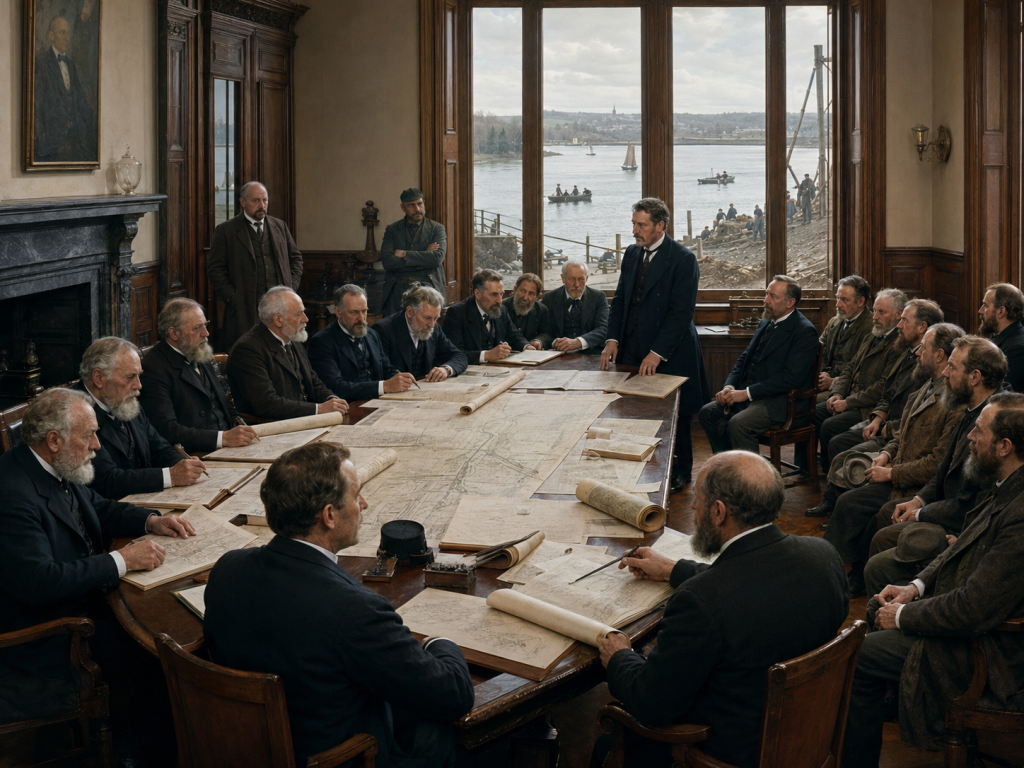
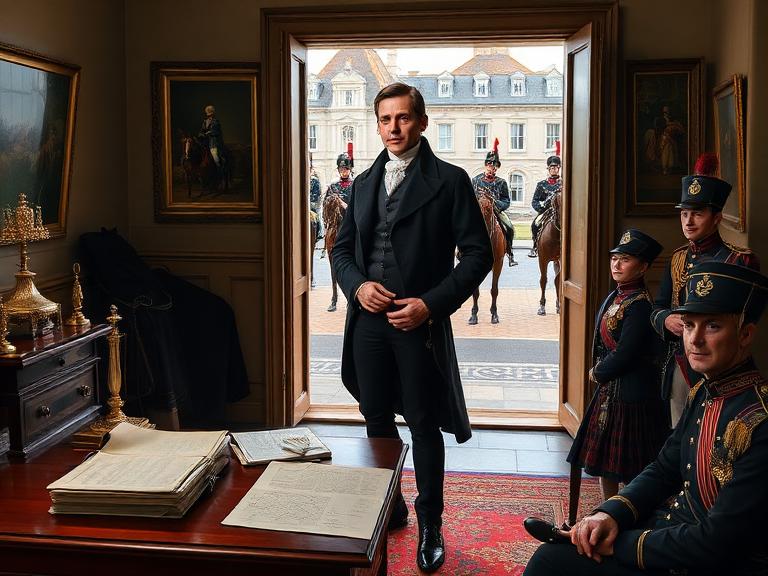
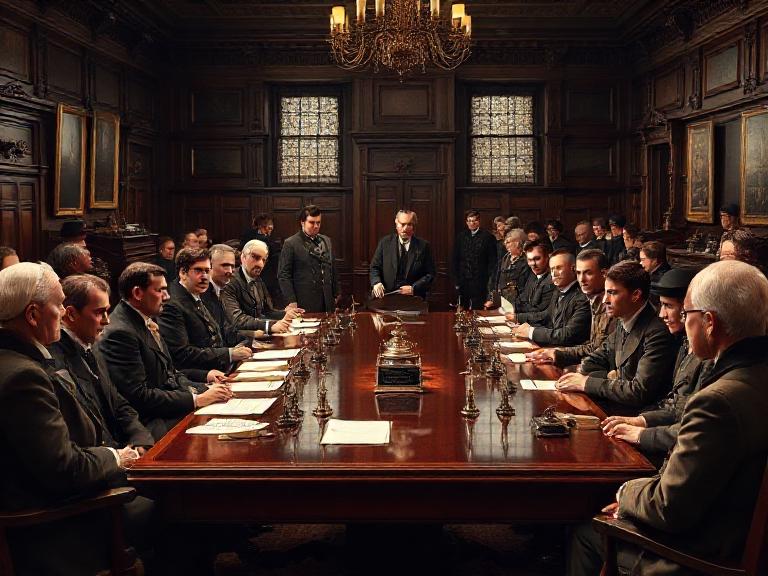
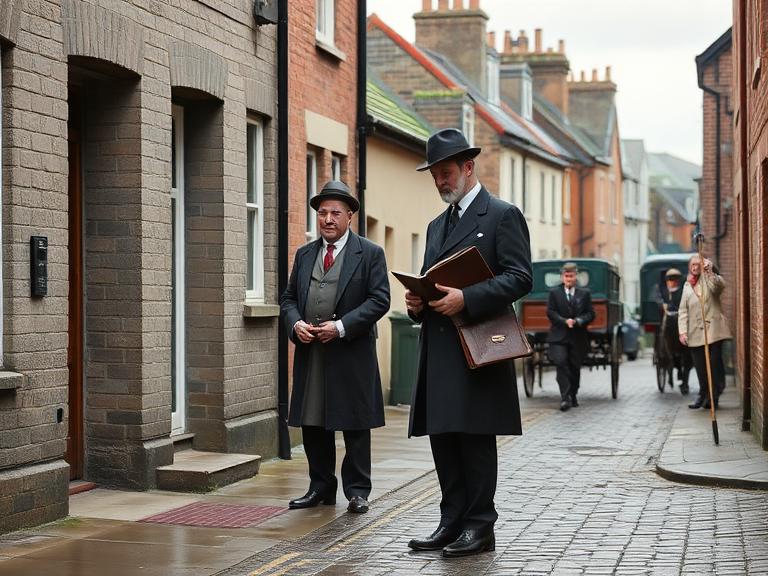
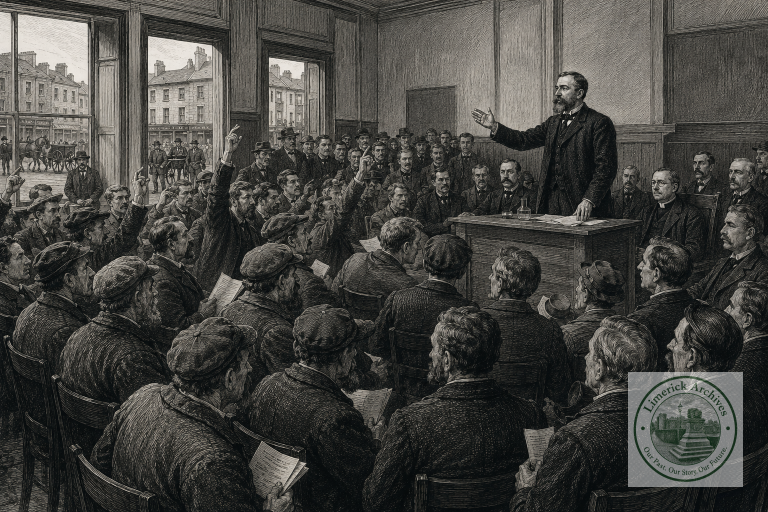
The Limerick Board of Guardians unanimously ordered a police constable to leave its meeting after members discovered that he was taking notes of the proceedings while dressed in civilian clothing. The incident, reported on 13 January 1900, interrupted the ordinary work of the board and immediately raised questions about why a police observer had entered the room without openly declaring his purpose. Mr Fitzgerald drew attention to the constable’s presence and proposed that the chairman require him to withdraw. Mr Kelly seconded the motion, which passed without dissent, leaving the officer no choice but to depart.
The surviving newspaper report does not name the constable or explain who instructed him to attend. His plain clothes and note-taking nevertheless caused particular offence because the Guardians were conducting the business of an elected public authority rather than holding a clandestine gathering. Mr Fitzgerald and Mr Kelly were identified as Nationalist guardians, but the unanimous vote showed that the objection extended beyond the two men who introduced the resolution. By insisting upon the officer’s removal, the board asserted that police observation of its deliberations required explanation and could not be accepted silently merely because the observer had gained admission.
The Limerick Union Board of Guardians administered the workhouse, outdoor relief, medical services and other responsibilities arising from the Irish Poor Law. Its members considered reports from officials, authorised expenditure, dealt with contractors and debated matters affecting poverty, public health and local administration. Meetings could also become political forums, particularly after wider electoral participation brought stronger nationalist representation into Irish local government. Notes taken by an unidentified constable might have recorded speeches, resolutions or the conduct of individual guardians. The board’s reaction reflected concern that legitimate public administration was being watched as though it represented a threat to public order.
The incident occurred within a political culture marked by distrust between nationalist representatives and the authorities responsible for policing Ireland. Police attended public meetings, political demonstrations and agrarian gatherings, sometimes preparing reports for their superiors. The Guardians did not claim that the constable had disrupted the meeting or threatened anyone; their complaint centred upon concealed observation and the recording of proceedings. The distinction was important. Uniformed attendance for an openly stated purpose might have been understood, but a plain-clothes officer quietly taking notes appeared to the board as surveillance. The unanimous resolution turned that suspicion into a formal defence of its institutional independence.
For Limerick, the confrontation demonstrated that local administrative bodies were becoming increasingly conscious of their democratic authority. The Guardians served a union containing the city and surrounding districts, with their decisions affecting the workhouse on Shelbourne Road and thousands of people dependent upon relief and medical provision. Their expulsion of the constable did not alter policing policy or produce a wider constitutional settlement, but it established a clear boundary within the boardroom. Public officials could report proceedings openly, and newspapers could record debate, yet covert police note-taking would not be tolerated without the knowledge and consent of the elected members.
Primary Sources
- Irish Times, “Constable Present,” 13 January 1900, p. 8.
- Limerick Union Board of Guardians Minute Books, January 1900, Emerald Archives, reference IE LA BG110; exact volume and page for the incident not confirmed.
- Emerald Archives, Limerick Union Board of Guardians Minute Books, 1842–1922, collection description and administrative history, reference IE LA BG110.
- Poor Relief (Ireland) Act 1838, 1 & 2 Vict., c. 56, establishing Irish Poor Law unions, workhouses and elected Boards of Guardians.
- Local Government (Ireland) Act 1898, 61 & 62 Vict., c. 37, reforming local representation and the electoral framework within which Poor Law guardians operated.