
Glacial Frontier31804 BCE
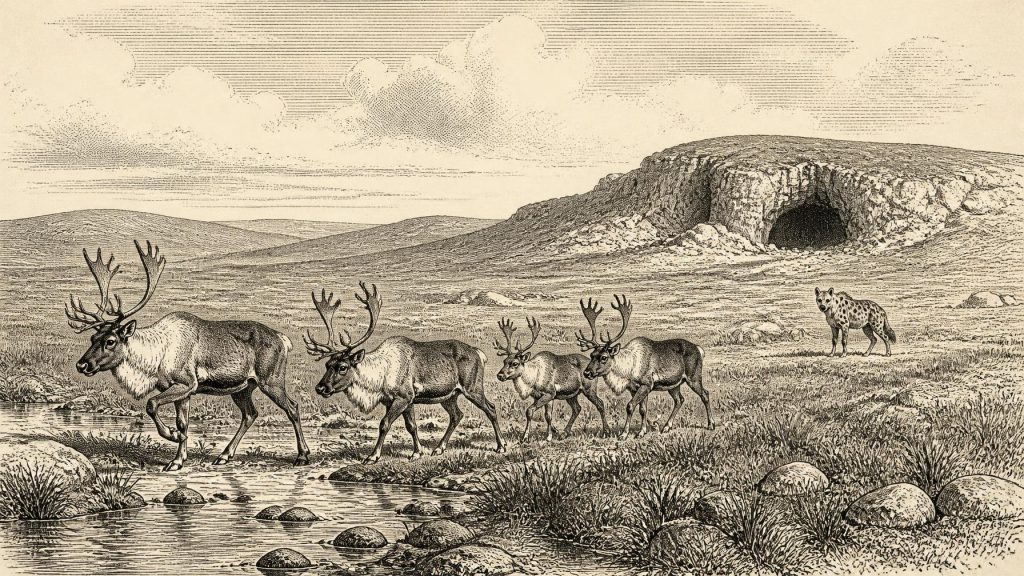
The reference year 31,804 BCE situates Ireland near a glacial frontier within the Late Pleistocene. Glacial geology, freshwater sediments and cave faunas suggest uneven ice development across the British-Irish region. Some landscapes remained open and biologically active while others experienced stronger glacial influence. Subsequent ice movement removed or buried earlier material, leaving scattered evidence and broad dating ranges. Research concerning Derryvree, Castlepook, regional ice histories and radiocarbon calibration supports cautious environmental reconstruction. The article uses its date as an archival reference rather than an exact event, stressing the distinction between annual organisation and the limited precision of Ireland’s prehistoric record.
Dateline
31,804 BCE is an archive reference year within the Late Pleistocene rather than a securely dated Irish event. Surviving evidence comes from glacial geology, freshwater sediments and cave faunas.
At the Edge of Expansion
The British-Irish Ice Sheet was developing unevenly across the region. Some Irish landscapes remained open and biologically active while other areas experienced stronger glacial influence.
Evidence and Caution
Later ice removed or buried much earlier material, so this period must be reconstructed from scattered sites and broad dating ranges rather than exact annual records.
Source References
Hover over a number to see the source. Select it to open the source.
- [1] Research draws on BRITICE-CHRONO, Derryvree studies, Castlepook research, National Museum collections and radiocarbon calibration evidence.
Primary Sources
Research draws on BRITICE-CHRONO, Derryvree studies, Castlepook research, National Museum collections and radiocarbon calibration evidence.



