Derryvree’s Menyanthes Seed
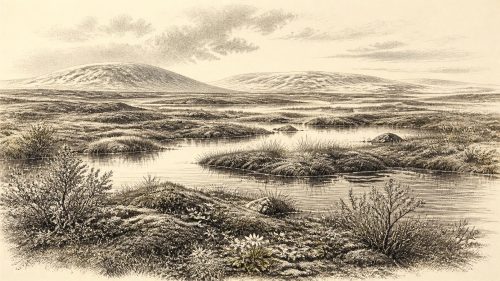
Around 31,754 BCE, Ireland cannot be described through annual events, but Derryvree, County Fermanagh, preserves an environmental horizon from later Marine Isotope Stage 3. Freshwater silts, radiocarbon-dated broadly to 36,900–31,700 years BP, lay between glacial tills, indicating a cold, locally ice-free wetland between ice advances. Mosses, sedges, dwarf willow, mountain avens and bogbean, alongside northern insects, show treeless tundra-like conditions. Cave remains demonstrate intermittent Late Pleistocene mammals, including reindeer, mammoth and hyaena, without proving local coexistence. No secure evidence places humans in Ireland then. Shifting ice, coastlines and climate created varied landscapes, then sealed beneath glacial deposits in subsequent millennia.
View Record
Elephant Hall’s Long Silence
Circa 31,755 BCE, Ireland lay within the volatile later Marine Isotope Stage 3 of the last Ice Age, as the British–Irish Ice Sheet expanded unevenly. Much of the island’s contemporary environment remains uncertain, later glaciation having erased or disturbed evidence. Castlepook Cave, County Cork, preserves Ireland’s richest relevant vertebrate assemblage, including reindeer, mammoth, giant deer, predators and lemmings, indicating cold, open habitats. Its mixed, imperfectly dated deposits document a long faunal sequence, not a single community. A possibly cut-marked reindeer bone suggests but cannot prove early human visitation. No secure evidence establishes settlement, culture or events in this nominal year.
View Record
Crag Cave’s Thawing Calcite
Around 31,756 BCE, Ireland formed an unstable Ice Age frontier during Marine Isotope Stage 3, rather than a precisely datable historical setting. Derryvree sediments in Fermanagh record wet, largely treeless tundra between glacial advances. Castlepook Cave in Cork contains mixed remains of mammoth, reindeer, giant deer and predators, demonstrating a cold-climate fauna over millennia. A marked reindeer bone may indicate brief human butchery, but proves neither settlement nor sustained occupation. Crag Cave calcite shows intermittent thaws, linked to North Atlantic climate shifts. As conditions deteriorated, advancing ice later reshaped landscapes and destroyed, buried or disturbed much earlier evidence of prehistory.
View Record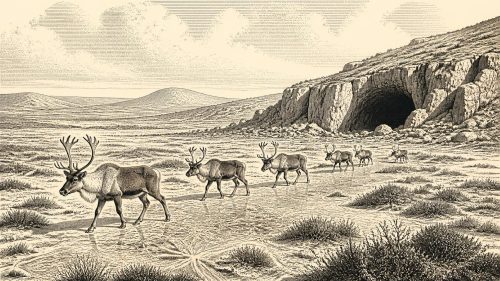
Mammoth Cave’s Single Mark
Around 31,757 BCE, Ireland lay within fluctuating Marine Isotope Stage 3 Ice Age conditions, with uncertain chronology and shifting ice, seas and land connections. Open, seasonal, largely treeless landscapes supported reindeer, mammoth, giant deer, bears, wolves, hyaenas and other cold-adapted fauna. Cave deposits and inter-till sediments provide fragmentary evidence, while older excavations and revised radiocarbon dating require caution. Castlepook, or Mammoth Cave, preserves Ireland's major late-Pleistocene mammal assemblage. A cut-marked reindeer femur may indicate brief Upper Palaeolithic carcass processing, but cannot demonstrate settlement, continuous population or wider social practices. No political, religious or cultural institutions are evidenced. Modern investigation continues.
View Record
Shandon’s Reindeer Passage
31,758 BCE is a modern chronological label within climatically unstable Marine Isotope Stage 3, not a precisely datable Irish event. Low sea levels and shifting ice shaped a changing north-west European landscape, while routes into Ireland remain uncertain. Shandon Cave fauna, including reindeer, mammoth, horse, bears and wolves, indicates cold, open habitats and diverse food webs, though cave deposits are not ecological censuses. Castlepook’s marked reindeer bone may evidence human butchery around 33,000 years ago, but cannot prove settlement. Derryvree sediments document treeless freshwater wetlands between glaciations. Later ice transformed or destroyed landscapes, leaving evidence of connections and human presence.
View Record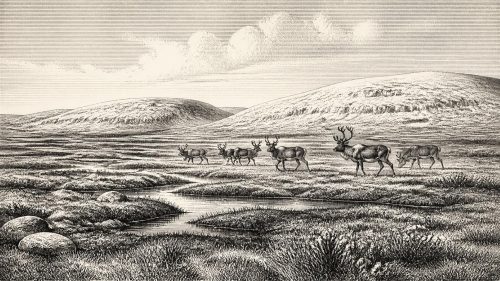
Castlepook’s Tundra Threshold
Around 31,759 BCE, a modern label within late Marine Isotope Stage 3, Ireland was a cold, changing periglacial landscape before the British–Irish Ice Sheet reached its maximum. Derryvree and Greenagho deposits show wetlands and regionally ice-free ground, while pollen, insects and plant remains indicate sparse tundra vegetation. Castlepook Cave preserves MIS 3 fauna including mammoth, reindeer, giant deer, hyaena and Arctic fox, though bone accumulation complicates interpretation. A marked reindeer femur may indicate brief human butchery, not settlement. Lower seas may have eased movement, but routes remained uncertain. Subsequent ice advance buried or destroyed much archaeological evidence across Ireland thereafter.
View Record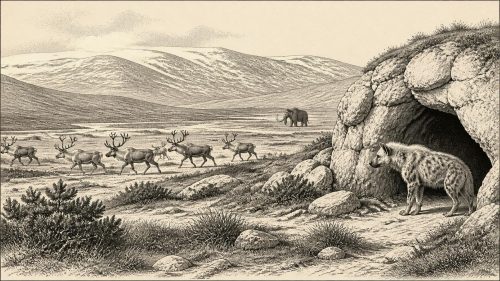
Awbeg Valley Hyena Den
Around 31,760 BCE, Ireland was within the unstable later Marine Isotope Stage 3, approaching the Last Glacial Maximum, not a precisely datable year. Castlepook Cave above County Cork’s Awbeg Valley preserves disturbed but evidence of a cold, open mammal fauna, including reindeer, mammoth, giant deer, wolves, bears and Ireland’s only known spotted hyaenas, probably denning there. Environmental deposits elsewhere confirm fluctuating habitable conditions before expanding ice. A cut-marked reindeer bone may indicate an early human visit, but no hearths, tools or settlements prove occupation. The evidence reveals a changing ecological frontier, while precluding claims about prehistoric society, politics or population.
View Record
Castlepook’s Cave-Bear Horizon
31,761 BCE is not a recoverable Irish historical year but a notional point within unstable Marine Isotope Stage 3. Radiocarbon calibration and disturbed deposits permit only broad chronological ranges. Derryvree, Fermanagh, preserves freshwater plants, insects and wetland sediments between tills, demonstrating locally treeless, tundra-like habitats during glacial fluctuations. Castlepook Cave, Cork, yielded MIS 3 remains of reindeer, mammoth, giant deer, bears, wolves, foxes, hyaenas, lemmings and other animals, indicating cold open-country ecosystems. A cut-marked reindeer bone suggests, but cannot prove, Pleistocene human activity. Later ice expansion, erosion and sea-level rise destroyed or buried evidence, leaving environmental traces, not social history.
View Record
Birm-166’s Permafrost Ledger
31,762 BCE is not a knowable Irish year but a broad Late Pleistocene horizon. Derryvree, County Fermanagh, dated through Birm-166, preserves freshwater silts, plants and small animals from roughly 36,900–31,700 years ago, indicating cold, open tundra and periglacial conditions before the ice sheet's maximum expansion. Castlepook Cave, County Cork, contains mixed remains of mammoth, reindeer, giant deer, bears, hyenas and other fauna, proving episodic animal access. A cut-marked reindeer femur may indicate human butchery, but neither permanent settlement nor associated tools are established. No polities, farming, trade or recoverable culture are evidenced; later ice obscured much of this fragile record.
View Record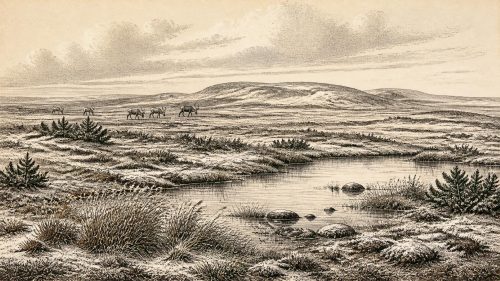
Maguirebridge’s Windblown Pools
Around 31,763 BCE is a modern label, not a recoverable Irish historical date. During MIS 3, fluctuating ice margins intermittently left habitable open terrain. Derryvree, near Maguiresbridge, preserves freshwater sediments between tills, indicating cold, treeless wetlands with pools, mosses, sedges, grasses, insects and brief growing seasons, although its calibrated dates predate the specified year. Crag Cave speleothems record interstadials. Castlepook Cave's mixed, disturbed bone assemblage demonstrates presence of mammoth, reindeer, giant deer, predators and cold-adapted fauna, but not their contemporaneity. A contested cut-marked reindeer bone suggests possible intermittent human visits, not settlement. Evidence reveals ecological conditions, not politics or society.
View Record