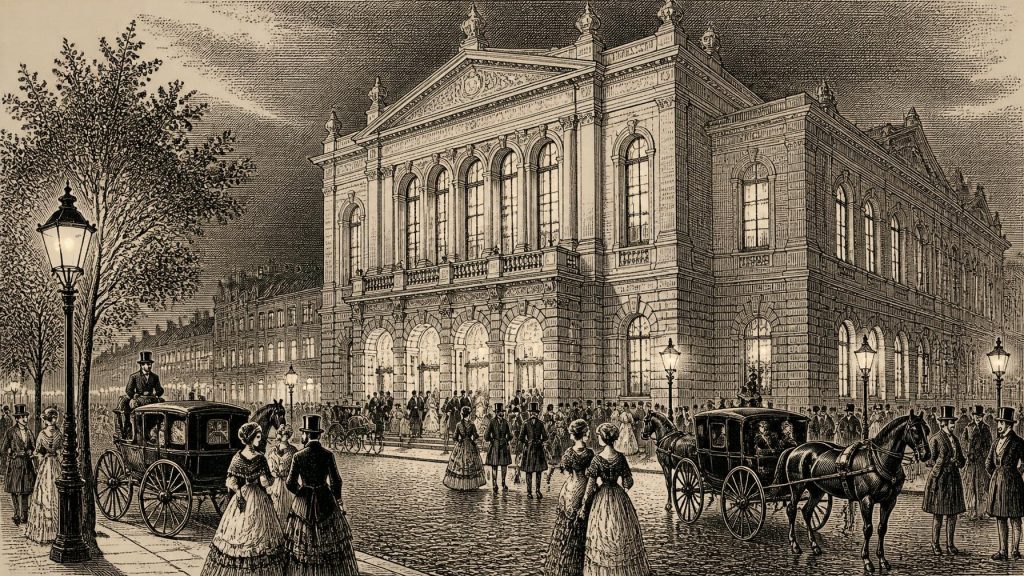
Bedford Street, Belfast Lough1862 CE
In 1862, Ireland saw significant infrastructural, civic and institutional development alongside enduring poverty and political frustration. Edward Harland and Gustav Wolff formed their Belfast shipbuilding partnership, while Ulster Hall opened, symbolising the city’s industrial and cultural confidence. The railway reached Sligo, and a Stranraer–Larne steam service improved connections with Scotland. Dublin gained statutory authority for a municipal fire brigade. Meanwhile, parliamentary debates highlighted severe rural distress and workhouse dependence; Poor Law changes expanded infirmary care and child boarding-out. Churches marked Archbishop Beresford’s death, republican organisation persisted covertly, and Irish communities remained connected to America, literature, and expanding national education systems.
Dateline
In 1862, Ireland did not experience a single political turning-point comparable to a rebellion, election or great reform settlement. Yet several firmly dated developments showed how rapidly its routes, institutions and public spaces were changing. Belfast acquired both a major concert hall and the partnership that would give its shipbuilding industry an internationally recognised name; Sligo was brought into the railway age; and Dublin received a statutory framework for an organised municipal fire brigade. These advances did not erase a harsher reality. Parliamentary debate during the same year recorded acute rural distress, especially in the west and south-west, while the Poor Law remained a feared refuge for many who had survived the Famine and its aftermath.
A Shipyard Partnership on Belfast Lough
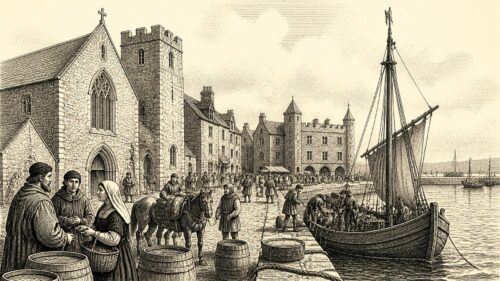
On 1 January, Edward Harland and Gustav Wilhelm Wolff formally entered partnership in Belfast. Harland, an English engineer and shipbuilder, had taken over the Queen’s Island yard only the year before; Wolff, born in Hamburg and established in Belfast after working in engineering, brought technical ability and commercial connections. The new concern, Harland and Wolff, was still a small enterprise beside the great industrial name it would become. Its significance in 1862 lay not in later-famous vessels but in its position within a growing port economy, where shipbuilding, engineering, linen manufacture, rope-making, warehousing and ocean trade increasingly reshaped the town and drew in labour from across Ulster.
Belfast’s growth was not merely industrial. On 12 May the Ulster Hall opened on Bedford Street, designed by the Belfast architect William J. Barre for the Ulster Hall Company. The company had been formed because a rapidly enlarging town lacked a public building large enough for concerts, lectures, exhibitions, dinners and other civic gatherings. Its prospectus envisaged accommodation for between 2,000 and 3,000 people; escalating costs eventually doubled the original £10,000 estimate. The opening concert was greeted with conspicuous local pride. Later in the year, on 17 December, the hall’s grand organ was inaugurated.
The contrast between the yard and the hall is revealing. Both depended on investment, confidence and an urban public able to use them. The shipyard served a commercial city tied to British and transatlantic markets; the hall offered a setting in which that city could hear music, attend lectures and assemble as a civic community. Neither should be treated as representative of all Ireland. Belfast’s industrialising north-east differed markedly from much of the island, where small farming, seasonal employment, emigration and insecure tenancy remained central to life. But in 1862 Bedford Street and Queen’s Island made visible a new scale of urban ambition.
Railway Reaches Sligo
Another precisely dated milestone came on 3 December, when the Midland Great Western Railway opened its extension from Longford to Sligo. The line linked Sligo to the railway system radiating from Dublin and created stations along the route, including at Ballymote. A permanent station building at Sligo followed shortly afterwards, but the opening of the line itself belongs securely to 1862. For passengers, merchants and farmers, rail travel altered the practical geography of the north-west: journeys that had depended on road coaches or coastal shipping could now be made on a scheduled inland route.
Railways did not automatically enrich every locality they entered. Their construction required capital and their timetables favoured particular routes and market towns. Nevertheless, connection to Dublin mattered. Sligo was a port with trading links across the Atlantic and Irish Sea; rail access could draw its hinterland more directly into national markets, move livestock and produce towards consumers, and bring manufactured goods, newspapers and travellers westward. The railway also expressed a broader nineteenth-century change: Ireland’s commercial life was being connected by infrastructure even as political authority remained concentrated at Westminster.
Sea communications were changing as well. During July, the Glasgow and Stranraer Steam Packet Company’s Briton entered service on the first Stranraer–Larne ferry route. The new service was modest beside Belfast’s shipping trade, but it underlined the importance of the short North Channel crossing. For Ulster merchants, migrants, holiday-makers and families, Scotland was not an abstract neighbouring country but a regular destination reached through ports such as Larne and Belfast.
Relief, Illness and the Workhouse
Modern transport and civic building coexisted with persistent poverty. In February, MPs debated “distress in Ireland”. The exchanges cited a marked rise in the workhouse population in Kerry: from 2,271 in 1859 to 7,367 in 1861. Such figures were deployed argumentatively, and cannot by themselves describe every county in 1862; they do, however, demonstrate that hardship remained an urgent political subject. Speakers also stressed a point with deep historical resonance: many poor people dreaded the workhouse and might endure want outside it rather than seek indoor relief.
The Poor Relief (Ireland) Act received royal assent on 7 August. It amended the system created in the late 1830s rather than replacing it. Among its provisions, it enabled boards of guardians to admit people needing medical or surgical assistance to workhouse infirmaries, and it addressed fever-hospital accommodation. It also contained rules about recovery of maintenance costs from people deemed able to pay. The measure is important because it shows the workhouse evolving into a place not only of destitution but also of institutional medical care. That development was consequential, though it did not make the system humane or popular.
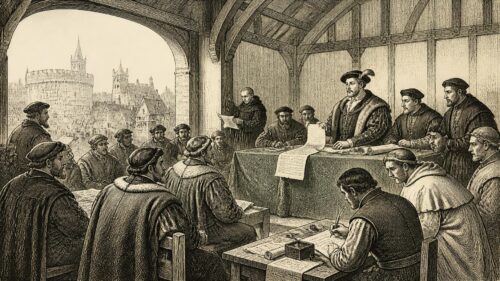
Debate on the bill exposed the human stakes. On 29 May, MPs discussed the exceptionally high mortality of orphaned and deserted children in Irish workhouses and proposed that very young children should not be kept there. The legislation would permit and encourage the boarding-out of children without their mothers, an attempt to reduce mortality. The evidence is a reminder that the post-Famine period was not simply an era of recovery. Families continued to be divided by poverty, disease, institutional rules and migration; local ratepayers and guardians made decisions that could determine whether relief came at home, in a workhouse, in an infirmary or through foster care.
Dublin’s Municipal Response
On 3 June, the Dublin Corporation Fire Brigade Act received royal assent. Its long title stated its purpose plainly: to extend and define the powers of Dublin’s Lord Mayor, aldermen and burgesses in extinguishing fires and protecting life and property. The Act provided the basis for a permanent organised brigade under Dublin Corporation, replacing a patchwork in which insurance brigades and private arrangements had played a large part. The early service was small, but its foundation marked a practical shift in municipal responsibility for an expanding capital of densely built streets, workshops, stores and public buildings.
This was not glamorous reform, but it mattered to everyday urban life. Fire was a constant threat where fuel, spirits, timber, textiles and closely packed buildings met. A municipal service recognised that fire protection could not sensibly depend solely on the insurance status of a property. Dublin’s new brigade belonged to the same broad Victorian trend as waterworks, sanitation schemes and regulated public health: local government was being asked to protect collective safety, even though the resources and powers available to Irish towns varied greatly.
Churches, Politics and Quiet Organisation
Religious institutions remained among Ireland’s strongest organised forces. On 18 July, John George de la Poer Beresford, Church of Ireland archbishop of Armagh and primate of all Ireland since 1822, died at Woburn near Donaghadee. His funeral in Armagh Cathedral on 30 July was attended by Joseph Dixon, the Roman Catholic primate, and Henry Cooke, moderator of the Presbyterian General Assembly. The attendance did not dissolve denominational division, but it was a notable public moment of clerical recognition across Ireland’s principal churches. Marcus Gervais Beresford succeeded to the archbishopric later that year.
Constitutional politics offered little dramatic Irish initiative in 1862, but discontent had not vanished. The Irish Republican Brotherhood, founded in 1858 and organised by James Stephens, remained a clandestine movement rather than a mass public force. Contemporary evidence from later in the decade makes clear that the organisation was already active, with recruitment networks drawing especially on towns and on emigrant connections. It would be misleading to project the Fenian Rising of 1867 back onto this year: there was no rising in 1862. Yet the secret republican current existed alongside parliamentary grievances about poverty and land, and its transatlantic horizon was sharpened by the American Civil War.
Irish-born and Irish-descended soldiers were fighting in that war. Thomas Francis Meagher’s Union Irish Brigade saw combat at Fair Oaks in Virginia on 31 May and 1 June, and at Antietam on 17 September. These battles occurred far from Ireland, but news, letters, remittances and enlistment connected Irish households to the conflict. The Civil War mattered not only as a distant spectacle: America was a principal destination for emigrants, and military service could offer pay, peril, status and a new political education to men from Irish communities.
Print, Learning and Memory
Cultural production in 1862 also crossed boundaries. Julia Kavanagh, born in Thurles and long resident in France and England, published French Women of Letters, biographical sketches of French writers. Charles Lever began publishing Barrington in monthly parts, a novel drawing energetically on Irish social types and Anglo-Irish memory. The posthumous Leadbeater Papers, including Mary Leadbeater’s Annals of Ballitore, brought a Quaker woman’s observations of a County Kildare community to new readers. Such works did not comprise a single national literary programme. Together, however, they show Irish writers and Irish local memory participating in a wide English-language print world.
The Commissioners of National Education also compiled their twenty-ninth annual report for 1862, evidence of the expanding administrative attention paid to schools, teachers, attendance and grants. Education was uneven and often curtailed by children’s need to work, while denominational questions remained sensitive. Still, the national system was helping to make reading, writing and arithmetic a more regular part of childhood for many families. In the same year that railways, steam packets and newspapers accelerated the movement of information, schooling offered more people the means to interpret it.
Thus 1862 is best understood not as a year of one commanding Irish event, but as a year when different futures were being built simultaneously. Belfast advertised industrial and cultural self-confidence; Sligo gained a rail connection; Dublin assumed a new civic duty; and the Poor Law’s medical role widened amid continuing need. Beneath these visible changes lay emigration, denominational allegiance, agrarian insecurity and a still-secret revolutionary tradition. Ireland was becoming more connected and more institutionalised, but neither more equal nor politically self-governing.
Primary Sources
- Poor Relief (Ireland) Act, 1862
- Distress in Ireland, House of Commons debate, 21 February 1862
- Irish Distress Observations, House of Commons debate, 2 May 1862
- Poor Law Records
- These Schemes Will Win for Themselves the Confidence of the People: Irish Independence, Poor Law Reform and Hospital Provision
- Chapter 3: Pre 1922
- Ulster Hall, Bedford Street, Belfast
- Ulster Hall
- Antrim, Belfast, Bedford Street, Ulster Hall
- Sligo MacDiarmada
- Irish Historic Towns Atlas: Sligo
- George Wilkinson, Dictionary of Irish Architects
- Statute Law Revision Act 2012
- Dublin Fire Brigade Museum
- Beresford, Lord John George de la Poer
- A Summary Catalogue of Manuscripts, Representative Church Body Library
- Stephens, James
- Patriotism as Pastime: the Appeal of Fenianism in the Mid-1860s
- The Irish Brigade at the Battle of Fair Oaks or Seven Pines
- The Irish Brigade at Antietam
- Historical Documents: Emigration from Ireland to the United States
- Twenty-ninth Report of the Commissioners of National Education in Ireland: For the Year 1862
- French Women of Letters: Biographical Sketches
- Barrington, by Charles Lever
- Index 1862, Royal Dublin Society Digital Archive