Membership is completely free, giving members unlimited access to all available resources, services, features, and benefits without any restrictions or fees.
Welcome back. Sign in to continue enjoying unlimited access to all available resources, services, features, and member benefits at no cost.
The best-established political event of the year occurred on St Patrick’s Day, 17 March. James Stephens, a former participant in the Young Ireland rising of 1848, received funding and authority from Irish-American supporters to organise a revolutionary movement in Ireland. That day, he and his associates took an oath directed towards the creation of an independent democratic republic. The body did not at once possess the elaborate membership or nationwide reach associated with later Fenianism, and its early title was not always used consistently. Historians nevertheless treat this moment as the foundation of the Irish Republican Brotherhood.
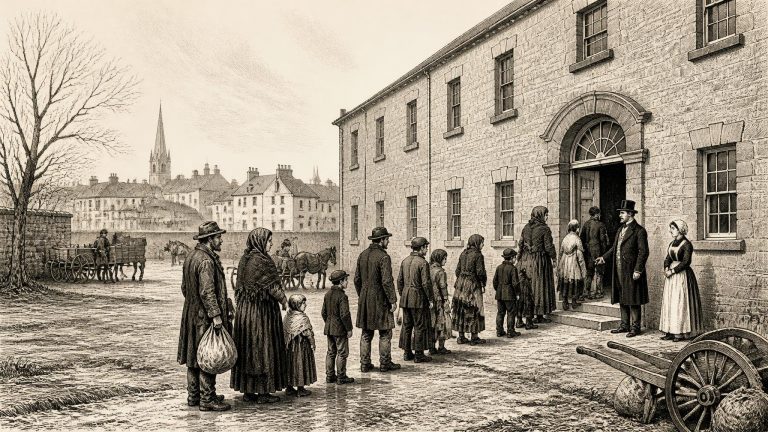
The immediate background was decisive. The potato failure of 1845 and the catastrophic failure of 1846 had exposed the dependence of a vast rural population on a single crop. Soup kitchens and relief works had eased suffering for a time, but their closure left the Poor Law as the principal official machinery of support. That system had been designed for ordinary destitution, not for a nationwide subsistence disaster. Admission to a workhouse often meant the break-up of a household, since men, women and children were separated into different wards. For people already ill, exhausted or homeless, however, the workhouse could seem the only remaining refuge.
The potato crop again suffered badly in 1848. This was a devastating reversal for families whose food supply, labour patterns and small holdings had already been shattered by the failures of 1845 and 1846 and by the hunger and epidemic disease of 1847. The blight was caused by Phytophthora infestans, though contemporaries did not possess a secure modern explanation or a means of preventing it. For labourers, cottiers and small tenants with little land and few reserves, another damaged crop meant that survival could not simply be postponed until the following harvest.
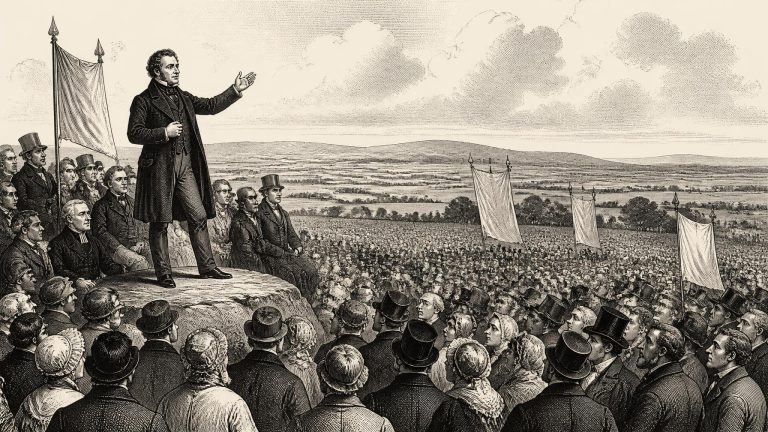
O’Connell was already the most formidable Irish popular politician of his age. His earlier mass campaign had helped secure Catholic Emancipation in 1829; now he argued that Ireland needed domestic self-government rather than piecemeal concessions from Westminster. Repeal, as he presented it, did not mean separation from the Crown. Ireland would share the monarch but recover a parliament in Dublin, capable of addressing Irish taxation, industry, land and social conditions.
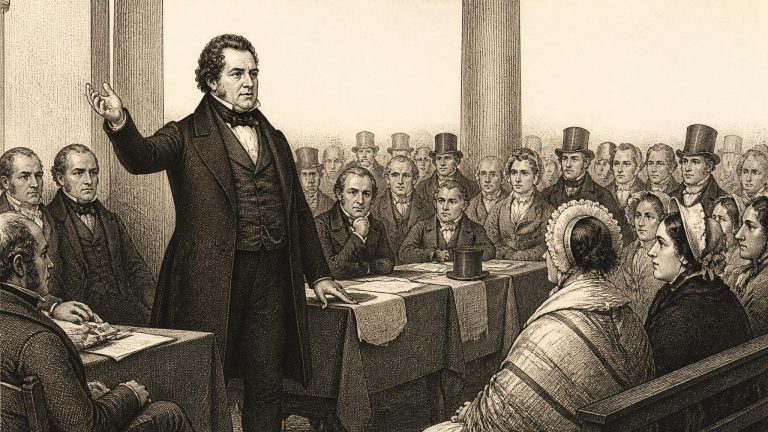
On 15 April 1840 O’Connell launched the National Association of Ireland for Full and Prompt Justice, or Repeal, at Dublin’s Corn Exchange. By July it was being styled the Loyal National Repeal Association of Ireland. The changing name is important: O’Connell did not propose separation from the Crown. He demanded restoration of an Irish legislature while maintaining the monarchical connection with Britain. The word “loyal” was intended to underline that this was to be a constitutional and peaceful campaign, not a preparation for rebellion.