Thomond Rivalry1553 CE
In 1553, Donough O’Brien’s death provoked a violent Thomond succession dispute, as his brother Sir Donal displaced his teenage son Conor despite Tudor inheritance arrangements. Donal demonstrated regional power through campaigning and negotiations at Leix, amid wider conflicts in the midlands and Connacht. Mary Tudor’s accession redirected Irish government towards Catholic restoration, although change remained gradual and uneven. George Dowdall regained recognition as archbishop of Armagh, while Protestant bishop John Bale fled Ossory. Sir Anthony St Leger returned as lord deputy, charged with reconciling religious restoration, fiscal restraint, military reduction, plantation and expanded crown authority. Chronological uncertainties complicate annalistic claims.
Dateline
A death and a disputed inheritance
In 1553, Ireland’s political landscape was altered above all by changes of ruler, but the most immediate consequences were felt locally: in a Thomond town set on fire, in a church hierarchy abruptly reordered, and at the boundaries of lordships where a crown that claimed the whole island still governed unevenly. The year cannot responsibly be reduced to a single national event. English royal authority mattered intensely in Dublin, the Pale and the expanding garrison zones; elsewhere it had to bargain with, reward or confront regional powers whose own laws of inheritance, fosterage, tribute and military following remained decisive.
Thomond, in the north of Munster, provides the clearest example. Donough O’Brien, second earl of Thomond and a member of the leading Gaelic dynasty of the region, died in 1553. The precise dating and circumstances need care. A later Irish annal places a violent attack on him at Cluain Ramhfhoda (Clonroad, near Ennis) in the opening of Lent and says that he died on the following Passion Saturday. A modern biographical account instead gives February for his death. What is secure is the underlying political result: Donough’s teenage son Conor did not take effective control. Donough’s younger brother, Sir Donal O’Brien, backed by substantial local support, assumed the leadership of the O’Brien lordship and asserted the earldom.
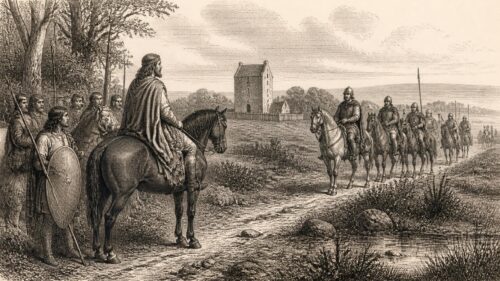
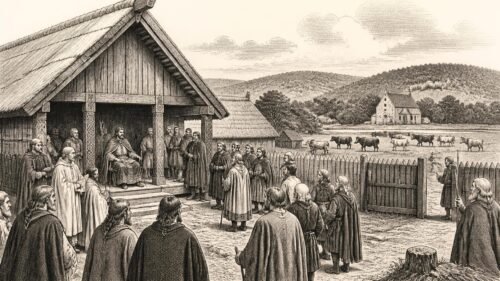
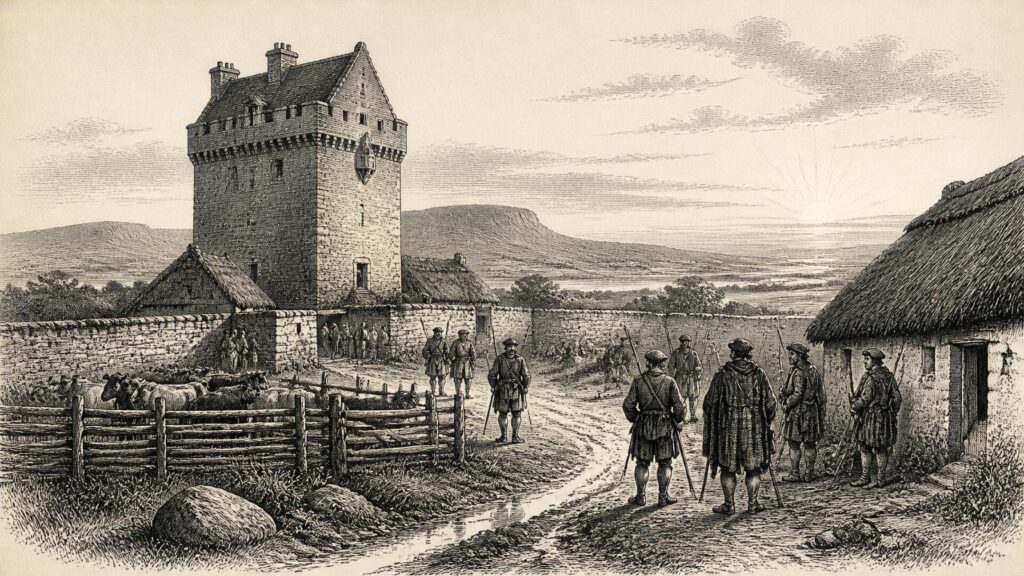
The dispute was rooted in two competing ways of ordering power. The Tudor crown had recognised titles and tried to make succession follow English-style hereditary rules. Donough had secured a claim favouring his son, styled Baron of Ibrickan, ahead of older collateral relatives. Within the O’Brien polity, however, the claims of an adult uncle with a following were far from extinguished. The Annals of the Four Masters describe Donal and another brother, Turlough, attacking Donough at Clonroad, burning and plundering the settlement and forcing him into a tower. That account is valuable testimony to the ferocity of the succession struggle, though it was written decades later and its description should not be treated as a court record. It is safer to say that violence accompanied the crisis than to pretend that every detail is independently proven.
Thomond beyond the succession
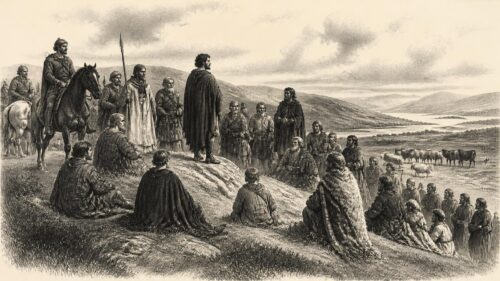
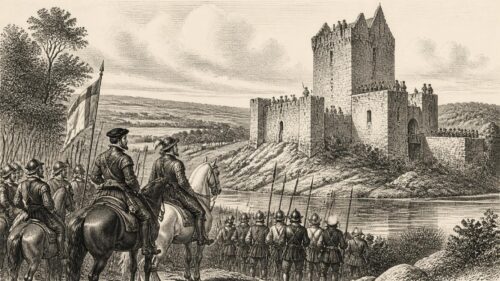
Donal O’Brien’s position did not rest only on a contested title. During 1553 he led a hosting into Leinster and held a conference with English representatives at the fort in Leix. The annal says that he left in peace and took hostages from O’Carroll as securities for it. Hostages were not a marginal custom: they were a practical political instrument, binding families and lordships to agreements by placing valuable persons in another power’s custody. The episode shows Donal operating in both Gaelic and crown-facing political worlds—raising an army, dealing at a royal fort, and accepting pledges in a recognisably Irish form.
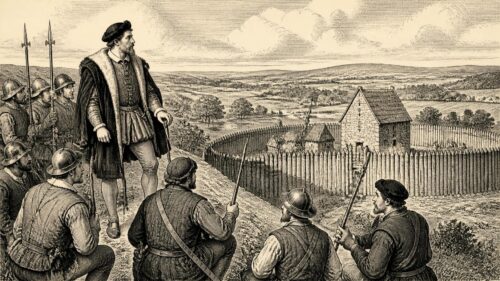
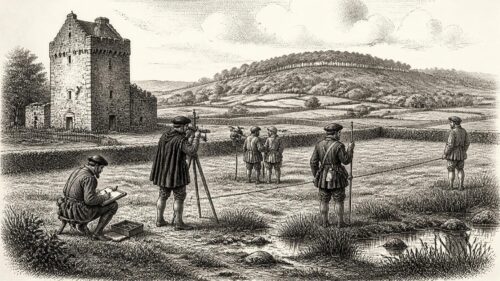
That meeting also reveals why Leix mattered. The crown had been attempting to turn the midlands into a more directly governed frontier, using forts, garrisons and surveys as precursors to plantation. For people living nearby, a fort was not an abstract emblem of administration. It meant soldiers to supply, new claims over land and passage, and the danger that local feuds would draw in officials or armed neighbours. In the same annalistic year, Niall, tanist of Clann Cholmáin, was killed after leaving the court at Mullingar. Retaliation included plundering Magh Corráin, seizing castles at Clonlonan and Newcastle, and expelling a rival O’Melaghlin with assistance from the Baron of Delvin and the English of Athlone. This was a region where private dynastic conflict and state intervention regularly overlapped.
Further west, the annals report that Richard-an-Iarainn Burke, Mac William, was defeated by the sons of Thomas Bacach Burke and the people of Gallen, captured, and said to have lost 150 men. The number cannot be independently checked and should be read as the annalist’s measure of a severe defeat, not as an audited casualty return. Yet the entry conveys a firm larger reality: Connacht’s great Burke lordships were divided political societies, not territories obedient to a single royal command. Warfare was commonly local, seasonal and tied to control of cattle, castles, client communities and routes of movement, but its effects—loss of livestock, burned crops, disrupted labour and insecurity on roads—were felt well beyond the fighting men.
Mary’s accession reaches Ireland
The succession at the centre of Tudor power was firmly dated. Edward VI died on 6 July 1553, and Mary Tudor succeeded to the crowns of England and Ireland. The Four Masters records that Mary was “made Queen” on 6 July, using the date of Edward’s death rather than the later public proclamations through which her authority became manifest. The distinction matters. In Ireland, political news, orders and personnel travelled through official and private channels; recognition of a new monarch was a process, not a single island-wide moment.
Mary’s accession nonetheless changed the assumptions under which Irish government and religion would operate. Her own Catholic convictions made an Edwardian Protestant programme untenable, but a complete legal and institutional restoration did not happen instantaneously in 1553. Ireland’s Marian parliament would not meet until 1556–7, when it repealed Irish anti-papal legislation. Nor should the year be represented as a simple reversal of every local religious practice. Parishes, cathedrals and religious personnel had experienced two decades of uneven royal intervention, the dissolution of religious houses, contested property and varying degrees of compliance. What changed in 1553 was the direction of authority from the crown and the renewed opportunity for defenders of traditional worship.
Two ecclesiastical careers make that shift visible. George Dowdall, the conservative former archbishop of Armagh, had been provided to the see by the papacy on 1 March 1553 while still abroad after fleeing Edwardian reforms. In October, Mary restored him as the crown-recognised archbishop. His return gave the northern province a powerful advocate of the old religion and a councillor whose authority joined Roman provision to royal acknowledgement. By contrast, John Bale, the uncompromising Protestant bishop of Ossory, had arrived in Kilkenny only in 1552. Edward’s death cut short his ministry. Facing hostility in the city after July, Bale fled through Dublin into continental exile. His departure should not be taken to mean that every inhabitant of Kilkenny changed belief at once; it does show how abruptly the official protection available to a reforming bishop had disappeared.
Dublin’s church leadership was also in transition. George Browne, archbishop of Dublin and once a prominent reformer, accommodated himself to Mary’s accession, though his earlier marriage would lead to his deprivation in 1554. Such individual adjustments are important. Religion in this year was not merely a contest between fixed confessions but a lived question of liturgy, clerical office, family, property and political survival. The recovery of Catholic structures would become more visible over the following two years; in 1553, it was a change of direction whose implementation was only beginning.
A new deputy, familiar methods
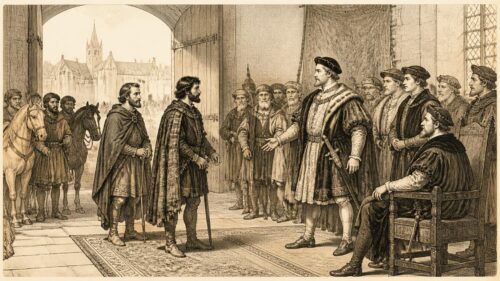
Mary appointed Sir Anthony St Leger lord deputy of Ireland on 1 September 1553, beginning his sixth and final period in the office. St Leger was no stranger to Irish affairs. He had long favoured accommodation with leading Gaelic and Anglo-Irish families, while also pursuing the crown’s objectives of revenue, military reduction and wider jurisdiction. His instructions combined aims that were potentially contradictory: restore Catholicism, reduce the garrison to 500 men, establish a more formal Munster presidency, advance plantation in Leix and Offaly, and suppress coign and livery—the exactions used to maintain the armed households of lords.
Those orders illuminate the limits of government. Reducing soldiers would save money, but the crown’s footholds depended on them. Curtailing coign and livery promised relief to communities burdened by billeting and forced provisioning, but it threatened the material basis of regional military power. Plantation in Leix and Offaly envisaged a profound remaking of landholding, yet it had to be pursued amid the unresolved position of the O’Connors and O’Mores. St Leger’s appointment was therefore not a settled solution. It was an attempt to make Catholic restoration, fiscal restraint, stronger provincial administration and territorial expansion coexist.
Financial administration itself was under scrutiny. Andrew Wise, vice-treasurer of Ireland and a close associate of St Leger, was summoned to London in October 1553 amid concerns about his accounts. In December Valentine Browne began service as auditor-general of Ireland. These developments were administrative rather than spectacular, but they matter because governing Ireland required cash: for wages, victuals, fortifications, rewards, diplomacy and the maintenance of office. Arguments over accounts were also arguments about who benefited from crown lands and revenues.
Chronicle, memory and chronology
One final caution is essential. The annal for 1553 also places the return of Gerald FitzGerald and Edward FitzGerald, and the return of Thomas Butler, future tenth earl of Ormond, in this year; it celebrates the joy their arrival supposedly caused across much of southern Ireland. These are historically meaningful restorations, but they cannot securely be assigned to 1553 as stated there. Gerald was restored to the earldom of Kildare on 13 May 1554, while modern research places Brian O’Conor Faly’s release and return from English custody, secured through his daughter Mairghréag’s petition, in 1554 as well. They belong to the immediate Marian political context, not to a strictly dated account of 1553.
That correction does not diminish the year’s importance. In 1553, Thomond’s succession was violently unsettled; Mary’s accession redirected official religion; Dowdall returned to royal recognition while Bale fled; and St Leger received a programme that exposed the crown’s ambitions and its practical weaknesses. Ireland entered the Marian reign not as a realm transformed overnight, but as a collection of connected lordships, towns, churches and garrison zones in which the consequences of a new monarch would be negotiated one locality at a time.
Source References
Hover over a number to see the source. Select it to open the source.

- [1] Annala Rioghachta Éireann: Annals of the Kingdom of Ireland, Volume 5 English Translation
- [2] St Leger, Sir Anthony
- [3] O'Connor Faly (Ó Conchobhair Failghe), Brian
- [4] Fitzgerald, Gerald
- [5] O'Brien, Conor
- [6] Butler, Thomas
- [7] Butler, Richard
- [8] MacGillapatrick, Brian
- [9] Dowdall, George
- [10] Browne, George
- [11] Bale, John
- [12] Cusack (Cusacke, Cusake), Thomas
- [13] Wise (Wyse), Andrew
- [14] Browne, Sir Valentine
- [15] Archbishop Dowdall and the Restoration of Catholicism in Dublin, 1553–5
- [16] Fiants of Tudor Monarchs
- [17] Calendar of State Papers, Ireland, Tudor Period, 1547–1553
- [18] Calendar of State Papers Ireland: Tudor Period 1547–1553
- [19] State Papers Domestic 1547–1649: Tudor and Stuart Government Papers
- [20] Mary I (r.1553–1558)
- [21] Calendar of State Papers, Ireland, Tudor Period 1547–1553
- [22] FitzGerald, Elizabeth
Primary Sources
- Annala Rioghachta Éireann: Annals of the Kingdom of Ireland, Volume 5 English Translation
- St Leger, Sir Anthony
- O'Connor Faly (Ó Conchobhair Failghe), Brian
- Fitzgerald, Gerald
- O'Brien, Conor
- Butler, Thomas
- Butler, Richard
- MacGillapatrick, Brian
- Dowdall, George
- Browne, George
- Bale, John
- Cusack (Cusacke, Cusake), Thomas
- Wise (Wyse), Andrew
- Browne, Sir Valentine
- Archbishop Dowdall and the Restoration of Catholicism in Dublin, 1553–5
- Fiants of Tudor Monarchs
- Calendar of State Papers, Ireland, Tudor Period, 1547–1553
- Calendar of State Papers Ireland: Tudor Period 1547–1553
- State Papers Domestic 1547–1649: Tudor and Stuart Government Papers
- Mary I (r.1553–1558)
- Calendar of State Papers, Ireland, Tudor Period 1547–1553
- FitzGerald, Elizabeth