Lea Imprisonment1294 CE
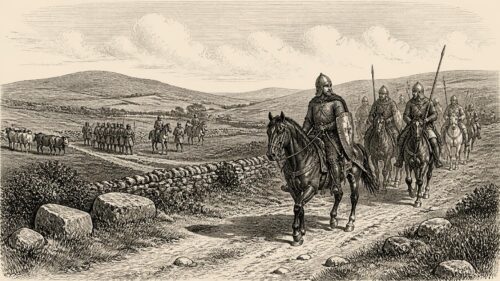
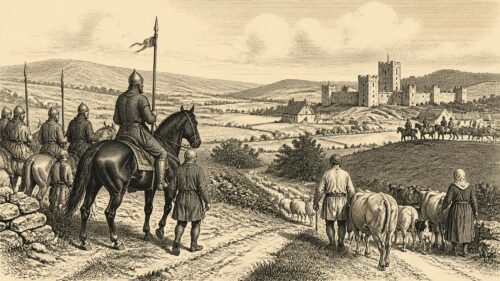
In 1294 Richard de Burgh, the Red Earl of Ulster and lord of Connacht, was captured by John fitz Thomas FitzGerald and imprisoned at Lea Castle, intensifying a wider struggle for power in Connacht. Sligo Castle was destroyed amid rival campaigns, while killings, raids and disputed successions destabilised Gaelic lordships. FitzGerald and de Bermingham forces devastated Connacht but failed to secure lasting control. Deaths and successions affected regional dynasties, ecclesiastical offices and political marriages. Bad weather and harvest failure began a three-year dearth, compounded by warfare. Property transactions continued, revealing authority divided among crown, magnates, kings, chiefs and local institutions.
Dateline
A Magnate Taken
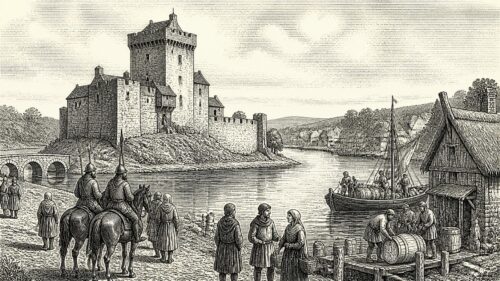
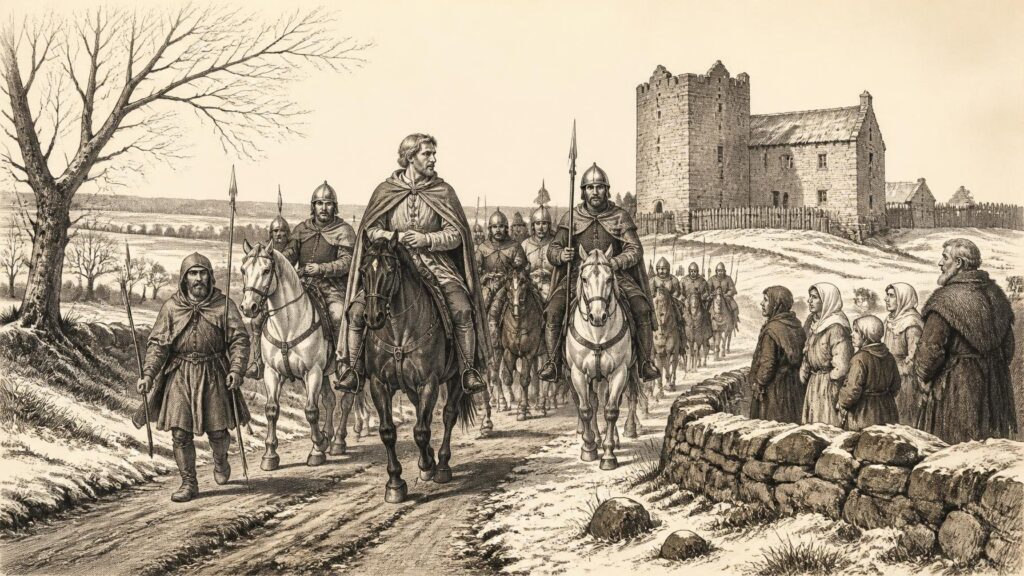
In 1294 one of the greatest aristocrats in Ireland became a prisoner of another. Richard de Burgh, earl of Ulster and lord of Connacht—later remembered as the Red Earl—was seized by John fitz Thomas FitzGerald and confined at Lea Castle, the FitzGerald stronghold in Offaly. The date of the capture is conventionally given as 9 December. It was not a royal arrest, nor the outcome of a formal court judgement, but the sharpest act in a feud between two immensely powerful Anglo-Irish lordships. The Annals of Connacht give the event its widest meaning: the earl’s capture by Mac Gerailt, or FitzGerald, caused “confusion throughout Ireland”.
That phrase should not be read as a claim that every region immediately descended into war. It conveys, rather, the scale of the shock. De Burgh held the earldom of Ulster, extensive lands in Connacht and influence far beyond his own estates. FitzGerald was lord of Offaly and heir to formidable Geraldine interests in Leinster and Connacht. Their retainers, tenants, allied Gaelic rulers and rival lords all had reason to calculate anew when one lord could imprison another. The immediate quarrel formed part of a longer contest over authority in Connacht, where English and Gaelic powers alike competed to install friendly rulers and command castles, tribute and military service.
The medieval Irish annals are indispensable here, but they require care. Their year-headings identify events as belonging to 1294, while seldom supplying modern-style dates or a complete narrative. The precise date of 9 December comes from the reconstructed political chronology used by modern historians; many of the Connacht killings, raids and successions below can responsibly be placed only within the calendar year. Taken together, however, the entries show that the arrest at Lea was not an isolated drama. It came amid an exceptionally unsettled year in Connacht.
Sligo and Connacht
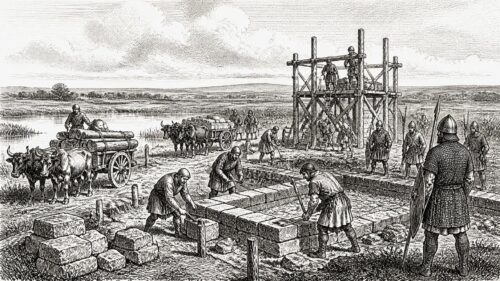
The struggle turned on Sligo as well as Lea. Sligo was a strategically important settlement on the Garavogue, linking the Atlantic coast with routes into north Connacht and Ulster. Its castle and its street-town were visible expressions of contested lordship. The annalist records that Sligo Castle was levelled by Áed Ó Conchobair in 1294. Modern reconstructions of the larger feud also associate the castle’s destruction with de Burgh’s campaign and with Geraldine interests there. The sequence and agency cannot be settled beyond doubt from the surviving notices, but the point is clear: a castle intended to anchor authority in north-west Connacht had again become a casualty of rivalry.
Castles were not merely military structures. They concentrated a garrison, stored provisions, received dues, protected a market and gave a lord a place from which to impose terms. Their destruction could therefore unsettle people whose names do not appear in the annals: cultivators bringing grain or livestock to town, craftsmen, boatmen, merchants, servants, clergy and families living close to the defended settlement. The reference to the killing of Máel Sechlainn Ó Flannacáin in the town of Sligo, by Cathal mac Taidg Mac Diarmata, indicates that violence reached this inhabited urban space as well as the surrounding countryside.
Connacht’s Gaelic politics were equally volatile. Muirchertach, son of Magnus Ó Conchobair, described by the annalist as an outstanding eligible claimant to rule Connacht, was killed with some followers by Tadg son of Andrias and Domnall son of Tadg. Áed son of Eógan Ó Conchobair raided Clann Muircheartaigh. These were not peripheral family disputes: within a kingship organised around competing branches of the Ó Conchobair dynasty, the removal of a credible adult claimant altered the balance of power. The previous year had seen the death of Manus Ó Conchobair and the elevation of Áed son of Eógan; 1294 exposed how precarious that settlement remained.
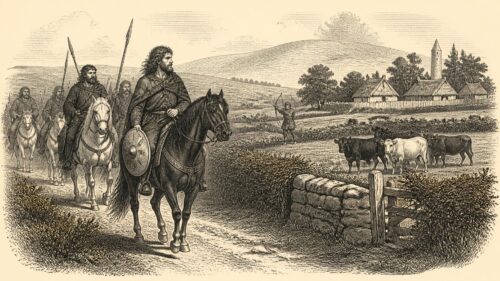
The FitzGerald response was forceful but inconclusive. The Annals of Connacht report a “great and treacherous” raid into Connacht by Mac Gerailt and Mac Feorais, the latter a member of the de Bermingham family. The raiders devastated the country and believed that they had deposed Áed mac Eógain, yet the annalist insists that they gained no lasting ascendancy. “Devastation” in this context meant more than a clash between armed men. Raiding armies could seize cattle, burn stored crops or houses, carry off goods and compel communities to abandon exposed places. The failure to secure political control meant that these costs did not purchase a durable settlement.
Deaths, Succession and Local Rule
The year’s obituary notices map a landscape of small but consequential lordships. Domnall Ó hEgra, king of Luighne or Leyney in the Sligo–Mayo borderlands, died. Donnchad Mac Con Snámha, chief of Muintir Chionnaith, and Carrach in Chairn Mag Tigernáin, chief of Tullyhunco in Breifne, also died. Each death opened questions of inheritance, alliances and the ability to defend land. The annals rarely describe the negotiations that followed, but their careful recording of such figures demonstrates that lordship was dispersed among many regional dynasties, not monopolised by earls or kings.
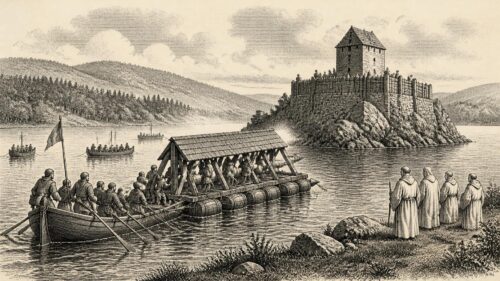
Moylurg, around Lough Key in what is now north Roscommon, saw both loss and succession. Cathal mac Taidg Mac Diarmata, its king, died in 1294; the annalist praises his generosity and valour, conventional but meaningful virtues for a ruler expected to lead in war and sustain followers through hospitality. His daughter Derbail also died during the year. Máelruanaid, son of Gilla Crist Mac Diarmata, then assumed the kingship. This was a change at the centre of a well-established Gaelic lordship whose rulers commanded a network of dependants, church connections and productive lakeside lands. Diarmait son of Liathanach Ó Conchobair, buried on Trinity Island in Lough Key, was another victim of the year’s conflict.
Women appear only sparingly in these compressed records, but their appearance matters. Derbail’s obituary and the death recorded in the Annals of Ulster of Sadhbh, daughter of Áed Buide Ó Néill and wife of Tadg son of Andrias Ó Conchobair, reveal marriages that connected ruling families across provinces. Such unions carried political importance, although the evidence does not allow us to assign a specific diplomatic purpose to either woman’s marriage. The same Ulster chronicle records the death of Thomas Ó hOirechtaigh, abbot of Assaroe, and the acquisition of the bishopric of Clonmacnoise by William Ó Finnáin, previously abbot of Kilbeggan. These notices show ecclesiastical offices continuing to matter as positions of learning, landholding and regional influence amid secular conflict.
Dearth and Household Strain
Warfare was accompanied by a worsening material pressure. Later Anglo-Irish annalistic evidence and modern environmental-economic research place the beginning of a three-year period of persistently bad weather, failed harvests and severe dearth in 1294. It would be wrong to attach a precise month, locality or mortality figure to the opening year. Nor did every household suffer alike. But the evidence supports recognising 1294 as the start of a subsistence crisis that lasted into 1296, with especially serious effects in the more commercialised districts of the Lordship.
For ordinary people, poor harvests translated into less bread grain, dearer food, weaker animals and more dangerous choices about seed, rents and debt. Grain prices around Dublin in 1294–95 stood markedly above the late-thirteenth-century average. Ireland’s connections across the Irish Sea could bring supplies and markets, but they also exposed consumers to scarcity in England, where harvest conditions were poor too. In a year of military raids, the loss of cattle or grain stores could make a weather-driven shortage still harder to survive. The sources do not permit a single national story: Connacht’s annals chiefly record political violence, whereas evidence for dearth is strongest in and around the English Lordship. Together they caution against imagining prosperity behind either Gaelic or colonial frontiers.
Property, Paper and Unfinished Authority
Even in this turbulent setting, written property transactions continued. A deed dated in April 1294 records Ralph Pyppard granting his son John castles, manors, rents, wards and other rights spread across Leinster, Meath, Ulster and Oriel. Another, dated 2 November at Dublin, records a lease involving Theobald Butler and land at Corduff. These documents are not evidence that Ireland was tranquil; rather, they show that landholding depended on durable written claims as well as force. Manors generated rents, labour services, reliefs and rights over heirs and marriages. Such revenue made magnate warfare possible, while warfare imperilled the settlements from which it was drawn.
By the year’s end, then, authority in Ireland remained intensely plural. The English crown claimed ultimate lordship, but its capacity depended on cooperation from magnates who might openly feud. Gaelic kings and chiefs defended their own dynastic interests and could exploit divisions among the Anglo-Irish. Towns and castles such as Sligo mattered because they were nodes in that struggle; lakeside lordships such as Moylurg mattered because succession there shaped regional power; and a prison at Lea Castle mattered because it held a man whose resources reached from Connacht to Ulster. The Red Earl’s captivity did not resolve these conflicts. It exposed how fragile the political order had become in 1294.
Source References
Hover over a number to see the source. Select it to open the source.

- [1] Annála Connacht, Annal 1294
- [2] Annála Connacht
- [3] Annals of the Four Masters, Part 13
- [4] Annals of the Four Masters
- [5] Annala Uladh: Annals of Ulster otherwise Annala Senait, Annals of Senat
- [6] The Annals of Ulster
- [7] CELT Project: Annales Breves Hiberniae
- [8] Annalium Hiberniae Chronicon ad annum MCCCXLIX
- [9] Burgh, Richard de
- [10] Burgh, Richard de
- [11] From Boom to Bust: The Lordship of Ireland and the European ‘Commercial Revolution’
- [12] Climate, Disease and Society in Late-Medieval Ireland
- [13] Irish Historic Towns Atlas, no. 24: Sligo
- [14] Calendar of Ormond Deeds, Volume I, 1172–1350
- [15] History of the FitzGeralds, 1257 to 1523
- [16] The Annals of Ireland by Friar John Clyn: Edited and Translated with an Introduction by Bernadette Williams
- [17] Irish Annals
- [18] CELT Project: Annals of Ulster Otherwise Annala Senait, Annals of Senat
- [19] CELT Project: Annals of the Four Masters
- [20] CELT Project: Annála Connacht
- [21] Irish Historic Towns Atlas
- [22] Sligo Castle: Archaeological and Historical Context
Primary Sources
- Annála Connacht, Annal 1294
- Annála Connacht
- Annals of the Four Masters, Part 13
- Annals of the Four Masters
- Annala Uladh: Annals of Ulster otherwise Annala Senait, Annals of Senat
- The Annals of Ulster
- CELT Project: Annales Breves Hiberniae
- Annalium Hiberniae Chronicon ad annum MCCCXLIX
- Burgh, Richard de
- Burgh, Richard de
- From Boom to Bust: The Lordship of Ireland and the European ‘Commercial Revolution’
- Climate, Disease and Society in Late-Medieval Ireland
- Irish Historic Towns Atlas, no. 24: Sligo
- Calendar of Ormond Deeds, Volume I, 1172–1350
- History of the FitzGeralds, 1257 to 1523
- The Annals of Ireland by Friar John Clyn: Edited and Translated with an Introduction by Bernadette Williams
- Irish Annals
- CELT Project: Annals of Ulster Otherwise Annala Senait, Annals of Senat
- CELT Project: Annals of the Four Masters
- CELT Project: Annála Connacht
- Irish Historic Towns Atlas
- Sligo Castle: Archaeological and Historical Context