Archived: 31 October 2026
Abstract
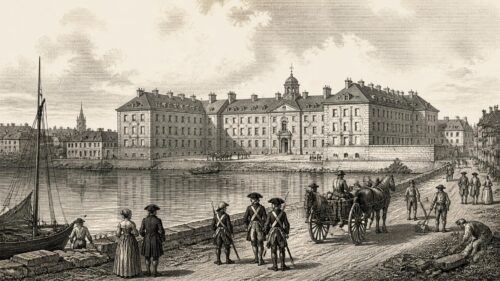
In 1706, Ireland was governed largely through Dublin Castle proclamations while parliament remained prorogued under Queen Anne and Lord Lieutenant Ormond. The War of the Spanish Succession prompted naval recruitment, thanksgiving services and completion of Dublin’s Royal Barracks, strengthening military administration. Measures against robbery and outlaws asserted state authority, while restrictions on Protestant conversion reinforced the penal regime and Protestant ascendancy. Economic orders regulated wine prices and butter packing, reflecting the importance of export trade. Constitutional debate persisted through Molyneux’s work. Meanwhile, O’Heyne documented Catholic continuity from Louvain, and Francis Makemie’s Philadelphia presbytery demonstrated Irish Presbyterian links across the Atlantic.
Read Article
Archived: 31 October 2026
Abstract
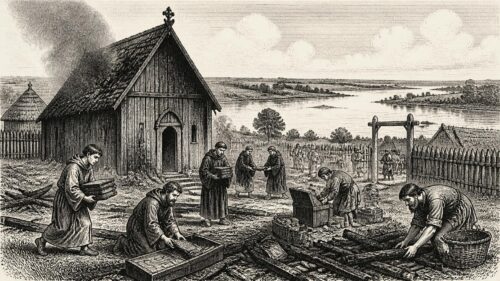
In the annal-year 755, Cluain Moccu Nóis (Clonmacnoise), a major monastery beside the Shannon, was burned on 21 March, though modern calendar alignment remains uncertain. The annals do not state the cause, scale or casualties, but the fire exposed the vulnerability of a wealthy religious and transport centre dependent on regional labour and patronage. They also record deaths of kings of Uí Méith, Uí Maine and Uí Fhailgi, alongside churchmen and abbots from several communities. These notices reveal politically fragmented, interconnected Ireland, where monasteries held economic, scholarly and social importance. No evidence supports nationwide crisis, war, famine or rebuilding details.
Read Article
Archived: 31 October 2026
Abstract
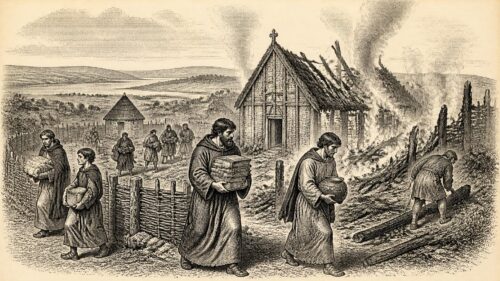
For Ireland in 756, the annals offer no single, all-embracing story. Instead, they preserve a sharp cluster of incidents: the burning of the great church settlement of Bangor on St Patrick’s Day; a military expedition which brought Leinster forces into Mag Muirthemne; the death of a Connacht overking; fighting in the midlands and Connacht; and a catastrophic wreck on Lough Ree. Read together, these terse notices reveal an island in which kingship, ecclesiastical authority and movement by water were all deeply consequential. They also demand care. Medieval annals did not record every event, and they often give outcomes without causes.
Read Article
Archived: 31 October 2026
Abstract
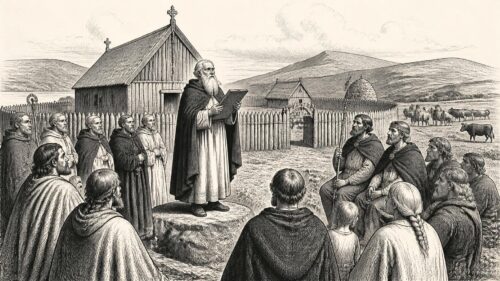
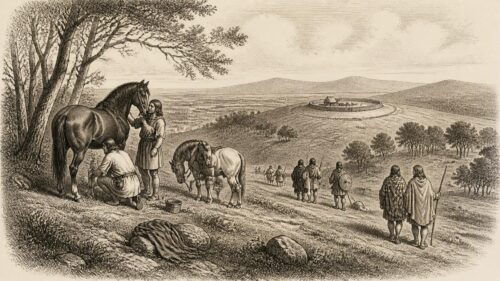
In annalistic 757, Ireland’s fragmented political and ecclesiastical landscape was marked by conflict, loss and religious assertion. At Cenn Febrat in Munster, Bodbgal, superior of Mungret, died in fighting among Munstermen, while Donn of the southern Uí Briúin was killed in Connacht. Tomaltach of Ciannachta Glinne Gaimin and several churchmen also died. Uí Chremthainn burned Cell Mór Dithraib, demonstrating religious communities’ material vulnerability. Obits recorded abbots and anchorites across Ireland. Most significantly, Sléibéne, abbot of Iona, promulgated the Law of Colum Cille, renewing Columban claims and links between ecclesiastical authority, secular protection, obligations and networks spanning Ireland and western Scotland.
Read Article
Archived: 31 October 2026
Abstract
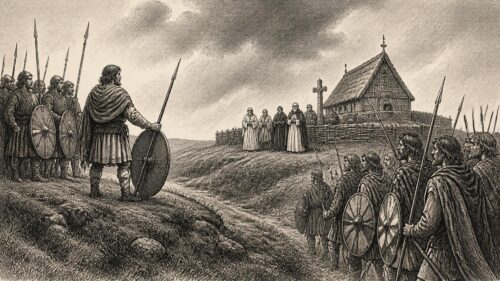
In 758, Irish annals record regional political and ecclesiastical transitions rather than an island-wide crisis. At Druim Róbaig in Connacht, Uí Briúin defeated Uí Fhiachrach; Ailill grandson of Dúnchad prevailed, while Tadc son of Muirdibur and three grandsons of Cellach were killed. Deaths included Niallgus, king of the Déisi of Brega, Cathal of Uí Chennselaig, and Aed of the Ciannachta. Céile Petair, abbot of Armagh, and Marthu, abbess of Kildare, also died. These notices reveal Ireland's regional lordships, kin-based succession and influential churches, while their selectivity precludes claims about nationwide conditions, causes, or outcomes beyond the sparse surviving evidence available.
Read Article
Archived: 31 October 2026
Abstract
In 759, annals record conflict, death and weather across Ireland, though their dating differs slightly. At Emain Macha, rivalry between priest Airechtach and Armagh’s abbot Fer dá Chrích helped provoke battle between Ulaid and Uí Néill forces. Fiachnae of Ulaid prevailed; Dúngal grandson of Conaing and Donn Bó died. Anmchad, king of Osraige, defeated Leinstermen at Gabráin. Domnall of Leinster died, alongside kings Rechtabra and Ferdamal, several abbots and named scholars. A rainy summer and a remarkable fish-bearing stream were noted. These terse records reveal intertwined ecclesiastical authority, regional warfare, learning and environmental observation within contested local networks of authority.
Read Article
Archived: 31 October 2026
Abstract
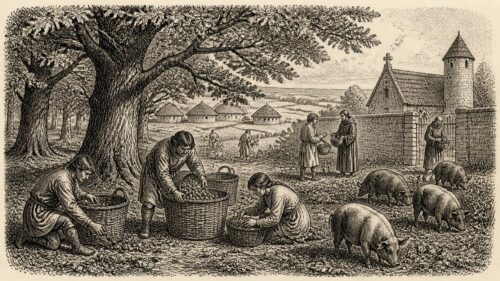
In 760, Irish annals recorded famine alongside an exceptional acorn crop, highlighting food insecurity despite local abundance and unequal access to resources. Political change followed the death of Leinster ruler Muiredach, while a battle at Belach Gabráin exposed rivalry between Leinster and Osraige. Ecclesiastical institutions were equally entangled in conflict: communities of Clonmacnoise and Birr fought, and a bishop was killed at Kildare’s altar, reportedly prompting a liturgical restriction. Death notices for rulers and churchmen reveal networks spanning Ireland. Though chronologically uncertain and selective, the annals portray a divided, interconnected society shaped by scarcity, dynastic competition, church power, and violence.
Read Article
Archived: 31 October 2026
Abstract
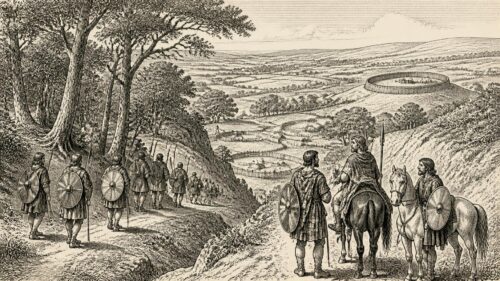
In 761, Irish annals record localised dynastic conflicts rather than an island-wide crisis. At Belach Gabráin, probably near Gowran, Osraige under Anmchad son of Con Cú Cerca defeated a Leinster force; Donngal son of Laidcnén, king of Uí Chennselaig, was killed. The repeated fighting there, also noted in 759, reflected competition for frontier routes and resources. At Áth Duma, Ulaid fought Uí Echach and Ailill son of Fíelmid died, amid north-eastern rivalries. Annals also note Pictish king Óengus’s death, illustrating Irish interest in interconnected British politics. Sources reveal changing political relationships but omit causes, numbers, civilian effects and battlefield detail.
Read Article
Archived: 31 October 2026
Abstract
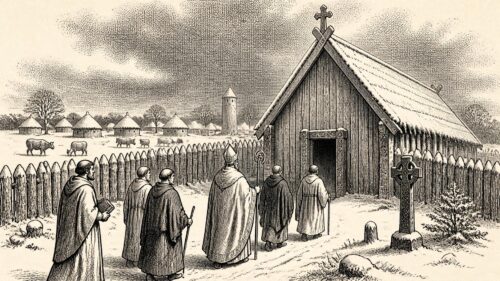
In the annalistic dossier conventionally dated 762, Ireland experienced exceptional snow and a darkened moon, perhaps linked to an eclipse dated elsewhere to December 763. Bishop Eóthigern was killed by a priest in Kildare's wooden oratory, demonstrating violence within a prestigious ecclesiastical centre, although motives remain unknown. Cenél Cairpri defeated the Luigne at Caill Tuidbig, illustrating local warfare amid Domnall Midi's overlordship. Deaths included Cormac, abbot of Clonmacnoise, and Fer Fio of Comrair, a noted scholar; Tigernach also records Fogartach of Éile and Suibne of Clonfert. These notices reveal dispersed authority, church influence, learning, and vulnerability to weather and conflict.
Read Article
Archived: 31 October 2026
Abstract
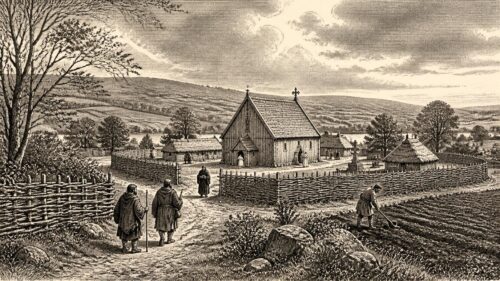
In 763, Domnall Midi of Clann Cholmáin, king of Tara, died at Durrow on 20 November, ending a southern Uí Néill ascendancy. Niall Frossach of Cenél nÉogain then began to rule, restoring the leading overkingship to the northern Uí Néill amid a contested political order rather than a unified monarchy. Annals also record Connacht’s severe but unexplained defeat at Cuilnech Mór and fighting between Munster peoples. Deaths of abbots and clerics at several major churches reveal an extensive ecclesiastical network. A daytime darkening of the sun was noted, though its cause and meaning remain unknown. Kingship, warfare and church intertwined.
Read Article


