

Start Exploring
Choose a route into Ireland’s past: follow the newest additions, find a particular year or subject, or browse every available period.
Welcome to Emerald Archives
Emerald Archives presents Ireland’s story one reference year at
a time, from the deep prehistoric past to the modern era. Each
article explores the evidence, people, places and developments
associated with a particular year and places them within their wider
historical setting. The collection brings together archaeology,
politics, society, religion, culture, conflict, everyday life and
changing landscapes in one continuously expanding timeline. New
articles appear here as the archive grows. You can also explore
the full Irish History Timeline, search the archive directly, or
use Explore to move through the collection by period and subject.
Archives Under Construction: 2,881 Years Shared — In Progress: 1253 CE — Available Archives: 26
13th Century Ireland CE


Ballymote’s First Stones
Archived: 24 October 2026
In 1300, construction began at Ballymote Castle in County Sligo, probably under Richard de Burgh, the Red Earl of Ulster and lord of Connacht. The fortress signalled and supported de Burgh influence in contested Corran, though Gaelic and settler powers remained varied and interconnected. Annalistic notices associate deaths in the earl’s household with this period, highlighting succession’s importance, but dating is uncertain. Meanwhile, justiciar John Wogan ordered provisions from Irish ports for Edward I’s Scottish war. Castle-building, royal requisitioning, trade, labour, religious institutions, and local violence reveal Ireland as a politically fragmented yet increasingly interconnected island within wider overseas affairs.

Turvey, Curragh and Annaly
Archived: 24 October 2026
In 1299, Ireland saw dispersed developments rather than a single national event. Theobald Butler died childless at Turvey, passing his office and lands to Edmund. John Wogan’s government relied on Richard de Burgh as deputy justiciar during his Scottish absence, following settlement of magnate conflict. Edward I protected the Curragh’s pasture by banning swine. In Annaly, Sefraid Ó Fearghail killed Meath knight Seoán de la Mare during a livestock pursuit, illustrating frontier tensions. Irish annals also noted Scottish conflict and Bishop Muiris Ó hÓcáin’s death. Misdated annalistic entries concerning Armagh and Tír Chonaill properly belong to 1303, not 1299 itself.
Coologe and the Crooked Heir
Archived: 24 October 2026
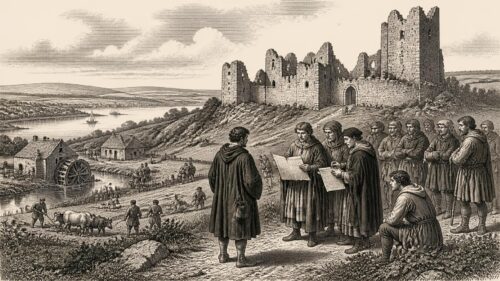
In 1298, Irish records reveal fragmented yet connected authority. Brian Bregach Mag Samradain, chief of Tullyhaw, was killed at Coologe, illustrating violent dynastic politics in Breifne. Thomas fitz Maurice FitzGerald, the Crooked Heir, died, prompting valuations of his extensive but unevenly productive estates, including decayed Dungarvan Castle and its active market economy. Dublin government supplied Edward I’s Scottish war while maintaining administration through officials and inquiries. Deaths and appointments among bishops and abbots underline ecclesiastical influence. Conflicting reports of Domnall Ruad Mac Carthaig’s death demonstrate the need to compare annals. The year exposes power’s local, negotiated and fragile political character.

Leighlin’s Burning, Wogan’s Parliament
Archived: 24 October 2026
In 1297, John Wogan’s Dublin parliament introduced elected knightly representatives from counties and liberties of the English lordship, seeking consent for measures on defence, policing, road clearance and collective military contributions. It also advanced royal administration through the creation of counties Kildare and Meath, while preserving powerful private liberties. These reforms responded to persistent insecurity: Slieve Margy forces burned Leighlin, while leading Orior figures were killed near Dundalk. Elsewhere, annals recorded the deaths of Moylurg’s lord, chiefs and bishops, and disputes over Elphin. Edward I’s wars constrained affairs. The year revealed authority as selective, contested and dependent on local institutions.
Boyle’s Four Nights
Archived: 24 October 2026
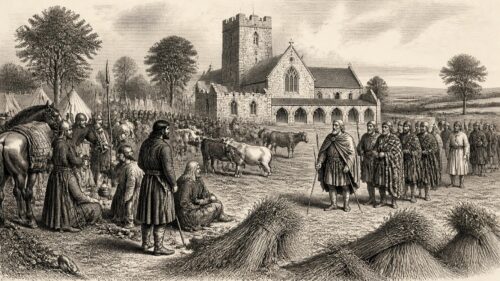
In 1296, Connacht suffered a violent Ó Conchobair succession struggle. Áed son of Eógan was deposed for Conchobar Ruad, whose supporters seized hostages and ravaged Cairbre, including churches. Backed by Uilliam and Theobald Burke, Áed assembled at Boyle Abbey, plundering grain and livestock, before alliances shifted again. Conchobar was killed at Cend Ceti, restoring Áed; his rival’s son was later blinded. Ecclesiastical deaths and burials stressed Boyle and Ballintober’s importance. Meanwhile, Irish magnates and troops joined Edward I’s Scottish invasion, criticised by annalists for sacrilege. Reports of weather and cattle disease illustrate insecurity surrounding food, livestock, lordship and religious institutions.
The Red Earl’s Hostages
Archived: 24 October 2026
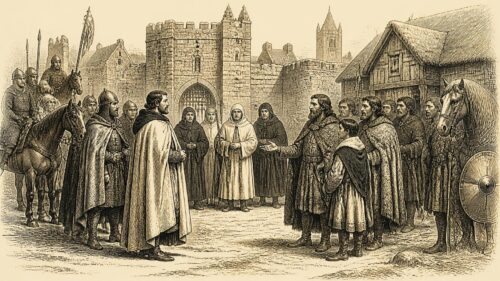
In 1295, Ireland remained divided among Anglo-Irish lordships, Gaelic kingdoms and church lands, where authority depended on negotiation, hostages and armed force. At Kilkenny, Richard de Burgh, the Red Earl, was released after hostages guaranteed a settlement with John fitz Thomas FitzGerald. Thomas fitz Maurice, acting as royal keeper, secured temporary submissions from Wicklow groups through fines and hostages. John Wogan became justiciar, tasked with preparing Irish resources for Edward I’s Scottish war. Annals also record dynastic killings, contested successions, plunder and expulsions in northern and southern regions, revealing persistent regional conflict despite royal efforts to restore order and stability.

Lea Castle’s Red Earl
Archived: 24 October 2026
In 1294 Richard de Burgh, the Red Earl of Ulster and lord of Connacht, was captured by John fitz Thomas FitzGerald and imprisoned at Lea Castle, intensifying a wider struggle for power in Connacht. Sligo Castle was destroyed amid rival campaigns, while killings, raids and disputed successions destabilised Gaelic lordships. FitzGerald and de Bermingham forces devastated Connacht but failed to secure lasting control. Deaths and successions affected regional dynasties, ecclesiastical offices and political marriages. Bad weather and harvest failure began a three-year dearth, compounded by warfare. Property transactions continued, revealing authority divided among crown, magnates, kings, chiefs and local institutions.

Saul’s Three Saints
Archived: 24 October 2026
In 1293, Ireland experienced interconnected political, administrative and religious upheavals. In Connacht, Magnus Ó Conchobair’s death triggered rapid changes of kingship, as Áed mac Eógain, Cathal Ruad and Anglo-Irish interests contested authority. Violence destabilised Moylurg and claimed several regional rulers. William de Vesci’s rivalry with John fitz Thomas FitzGerald prompted Edward I to restrain military mobilisation, reform sheriffs’ accountability and investigate the justiciar. At Saul, Nicholas Mac Máel Ísu enshrined reported relics of Patrick, Columba and Brigid, reinforcing ecclesiastical prestige. Episcopal deaths and contested elections linked Irish churches to royal administration, monasteries and Rome, revealing overlapping, insecure jurisdictions across Ireland.
Roscommon and Meelick
Archived: 24 October 2026
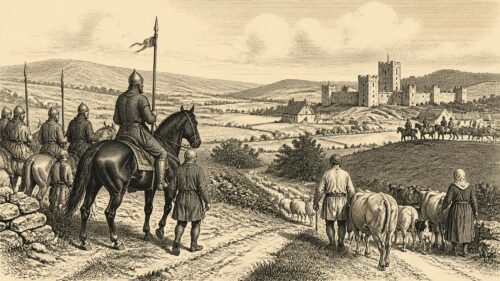
In 1292, Richard de Burgh, earl of Ulster and lord of Connacht, sought to enforce authority through campaigning, negotiation and violence. His advance to Roscommon failed to secure hostages from Magnus Ó Conchobair, but Magnus later submitted at Meelick and gained concessions. De Burgh’s raid on Leyney devastated resources without securing Domnall Ó hEgra’s obedience, while Mac Cochlain of Delvin was killed on his orders. Dynastic deaths further unsettled Connacht. In the south, Edward I settled Thomas fitz Maurice FitzGerald’s inheritance, regranting Decies, Desmond and Dungarvan under revised terms. These events exposed Crown authority’s dependence on continually unstable local agreements.
Collooney Weir and Red Earl
Archived: 24 October 2026
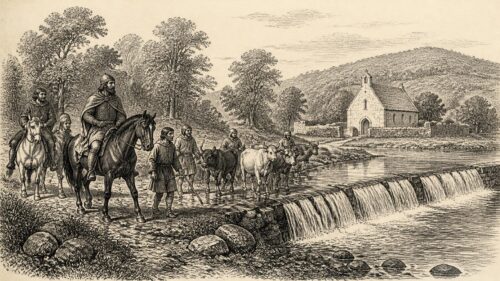
In 1291 Ireland’s most consequential recorded developments lay in the north and west: the campaigning of Richard de Burgh, earl of Ulster, known to later history as the Red Earl; disputed kingships among the Ó Néill, Ó Domnaill and Ó Conchobair; and a sharp Connacht struggle centred on the weir at Collooney. These events are principally preserved in Irish annals, which organise material by year but do not normally supply dates or a dependable sequence within the year. The campaigns and battles described below can therefore be responsibly assigned to 1291, while their precise seasons and order cannot. Royal administrative records, by contrast, occasionally preserve exact dates and reveal a different Ireland of courts, ports, religious houses and official finance.



