FitzGerald Inheritance1298 CE
In 1298, Irish records reveal fragmented yet connected authority. Brian Bregach Mag Samradain, chief of Tullyhaw, was killed at Coologe, illustrating violent dynastic politics in Breifne. Thomas fitz Maurice FitzGerald, the Crooked Heir, died, prompting valuations of his extensive but unevenly productive estates, including decayed Dungarvan Castle and its active market economy. Dublin government supplied Edward I’s Scottish war while maintaining administration through officials and inquiries. Deaths and appointments among bishops and abbots underline ecclesiastical influence. Conflicting reports of Domnall Ruad Mac Carthaig’s death demonstrate the need to compare annals. The year exposes power’s local, negotiated and fragile political character.
Dateline
In 1298, Ireland’s surviving records preserve no single island-wide turning point. Instead, they bring several sharply observed local developments into view: the killing of a Cavan chieftain in his own house, the death of a powerful FitzGerald lord and the detailed valuation of his estates, changes in major ecclesiastical offices, and the continuing connection between Dublin government and the wars of Edward I. Read together, they show a country of overlapping jurisdictions rather than a simple division between an English colony and a Gaelic hinterland. Gaelic dynasties, Anglo-Irish magnates, borough communities, monasteries and royal officials all exercised authority, often in the same regions.
A Killing in Tullyhaw
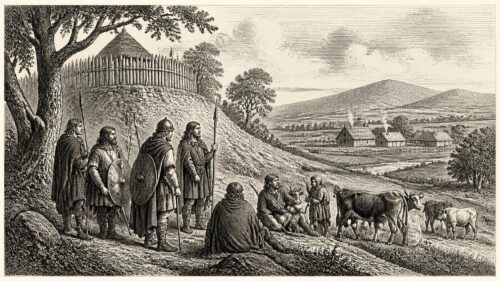
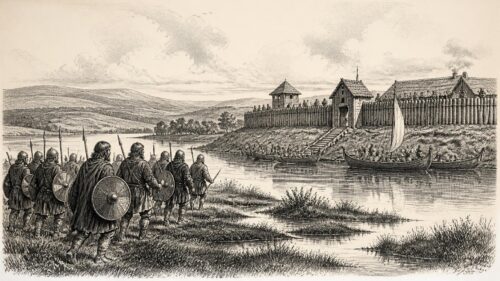
The most dramatic firmly placed event was the killing of Brian Bregach Mag Samradain, chief of Tullyhaw in what is now north-west County Cavan. Annals of Connacht records that Áed Brefnech Ó Conchobair and Clann Muirchertaigh killed him in his own house at Coologe on the “third day of summer”. The annal’s seasonal wording should be retained rather than converted into an invented modern date. Its emphasis on the domestic setting is striking: this was not simply a clash between armed forces in open country, but a calculated attack on the residence of a regional ruler.
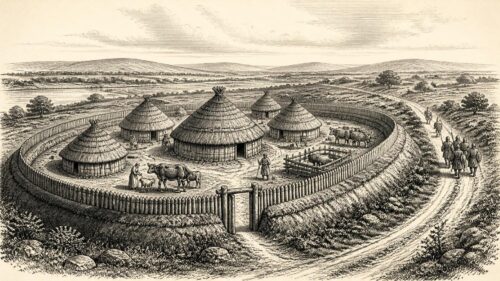
Mag Samradain’s territory lay within the politically fractured borderlands of Breifne, where lordship depended on kinship, clientage, cattle, armed followers and the ability to protect dependants. The annalist’s conventional praise of Brian as generous and valiant is not neutral biography, but it matters. Generosity was a political virtue: a chief demonstrated standing by feeding and rewarding followers, maintaining hospitality and distributing the proceeds of lordship. His death therefore threatened more than one household. It could alter local alliances and the terms on which lesser families held land or owed service.
Other Connacht entries reveal the same vulnerability of dynastic society. Donnchad, son of Domnall Ó hEgra, described as a princely figure of Luighne, was killed treacherously by his kinsman Brian Carrach Ó hEgra. Sadb, daughter of Áed Buide Ó Néill and wife of Tadc son of Andrias Ó Conchobair, died at the beginning of spring. Her death was not presented as a political crisis, yet the marriage itself demonstrates how leading families connected territories across Ireland: an Ó Néill woman of Ulster was married into the Ó Conchobair world of Connacht. Kinship could furnish diplomacy and support, but, as the killings show, it did not remove rivalry within a lineage.
The Death of Thomas Fitz Maurice
In Munster, Thomas fitz Maurice FitzGerald died on 4 June 1298, a date preserved in the royal documentary record and consistent with the annalists’ notice of his death. Gaelic sources call him the “Crooked Heir”, while the Annals of Inisfallen praise him as exceptionally modest, hospitable and capable among Munster’s barons. He was lord of Decies and Desmond, and his death mattered because his inheritance linked landed power in Limerick, Kerry, Cork, Waterford and Connacht. His estates were not a single compact block: they were a scattered network of manors, castles, boroughs, rents, churches and lordly rights.
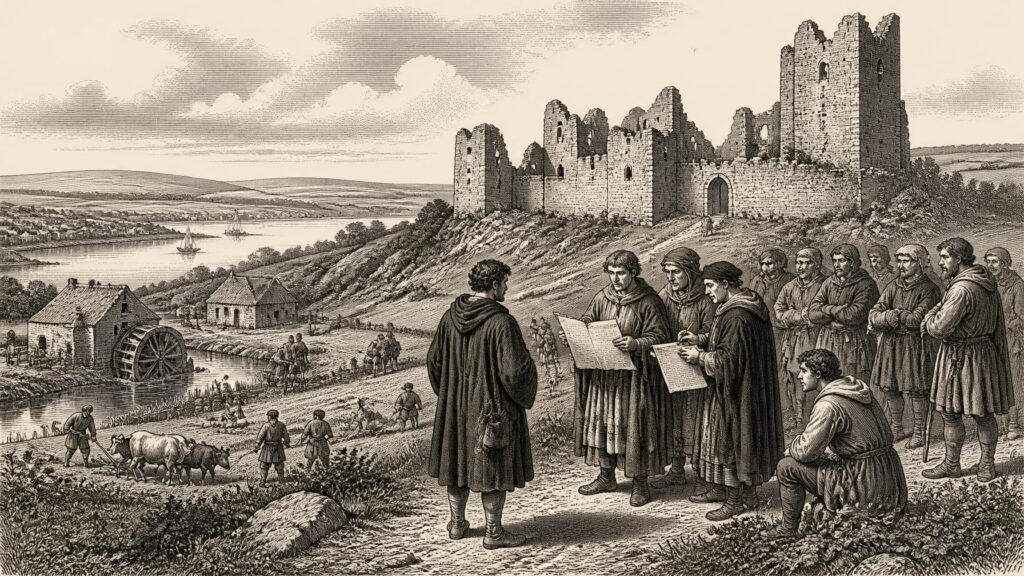
The Crown promptly ordered an extent, or sworn valuation, of his lands. Such records were drawn up to establish what was held, what income it produced and what rights passed into royal custody during the minority of an heir. Their value lies in their closeness to the working countryside. At Glenogra in County Limerick, jurors counted 300 acres of demesne arable land, meadow, pasture, a grove supplying rods for ploughs, a pool, and land cultivated by betagii, a dependent agricultural population. Hand-mills, rents, court profits and livestock resources could all be valued. This was a landscape worked not merely for grain but through a mixture of cultivation, grazing, woodland products, milling and customary dues.
The estate evidence also cautions against imagining lordship as uniformly prosperous. At some places pasture could not be let; at others, lands were described as waste. In Kerry, a hall, chambers, grange and threshing floor at one manor yielded nothing “owing to war”. Elsewhere jurors reported holdings unproductive because of poverty of soil, lack of tenants or danger from robbers. These notices do not prove a general collapse across Munster, but they demonstrate that income on paper was exposed to conflict, insecurity and environmental limits. Lordship demanded constant maintenance: a rent was valuable only if tenants could be found, crops raised, roads used and courts enforced.
Dungarvan’s Uneven Prosperity
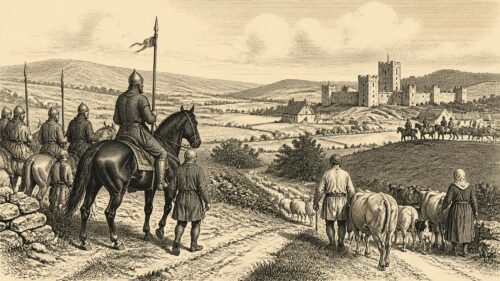
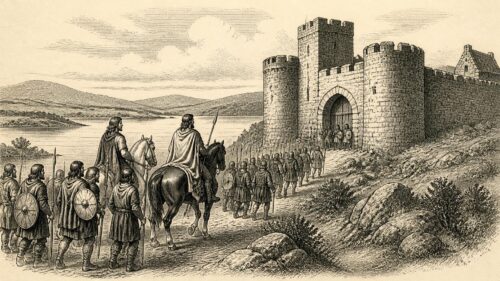
The post-mortem enquiries provide an unusually vivid view of Dungarvan and its hinterland. The detailed survey there was taken on 2 January 1299, just months after Thomas’s death, and is therefore evidence for the immediate condition of a lordship reshaped by the events of 1298. It found the castle in bad repair: unroofed, nearly levelled in places, with a new tower likewise unroofed and a stone house beyond the gate in poor condition. Castles were symbols of authority, but this report exposes the cost of sustaining them. A fortress could be strategically important while also being an expensive, decaying asset.
Yet Dungarvan remained a functioning town and market centre. Its burgesses held land in burgage and paid a substantial annual rent; mills operated on both sides of the settlement; and the lordship drew income from the primage of ale and fish, pannage for pigs in woodland, turf-cutting, hand-mills, court perquisites and local officialdom. One tenant’s rent was even rendered in 1,000 cloves of garlic. Such particulars give a more human scale to the economy. Town and countryside were interdependent: grain and meadow supported households, water powered mills, the coast and riverine environment supplied fish, woods fed pigs and provided timber, while craft, tolls and legal payments turned movement and exchange into revenue.
The language of the extent also records a mixed population without reducing it to a modern ethnic map. Some lands were held by people described as English, Irish or both; other tenants bore Gaelic names while participating in the rents and courts of a FitzGerald lordship. The document’s categories reflect the assumptions of royal administration, not fixed cultural boundaries. In practice, the south-west contained communities connected by tenancy, marriage, markets, military obligations and dispute as well as by language or ancestry.
Dublin Government and Wider War
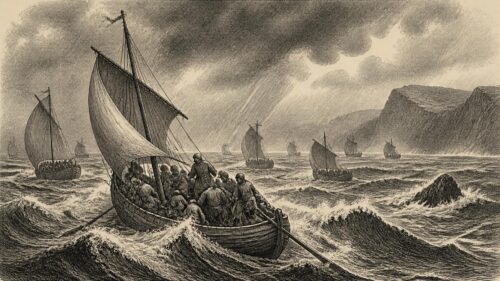
Government in the Lordship of Ireland continued to serve the wider dominions of Edward I. On 7 February 1298, an order issued at Dublin directed payment of 100 marks to buy corn and malt, hire a ship and send the supplies to Carlisle Castle. The destination lay on the northern English frontier during Edward’s war against Scotland. The order is a small but revealing sign that Irish revenues, foodstuffs, shipping and administrative capacity could be drawn into conflicts beyond the island. It does not show Ireland acting as a unified participant in that war; it shows the Dublin administration operating within a king’s cross-channel military system.
John Wogan, the justiciar, remained central to that system. A June record ordered a substantial payment towards his annual fee. The routine character of this entry is important. Royal government did not disappear because authority was contested beyond its strongest counties and towns. Rather, it worked through an uneven infrastructure of Exchequer payments, sheriffs, escheators, castles and sworn juries. The FitzGerald extent itself depended on that machinery, even where it documented manors affected by war or unable to yield revenue.
Churches, Office and Memory
Ecclesiastical notices form another thread in the year. Fergal Ó Fergail, bishop of Tír Conaill, died; Tomas Ó hOirechtaig, abbot of Assaroe, also died; and Uilliam Ó Finnáin, abbot of Kilbeggan, assumed the bishopric of Clonmacnoise. These entries remind us that monasteries and episcopal sees were not marginal to public life. They were centres of worship, learning, landed management, hospitality and record-keeping. An abbot moving to a bishopric also indicates that ecclesiastical advancement connected communities far beyond an individual monastery.
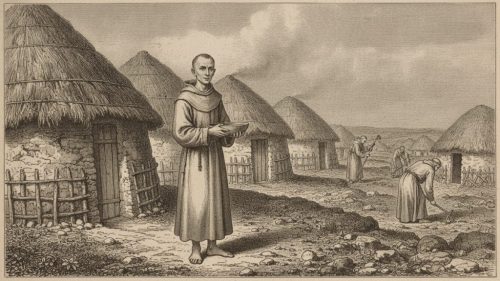
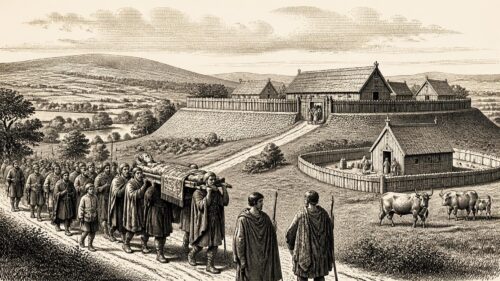
At Cork, Ragnailt, daughter of Brian’s son, was buried on 1 July in the choir of the church called by the Annals of Inisfallen the Discalced Friars. The precision of the burial notice contrasts with the sparse record for most people. It reveals the importance of friaries as burial places for elites and as urban religious institutions. The wider late-thirteenth-century context was one in which mendicant orders operated across Gaelic and Anglo-Irish society, even as tensions over language, allegiance and control could surface within religious life.
One apparent 1298 death requires particular care. Annals of Connacht places Domnall Ruad Mac Carthaig, king of Desmond, among the year’s deaths. But other evidence places him alive afterwards, and the Annals of Inisfallen records his death under 1301, while modern biographical work dates it to February 1302. He should therefore not be counted as securely dead in 1298. The discrepancy is a useful warning: annals are indispensable, but their chronological headings and retrospective compilations must be tested against one another.
A Year Seen Through Records
Thus 1298 is best understood not as the year of one decisive Irish battle, but as a year in which sources briefly illuminate the practical workings and fragility of power. Coologe showed the lethal stakes of Gaelic regional politics. Thomas fitz Maurice’s death opened a major inheritance and generated a remarkable survey of land, labour, market dues and decay. Dungarvan’s rents and ruined castle reveal prosperity and weakness side by side. Dublin’s orders linked the Lordship to Edward I’s external wars, while bishops, abbots and friars continued to shape religious and social life. Together these fragments preserve an Ireland whose local worlds were distinct, connected and continually negotiated.
Source References
Hover over a number to see the source. Select it to open the source.

- [1] Annála Connacht
- [2] Annals of the Four Masters
- [3] Annals of Inisfallen, Part 81
- [4] Annals of Ulster otherwise Annala Senait, Annals of Senat
- [5] Calendar of Documents Relating to Ireland, Volume 4, Item 551 (1298–1299)
- [6] Calendar of Documents Relating to Ireland, Volume 4, Item 480 (20 January 1298)
- [7] Calendar of Documents Relating to Ireland, Volume 4, Item 580 (1298–1299)
- [8] Close Roll 26 Edward I (1297–1298), Item 13
- [9] Close Roll 26 Edward I (1297–1298), Item 29
- [10] MacCarthy (Mac Carthaig), Domnall Ruad
- [11] FitzGerald, Maurice fitz Thomas
- [12] FitzGerald, John fitz Thomas
- [13] King John’s Castle (Dungarvan Castle)
- [14] County Waterford City Urban Archaeology Survey
- [15] The Earls of Desmond in the Fourteenth Century
- [16] From Boom to Bust: The Lordship of Ireland and the European ‘Commercial Revolution’
- [17] A New History of Ireland: Volume II, Medieval Ireland 1169–1534
- [18] Sefraid Ó Fearghail and Anghaile, 1271–1318
- [19] ‘Ireland Corporate of Itself’
- [20] Two Nations, One Order: The Franciscans in Medieval Ireland
- [21] Annales Hiberniae
Primary Sources
- Annála Connacht
- Annals of the Four Masters
- Annals of Inisfallen, Part 81
- Annals of Ulster otherwise Annala Senait, Annals of Senat
- Calendar of Documents Relating to Ireland, Volume 4, Item 551 (1298–1299)
- Calendar of Documents Relating to Ireland, Volume 4, Item 480 (20 January 1298)
- Calendar of Documents Relating to Ireland, Volume 4, Item 580 (1298–1299)
- Close Roll 26 Edward I (1297–1298), Item 13
- Close Roll 26 Edward I (1297–1298), Item 29
- MacCarthy (Mac Carthaig), Domnall Ruad
- FitzGerald, Maurice fitz Thomas
- FitzGerald, John fitz Thomas
- King John’s Castle (Dungarvan Castle)
- County Waterford City Urban Archaeology Survey
- The Earls of Desmond in the Fourteenth Century
- From Boom to Bust: The Lordship of Ireland and the European ‘Commercial Revolution’
- A New History of Ireland: Volume II, Medieval Ireland 1169–1534
- Sefraid Ó Fearghail and Anghaile, 1271–1318
- ‘Ireland Corporate of Itself’
- Two Nations, One Order: The Franciscans in Medieval Ireland
- Annales Hiberniae