Ragnall’s Son at Dún Lethglaise942 CE
In 942, Dublin Norse forces under Blacair son of Gothfrith ravaged the wealthy ecclesiastical centres of Clonmacnoise and Kildare, demonstrating their reach beyond the coast amid fractured Irish and Scandinavian politics. In Ulaid, a son of Ragnall plundered Dún Lethglaise, but Matudán, king of Ulaid, swiftly killed him after pursuing the raiders from their island refuge. The year also brought the death of Faelán, long-serving king of Leinster, and killings linked to Congalach of Brega’s rising power. Deaths of senior churchmen at Clonmacnoise and Clonard underscored churches’ political and economic importance, resilience, and vulnerability to warfare across the island alike.
Dateline
A Year of Raids and Retaliation
The Irish annals place a concentrated sequence of events in 942, though their year-headings do not always align neatly with modern calendar reckoning. The Annals of Ulster label this section “AD 941 alias 942”, while the related Chronicon Scotorum enters comparable material under 942. Modern historical reference works accordingly treat the raid on Dún Lethglaise, now Downpatrick, and Blacair’s attacks on Clonmacnoise and Kildare as events of 942. No source supplies a day or month for these incidents. What can be said securely is that this was a year in which the Norse rulers and war-bands associated with Dublin struck at ecclesiastical centres across the island, while Irish rulers answered with local and regional force.
The year belongs to a tense interval in which political authority in Ireland was divided among powerful dynasties rather than concentrated in a single state. Donnchad Donn of Clann Cholmáin remained king of Tara and the leading southern Uí Néill ruler. In the north, Muirchertach na Cochall Craicinn, king of Ailech, had recently imposed severe pressure on Dublin and was a formidable rival and, at times, ally of Donnchad. The Dublin Norse were not outsiders merely visiting Ireland: their rulers were embedded in the politics of Ireland, Britain and the Irish Sea, holding a wealthy coastal settlement, ships, armed followings and connections across the sea. Yet their position was vulnerable, and raids on rich church settlements were one means of replenishing wealth and asserting power.
Blacair, son of Gothfrith, was the principal Dublin leader associated with the attacks recorded in 942. His father had ruled both Dublin and York, but that wider family dominion had fractured. Blacair’s position in Dublin had to be made and defended amid rivalry with close kinsmen. The annals’ account of his campaigning therefore reveals more than religious hostility or simple piracy. Raiding churches could produce livestock, precious metal, foodstuffs, hostages and captives; it could also demonstrate that a ruler of Dublin still possessed the military reach to penetrate Ireland’s interior.
Clonmacnoise and Kildare Ravaged
The Annals of Ulster state plainly that Cluain Moccu Nóis, Clonmacnoise, and Cell Dara, Kildare, were ravaged by the “heathens” of Dublin. The terminology is that of Christian annalists, not a neutral ethnic description, but the targets themselves explain the gravity of the notice. These were not isolated chapels. Each was a major ecclesiastical community with landed resources, dependent population, clergy, artisans, guests and stores. Raiding them meant entering places where spiritual authority, economic assets and political patronage met.
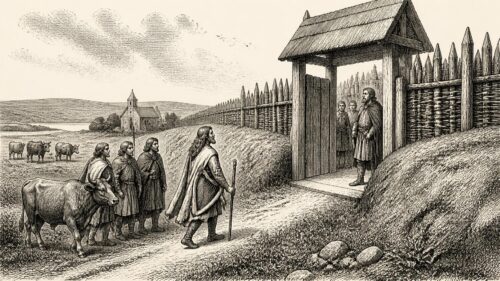
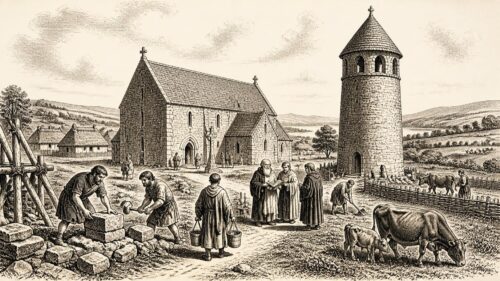
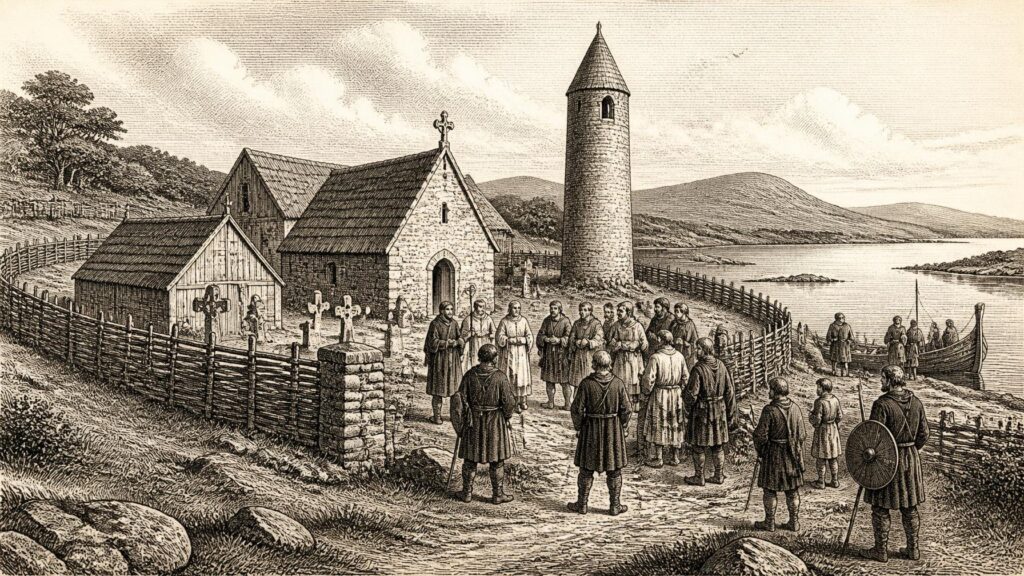
Clonmacnoise stood on the Shannon, beside a route that linked the island’s northern and southern waterways with the east–west land corridor along the eskers. Its position made it a centre of learning, worship, exchange and royal commemoration, but also exposed it to people moving through the midlands. By the tenth century its churches were increasingly built in stone, while much of the broader settlement—dwellings, workshops and service buildings—remained timber. A “ravaging” need not mean that every structure was burned or that the community ceased to function. It does, however, indicate a violent seizure of goods and people, and probably destruction sufficient to merit commemoration in annalistic record.
The attack came at a particularly difficult moment for Clonmacnoise. The annals also record the death of Dúnchad son of Suthainén, its bishop, in this year. That juxtaposition should not be mistaken for proof that he died in the raid: no surviving annal makes that connection. But his death and the plundering of the community show how exposed even a great church could be when leadership changed. Episcopal and abbatial office brought religious responsibilities, but also involved the management of estates, client relationships, hospitality, books, treasure and the protection of a sizeable lay population.
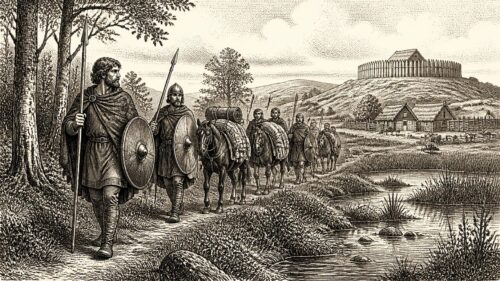
Kildare was similarly more than a devotional destination. Associated with Brigit and long favoured by powerful Leinster dynasties, it was an institution of prestige and wealth on the approaches to Dublin’s wider hinterland. The raid demonstrates the reach of Blacair’s Dublin force into the central plain. It also reminds us that Viking-age conflict in Ireland was not confined to the coast. Rivers, roads, fords and traditional overland routes connected the port settlement to the midlands, while raiding parties could move swiftly enough to threaten religious centres whose fame and resources made them conspicuous targets.
The Attack on Downpatrick
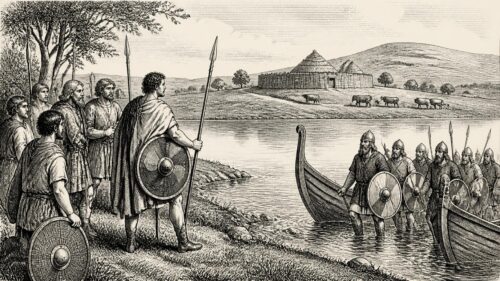
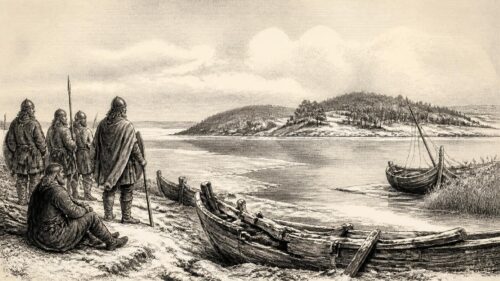
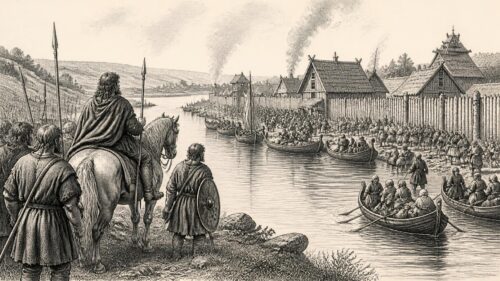
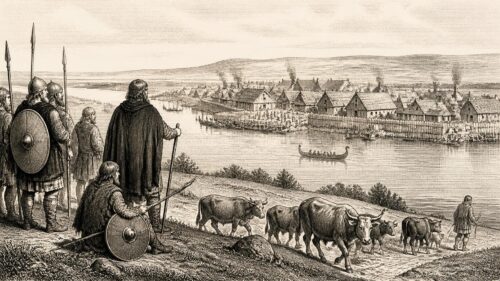
In the north-east, Dún Lethglaise suffered another assault. The settlement was an important church of the Ulaid and was linked in ecclesiastical tradition with Patrick. The fuller account in Chronicon Scotorum identifies the attackers as the force of a son of Ragnall. It says that Dún Lethglaise was plundered, but that Ragnall’s son was killed by Matudán, king of Ulaid, within a week. The Annals of Ulster, less specific about the identities, likewise presents the raiders’ undoing as a swift reversal: their island refuge was taken, their leader fled to land, and he was killed by the Irish.
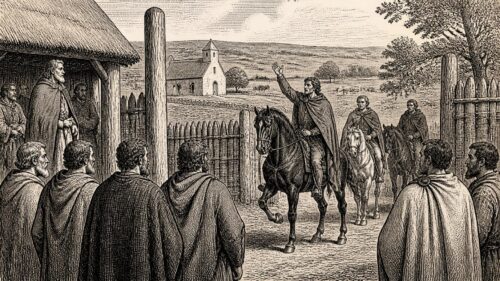
The language of divine vengeance in the Ulster annal—God and Patrick avenged the violation—expresses the moral frame in which the church recorded the episode. It should not obscure the political reality behind it. Matudán’s response was a demonstration that the king of Ulaid could protect, or avenge, a major Patrician church in his sphere. The reference to an island base also hints at the geography of warfare around the loughs and coasts of Ulster. Fleets and temporary refuges made raiders mobile; local knowledge, rival seafarers and control of landing places could turn that mobility against them.
The killing of Ragnall’s son was significant precisely because it did not end Scandinavian activity. Norse groups were divided by kinship rivalry and competing centres of power; a setback for one leader could create opportunity for another. Still, the event offers an important corrective to any picture of passive Irish victims and invincible Viking raiders. The churches were vulnerable, but armed Irish forces could pursue raiders beyond the initial attack and eliminate their commander. In 942, retaliation was not merely rhetorical.
Leinster’s Uncertain Succession
Political instability was also evident in Leinster. Faelán son of Muiredach, king of Leinster since 917, died in 942. Chronicon Scotorum adds the striking detail that he died from a fall, though it does not explain where or under what circumstances. His long reign had been unusually durable in a province where the rotating branches of the Uí Dúnlainge dynasty shared the kingship. Faelán’s death opened space for his son Lorcán, but this was not a settled succession: Lorcán’s career would prove brief and violent in the following year.
The annals also record that Congalach son of Máel Mithig killed two sons of Lorcán son of Donnchad. These were not the same Lorcán who succeeded Faelán in Leinster. The episode instead points to lethal competition within the wider aristocracy of Brega and the southern Uí Néill world. Congalach, based at Cnogba or Knowth, was already a rising figure. His elimination of potential rivals in 942 was one of the moves through which he consolidated influence before the deaths of Muirchertach in 943 and Donnchad Donn in 944 transformed the contest for Tara.
Another ecclesiastical death belongs to the year: Máel Mochta, superior of Clonard, “rested”, in the annalists’ conventional formula. Clonard was a distinguished church of the midlands with close connections to kingship and learning. The sparse notice cannot tell us much about the circumstances of his death, but it is a useful reminder of what the annals preserve alongside battles and raids. They tracked the passing of senior churchmen because monasteries and churches were corporate landholders, intellectual communities and political actors. A change of superior could matter far beyond the enclosure.
What 942 Reveals
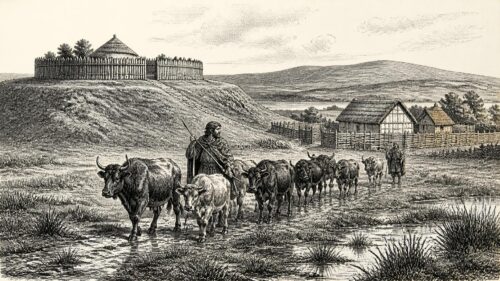
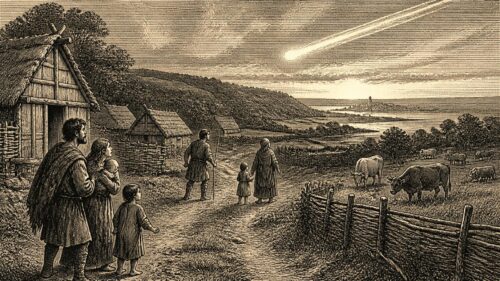
For most people, the annals’ short entries conceal more than they reveal. Farmers and herders supplied the food, animals and labour on which kingdoms, monasteries and war-bands depended. A raid might mean the loss of cattle, stored grain, tools, relatives taken captive, or the interruption of seasonal work. At church settlements, priests, students, tenants, craftspeople and visitors all faced the danger. Yet the survival of the institutions in the record also indicates resilience: neither Clonmacnoise nor Kildare disappeared after Blacair’s attack, and Dún Lethglaise continued as a major ecclesiastical place.
942 was therefore not a single national crisis, nor a neat struggle between “Irish” and “Viking” worlds. It was a year of connected local shocks. Dublin’s leaders projected force into the midlands; a raiding leader was destroyed in Ulaid; a long-serving Leinster king died; and competitors within Brega removed rivals. Churches stood at the heart of these developments because they concentrated wealth, learning, legitimacy and people. The year’s annalistic notices are brief, but together they show an Ireland in which political ambition, maritime violence and religious institutions were inseparable.
Primary Sources
- The Annals of Ulster: Year U942
- The Annals of Ulster: Year U943
- The Annals of Ulster
- Chronicon Scotorum
- Annals of the Four Masters (English translation)
- Annals of the Four Masters (Irish text)
- Blacair (Blakkr)
- Muirchertach na Cochall Craicinin
- Donnchad Donn
- Congalach Cnogba
- Cellachán Caisil
- Niall Glúndub
- Clonmacnoise Monastic Site
- Clonmacnoise Visitor Guide
- Clonmacnoise Monastic Site: Highlights
- Irish School of Illumination, c. 650–1100
- High Crosses
- Evidence for Vikings by County in the Irish Annals
- Dinnseanchas, Volume IV, 1970–71
- Exploring the Irish Annals
- Irish Texts at CELT
- List of Published Texts at CELT