Knockaulin292 CE
Knockaulin in County Kildare is one of the main Irish royal sites and preserves a multi-phase Iron Age sequence. The excavated timber structures and entrance works are dated by radiocarbon and associated parallels to a broad span from the third century BCE into the fourth century CE, which encompasses 292 CE. The evidence does not identify a single event in that year, but it does show that the site remained part of a long Iron Age ceremonial landscape at the time.
Dateline
Site Context
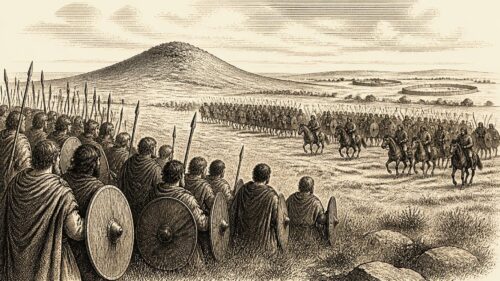
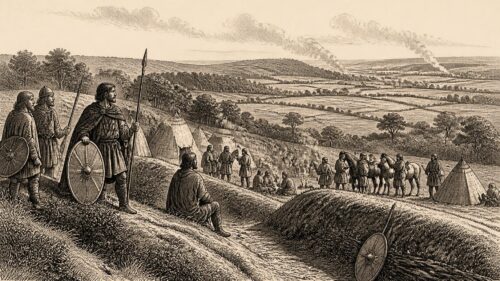
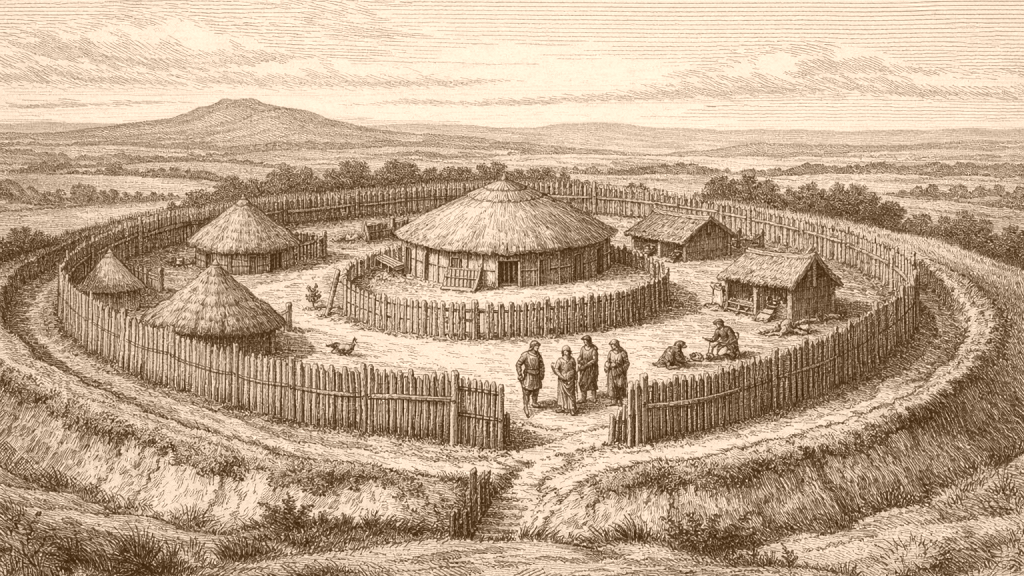
Knockaulin, also known as Ailenn or Dún Ailinne, is one of the Irish royal sites discussed in archaeological terms. The site is a large oval earthwork with an east-side entrance, and the excavation sequence at its center shows several successive timber and earthen phases rather than a single occupation. [1]
The site evidence places its main Iron Age phases in a broad span extending from the third century BCE into the fourth century CE. That range is the relevant historical context for the archive year 292 CE, even though no excerpt here assigns a specific event to that exact year. [1]
Dating Range
The central phases at Knockaulin are described as White, Rose, Mauve, Emerald, Dun, and Flame, with the White, Rose, and Mauve entrances oriented toward sunrise around 1 May. Radiocarbon dates for the later phases cluster between the third century BCE and the fourth century CE, while stylistic parallels for associated metalwork are mainly first century BCE to first century CE. [1]
This dating means that 292 CE falls within the broad archaeological span represented at the site, but the evidence remains general rather than year-specific. The excerpted material supports a long-lived Iron Age sequence, not a securely isolated event for that single year. [1]
Source References
Hover over a number to see the source. Select it to open the source.