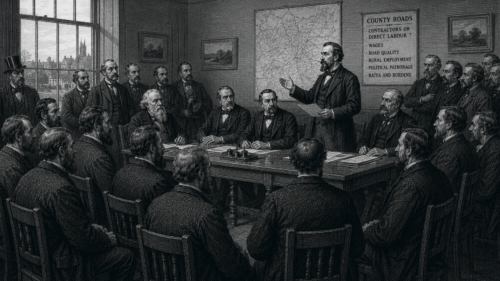
Sessions Disputed
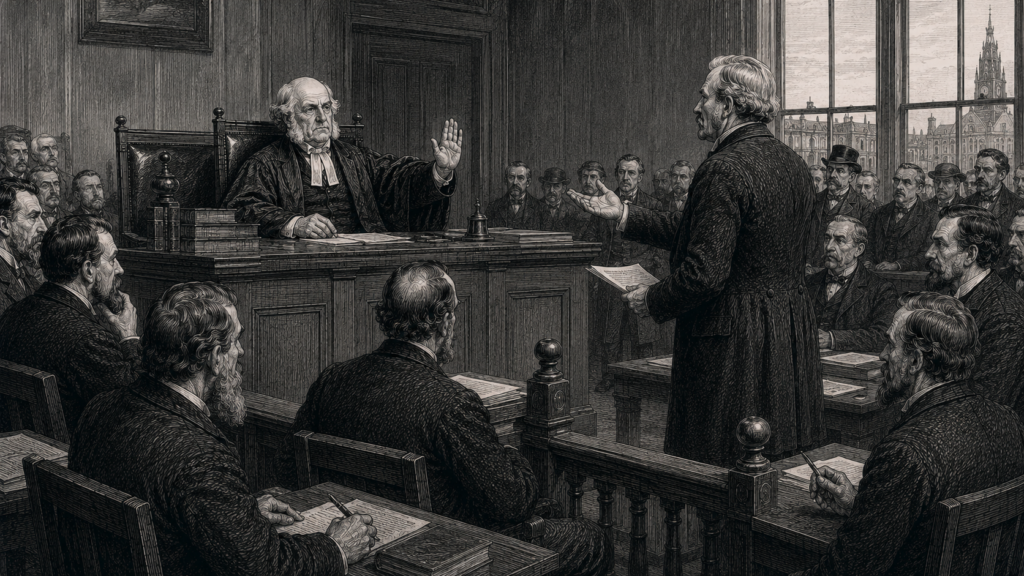
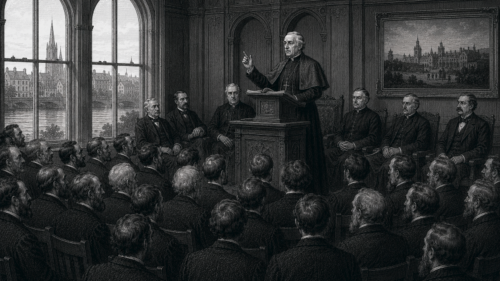
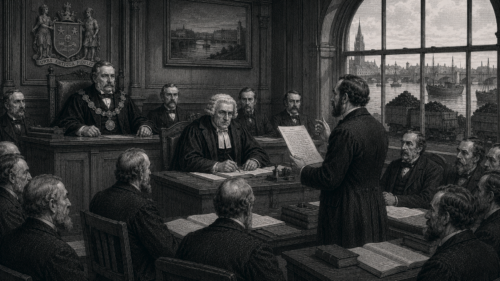
Judge Richard Adams rejected demands that Limerick’s annual Quarter Sessions should be increased from four to eight when he opened the Hilary sittings at the County Courthouse. He asked the barristers and solicitors present whether any member of the local profession supported the proposed change. No one answered in its favour. Adams concluded that the agitation had arisen neither from those practising before the court nor from any clearly demonstrated public demand. He therefore refused to treat the requested increase as a necessary reform and declared that he would continue holding the four established sessions unless legislation compelled him to do otherwise.
The proposal concerned the practical administration of justice rather than ceremony. As County Court judge and chairman of Quarter Sessions, Adams exercised civil and criminal jurisdiction over a wide range of business. The court heard civil bills, debts, tenancy disagreements, compensation applications, malicious-injury claims and criminal cases serious enough to fall beyond the ordinary work of Petty Sessions. Doubling the number of sittings might have shortened waiting periods and spread the court’s workload more evenly across the year. It would also have required additional judicial attendance, legal preparation, jurors, officials and public expenditure.
Adams referred critically to a deputation that had approached the Lord Chancellor seeking the additional sittings. He contrasted the Limerick position with Galway, where the Recorder had reportedly agreed to hold eight sessions annually. The judge maintained that arrangements suitable for one place should not automatically be imposed upon another without evidence of need. His remarks combined humour with a firm defence of judicial independence. He made clear that informal pressure would not alter Limerick’s court calendar and suggested that any attempt to require additional sessions would need the direct authority of Parliament.
The dispute mattered to ordinary people throughout Limerick city and county. A delayed civil claim could leave a tradesman without payment, a tenant uncertain of possession or a family waiting for compensation after property had been damaged. Criminal proceedings also affected witnesses, defendants, victims and jurors required to attend the courthouse. More frequent sittings might improve access to justice, but they could equally increase legal expenses and county costs if the existing workload did not justify them. The silence of the assembled legal practitioners strengthened Adams’s argument that the demand had not emerged from those confronting the court’s delays and pressures every day.
No immediate alteration followed the judge’s declaration, and the traditional quarterly arrangement remained in place. The confrontation revealed an important tension within Irish administration at the beginning of the twentieth century: central authorities and public deputations could advocate uniform reform, while local judges claimed detailed knowledge of their own courts. Adams did not deny that access to justice mattered; he disputed the evidence that eight annual sittings would improve it in Limerick. His refusal placed responsibility upon reformers to demonstrate genuine local need before asking the county to support a larger and potentially more expensive judicial system.
- Irish Times, “Jurisdiction of Courts: Judge Adams’s Opinion,” 3 January 1900, p. 6.
- Freeman’s Journal, report on the opening of the Limerick Quarter Sessions and Judge Adams’s opposition to more frequent County Court sittings, 4 January 1900, p. 6.
- Munster News, report on Judge Adams opening the Hilary Quarter Sessions at Limerick County Courthouse, January 1900; exact issue and page not confirmed.
- County Officers and Courts (Ireland) Act 1877, 40 & 41 Vict., c. 56, provisions governing Irish County Courts, Civil Bill Courts and chairmen of Quarter Sessions.
- National Archives of Ireland, Court Records Pre-1922, Courts of Crown and Peace, Quarter Sessions and County Court records.