Explore
Each page shows 5 articles and 5 images from 203 articles and 544 images
Explore the Archives

Limerick Storyteller
Frank McCourt was born in Brooklyn, New York, on 19 August 1930, the eldest surviving child of Irish immigrant parents Angela Sheehan and Malachy McCourt. During the Great Depression, the family returned to Ireland, eventually settling in Limerick, where unemployment, illness, overcrowding and hunger shaped his childhood. The McCourts lived in poor housing, including homes on Roden Lane, while Frank attended local schools and worked small jobs to help his family. These experiences later became the foundation of his writing, although he transformed remembered events through humour, dialogue and carefully constructed scenes rather than presenting a detached historical record alone.
Read Article
Derry Siege
For Limerick, the siege of Derry in 1689 was an early turning point in the war that would eventually reach the Shannon and make the city the final Jacobite stronghold. The failure to secure Derry allowed Williamite resistance to survive in Ulster, delayed Jacobite control of Ireland and gave William time to organise a major invasion. The decisions taken before Derry therefore helped shape the later sieges of Limerick and the final settlement of the war.
Read Article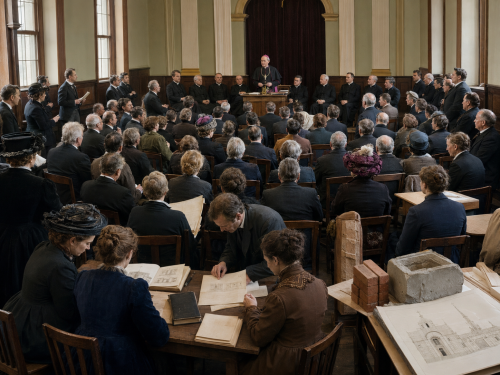
Kincora Committees
A large public meeting assembled in the Lecture Hall of Limerick’s Catholic Institute to organise a fête and fancy fair for the new church of St Joseph then rising within St Michael’s Parish. The gathering, reported on 4 January 1900, was promoted by the parish clergy and presided over by Bishop Edward Thomas O’Dwyer. Clergy, women and men attended in considerable numbers, demonstrating broad interest in completing the additional parochial church. The meeting agreed that the fundraising celebration would take place in June and established committees to undertake the detailed work required before the event could open.
Read Article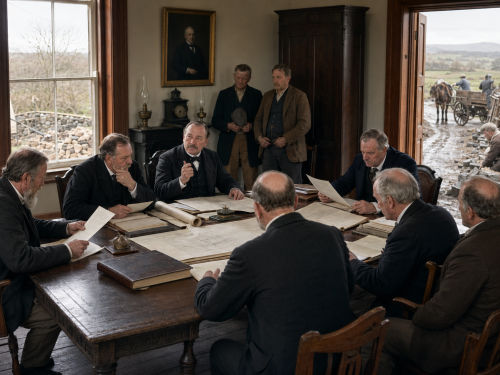
Contracts Shortened
Limerick No. 1 District Council altered the system governing maintenance and repair contracts for public roads when members decided that future agreements would run for twelve months rather than the four-and-a-half-year term previously used. The decision followed an adjourned quarterly meeting held under the chairmanship of William Noonan and reported on 18 January 1900. Road tenders rejected at an earlier sitting had been referred to Limerick County Council, which declined to consider them and returned the entire question to the District Council. Members were therefore required to reconsider both the tenders and the basis upon which future road work would be awarded.
Read Article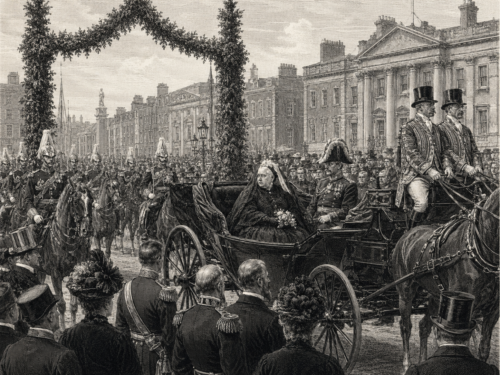
Royal Farewell
Queen Victoria arrived at Kingstown today for what would prove to be her final visit to Ireland, beginning a three-week residence centred largely upon Dublin and the Vice-Regal Lodge in Phoenix Park. Although the royal party will not travel to Limerick, accounts of the landing, the ceremonial procession and the extensive public decorations are already attracting attention throughout the city and county. Unionist residents may regard the visit as an affirmation of loyalty to the Crown, while nationalists are likely to judge it against continuing demands for Home Rule, land reform and recognition of Ireland’s political grievances. The Queen travelled…
Read Article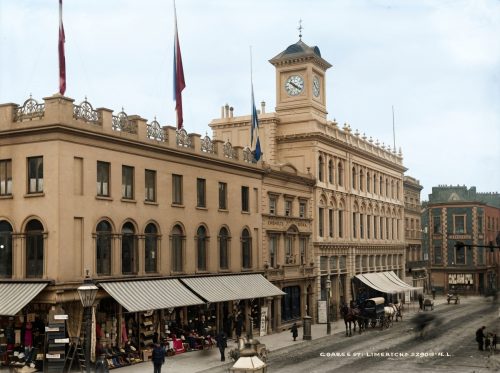
Street Limerick
In 1900, George Street, now O’Connell Street, formed the commercial heart of Edwardian Limerick. Its broad thoroughfare was lined with elegant Georgian buildings, busy shops, hotels and offices, while horse-drawn carts, carriages and pedestrians filled the roadway. Street traders added colour and activity to the city’s principal avenue. Among its notable establishments were the Cruises Royal Hotel, MacMahon’s Temperance Hotel and respected merchants such as O’Mahony & Company. The street reflected Limerick’s growing prosperity at the opening of the twentieth century, combining refined architecture with energetic daily commerce and serving as a central meeting place for residents, visitors and travellers…
View Image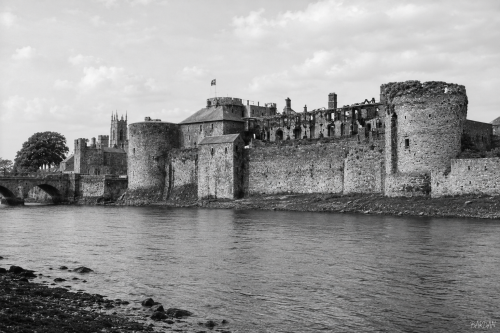
John’S Castle
King John’s Castle stands beside the River Shannon at Curragower Falls, with broken water, river rocks and the castle’s stone frontage visible across the scene. The round towers, curtain walls and riverside defences remain central, while the burned Castle Barracks appears roofless and blackened within the enclosure. Thomond Bridge is visible to the left, with nearby trees, older buildings and a church tower rising beyond the castle walls. The river surface shows ripples, reflections and shallow movement below the fortifications. The image presents the castle after damage, set within the wider early twentieth century Limerick urban riverside landscape after 1922.
View Image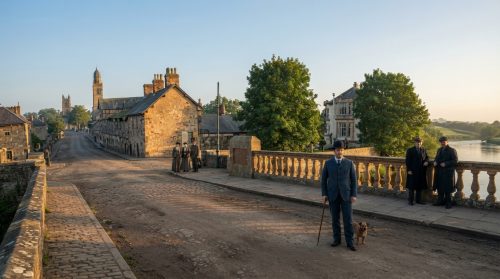
O’Dwyer Bridge
This rare 1932 photograph shows the newly completed Bishop O’Dwyer Bridge linking Limerick city with Corbally. Constructed between 1929 and 1931 at a cost of £21,308, the concrete structure replaced the older Park Bridge, which had served the district since 1798. It was named in honour of Dr Edward Thomas O’Dwyer, Bishop of Limerick from 1886 to 1917. The bridge represented a new era of engineering, transport and urban development, while maintaining a crossing essential to local life for generations. Nearly a century later, it remains a familiar landmark, practical route and enduring part of Limerick’s architectural and social history.
View Image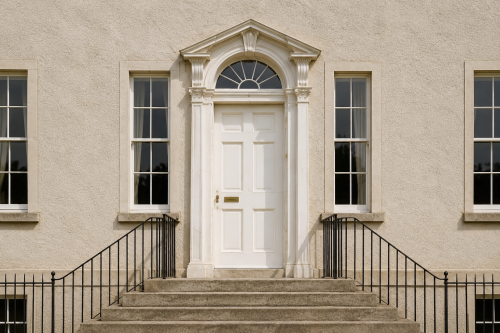
Co Limerick
Elm Hill, County Limerick, was built around 1790 for the Studdert family as an elegant Georgian country residence. The six-bay, two-storey house stood over a raised basement and contained spacious reception rooms, nine bedrooms, servants’ quarters, kitchens, cellars and service rooms. Following the Great Famine, it was offered for sale and described as being in excellent repair. The property remained substantial for generations but gradually fell vacant and deteriorated. A 2008 architectural survey praised its limestone doorcase, carved timber entrance, slate-hung elevations, fireplaces and decorative plasterwork. Its recognised importance led to designation as a protected structure under Irish planning legislation.
View Image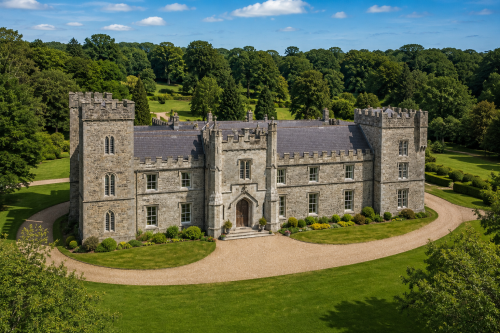
Castle Restored
This reconstructed view presents Glenduff Castle in County Limerick as it may have appeared before its destruction in 1922. The imposing residence combines the fortified character of an earlier seventeenth-century tower house with the Gothic Revival additions created for the Ievers family around 1840. Tall crenellated towers, pointed windows, battlements and a formal central entrance give the building a commanding presence. Set within carefully maintained lawns and mature woodland, the castle reflects the scale and confidence of a nineteenth-century Irish country estate. The image offers a plausible visual impression rather than a definitive record of its original appearance or grandeur.
View Image