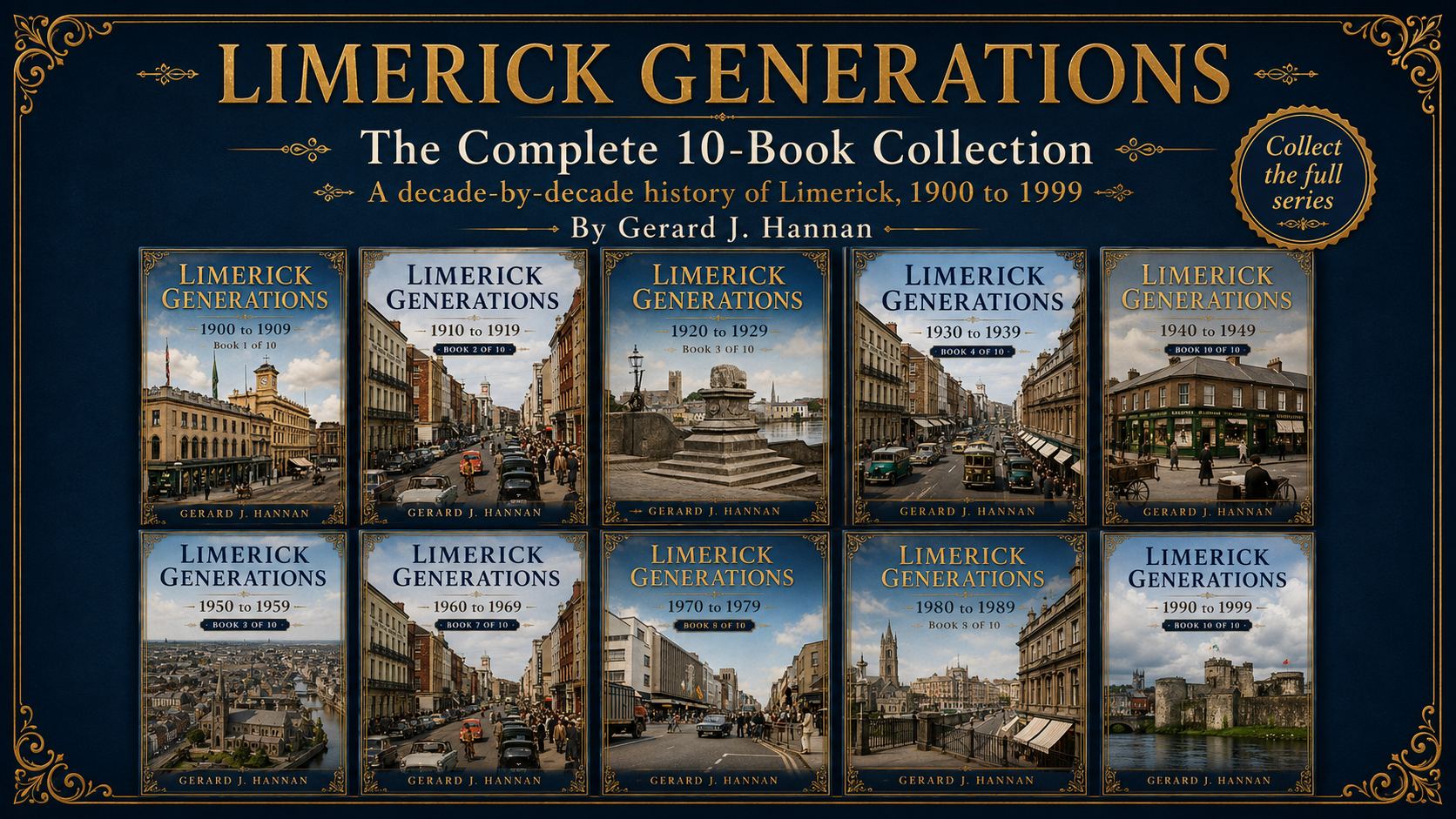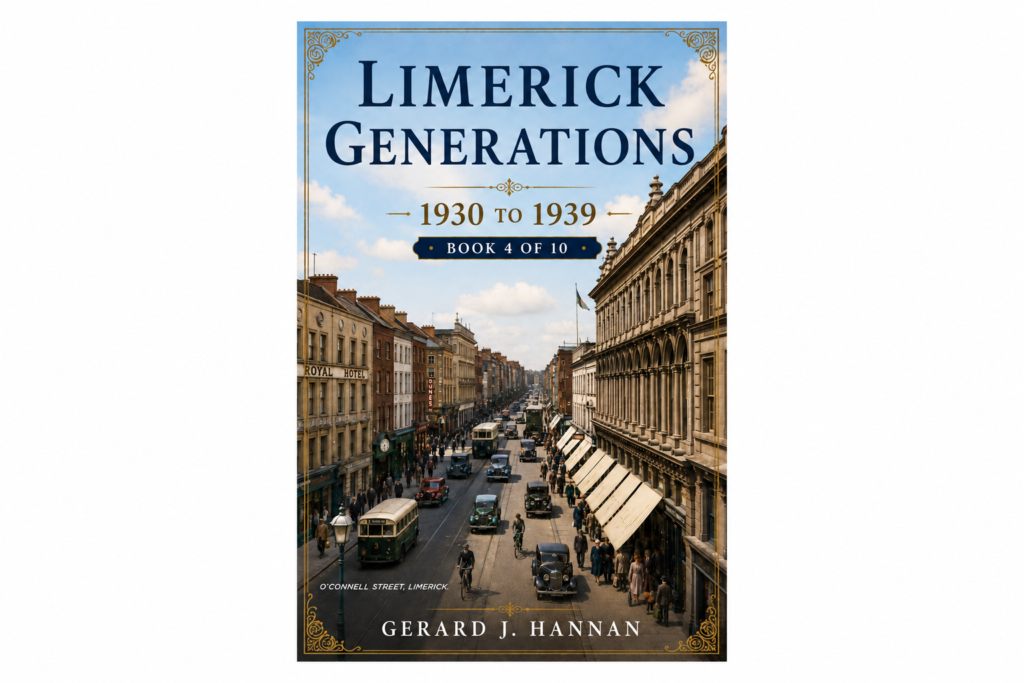
Limerick Generations 4
Book 4 of 10 : 1930 ~ 1939
Limerick Generations: 1930 to 1939 follows Limerick city and county through a decade marked by hardship, political tension and cautious modernisation. Independence had been achieved, but its promises remained incomplete for thousands facing unemployment, poor housing, low wages and emigration. Economic uncertainty entered homes through rent arrears, reduced spending, insecure work and dependence upon public assistance. Rural families confronted falling prices and limited opportunity, while urban workers competed for scarce employment. Yet the decade was not defined by decline alone. New policies, technologies and forms of leisure gradually altered daily life across streets, farms, workplaces and communities during these years.
The worldwide depression deepened pressures already present within Limerick society. Businesses struggled with weakened demand, labourers faced irregular hiring and families adjusted meals, clothing and fuel to shrinking incomes. Public bodies attempted to respond through relief schemes, housing programmes and limited employment initiatives, but need often exceeded available resources. Poverty appeared in workhouse records, court proceedings, council debates and charitable appeals, yet official language rarely captured the private strain of debt or hunger. For many households, survival depended upon women’s unpaid labour, extended family support, neighbourly help and the careful stretching of every shilling through each difficult week in Limerick.
The Economic War placed additional strain upon County Limerick, where farming remained central to household income and local trade. Disputes between the Irish and British governments over land annuities led to tariffs, falling cattle prices and uncertainty for producers. Farmers watched markets closely, reduced spending and postponed improvements, while shopkeepers and labourers felt the wider consequences of weakened rural purchasing power. Political supporters defended the policy as a necessary assertion of sovereignty, but critics pointed to hardship and disruption. The conflict revealed how international agreements and national decisions could reach into farmyards, fairs, shops, banks and kitchen-table calculations throughout Limerick.
Fianna Fáil’s rise transformed political life and reshaped expectations concerning government responsibility. Its leaders promoted economic protection, industrial development, welfare measures and national independence, challenging policies associated with Cumann na nGaedheal. In Limerick, these changes were debated through elections, newspapers, public meetings and conversations shaped by Civil War loyalties. New initiatives created hope among supporters, while opponents feared instability, excessive spending or renewed republican influence. Politics remained personal because families remembered arrests, losses and divisions from the revolutionary years. The decade therefore combined policy change with unresolved memory, making every election a contest over both Ireland’s future and its past.
Civil War divisions continued to influence life through the activities of the IRA, the Blueshirts and rival political organisations. Uniforms, marches, meetings and occasional confrontations reflected a society in which constitutional order still felt vulnerable. The Blueshirt movement drew support from those fearing republican violence and political disorder, while the IRA rejected the legitimacy of the state settlement and pursued its own revolutionary aims. Limerick communities often viewed both movements through local relationships rather than abstract ideology. Neighbours, relatives and former comrades could stand on opposing sides, ensuring that disputes remained rooted in remembered grievances, personal loyalties and unfinished arguments.
Events beyond Ireland increasingly entered Limerick’s political imagination during the 1930s. Fascism, communism, dictatorship and democracy were argued over in newspapers, sermons, trade union meetings and public lectures. Mussolini’s Italy, Hitler’s Germany and the Soviet Union became symbols in local disputes about authority, religion, labour and social order. The Spanish Civil War sharpened these divisions, inspiring sympathy for both the Republican government and Franco’s forces. Irish volunteers travelled to fight on opposing sides, while those at home interpreted the conflict through faith and politics. Europe’s ideological struggles therefore became part of Limerick’s own debates about freedom, justice and national identity.
Housing remained one of the decade’s most urgent social questions. Overcrowded tenements, poor sanitation and decaying dwellings endangered health and undermined family dignity, particularly in working-class districts of Limerick city. Public housing schemes offered escape from some of the worst conditions, replacing cramped rooms with new secure homes, gardens and improved services. Progress was uneven, and demand remained far greater than supply, yet rehousing changed expectations about what ordinary families could claim from local and national government. Each new estate represented more than construction. It altered neighbourhoods, daily routines and relationships, while placing health, privacy and domestic comfort within reach.
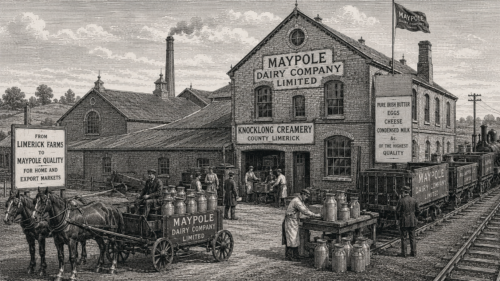
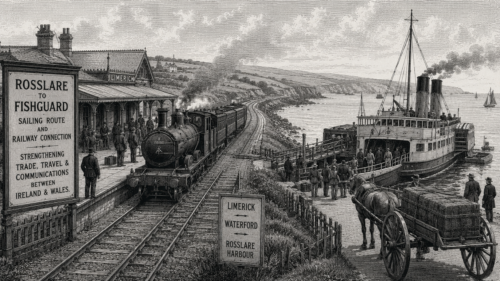
Modernisation also appeared through electricity, improved transport, industrial development and changing patterns of communication. Electric light transformed homes, shops and streets, though access varied between city and countryside. Buses and motor vehicles altered travel, while railways continued linking Limerick with markets, workplaces and ports. New industries promised employment and reduced dependence upon imports, even when their benefits were limited or uneven. Radio brought national speeches, music, sport and international news directly into domestic spaces. These developments gradually shortened distance and expanded awareness, allowing Limerick people to experience modernity not as a single revolution, but through accumulating changes in ordinary life.
Cinema, sport and dance halls provided relief from economic pressure and political anxiety. Picture houses offered glamour, comedy, romance and newsreels, connecting local audiences to distant worlds. Hurling, rugby, soccer, athletics and other sports strengthened parish, neighbourhood and civic identities, while matches created shared excitement across class and political boundaries. Dance halls gave young people new opportunities for courtship and sociability, though clergy and parents often watched changing behaviour with concern. Leisure was never merely escape. It revealed shifts in taste, gender relations, consumer culture and generational authority, showing how modern life entered Limerick through pleasure as well as policy.
Grounded in newspapers, council records, government reports, housing files, court proceedings, economic data and archival evidence, this volume reconstructs the 1930s through the lives of those who endured them. Farmers, workers, unemployed men, women, children, emigrants, activists and householders faced a decade of scarcity, conflict and adaptation. Some benefited from new housing, welfare, industry and technology, while others remained trapped by poverty or departure. By 1939, Limerick had changed materially and politically, but insecurity persisted. The decade ended beneath the gathering shadow of European war, leaving unfinished reforms and renewed fears for an uncertain future throughout city and county alike.

This Link Will Become Available Upon Publication On 22 July 2026.