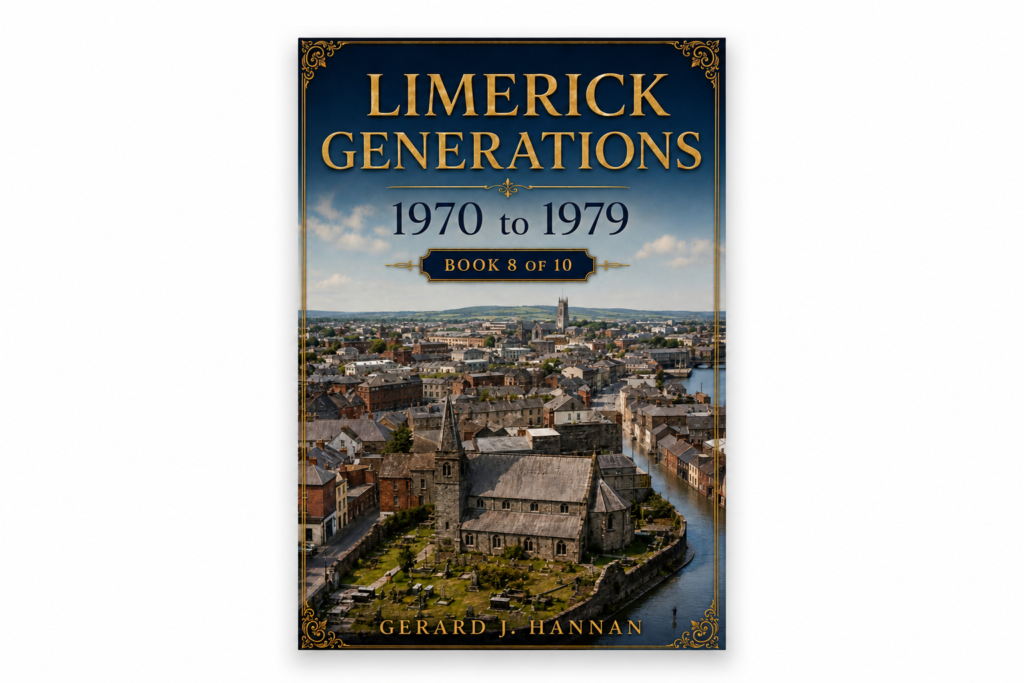
Limerick Generations
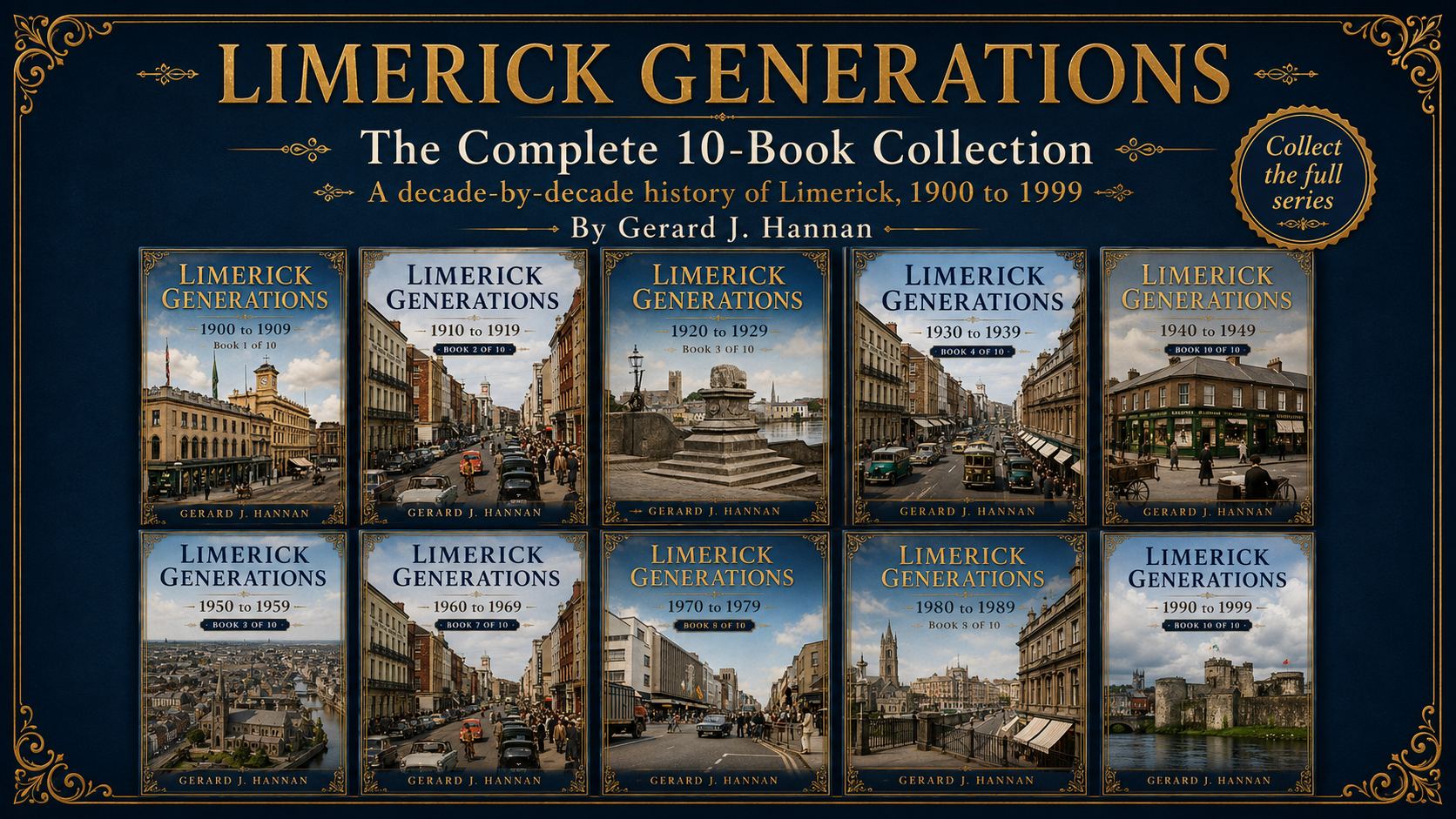
Book 8 of 10 : 1970 ~ 1979
Limerick Generations: 1970 to 1979 follows Limerick city and county through a decade of uncertainty, social change and uneven modernisation. Industrial expansion, wider education and growing consumer confidence raised expectations, but recession, inflation and unemployment repeatedly weakened security. Families measured national problems through rising prices, shrinking wages and the fear of redundancy. New factories offered opportunity, yet dependence upon outside investment left employment vulnerable to international shocks. The decade brought televisions, cars, modern housing and broader horizons into many homes, but prosperity remained fragile. Progress existed beside anxiety, and change often arrived without stability for many families across Limerick society.
The oil crisis exposed how dependent Limerick had become upon global markets, imported energy and modern transport. Fuel shortages, rising costs and inflation affected factories, farms, shops and households across city and county. Businesses faced reduced demand and higher expenses, while workers watched wages lose value. Families adjusted heating, travel and spending, often postponing purchases or relying upon credit. Economic pressure entered every part of daily life, from food prices to bus fares. The crisis weakened confidence in continuous growth and revealed that modernisation had brought new vulnerabilities alongside convenience, employment and improved living standards during the decade in Limerick.
Unemployment became one of the decade’s most persistent sources of fear. Young people left school or college with greater qualifications than earlier generations, yet many struggled to find secure work. Factory closures, reduced hours and redundancies damaged households that had trusted industrial development to provide stability. Emigration remained an option, particularly for those unwilling to wait through prolonged joblessness. Unemployment affected more than income. It shaped self-respect, family relationships, marriage plans and community confidence. In poorer districts, the absence of reliable work reinforced older inequalities, proving that educational expansion and economic growth had not removed insecurity entirely from Limerick life.
The Troubles in Northern Ireland entered Limerick through newspapers, television, political meetings, funerals, protests and private conversation. Violence produced fear and sorrow, but also disagreement over responsibility, legitimacy and national identity. Some expressed sympathy with republican aims, while others condemned armed struggle and worried about instability spreading southward. Security concerns affected policing, public events and political language. The conflict divided opinion within families, workplaces and communities, where historical memory shaped contemporary judgement. Limerick was geographically distant from the main violence, yet emotionally and politically connected to it, making the Northern crisis an unavoidable part of local life throughout the decade.
Women’s organisations challenged discrimination in employment, law, education and family life. Campaigners demanded equal pay, access to contraception, legal reform and greater control over personal decisions. Their arguments confronted deeply rooted assumptions about marriage, motherhood, sexuality and authority. Women were entering workplaces and higher education in growing numbers, yet domestic labour and childcare remained overwhelmingly their responsibility. Restrictive laws and social judgement continued limiting opportunity. Public debate could be hostile, especially where reform appeared to challenge religious teaching. Nevertheless, women’s activism changed the language of rights and exposed inequalities previously treated as natural, private or beyond political discussion in Limerick.
Debates over contraception, censorship, sexuality and Church authority widened during the 1970s. Younger generations increasingly questioned rules governing books, films, relationships and personal behaviour. Religious practice remained strong, and clergy still exercised considerable influence over schools, hospitals and family life, but unquestioned obedience was weakening. Television and travel exposed people to societies where moral and social conventions differed sharply from those in Ireland. Public controversy revealed a widening gap between official teaching and private conduct. Limerick households often negotiated change quietly, balancing faith, respectability, desire and secrecy as older certainties began losing their hold on everyday life across Limerick society.
New housing estates transformed the physical and social landscape of Limerick. Thousands of families gained modern homes with improved sanitation, space and privacy, escaping overcrowded streets and decaying dwellings. Yet some estates were built faster than schools, shops, transport, recreation and community services could follow. Distance from employment and city-centre networks created isolation, particularly for women, children and households without cars. New neighbourhoods had to create their own identities, organisations and support systems. Public housing represented real progress, but planning failures sometimes replaced one form of hardship with another, revealing that better buildings alone could not fully guarantee strong communities.
Television, popular music, travel and education widened horizons throughout the decade. International news, comedy, drama and advertising entered living rooms, shaping tastes and expectations across class and generation. Young people listened to new music, adopted changing fashions and imagined lives less constrained by parish, family or traditional occupation. Cheap travel and emigrant connections made Britain, Europe and America feel closer. Schools and colleges produced a more educated population, increasingly willing to question inherited authority. These changes encouraged confidence and cultural openness, but they also intensified dissatisfaction when employment, housing or social freedom failed to match newly expanded ambitions across Limerick.
Poverty remained starkly visible despite consumer growth and public investment. Some households acquired televisions, refrigerators and cars, while others struggled with rent, food, heating and school costs. Unemployment, illness and family breakdown could quickly push people into dependence upon welfare or charity. Travellers and other marginalised communities faced discrimination in housing, education and employment. Older people often lived on limited incomes, while children experienced deprivation within a society increasingly defined by consumption. Inequality became more striking because prosperity was so publicly displayed. The decade’s modern appearance could therefore conceal hardship that remained concentrated in particular streets, estates and rural households.
By 1979, Limerick had become more modern, connected and questioning, but also more conscious of its unresolved divisions. Education, housing, women’s activism, television and travel had expanded possibility, while recession, inflation and unemployment weakened confidence in progress. Church authority remained powerful but increasingly contested. The Troubles continued shaping political argument, and emigration still offered escape from limited opportunity. Limerick entered the 1980s with expectations that earlier generations could scarcely have imagined, yet without the economic security required to fulfil them. The decade had widened horizons, but it also revealed how fragile prosperity and social change could be across the county.

This Link Will Become Available Upon Publication On 22 July 2026.