1900

Mounted Volunteers

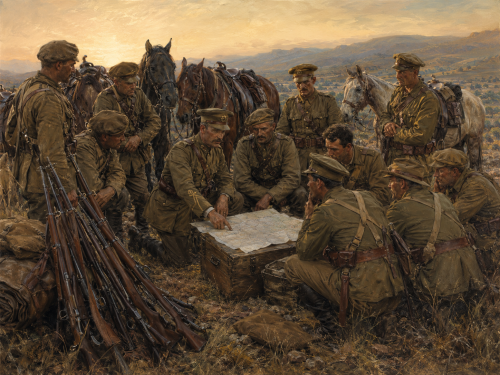
A Special Army Order issued at the beginning of January 1900 established the machinery for recruiting the Imperial Yeomanry, a volunteer mounted force intended for service in South Africa. The decision followed the British defeats of December 1899, when Boer commandos demonstrated the effectiveness of mobile riflemen operating across difficult country. Existing yeomanry units were invited to provide trained volunteers, while suitable civilians could also enlist for a limited period of overseas service. The new formation was organised as mounted infantry rather than conventional cavalry, emphasising movement, marksmanship and the ability to fight after dismounting.
Coal Dues

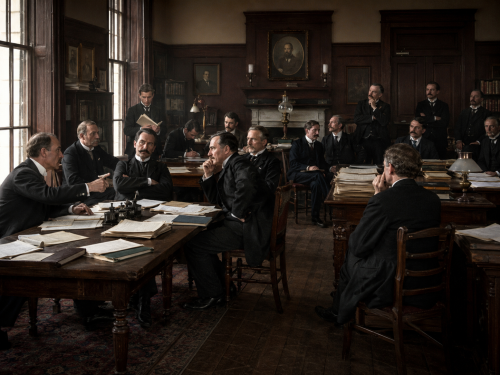
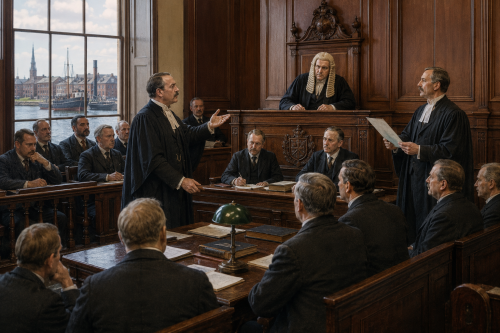
A substantial case before Judge Richard Adams examined the Mayor of Limerick’s asserted right to receive dues upon coal brought into the city. The proceedings, reported on 12 January 1900, required the court to consider whether this inherited privilege rested upon royal charter, lease, long-established prescription or some combination of those authorities. Counsel disputed both the legal foundation of the claim and the capacity in which the Mayor exercised it. What appeared to be an obscure municipal custom therefore became a serious test of whether an ancient commercial right remained enforceable within Limerick’s modern port economy.

Kincora Preparations

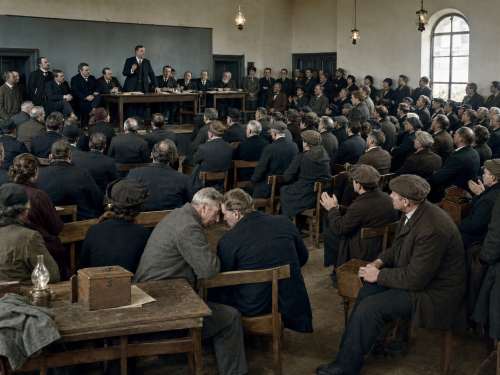
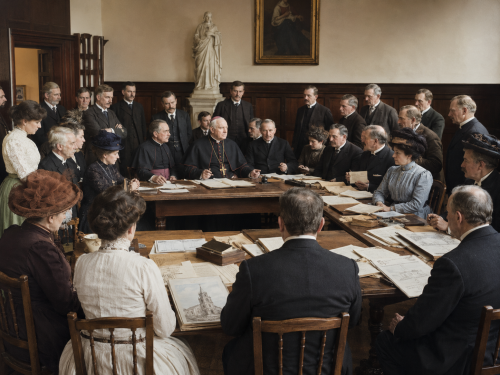
A large public meeting reported on 4 January 1900 gathered in the Lecture Hall of Limerick’s Catholic Institute to organise a fête and fancy fair in aid of the new St Joseph’s Church then under construction in St Michael’s Parish. Bishop Edward Thomas O’Dwyer presided over an attendance of clergy, women, merchants and other prominent citizens. The gathering agreed that the event should take place during June and established committees to undertake the considerable work involved. Their responsibilities included subscriptions, entertainments, stalls, decorations, publicity and the practical management of what organisers intended to become a major civic fundraising occasion.

Terminus Tragedy

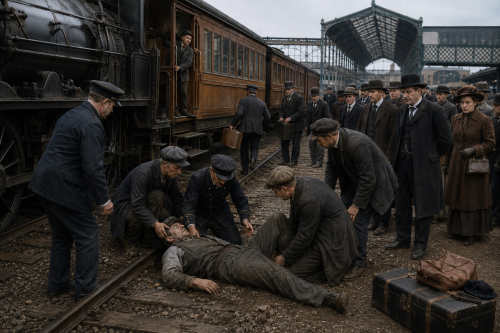
A serious accident at Limerick railway terminus left labourer James Davoren requiring the amputation of his right leg. The Irish Times reported on 2 January 1900 that Davoren had gone to the station to see his brother, described as a solicitor, depart by train for Fermoy. During the farewell, he fell from the platform onto the permanent way and was caught beneath the passing train. Railway staff and bystanders found him lying on the rails after the carriages had cleared. He was removed without delay to Barrington’s Hospital, where surgeons determined that the injured limb could not be saved.

Legal Resistance

Limerick Harbour Commissioners instructed the Dublin solicitor George Fottrell to organise formal opposition to renewed proposals for railway amalgamation. The decision, reported on 2 January 1900, also authorised him to retain an experienced King’s Counsel to represent the harbour authority during the expected parliamentary struggle. Commissioners had resisted a similar scheme during the previous year and regarded its revival as a direct threat to the commercial independence of Limerick. By securing legal expertise at an early stage, they ensured that the port’s objections would be supported by evidence, parliamentary procedure and professional advocacy rather than confined to local resolutions.

Shannon Opposition

The surviving newspaper evidence dates this report to 2 January 1900 rather than 1 January, although the meeting itself may have occurred immediately beforehand. The Limerick Fishery Conservators, presided over by Lord Massy, unanimously resolved to oppose the Shannon Water and Electric Power Company’s proposed parliamentary bill. Promoters sought authority to harness Shannon water near Lough Derg and carry it through engineered channels to generate electricity at Clonlara. The Conservators regarded the project as a serious threat to interests already dependent upon the river and resolved to organise opposition before Parliament granted the company extensive powers.

Unity Resolutions

Local political organisations passed resolutions supporting a united Irish parliamentary representation as impatience grew with the divisions inherited from the fall of Charles Stewart Parnell. United Irish League branches, nationalist associations and constituency bodies increasingly argued that rival parliamentary groups should place national interests above personal quarrels. Their declarations carried no direct authority over individual MPs, but they reflected the opinion of activists who organised meetings, raised subscriptions and supplied much of the labour required during elections. Continued factionalism therefore threatened not only parliamentary effectiveness but the willingness of local supporters to sustain representatives who refused to cooperate.

Press Demands

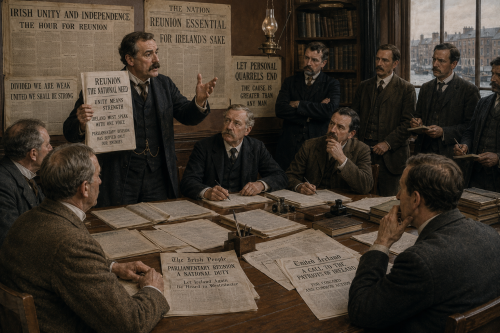
Nationalist newspapers increasingly presented reunion as essential if Ireland was to recover influence at Westminster after almost a decade of parliamentary division. Since the split over Charles Stewart Parnell’s leadership in 1890, rival Parnellite, anti-Parnellite and Healyite groups had competed for authority, funds and constituencies while claiming allegiance to the same national cause. Editorials and political reports warned that British governments could disregard Irish demands when nationalist MPs lacked common leadership and discipline. Reunion was consequently framed not simply as reconciliation between prominent personalities, but as the practical means by which Ireland might again act as a recognisable parliamentary force.

Factional Legacy

The legacy of the Parnell split continued to govern personal relationships within Irish nationalism nearly a decade after the parliamentary rupture of December 1890. Charles Stewart Parnell’s refusal to surrender the party leadership during the O’Shea divorce crisis divided former colleagues into Parnellite and anti-Parnellite camps. Political argument became inseparable from accusations of loyalty, betrayal, clerical interference and personal ambition. Parnell’s death in October 1891 removed the leader around whom the conflict had formed, but it did not reconcile the men who had defended or rejected him. Those memories endured within parliamentary factions, newspapers, constituencies and private correspondence.

Health Inquiry

A government investigation into the causes of exceptionally high death rates in Irish cities was extended to Limerick, according to an announcement published on 27 January 1900. The Local Government Board was expected to apply machinery similar to that already established for examining public health in Dublin. The proposed scrutiny would reach beyond mortality statistics and examine how Limerick Corporation discharged its sanitary responsibilities. Drainage, cleansing, water supply, dairies and slaughterhouses were all identified for investigation. The announcement placed the city’s everyday environment under official examination and signalled that preventable illness and premature death would be treated as failures of administration as well as private misfortune.