Archived: 5 October 2026
Abstract
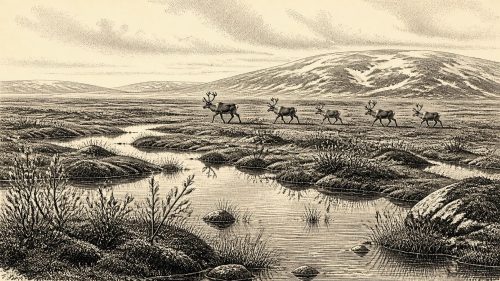
Around 30,261 BCE, Ireland was entering the Late Midlandian glacial expansion, though conditions varied regionally and the island was not yet wholly ice-covered. Lower sea levels altered coasts and possible routes, without guaranteeing easy crossings. Derryvree deposits, older than the nominal date, record freshwater tundra vegetation in an ice-free interior. Castlepook Cave preserves a time-averaged cold-stage fauna, including mammoth, reindeer and predators, but cannot describe one moment. A possibly stone-cut reindeer bone offers tentative evidence of human activity, not settlement. Advancing ice reshaped landscapes and erased evidence, leaving a deep prehistory understood chiefly through environmental archives and cautious scientific interpretation.
Read Article
Archived: 2 October 2026
Abstract
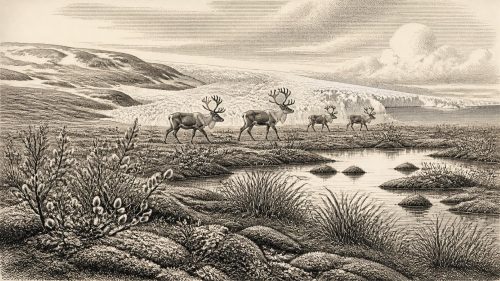
30,348 BCE is a modern label rather than a precise Irish date. Evidence from Greenagho and Derryvree in Fermanagh comprises organic lake sediments sealed beneath till, indicating cold open wetlands with freshwater plants, insects and animals before advancing ice. During Marine Isotope Stage 3, Ireland experienced severe but regionally variable glaciation; the full ice-sheet extent came later. Cave faunas, notably at Castlepook, demonstrate diverse large mammals, including reindeer, horse, mammoth and predators, though deposits are complex. A cut-marked reindeer bone tentatively suggests human butchery, not settlement. No political, cultural or economic structures are recoverable; environmental change dominates this deep past.
Read Article
Archived: 2 October 2026
Abstract
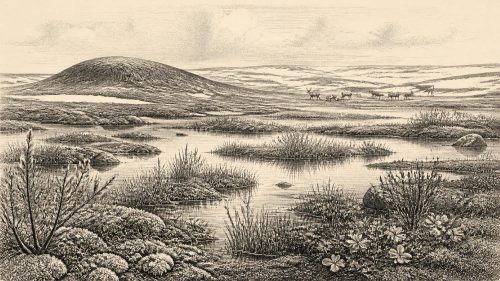
Around 30,351 BCE, Ireland’s history is reconstructed from environmental evidence rather than written records. At Derryvree, County Fermanagh, freshwater sediments between two tills indicate a cold, treeless wetland interval between glacial advances. Fossils reveal grasses, sedges, mosses, bogbean and mountain avens within tundra-like terrain. Ireland experienced regional climatic change as the last ice sheet expanded, not uniform conditions. Castlepook Cave, County Cork, preserves remains of reindeer, mammoth, giant deer and predators, though they span different periods. A possibly butchered reindeer bone may indicate Upper Palaeolithic human activity, but no secure settlement evidence exists. Political, cultural and religious life remains unknown.
Read Article
Archived: 25 September 2026
Abstract
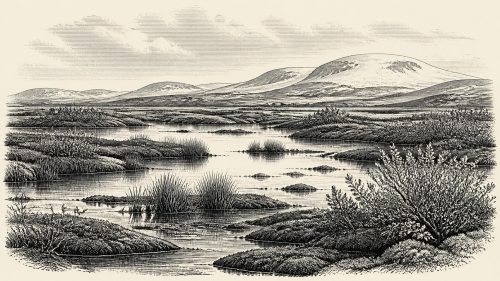
Approximately 30,716 BCE, Ireland lay within the unstable MIS 3 phase of the last Ice Age, although no annual event can be dated so precisely. At Derryvree, County Fermanagh, freshwater silts and beds preserved between glacial tills demonstrate a local ice-free interval. Plant and insect remains indicate cold, treeless wetland, with pools, sedges, mosses, dwarf willow and arctic-alpine flora. Castlepook Cave, County Cork, records a MIS 3 fauna, including reindeer, mammoth, giant deer and carnivores, but its disturbed deposits cannot prove contemporaneity. No secure evidence establishes human settlement; a possible cut-marked bone remains inconclusive. Later glaciation reshaped this Pleistocene landscape.
Read Article
Archived: 21 September 2026
Abstract
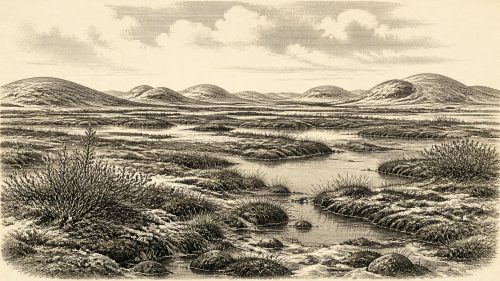
30,943 BCE denotes no dated Irish event but a late Marine Isotope Stage 3 environmental interval. Derryvree, County Fermanagh, preserves freshwater silts between glacial tills, demonstrating an intervening cold, largely treeless wetland of pools, sedges, herbs, mosses and exposed ground, rather than continuous ice cover. Castlepook Cave, County Cork, records animals including mammoth, reindeer, giant deer, bear, wolves and hyaena, though remains accumulated over long periods. A possibly cut-marked reindeer bone offers limited evidence of human activity, not settlement. Changing ice, sea levels and routes shaped a landscape before expanding ice sheets transformed habitats and subsequently obscured evidence from view.
Read Article

Archived: 20 September 2026
Abstract
Around 31,065 BCE, Ireland experienced unstable Late Pleistocene conditions before full expansion of the last Irish Ice Sheet. Derryvree sediments in Fermanagh indicate treeless, waterlogged tundra vegetation, while lower sea levels enlarged the landmass but left migration routes uncertain. Castlepook Cave in County Cork preserves remains of reindeer, mammoth, giant deer, lemmings, wolves, bears, foxes and hyaenas, demonstrating diverse cold-steppe food webs. A possibly cut-marked reindeer bone may indicate brief Upper Palaeolithic human activity, but cannot prove settlement. No evidence supports societies, politics, ritual or trade. Subsequent ice advance destroyed or buried much earlier evidence, leaving a limited environmental record.
Read Article
Archived: 20 September 2026
Abstract
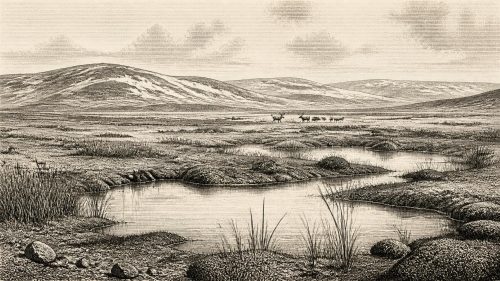
Labelled 31,077 BCE, this notional date cannot yield a conventional Irish history, because evidence consists of stratified deposits, fossils and calibrated ranges rather than records. At Derryvree, County Fermanagh, BIRM-166 dates organic freshwater sediments from an ice-free interval between tills, indicating cold, treeless wetland with mosses, sedges and northern insects. Castlepook Cave, County Cork, preserves MIS 3 fauna including reindeer, mammoth and predators, though mixed cave contexts prevent a single-date reconstruction. A marked reindeer femur may indicate human butchery, but proves neither settlement nor population. Environmental change dominated, as later ice-sheet expansion transformed Ireland's physical landscapes, habitats and drainage systems.
Read Article
Archived: 20 September 2026
Abstract
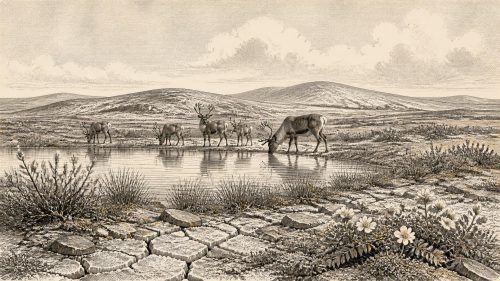
About 31,108 BCE, Ireland’s history is reconstructed through scientific ranges rather than events or communities. Derryvree, near Maguiresbridge, preserves freshwater sediments between glacial tills, dated broadly to 36,900–31,700 calendar years ago, showing north-central Ireland had cold, tundra-like, ice-free habitats before major ice-sheet expansion. Mosses, sedges, insects and other fossils reveal periglacial wetlands amid open ground. Cave assemblages, notably Castlepook, demonstrate intermittent presence of mammals including reindeer, mammoth and predators. A marked reindeer femur may indicate human carcass processing, but cannot prove settlement. No evidence supports claims for societies, farming, monuments or named peoples; the record remains fragmentary, local and environmental.
Read Article

Archived: 9 September 2026
Abstract
Around 31,939 BCE, Ireland was experiencing unstable Late Pleistocene conditions near the expansion of the last Irish Ice Sheet, rather than a single uniformly glaciated landscape. Glacial, sedimentary and cave evidence indicates cold open habitats supporting reindeer, mammoth, giant deer, bears, wolves, Arctic foxes, lemmings and hyaenas, especially in southern caves. Castlepook Cave's dated reindeer femur, possibly cut-marked by a stone tool, raises the prospect of brief Upper Palaeolithic human activity. Nevertheless, disturbed deposits and absent tools, hearths or settlements preclude proof of permanent occupation. No social, cultural or political reconstruction is justified. Secure Irish settlement appears after 8000 BCE.
Read Article

Archived: 8 September 2026
Abstract
Around 33,900 years ago, Ireland lay within a cold, unstable Late Pleistocene landscape, with regionally variable ice cover preceding the Last Glacial Maximum. Lower sea levels altered coastlines and potential animal routes. Open tundra-steppe habitats supported mammoth, giant deer, reindeer, bears and predators, evidenced especially at Castlepook Cave, County Cork. A cut-marked reindeer femur there provides limited evidence that Upper Palaeolithic hunters may briefly have visited or crossed Ireland. It does not demonstrate settlement, population continuity, polities or cultural practices. Subsequent ice expansion destroyed or obscured much evidence, leaving caves as selective archives. Post-glacial Mesolithic settlement occurred many millennia later.
Read Article

