

Questions Asked & Answered
Recent Questions Answered
Archived: 27th October 2026
Irish Houses
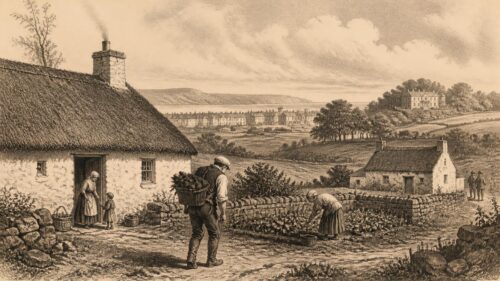
This article traces the long history of dwelling across Ireland, from excavated prehistoric timber structures and enclosed early medieval settlements to vernacular cottages, elite townhouses, estate houses, tenements and public housing. It examines what archaeological remains, surveys, census returns and surviving fabric can securely reveal, while separating documentary evidence from interpretation and folklore. Houses emerge not merely as styles but as working environments shaped by kinship, farming, colonial power, urban inequality and state policy. It considers both jurisdictions on the island and emphasises material variation, social division, adaptation and conservation. It argues ordinary homes, no less than monuments, record Ireland.
Archived: 27th October 2026
Constitutional Ireland
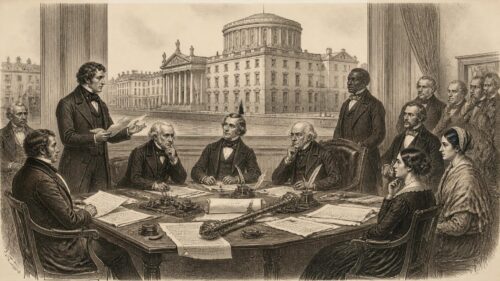
This article traces Ireland’s constitutional history from the eighteenth century parliament through Union, Home Rule, revolution, partition, the Irish Free State and Bunreacht na hÉireann. It examines constitutions as contested settlements rather than timeless national charters, allocating authority, defining membership, protecting some liberties and restricting others. Particular attention is given to the 1922 and 1937 texts, their drafting, public approval, institutions, religious language, gender provisions, territorial claims and later amendment. Drawing upon official texts, parliamentary records and archival scholarship, it distinguishes evidence from retrospective interpretation, showing how constitutional change both recorded political transformation and provided mechanisms for later change.
Archived: 27th October 2026
Vanished Giants
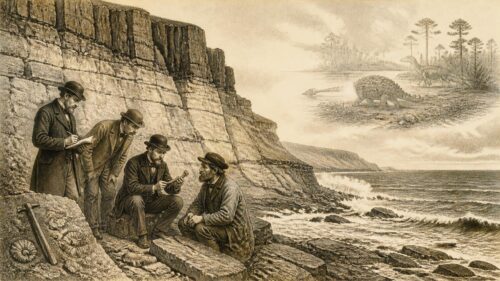
This article examines what can and cannot be said about dinosaurs in Ireland. Evidence from County Antrim confirms two Early Jurassic dinosaur bones, while the island’s sparse and largely marine Mesozoic rock record explains why discoveries remain exceptional. It traces the geological conditions that governed preservation, assesses the cautious identifications of the fossils, and separates secure findings from popular misconception. It also considers older vertebrate trackways at Valentia, marine reptiles, nineteenth-century collecting, and the limits of reconstructing lost landscapes. The conclusion is clear: dinosaurs almost certainly occupied the wider region, but Ireland preserves only a thin, contingent record of them.
Archived: 27th October 2026
Civic Dublin
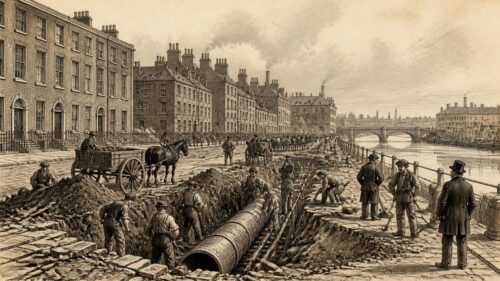
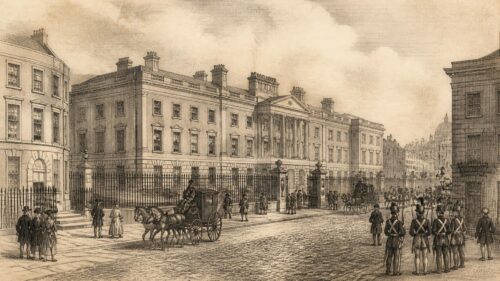
Dublin’s housing history is inseparable from the systems that supplied water, removed waste, enabled movement and shaped land values. This article traces the city from its medieval riverine setting through Georgian expansion, nineteenth-century sanitary reform and the Vartry water scheme, to the tenement crisis exposed in 1913. It examines municipal building, garden suburbs, persistent mid-century overcrowding, Ballymun’s high-rise experiment, later regeneration and the return of trams through Luas. Drawing on census evidence, civic records, official inquiries, buildings and oral history, it distinguishes documentary fact from interpretation and nostalgia, showing why housing has always been an infrastructure question in Dublin.
Archived: 27th October 2026
Irish Arms
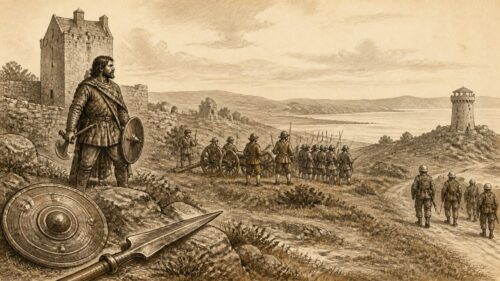
Military history in Ireland is not a single national story but a record of local raiding, lordship, conquest, imperial service, rebellion, partition, state formation and peacekeeping. Material remains, annals, government records and personal testimony reveal changing weapons and organisations, yet also persistent civilian costs. This survey follows evidence from prehistoric arms to medieval warbands, Tudor and Stuart campaigns, eighteenth century garrisons, nineteenth century imperial recruitment, revolutionary conflict, the Civil War, Northern Ireland and United Nations deployments. It separates archaeological fact from literary memory and treats celebrated episodes cautiously, showing how military power repeatedly shaped Irish society, politics, landscapes and remembrance.
Archived: 27th October 2026
Parliamentary Ireland
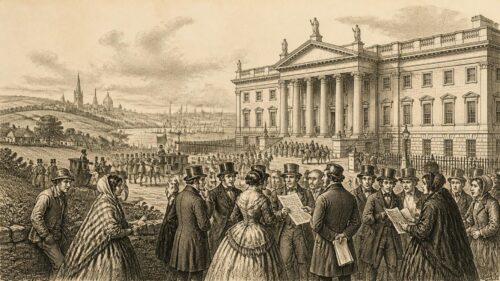
This article traces the changing meanings of parliament in Irish history, from medieval assemblies of the English lordship to the modern Oireachtas and Northern Ireland Assembly. It examines institutional continuities, constitutional ruptures, restricted representation, religious exclusion, legislative independence, the Union, Home Rule, revolutionary legitimacy, partition and devolved government. Parliament was never a single uncontested national inheritance: its authority, reach and social composition altered repeatedly. Drawing on statutes, parliamentary records, archival collections and scholarly interpretation, the article separates demonstrable evidence from political memory, and explains why parliamentary history remains central to competing ideas of sovereignty, citizenship and consent on the island.
Archived: 27th October 2026
Irish Politics
This article traces the making of Irish politics from medieval assemblies shaped by conquest through the restricted Parliament of Ireland, Union with Britain, constitutional campaigns, revolution, partition, and the democratic institutions created north and south of the border. It examines who could exercise power, how consent was claimed, and why arguments about sovereignty, religion, land, identity and citizenship transformed constitutional life. The account treats documents as evidence, distinguishes interpretation from political myth, and emphasises contingency over inevitability. It concludes that Irish politics developed not along one national path but through competing constitutional traditions, unequal participation, conflict, compromise and institutional adaptation.
Archived: 27th October 2026
Irish Sustenance
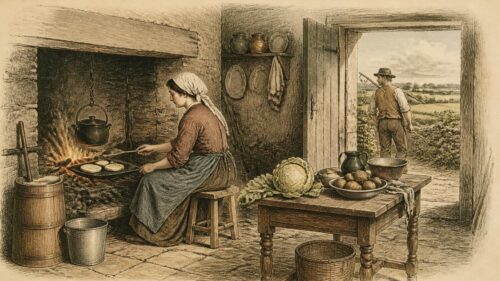
This article traces the foodways of Ireland from archaeological evidence for farming, dairying and communal cooking to the globalised kitchens of the late twentieth century. It argues that Irish food cannot be reduced to potatoes or famine. Grains, milk, butter, fish, meat, gardens, trade, labour and household skill shaped changing diets, while class and colonial power determined access to them. The Great Famine remains central because it exposed a precarious social system rather than merely a crop failure. Archaeology, written records, nutritional studies and folklore each illuminate different experiences, and this account separates their evidence from later memory and myth.
Archived: 27th October 2026
Timeless Ireland
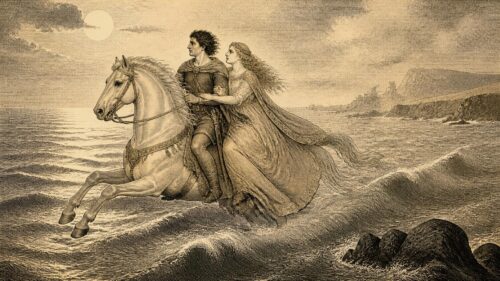
Tír na nÓg, the Irish Land of Youth, is best understood as a changing literary and folkloric tradition rather than a single ancient myth. This article traces its roots in medieval Irish Otherworld narratives, the Fenian memory of Oisín, and the Christian framing supplied by St Patrick. It examines the influential eighteenth-century lay attributed to Mícheál Ó Coimín, nineteenth-century editions and translations, and twentieth-century oral records in the National Folklore Collection. Distinguishing evidence from interpretation, it explains why Niamh’s invitation, Oisín’s delayed ageing and his return to a transformed Ireland remain enduring images of loss, memory, language and cultural change.
Archived: 27th October 2026
Open Doors
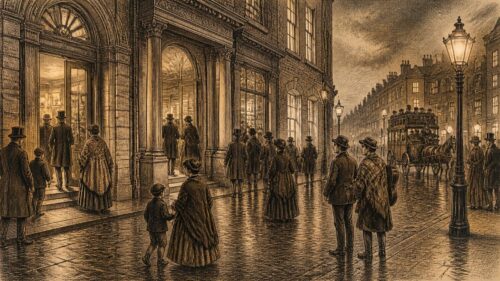
Culture Night, or Oíche Chultúir, began in Dublin’s Temple Bar in 2006 as a free late opening of forty cultural venues. It grew from a local experiment in audience development into an annual all island programme involving museums, libraries, heritage places, artists, broadcasters, local authorities and community groups. Its history illuminates changing Irish ideas about culture: access rather than exclusivity, participation rather than passive consumption, and shared civic space after dark. This article traces its institutional origins, geographical expansion, relationship with cultural policy, identity, cross border reach, pandemic adaptation and evidence of impact. It considers tensions behind its public face.