
Year by Year
Explore Year by Year articles from the most modern historical year back to the oldest.
3,295 Articles Archived
Exceptional Frost
Archived: 29 October 2026
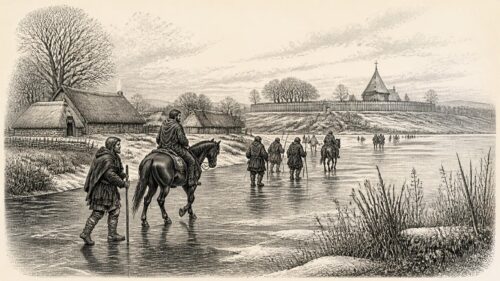
In 855, Ireland experienced an exceptional freeze: from late November to early January, lakes and rivers supported pedestrians and horses, disrupting transport, food supplies and rural life while opening unusual routes. A later annal links the frost to a deadly raid at Loch Cenn. Máel Sechnaill mac Máele Ruanaid took hostages at Cashel, asserting overlordship amid Munster’s divisions. He fought heathen forces with Norse-Irish allies, illustrating intertwined Irish and Scandinavian politics. Norsemen burned Lusca’s oratory, while Áed son of Niall routed Norse-Irish in the north. Death notices for Lismore and Lathrach Briúin clerics underline churches’ intellectual, economic and political roles.
Cathan's Snow
Archived: 29 October 2026
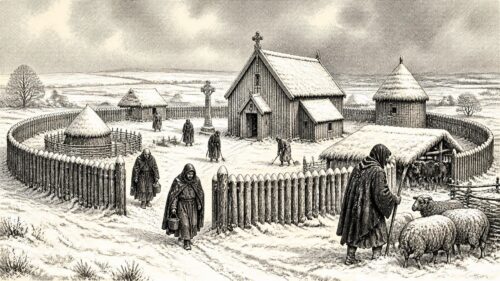
In 854, Irish annals recorded the death of Cathan, abbess of Kildare, highlighting the influence of major ecclesiastical communities and female leadership. Exceptional snow fell on 23 April, probably disrupting travel, livestock care and spring farming, though no famine was reported. Áed son of Niall raided Ulaid, killing prominent opponents and many others, while Fínnechta was treacherously killed and Muiredach of Ard Cianachta died. Abbots at Monasterboice, Achad Bó and Inis Cáín Dega were also commemorated, including one who drowned. These local events reveal an Ireland shaped by regional conflict, church continuity, hazardous travel and unusual weather, amid Scandinavian influence.
Amlaíb Arrives
Archived: 29 October 2026
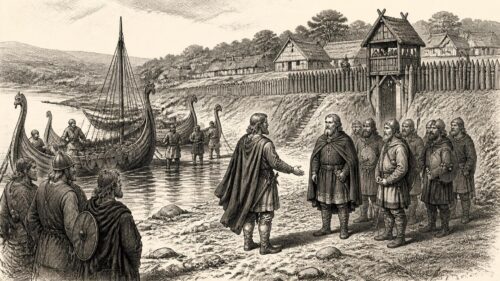
In 853, Amlaíb, son of the king of Laithlind, arrived in Ireland, where Scandinavian groups submitted to him and tribute was extracted from Irish communities. Although often linked with Norway, Laithlind’s location remains uncertain, and the annals do not establish a unified foreign conquest. The year also saw Norsemen kill Cathmal, co-king of Ulaid; Echtigern of south Leinster murdered in an internal struggle; and Áilgenán, king of Cashel, die. Local Munster successions and deaths of prominent clerics reflected Ireland’s multiple political and ecclesiastical centres. Annalistic dating varies, while evidence chiefly records elites, violence and exceptional events, leaving ordinary life obscure.
Snám Aignech
Archived: 29 October 2026
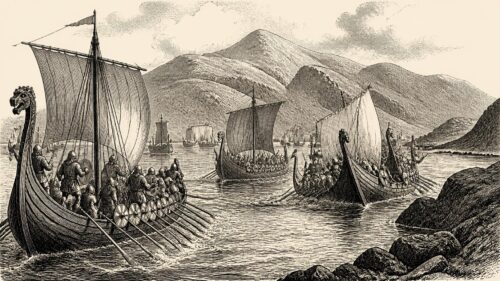
In 852, rival Viking fleets fought for three days at Snám Aignech, probably Carlingford Lough. Annals disagree over leaders, numbers and victors, but confirm a major struggle between competing overseas groups. Raiders from Linn Duachaill devastated Armagh, Ireland’s foremost Patrician church, while later tradition describes some local collaboration. That year also saw deaths of Armagh’s rival coarbs, Forannán and Diarmait, complicating recovery. Elsewhere, Cianachta defeated foreigners in eastern Brega. The evidence depicts contested coastal waters, vulnerable yet resilient ecclesiastical centres, local resistance, and fragmented Irish politics under Máel Sechnaill across a predominantly rural society, rather than outright conquest or collapse.
Viking Rivalries
Archived: 29 October 2026
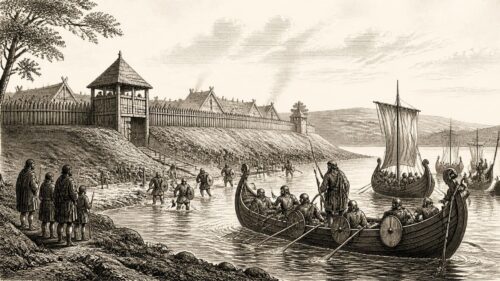
In 851, rival Viking groups contested Ireland’s eastern seaways. The Dubgenti attacked Dublin’s Finngenti, killing many and plundering their longphort, but suffered heavy losses when attacking the defended base at Linn Duachaill near Annagassan. These events reveal competition for ships, wealth, captives and strategic ports rather than a unified Viking campaign. Meanwhile, Máel Sechnaill mac Máele Ruanaid, king of Tara, convened rulers and churchmen at Armagh, strengthening northern alliances and authority. He also helped kill Cináed of Cianachta, a rebellious regional rival, despite guarantees. Foreign violence killed Eochu of Fir Rois. The year illustrates contested military, political and ecclesiastical power.
Lagore Destruction
Archived: 29 October 2026
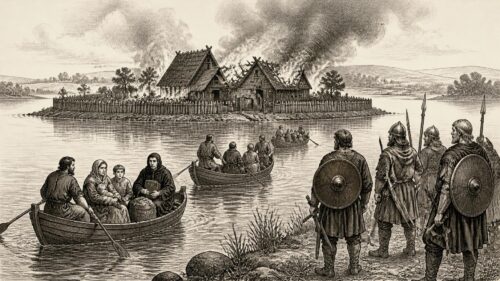
In 850, Irish annals record Cináed son of Conaing, king of Cianachta, rebelling against Máel Sechnaill, king of Tara, with overseas warriors described as foreigners. His forces devastated Uí Néill territories from the Shannon to the sea, attacking churches and secular lordships. They captured and destroyed Loch Gabair, identified with Lagore crannóg, a politically significant elite residence in southern Brega. Nearby oratories at Treóit and possibly Nuarrach were burned, causing casualties. Obituaries and local killings reveal ecclesiastical and regional politics. A notice of Loch Laig draining highlights environmental change. The year depicts rural Ireland under pressure, interconnected yet politically fragmented.
Scandinavian Fleet
Archived: 29 October 2026
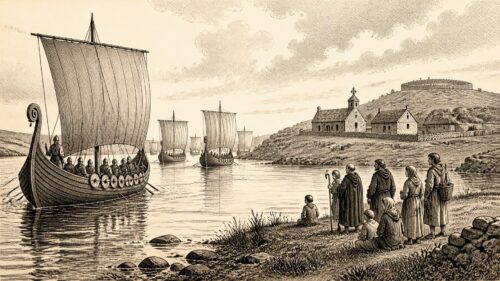
In annalistic year 849, a fleet of seven score ships arrived in Ireland to compel obedience from Scandinavian groups already established there, causing disruption. The evidence does not identify its leader, landing place or achievements. Meanwhile, Máel Sechnaill of Tara maintained an encampment at uncertain Crufaid, while regional rulers died or were killed, including Flannacán of Dál Araidi. Ecclesiastical notices recorded deaths, Robartach of Sláine's voluntary exile, and Indrechtach of Iona's arrival carrying Colum Cille's sacred objects. Máel Bresail, king of Mugdorna turned cleric, was killed by heathens. The annals depict overlapping political, religious and Scandinavian conflicts, not a campaign.
Tomrair's Defeat
Archived: 29 October 2026
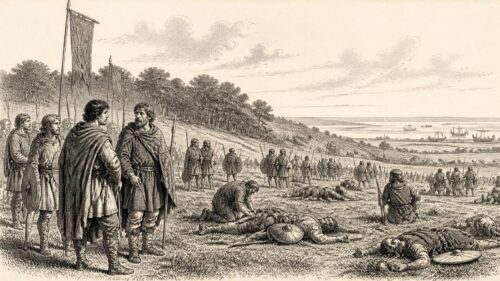
In 848, Irish annals recorded a cluster of victories over Viking forces, although later compilations and exaggerated casualty figures require caution. Máel Sechnaill of Tara defeated raiders at Forach, while Ólchobar of Munster and Lorcán of Leinster killed Tomrair, a prominent Scandinavian jarl and deputy, at Scíath Nechtain. Tigernach of Lagore and the Eóganacht of Cashel won further successes. Ólchobar also campaigned against the Viking fort at Cork, though its outcome is unknown. These actions demonstrated regional resistance, not national unity, amid disruption to communities and churches. Viking bases and activity endured, but victory enhanced Irish confidence and standing abroad.
February Snowfall
Archived: 29 October 2026
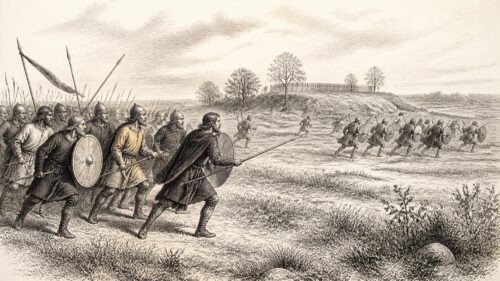
The surviving record for 847 CE begins not with a battle but with weather. The Annals of Ulster, whose annal labelled U848 corresponds to AD 847, notes a great snowfall on 1 February. It gives no duration, no depth and no tale of disaster; it is therefore unsafe to turn the notice into a ‘great winter’. Yet the entry is revealing. Snow sufficient to merit notice altered movement, grazing and work across a predominantly rural island, at a moment when armed forces, food supplies and communications already faced exceptional strain.
Forannán Relics
Archived: 29 October 2026
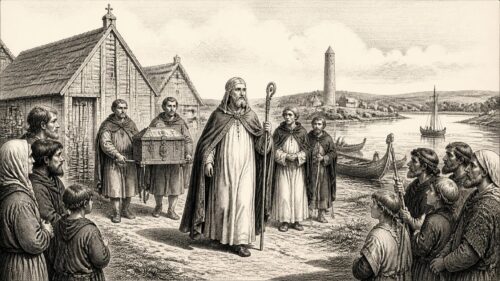
In 846, Ireland experienced dynastic change and Viking violence amid disputed annalistic dating. Niall Caille, northern Uí Néill king of Tara, drowned in the Callan near Armagh, enabling Máel Sechnaill of Clann Cholmáin to claim Tara, though opposition persisted. Scandinavian raiders defeated Connachtmen and plundered Baislec in Roscommon, demonstrating their growing ability to use waterways and strike inland. Forannán, abbot of Armagh, returned from Munster with Patrick’s relics after earlier abduction, reinforcing Armagh’s authority. Deaths of abbots and regional rulers reveal interconnected ecclesiastical and local political structures. The year showed Ireland divided yet resilient under intensified external pressure and uncertainty.
Some records do not yet have a verified historical year and are awaiting chronological placement.