
Year by Year
Explore Year by Year articles from the most modern historical year back to the oldest.
3,305 Articles Archived
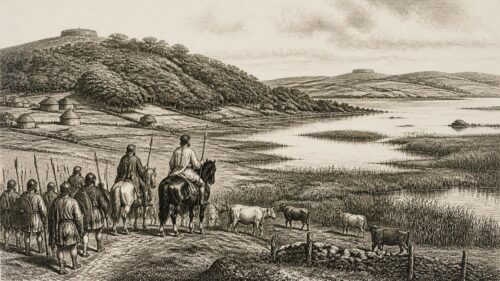
Loch Fén
Archived: 2 November 2026
In 665, Ireland faced the devastating buide Chonaill, or yellow mortality, while conflict continued between regional powers. The Annals of Inisfallen record a battle at Loch Fén between Munster and Connacht, in which Talamnach son of Laidcenn was killed, but give no cause or victor. The epidemic caused the deaths of major rulers, including Diarmait Ruanaid, Blathmac and probably Cathal Cú cen Máthair of Munster, altering dynastic politics without ending established kingdoms. It also struck leading churchmen and monasteries. Differing annal dates limit certainty, but the evidence shows epidemic, succession and warfare reshaping Ireland simultaneously.
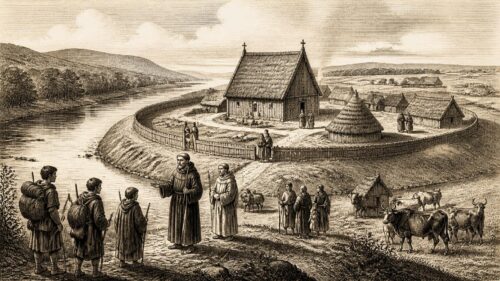
Uncertain Mortality
Archived: 2 November 2026
In 664, Irish annals recorded a devastating mortality arriving on 1 August at Mag Itha of Fotharta, though the disease and location cannot be identified with certainty. Later called the Yellow Plague, the epidemic formed part of a wider Irish Sea crisis also reported by Bede. Annalists linked it with an eclipse, fiery skies and uncertain earthquake reports, while recording deaths among dynasts and abbots without always attributing them to disease. The outbreak threatened interconnected monasteries and rural communities, amid active travel and religious exchange. The year also saw the Synod of Whitby and reports of conflict in Scotland, illustrating Ireland’s wider regional connections.
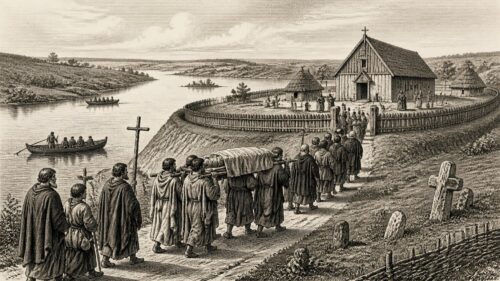
Guaire Aidne
Archived: 2 November 2026
In 663, Irish annals chiefly record deaths and killings rather than major campaigns. Guaire Aidne, king of Connacht, died and was buried at Clonmacnoise, linking his dynasty with an influential monastery. The killing of Conall and Colcu, sons of the former northern Uí Néill king Domnall mac Áedo, reflected continuing dynastic danger. Ecclesiastical losses included Ségíne, abbot of Bangor, and Tu-Enóc, abbot of Ferns, alongside several bishops. Annalistic dating varies slightly between sources, but 663 is generally accepted. These sparse notices reveal a politically fragmented Ireland in which kingship, kinship and churches shaped authority and remembrance, shortly before the mortality recorded for 664.
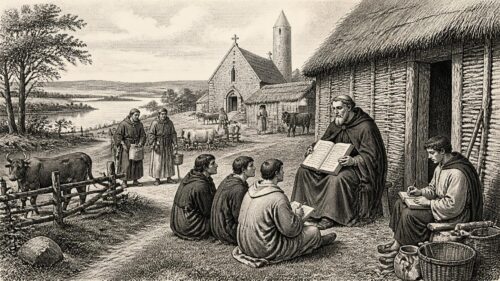
Ogoman Clonfert
Archived: 2 November 2026
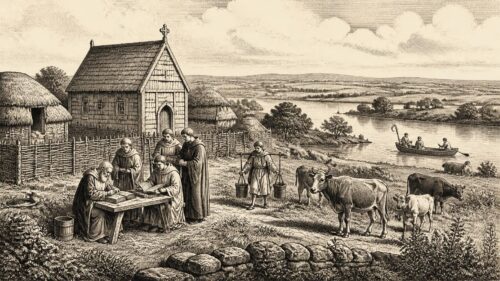
In 662, the battle of Ogoman exposed rivalry within the southern Uí Néill of Brega, killing Conaing, Ultán of the Ciannachta and Cenn Fáelad. Accounts suggest Blathmac was defeated by followers of his brother Diarmait, though the political outcome remains uncertain. The annals also record the death of Máenach, king of Munster, emphasising the importance of Eóganachta descent. Cummíne Fota of Clonfert died around 661–62 and was remembered as a distinguished scholar of the Easter controversy. These events reflect an Ireland of competing kin-groups, rural lordships and influential ecclesiastical networks.
Cummian Fota
Archived: 2 November 2026
In 661, Irish annals record ecclesiastical, dynastic and royal change across a politically fragmented but connected island. Cummian Fota of Clonfert, a learned churchman of aristocratic Munster ancestry and probable author of a major Easter treatise, died aged seventy-one or seventy-two. Abbot Cumméne Find of Iona visited Ireland, illustrating active Irish Sea monastic networks. At Ogaman, conflict within the Brega-based Síl nÁedo Sláine dynasty saw Blathmac defeated by followers of his brother Diarmait. Máenach son of Fíngen, king of Munster, also died. Together, these events reveal the importance of contested kingship, ecclesiastical authority and scholarship.
Ogaman Battle
Archived: 2 November 2026
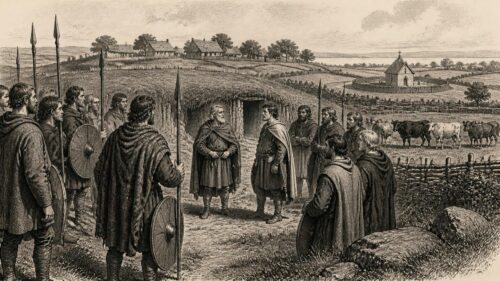
Around 660, the battle of Ogaman at Cenn Corbadáin exposed conflict within the southern Uí Néill. Although annals date it variously to 660–662, they agree that Diarmait’s followers defeated those of his co-ruler and brother Blathmac, killing leaders linked to the Ciannachta and Ard Ciannachta of Brega. Blathmac survived, suggesting a shift in power rather than deposition. The same chronological horizon includes deaths among Munster’s elite and leading churchmen, notably Tóiméne, bishop of Armagh. These events reflected Ireland’s fragmented political order, where dynastic alliances, local rulers and ecclesiastical centres shaped authority amid a predominantly rural society.
Annals Obituaries
Archived: 2 November 2026
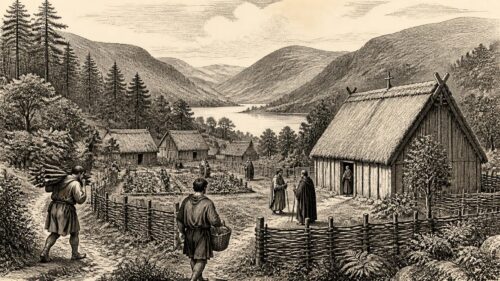
The annals for 659 chiefly record deaths rather than major events, including Colmán of Glendalough, Fínán of Lindisfarne, Daniél of Kingarth, Echaid son of Blathmac, Conall Crandomna of Dál Riata and Eóganán son of Tóthalán. Differing annalistic chronologies make exact dates uncertain, particularly for Fínán. The notices reveal links between Irish churches, Iona, Northumbria and western Scotland, alongside dynastic losses in Brega and Dál Riata. They do not establish causes of death or political consequences. Although ordinary life centred on farming settlements and local labour, the surviving record offers no evidence of famine, epidemic or island-wide warfare.
Episcopal Deaths
Archived: 2 November 2026
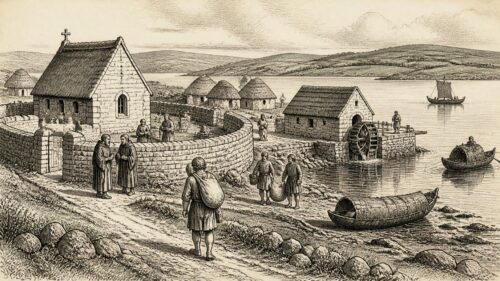
In 658, Irish annals chiefly record the deaths of bishops Díma Dub of Connor and Cuiméne of Nendrum, with the later Four Masters also naming Sillán of Daiminis. These notices show the importance of church settlements as religious, economic and political centres linked to regional patrons. The Four Masters places the year during the prominence of Diarmait and Blathmac of Síl nÁedo Sláine, while also recording dynastic deaths and the reported killing of Faelán of Osraige by Leinstermen. Despite uncertain dating in some sources, the evidence depicts rural communities sustained by farming, cattle, waterways, churches and local lordship.
Four Calves
Archived: 2 November 2026
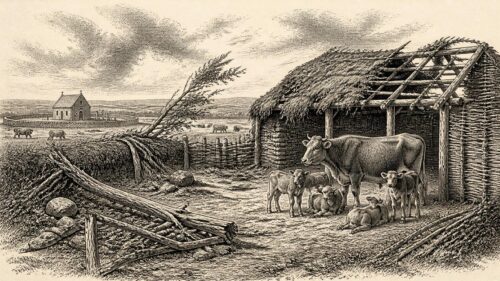
In 657, later tradition dated the joint rule of Diarmait and Blathmac of Síl nÁedo Sláine, kings of Tara, though their claimed sovereignty represented precedence among competing regional rulers rather than unified government. The Annals of Ulster records several deaths, including that of Guret, king of Alt Clut, reflecting Ireland’s links across the Irish Sea. Obituaries also indicate the importance of ecclesiastical communities within secular society. A violent windstorm and the reported birth of four calves to a cow at Láthair Briúin show how weather and livestock mattered in rural life.
Annals 656
Archived: 2 November 2026
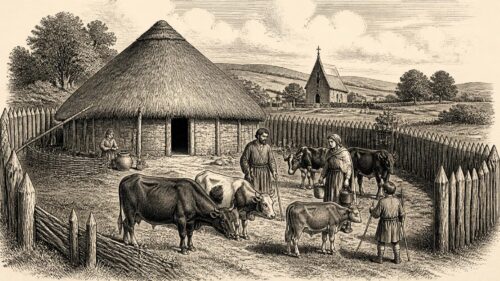
In 656, Irish annals recorded deaths, conflict and an unusual rural event, revealing Ireland’s interconnected early medieval world. Suibne moccu Urthrí, abbot of Iona, died, marking a change in Columban leadership, while Ultán of Ardbraccan and Cellcéne of Lothra were also commemorated. The battle of Deliu killed Máel Deith, son of Conall, though its circumstances remain unknown. The annals noted the death of Tolorgan, king of the Picts, reflecting links between Ireland and northern Britain. A cow at Láthair Briúin reportedly bore four calves, highlighting cattle’s importance in rural society.
Some records do not yet have a verified historical year and are awaiting chronological placement.