
Year by Year
Explore Year by Year articles from the most modern historical year back to the oldest.
3,295 Articles Archived
Lough Erne
Archived: 20 October 2026
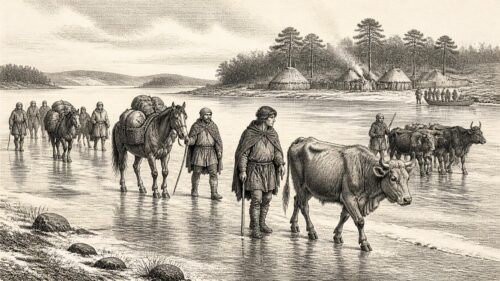
For Ireland, 1435 opened in a landscape temporarily remade by cold. The annals call it an exceptional frost: lakes and rivers were hard enough to be crossed on solid ice. The Annals of Ulster add an unusually vivid detail from Fermanagh. When Eóghan Ó Néill entered the region with an army, the people of Fir Manach moved cattle, horses carrying loads and other portable goods westward across Lough Erne—not in boats, but over the frozen lake. This was not merely a picturesque curiosity. It changed the practical geography of a frontier lordship.
Nobber Disaster
Archived: 20 October 2026
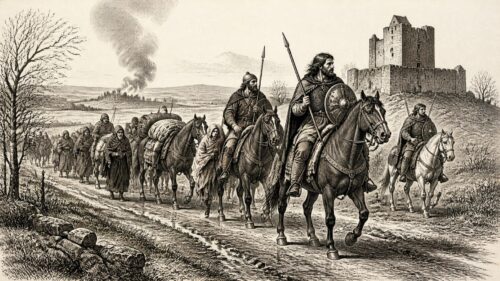
In 1434, Eóghan Ó Néill of Tír Eóghain and Niall Garbh Ó Domhnaill of Tír Chonaill, recently rivals, led a broad Ulster coalition into the English lordship. They exacted tribute at Sradbaile, burned Sliabh Breagh and Oriel, and attacked Nobber Castle. Thomas Stanley’s mounted response allowed Ó Néill’s sons to withdraw safely but trapped Ó Domhnaill’s separated party seeking cattle. His heir Toirdhealbhach and other leaders died, while Niall Garbh was captured, enabling his brother Neachtan to rule. Annals also recorded deaths among churchmen and learned families. Late in the year, severe frost froze major lakes, disrupting life and travel.
Quin Observance
Archived: 20 October 2026
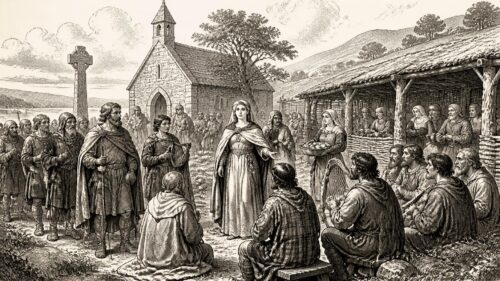
In 1433, regional conflict, diplomacy, famine and patronage shaped Ireland. Eóin Ó Néill, aided by Mac Domhnaill’s Scottish fleet, campaigned against Niall Garbh Ó Domhnaill and MacQuillan in Dufferin, devastating creaghts and burning Ardglass. Negotiations by Niall Garbh’s wife and subordinate rulers halted a proposed attack, while subsequent travel produced peace at Caol Uisce. In Breifne, Mag Raghnaill factional warfare involved paid soldiers. Severe summer famine accompanied notable hospitality by Mag Uidhir and Margaret Ó Cearbhaill. Pope Eugenius IV licensed Franciscan Regular Observance at Quin, reinforcing Mac Conmara patronage and linking local lordship to wider ecclesiastical reform currents across Europe.
Tullaghoge Inauguration
Archived: 20 October 2026
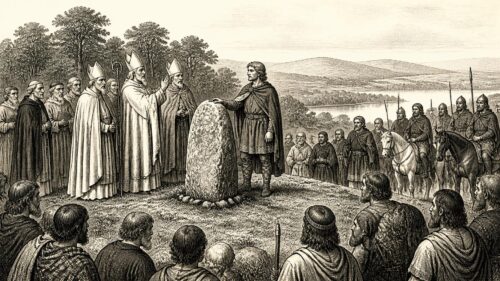
In 1432, Domhnall Bog Ó Néill was killed in Ó Catháin territory, enabling his rival Eóghan, son of Niall Óg, to be inaugurated king of Tír Eóghain at Tullaghoge with clerical and learned support. Eóghan’s alliance with Sligo provoked conflict with Niall Garbh Ó Domhnaill of Tír Conaill, bringing armed diplomacy, Erne crossings, prolonged campaigning, burned settlements and crops. Raids exposed Armagh’s vulnerability, while bishops and learned families remained centres of hospitality, law and memory. Elsewhere, Ormond attacked Éile and Mac Murchadha challenged English power in Leinster. The year revealed fragmented authority, shifting alliances, and legitimacy unable to secure peace.
Ballymagauran Reprisal
Archived: 20 October 2026
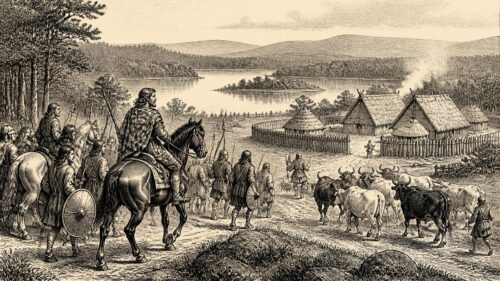
In 1431, Ireland experienced raids, reprisals, dynastic conflict and institutional losses. Sir Thomas Stanley's delayed arrival as royal lieutenant left the English lordship constrained around Dublin, though chancery business continued. After John Maguire was killed in Tullyhaw, Tomás Óg Maguire ravaged the district and burned Ballymagauran. O'Neill, Maguire and O'Reilly devastated MacQuillan territory, while hostage negotiations and O'Donnell rivalries reshaped Ulster. Gaelic and English forces conducted reciprocal raids in Breifne and Leinster. Deaths of bishops, clerics, poets and nobles underscored the fragility of lordship. Warfare damaged crops and homes, yet religious, learned and administrative institutions endured amid mobile local power.
Thomas Maguire
Archived: 20 October 2026
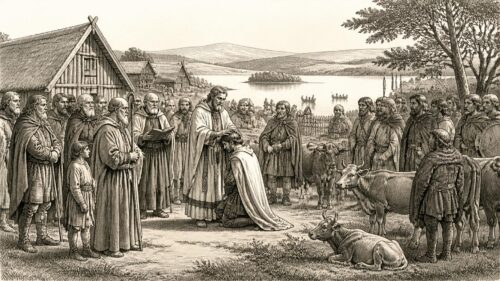
In 1430, Irish political life was marked by warfare, negotiation and succession rather than an island-wide event. Tomás Mág Uidhir died on 13 November after thirty-six years ruling Fermanagh, and his son Tomás Óg succeeded with publicly affirmed support. Eóghan O’Neill raided Oriel and Meath, securing tribute, submissions and a hostage without permanently conquering these territories. In Cork, Kilbrittain castle changed hands amid MacCarthy and Desmond conflict. Raids and rival claims affected Connacht and Breifne, where sanctuary and éraic enabled settlement. Deaths of clerics and legal scholars underline ecclesiastical and learned institutions’ roles in authority, hospitality, memory and social order.
Aghakilmore Defeat
Archived: 20 October 2026
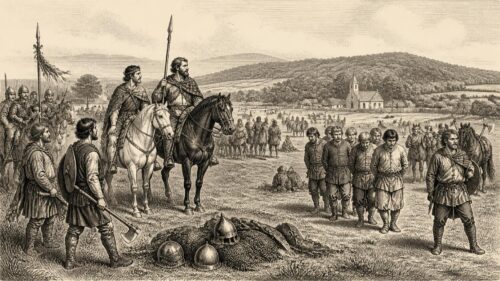
The best-documented Irish event of 1429 was a major defeat at Achadh Cille Móire, now generally identified with Aghakilmore in County Cavan. It was not a battle between two neatly bounded nations. Rather, it grew from the shifting alliances, rival branches and armed followings that shaped lordship in the Breifne borderlands. The annals place it firmly in this year, while their differing emphases also reveal why a single encounter could matter far beyond the field on which it was fought. The Annals of Ulster report a “great war” between Tadhg Ua Ruairc (O’Rourke) and Eóghan Ua Raighillaigh (O’Reilly).
Compostela Death
Archived: 20 October 2026
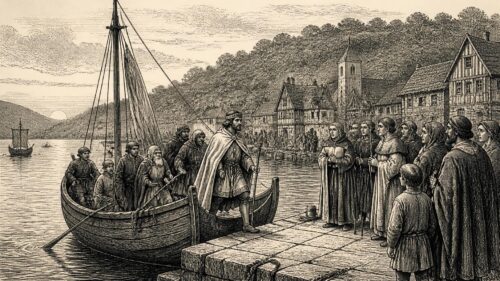
In 1428, Irish annals recorded no single national crisis but interconnected regional events. Aedh Mag Uidhir, a Fermanagh lord returning from pilgrimage to Compostela, died at Kinsale on 11 August and was buried at Cork, illustrating maritime, religious and political links. His death coincided with Maguire dynastic violence, including seizure of his sons’ castle and the killing of Aedh Óg. In Leinster, Donnchadh Mac Murchadha Caomhánach’s ransom, return and cooperation with English authority reflected negotiated power. Deaths of ecclesiastical and local rulers, notably a Mac Conmara chief, reveal hereditary offices, patronage, protection and peace as foundations of Ireland’s diverse lordships.
Leinster Return
Archived: 20 October 2026
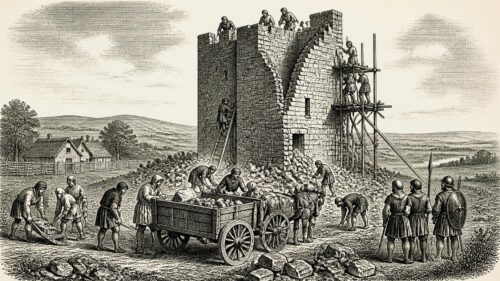
In 1427, Ireland’s fragmented political order was shaped by dynastic rivalry, constrained English administration and local military action. Donnchadh Mac Murchadha, king of Leinster, returned after eight years’ imprisonment in England, challenging his brother Gerald’s authority while receiving English support. Lord Grey briefly assumed the lieutenancy, reliant on local deputies amid fiscal and factional weakness. English or Anglo-Irish forces demolished Edenderry Castle, while an Ulster coalition led by Niall Garbh Ó Domhnaill defeated MacQuillan’s forces, taking prisoners and booty. Annalistic obituaries emphasised penitence, hospitality and charitable guest-houses, demonstrating that reputation, kinship and religious patronage remained central to power and standing.
O'Donnell Hostages
Archived: 20 October 2026
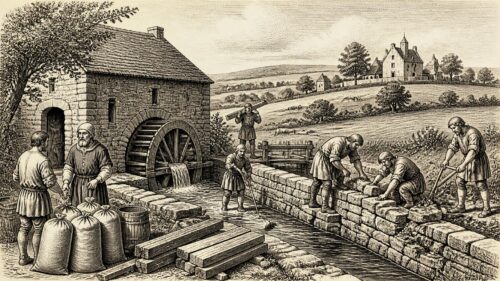
In 1426, Ireland comprised overlapping English, Gaelic and Gaelicised jurisdictions rather than a unified state. Naghtan O'Donnell was ransomed from English captivity by his brother Niall, who provided extensive property and hostages; Turlough O'Donnell subsequently escaped with four fellow hostages. Annals record successions, deaths and kin violence, including O'Brien inauguration, Mac Mahon’s killing, and O'Conor losses. Reconciliation between Owen O'Neill and O'Neill aimed to recover alienated lands. Learned historians, hospitality, penance and plague also feature. Dublin received royal compensation for earlier military service, while an Ormond deed leased Kilkenny mills, demonstrating administrative, economic and seigneurial institutions alongside regional personal power.
Some records do not yet have a verified historical year and are awaiting chronological placement.