Ardglass Fire and Quin1433 CE
In 1433, regional conflict, diplomacy, famine and patronage shaped Ireland. Eóin Ó Néill, aided by Mac Domhnaill’s Scottish fleet, campaigned against Niall Garbh Ó Domhnaill and MacQuillan in Dufferin, devastating creaghts and burning Ardglass. Negotiations by Niall Garbh’s wife and subordinate rulers halted a proposed attack, while subsequent travel produced peace at Caol Uisce. In Breifne, Mag Raghnaill factional warfare involved paid soldiers. Severe summer famine accompanied notable hospitality by Mag Uidhir and Margaret Ó Cearbhaill. Pope Eugenius IV licensed Franciscan Regular Observance at Quin, reinforcing Mac Conmara patronage and linking local lordship to wider ecclesiastical reform currents across Europe.
Dateline
In 1433 Ireland’s political map was made and remade not by a single national government but through the movements of regional lords, armed followings, churchmen, professional families and seaborne allies. The year is unusually well illuminated by the Annals of Ulster, whose account is substantially echoed by the later Annals of the Four Masters. Their entries preserve a northern campaign extending from Dufferin and Ardglass to Inishowen, a destructive local war in Breifne, a grave summer famine, prominent acts of hospitality and a significant papal licence connected with Quin in Thomond. These were not separate worlds. Warfare disrupted crops and households; lordly reputation depended upon feeding guests and rewarding learned people; and links across the North Channel shaped the balance of power in Ulster.
War in Dufferin
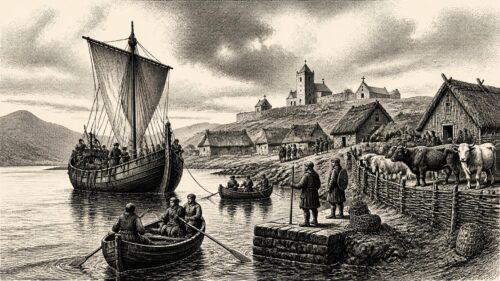
The largest sequence of events belongs to the contest between Eóin Ó Néill of Tír Eógain and Niall Garbh Ó Domhnaill of Tír Chonaill. Niall Garbh entered Dufferin, south of Strangford Lough, to aid Mac Uibhilín or MacQuillan. Eóin Ó Néill pursued with a substantial host. At the same moment, Mac Domhnaill of Scotland arrived with a numerous fleet to join Ó Néill. The annalists’ terminology matters: these were Gaelic-speaking powers whose political and military connections crossed the narrow sea, not an isolated Irish struggle interrupted by foreign intervention.
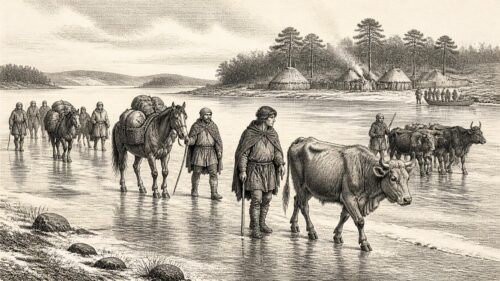
The Scottish force attacked the creaghts of MacQuillan and Robert Savage. A creaght was a moving body of people, animals and goods, often shifted for safety or as part of a campaign. The report that cattle were seized and killed, and that only a few of MacQuillan’s people escaped Dufferin before others fell at the pass or river-crossing of Newcastle, conveys more than a battlefield reverse. It describes the destruction of mobile wealth and provisions on which households depended. Such warfare could be intensely local in its targets while being regional in its alliances.
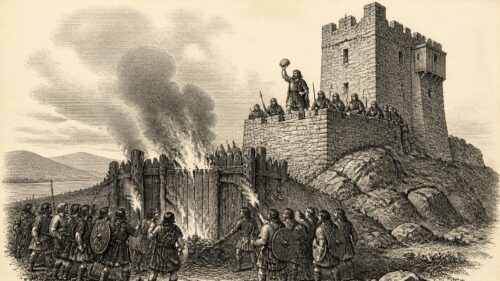
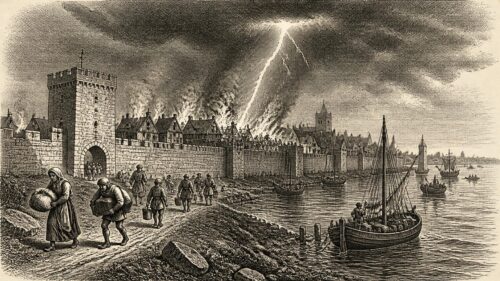
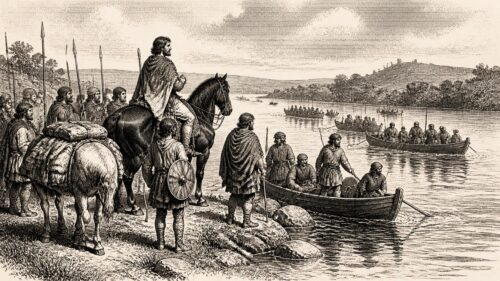
Ó Néill, his son Henry and Mac Domhnaill then burned Ardglass. The annals do not give a day or month, nor do they describe the extent of the destruction, so it would be unsafe to reconstruct the town’s losses street by street. Yet Ardglass was a valuable target: a coastal settlement and harbour in Lecale, exposed to a force that could combine land movement with ships. From there Mac Domhnaill’s men sailed north-west to Inishowen, while Ó Néill went overland to cooperate in a proposed raid on Tír Chonaill. The episode shows how maritime mobility allowed a northern war to range rapidly between Down and Donegal.
Peace Made Without Consent
The projected attack on Tír Chonaill did not proceed as the commanders intended. Neachtain Ó Domhnaill, the wife of Niall Garbh Ó Domhnaill—identified as a daughter of Ó Conchobair Fáilghe—and the sons of Tír Chonaill’s subordinate rulers met the opposing side in Inishowen. They made peace with Ó Néill without Niall Garbh’s permission. That detail is exceptionally revealing. It shows that lordship depended upon a wider political household: wives, kin, clients and lesser dynasts could negotiate when continued war threatened their interests. It also demonstrates that “peace” was not necessarily a final settlement imposed by a victor; it could be a practical agreement made by those present on the ground.
Niall Garbh and MacQuillan responded by seeking an alliance with the English of Meath and the king of England’s deputy in Ireland. Their joint force went to Magh Airgialla, near Armagh, where it moved against the Franciscan friary at Armagh. The annals say that the expedition returned home without gaining control. This does not mean that the Dublin administration was unimportant. Rather, it shows the limited and negotiated character of its reach beyond the central lordship: Gaelic rulers could seek its armed support against Irish rivals, while the “English” communities of Meath and Airgialla remained actors with interests of their own.
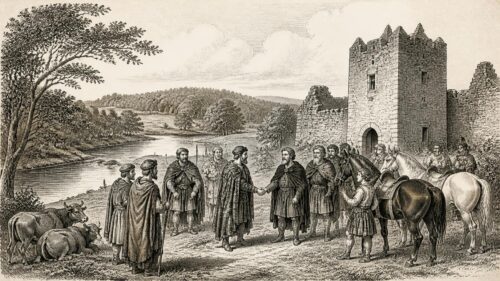
Niall Garbh then travelled through Meath, Athlone, Uí Maine and Magh Connacht, meeting Mac Diarmata of Moylurg and Tadhg Ó Ruairc before crossing the Erne. Eóin Ó Néill and Mag Uidhir came to Caol Uisce, or Narrow Water, to meet him, and peace was made. The itinerary is a reminder that diplomacy was conducted through travel, hosting and personal meetings across long distances. Meanwhile MacQuillan, expelled from his own territory, found refuge with the Savages in the Ards. Alliances in 1433 were consequently overlapping rather than neatly ethnic or territorial: Irish, Hiberno-English and Scottish lords could be enemies, hosts or allies according to immediate need.
Breifne’s Paid Soldiers
Conflict also struck Magh or “the Plain”, the territory of the Mag Raghnaill family in what is now south Leitrim and adjacent areas. Conchobhar Mag Raghnaill fought the sons of Mael Sechlainn Mag Raghnaill. The latter hired the sons of Mathgamain Mac Cába for wages, an explicit notice of paid military service. Their force burned the town or residence of Cathal Mag Raghnaill, but was overtaken as it withdrew. Three Mac Cába brothers—Rossa, Donnchad and Brian—were killed, while their elder brother Eógan was captured badly wounded. The Annals of Ulster places the encounter a week before a feast of Holy Cross, but does not supply a date that can safely be converted into a precise modern day.
The report gives a brief glimpse of the military economy. A kindred could augment its fighting strength by retaining a professional contingent, including gallóglaigh, but payment did not remove the danger borne by men placed in the rearguard. The annalist praises the dead brothers’ descent, prowess, loyalty and hospitality. In Gaelic political culture, military capability and generosity were complementary claims to status, not competing virtues.
Famine and Hospitality
Against this background of raiding and burning, both major annalistic accounts record a famine in the summer of 1433. It was remembered as Samhraidh na mear-aithne, often rendered “the Summer of Aberration” or “the Summer of Misrecognition”, because, the annal says, no one recognised a loved one or friend in the extremity of hunger. The phrase is powerful testimony to suffering, but the surviving entries do not establish a single cause. It would be rash to attribute the famine solely to warfare, weather or disease. What can be said securely is that contemporaries regarded it as severe enough to acquire a lasting name.
Hospitality therefore carries special force in this year’s record. Cathal Mór Mac Maghnusa Mag Uidhir died on 29 September. The Annals of Ulster remembered him as keeper of a general guest-house for bardic companies, pilgrims and learned retinues from Ireland and Scotland. His son Cathal was selected in his place with the involvement of Ó Néill and Mag Uidhir. The succession was political, but the obituary’s emphasis on a guest-house indicates the social obligations attached to power: food, shelter and welcome could bind together travellers, churchmen, poets and patrons.
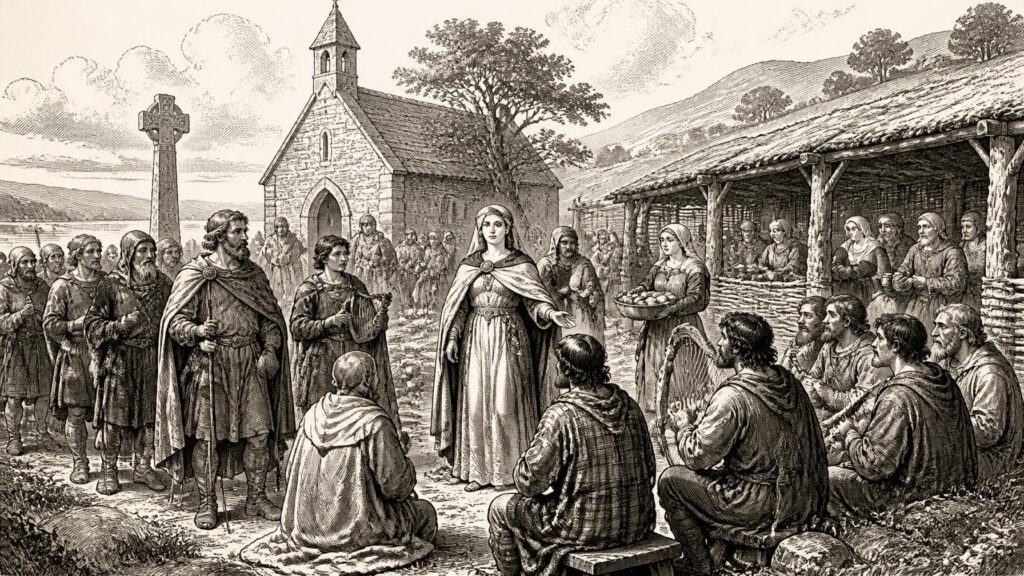
Margaret, daughter of Tadhg Ó Cearbhaill of Éile and wife of Calbhach Ó Conchobair Fáilghe, offered an even more striking example. The annals record two general invitations in 1433, directed to bardic companies and their retinues. A later Connacht annal identifies the occasions as a feast at Killeigh and a second gathering at Rathangan for those unable to attend the first. These should not be reduced to private banquets. They were public exercises in patronage, bringing learned professionals into the orbit of an Offaly lordly household and rewarding the people who preserved law, genealogy, praise-poetry, music and historical memory. Their occurrence in a famine year is a stark contrast, though the evidence does not permit a claim that the feasts answered the famine directly.
A Licence for Quin
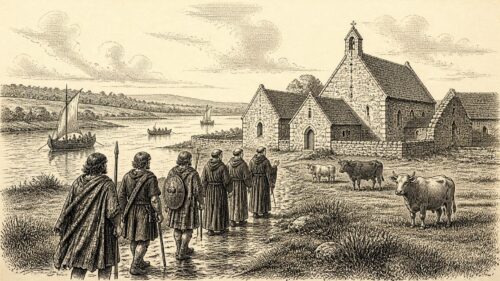
In Thomond, 1433 is also connected with the Franciscan house at Quin, County Clare. Pope Eugenius IV granted Maccon Mac Conmara permission to establish or maintain a house of Regular Observance there. The wording and later interpretation require care. A Franciscan foundation at Quin is associated with Maccon’s father, Síoda Cam Mac Conmara, from 1402; the papal act of 1433 was not necessarily the creation of an entirely new friary. It was, however, a firmly dated ecclesiastical development which linked a local Gaelic lordly family, a former Anglo-Norman castle site and a wider reforming current within the Franciscan order.
The surviving ruins at Quin still make that layered history visible. The friary incorporated elements of the earlier de Clare fortress, while Mac Conmara patronage made the site a religious and dynastic centre. The licence was secured in the pontificate of Eugenius IV, when papal authority itself faced the pressures of the Council of Basle; nevertheless, Rome could still address the religious ambitions of a Clare lord. At a local level, the act represented investment in worship, clerical life and institutional prestige rather than a simple withdrawal from secular politics.
Thus 1433 brought devastation at Ardglass, negotiated restraint in Inishowen and at Caol Uisce, factional violence in Breifne, famine across the island, and conspicuous patronage in Offaly, Fermanagh and Clare. The year’s evidence is fragmented, as medieval evidence often is. Yet together the records show an Ireland connected by sea-routes, cattle movements, learned networks, religious institutions and the hard necessities of food, security and alliance.
Primary Sources
- The Annals of Ulster, Year U1433
- Annals of the Four Masters, Annal M1433
- Annála Connacht
- Annála Connacht, electronic edition header and bibliographical information
- The Annals of Ulster, electronic edition
- Annala Uladh: Annals of Ulster otherwise Annala Senait
- Annals of the Four Masters, English translation, Volume 4
- Annals of the Four Masters, Irish text, Volume 4
- Annála Connacht, index to annals
- Quin Franciscan Friary
- Quin (Co. Clare)
- Chapter 4 – Quin Parish; Quin Abbey; Irish Deeds relating to lands in Quin parish
- MacNamara, MacConmara
- Medieval Abbeys & Friaries of County Clare
- Rian na Manach: Clare Ecclesiastical Trail
- Survey of the Churches: Barony of Bunratty Upper
- E004671 Quin Report
- Materials for the History of the Franciscan Province of Ireland, A.D. 1230–1450
- Margaret O’Carroll
- Annála Connacht, Annal 1451
- Eugenius IV
- Two Seventeenth-Century Franciscans from Thomond
- The Early Stewart Kings, the Lordship of the Isles, and Ireland