Dillon Concedes(c.1900s)
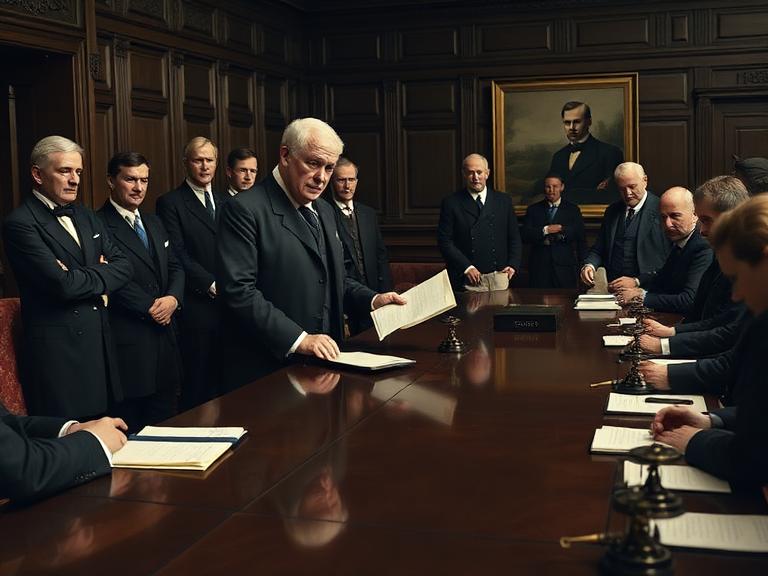
John Dillon confirmed during the closing days of January that he was prepared to relinquish any personal claim to the leadership of a reunited nationalist parliamentary movement. As chairman of the Irish National Federation and the most influential figure among the majority anti-Parnellites, Dillon might reasonably have expected to compete for control of the restored party. His decision indicated that the negotiations had moved beyond symbolic reconciliation towards a practical settlement. After nearly a decade of factional conflict, unity required senior politicians to sacrifice position, prestige and the expectations of supporters who regarded leadership as confirmation that their side had prevailed.
Dillon’s concession addressed one of the greatest obstacles confronting the reunion negotiations. The Parnellite faction would not readily submit to a leader associated with the removal of Charles Stewart Parnell in 1890, while many anti-Parnellites remained suspicious of John Redmond and those who had defended Parnell until his death. Selecting either Dillon or Redmond risked making reunion appear like a victory for one faction over another. By withdrawing his own leadership ambitions, Dillon created room for Redmond to emerge as a compromise chairman while allowing the larger anti-Parnellite body to enter the reunited organisation without formally repudiating its past conduct.
The decision reflected pressure from William O’Brien’s United Irish League, whose branches had demanded an end to parliamentary division. The League’s expansion demonstrated that tenant farmers, local organisers and nationalist voters were increasingly impatient with disputes inherited from the Parnell crisis. Dillon understood that continued resistance could isolate the parliamentary factions from the popular organisation reviving nationalist activity across Ireland. His concession was therefore both a public act of political restraint and a recognition that leadership could no longer be determined solely through negotiations among Westminster members. Organised opinion outside parliament had become powerful enough to shape the settlement.
In Limerick, the development carried particular importance for nationalist organisers, voters and newspapers following the reunion discussions. The city and county had experienced the effects of factional politics through competing organisations, divided loyalties and contested parliamentary representation. A reunited party promised to concentrate attention upon Home Rule, land purchase, tenant grievances and local government rather than personal disputes among national leaders. Dillon’s willingness to stand aside could consequently be understood in Limerick as evidence that the rival groups were finally prepared to place collective political effectiveness above the ambitions of individual parliamentarians.
Dillon did not withdraw from influence or abandon his strongly held political views. Within the reunited Irish Parliamentary Party he became Redmond’s principal deputy and retained considerable authority over organisation, policy and relations with nationalist opinion in Ireland. His concession nevertheless proved essential to the settlement completed in early February, when Redmond was elected chairman of the united parliamentary body. The decision showed that reconciliation depended upon more than shared resolutions and public handshakes. It required a senior leader to accept a subordinate position so that constitutional nationalism could recover the appearance and practical advantages of unity.
- Freeman’s Journal, late January and early February 1900 editions, reports concerning John Dillon, nationalist reunion and the selection of a chairman for the reunited parliamentary party.
- John Dillon Papers, Trinity College Dublin Manuscripts, correspondence and political material relating to the Irish National Federation and parliamentary reunion in 1900.
- John Redmond Papers, National Library of Ireland, correspondence concerning negotiations among the nationalist factions and the formation of the reunited Irish Parliamentary Party.
- Philip Bull, “The United Irish League and the Reunion of the Irish Parliamentary Party, 1898–1900,” Irish Historical Studies, volume 26, number 101, May 1988, pages 51–78.
- F. S. L. Lyons, John Dillon: A Biography, London, Routledge and Kegan Paul, 1968, discussion of Dillon’s leadership of the anti-Parnellites and acceptance of reunion under John Redmond.