Forfeited Estates(c.1700s)
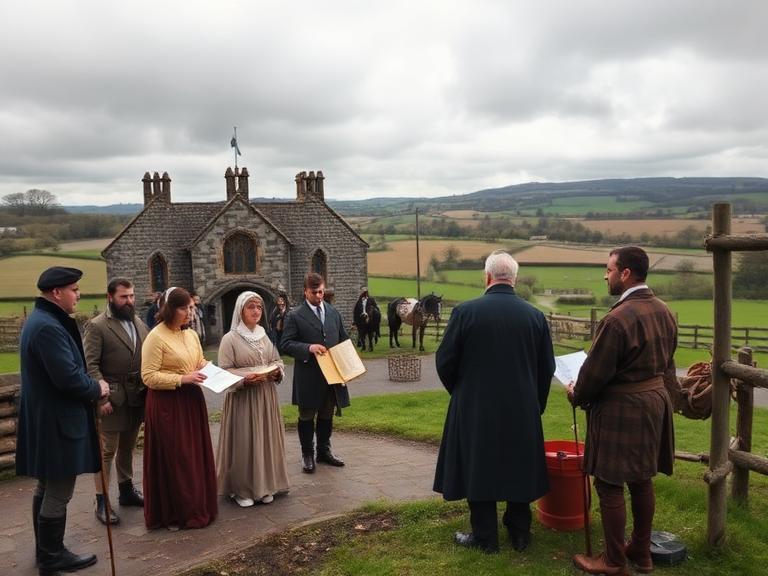
Limerick’s surrender promised qualifying Catholic inhabitants, soldiers and landholders that they could retain estates, inheritances, goods and lawful interests held under Charles II. That assurance mattered because property formed the foundation of family security, political standing and economic independence. Yet the settlement followed a war in which loyalty to James II exposed extensive lands to forfeiture. Families connected with Limerick and the western counties entered peace believing the articles protected them from dispossession if they submitted and swore allegiance. What followed was a struggle involving attainders, grants, claims, parliamentary investigations and sales that transformed ownership across Ireland for generations afterwards.
After the Williamite victory, estates belonging to supporters of James were treated as forfeited to the Crown. William III granted substantial portions to military commanders, political allies and royal favourites, provoking criticism that Irish confiscations had become instruments of patronage. Parliament later challenged these grants and sought to resume the lands for public sale. The Act of Resumption in 1700 vested forfeited interests in trustees who were required to investigate titles, hear claims and dispose of property. This process affected owners, tenants, creditors, widows and children whose interests might predate the war or depend upon settlements, mortgages and family agreements.
Claimants were instructed to register interests with the Trustees for the Sale of Forfeited Estates at Chichester House in Dublin. The surviving printed list records thousands of claims involving land and property. Each application represented an attempt to separate a lawful private interest from the estate of an attainted owner. Some claimants relied upon marriage settlements, leases, debts, jointures or earlier conveyances. Decisions could determine whether a family retained income, lost possession or received recognition as a creditor. The proceedings reveal that confiscation was not one simple transfer. It was a legal sorting process conducted after political and military defeat.
For Catholics, the forfeiture settlement carried consequences beyond the immediate loss of particular estates. Land determined voting power, local influence, marriage prospects and the capacity to provide for children. Later statutes reinforced the transformation by preventing Catholics from inheriting certain forfeited properties unless they conformed and took prescribed oaths. Ownership was therefore connected directly with religious profession. A Protestant relative could enjoy property during the lifetime of a Catholic heir who refused qualification. The law did not merely punish past political allegiance. It deliberately used confiscated land to strengthen a Protestant interest and to encourage religious conversion through material advantage.
The forfeited estates story shows how the Treaty of Limerick’s property guarantees collided with the realities of conquest, legislation and patronage. Some protected individuals recovered possessions, while others faced exclusion, litigation or the sale of lands through trustees. The surviving claims, minutes, reports and sale books allow historians to follow that transformation at individual level. They contain evidence of families attempting to prove rights within a system designed to redistribute defeated interests. For Limerick, where surrender had been exchanged for security, every disputed estate raised the same question: how much protection remained when political power controlled the interpretation of peace?
Primary Sources
- The Civil Articles of Limerick, particularly the property protections contained in Article II, 1691.
- An Act for Granting an Aid to His Majesty by Sale of the Forfeited and Other Estates and Interests in Ireland, 11 and 12 William III, chapter 2, 1700.
- A List of the Claims Entered with the Trustees at Chichester House, Dublin, published in 1701.
- Minutes of the Trustees for the Sale of the Forfeited Estates, 3 June 1700–24 August 1703.
- The Report of the Trustees for the Forfeited Estates of Ireland, delivered to Queen Anne and Parliament, 1704.