Popery Act(c.1700s)
Limerick was singled out directly in the 1704 Act to prevent the further growth of Popery. Although the city’s surrender had supposedly secured Catholic residents in their property, professions and religious position, the new statute declared that no Catholic could dwell in Limerick or Galway except under specified conditions. This restriction placed the treaty city inside legislation designed to reduce Catholic economic and social strength throughout Ireland. The act reached far beyond residence, entering family relationships, landholding, inheritance, guardianship, public employment and worship. For Limerick Catholics, it demonstrated again how quickly promised security could be replaced by systematic statutory discrimination.
The act attacked Catholic property through inheritance and leasing rules. Catholics could not purchase freehold estates or hold leases exceeding thirty-one years. Even a permitted lease could be lost if the profit exceeded one-third of the rent, allowing a Protestant discoverer to claim the interest. Where a Catholic proprietor lacked a Protestant heir, the estate was divided equally among sons rather than descending intact to the eldest. This prevented the accumulation and preservation of large Catholic estates. Property law became an instrument of religious policy, deliberately weakening families whose land might otherwise sustain wealth, influence and independence across successive generations.
Family authority was also reorganised around conversion. If the eldest son of Catholic parents became Protestant, he could secure the inheritance while his father was reduced to a life interest. A Catholic father could be compelled to provide maintenance and a portion for a child who conformed. The statute also restricted Catholic guardianship, exposing children to removal from parental custody under religious provisions. These clauses introduced incentives for division within households. Conversion was rewarded with property and legal advantage, while continued Catholic profession weakened parental control. The law therefore placed religious pressure inside inheritance decisions, education and relationships between generations.
Access to office depended upon oaths, declarations and sacramental tests that Catholics could not accept without abandoning their religion. Persons entering civil or military employment were required to take prescribed oaths, reject Catholic doctrine and receive the sacrament according to the established church. Voting was similarly tied to allegiance and abjuration oaths. These requirements converted religious conformity into a qualification for public participation. Catholics might remain loyal to the Crown, yet loyalty alone was declared insufficient. Their exclusion strengthened Protestant control of corporations, Parliament, administration and the professions, while presenting conformity as the only doorway to advancement and civic authority.
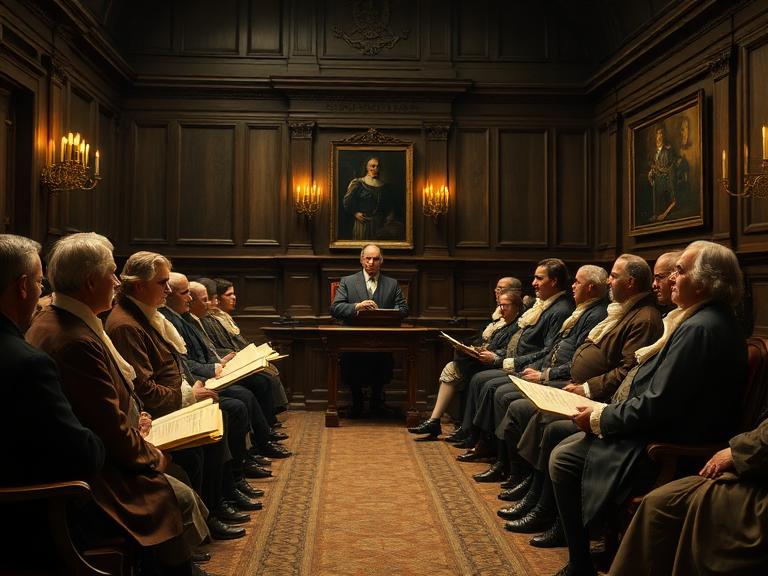
Catholic representatives opposed the bill before it became law. Sir Theobald Butler argued that it would destroy the Articles of Limerick, which had been granted in return for surrender while the garrison remained capable of resistance. The appeal failed, and royal assent was given in March 1704. Parnell regarded the statute as one of the most severe violations of the treaty settlement. Its significance lay in its combined design: land, family, residence, office and religion were regulated together. The Popery Act did not impose one isolated penalty. It constructed a system intended to make Catholic continuity economically and socially difficult.
Primary Sources
- An Act to Prevent the Further Growth of Popery, 2 Anne, chapter 6, enacted in 1704.
- The Petition of Irish Catholics against the Bill to Prevent the Further Growth of Popery, 1703.
- Sir Theobald Butler’s argument before the Irish House of Commons, 22 February 1703.
- Sir Stephen Rice’s argument before the Irish House of Commons opposing the bill, 1703.
- Counsellor Malone’s argument before the Irish House of Commons opposing the bill, 1703.