Bardan, resident druid of Limerick Archives

Summon Bardan

Summon Bardan, our resident druid, and ask him any question about Limerick.
His ancient wisdom will answer you instantly.

Period_street_scene_in_Limerick_202608062331

Estimates of fatalities in County Limerick during the Irish War of Independence, dated 1919 to 1921, vary between published compilations and local commemorations. Modern academic tallies commonly record about one hundred and twenty one confirmed deaths in the county for that period while municipal and commemorative notices sometimes cite a figure nearer one hundred and thirty. These totals combine civilians, Irish Republican Army volunteers, and members of police or Crown forces connected with Limerick city and rural districts. Differences arise from criteria used, inclusion or exclusion of deaths from wounds later sustained, and disputed incidents and identities in archival records.

A useful starting point for any definitive reckoning is the Military Service Pensions Collection held by the Irish Military Archives, whose fatalities lists, brigade activity reports and pension files provide person by person testimony and administrative detail that can confirm or correct local lists. Contemporary local newspapers such as the Limerick Leader reported shootings, ambushes, arrests and funerals and therefore remain an essential corroborating source. Cemetery registers, parish burial records and coroner or inquest reports can verify dates of death and cause. Cross checking these primary records reduces duplication and helps resolve contested identities and dates among pension applications records.

Key contested incidents within the county demonstrate why totals differ and require case by case source work. The assassinations of the Lord Mayor George Clancy and Michael O Callaghan in March 1921 were widely reported in local and national newspapers and feature in pension testimony and municipal records. Ambushes such as Oola and Dromkeen, and incidents in rural parishes, produced multiple fatalities and wounded survivors who later died of injuries. Deaths of men treated or buried in Limerick but killed outside county borders complicate counting. Accidental munitions explosions appear in pension files and coroner records and need careful classification consistency.

For editors compiling a person by person list I recommend a reproducible method that records decisions and sources. Begin with the Military Service Pensions fatalities inventory and brigade reports, then extract named entries relevant to Limerick city and county. Next consult contemporary local newspapers for incident reports and obituaries, then confirm burial in parish registers municipal cemetery ledgers. Where ambiguity remains consult coroner inquests, court records prison registers, and where available family testimony within pension applications. Finally document every inclusion decision, cite the primary source for each named fatality, and retain copies or references for future audit and verification purposes.

In summary, an authoritative Limerick body count for 1919 to 1921 is attainable but demands systematic primary source work and transparent criteria. Existing secondary summaries point to about one hundred and twenty one confirmed deaths in County Limerick with local claims around one hundred and thirty, but those figures remain provisional until reconciled with pension files, brigade reports, newspapers, burial registers and coroner or inquest material. Editors who proceed with a named roll should compile citations for each entry and retain source references. Researchers can follow the ten primary records cited below as starting points for detailed verification and consultation.

Primary Sources

  1. Military Service Pensions Collection (1916–1923), fatalities lists and brigade activity reports, Military Archives, Dublin. Searchable nominal rolls and pension files held by the Military Archives catalogue. Source Link
  2. Brigade Activity Report for East Limerick Brigade, Military Service Pensions Collection, Military Archives. Entry for Dromkeen ambush, 3 February 1921.
  3. Limerick Leader, contemporary issues March 1921, reports of the shootings of Lord Mayor George Clancy and Michael O Callaghan, local funeral notices and obituaries.
  4. Limerick Municipal Cemetery Burial Registers and ledgers, Limerick City and County Council archives, registers for 1919–1922.
  5. Coroner inquest records and verdicts for County Limerick, 1919–1922, held at the National Archives of Ireland and local quarter sessions records where applicable.
  6. Parish burial and register entries for affected parishes in County Limerick, Roman Catholic and Church of Ireland register books for 1919–1922, held at diocesan archives and National Library of Ireland microfilm.
  7. Contemporary national press reports: Irish Independent and Freeman’s Journal coverage of Limerick incidents 1919–1921, including casualty lists and official statements.
  8. Military Service Pensions Collection pension application files for named Limerick fatalities, including witness statements, medical reports and correspondence, Military Archives catalogue entries.
  9. Corps and police records: Royal Irish Constabulary and Auxiliaries incident reports and roll call casualties for operations in Limerick, held in the National Archives of the UK and reproduced in pension and government files.
  10. Photographs and funeral procession notices in local photograph collections and contemporary press photograph archives for Limerick 1919–1921, including civic funerals and commemorations, held in Limerick Archives photographic collections.

Associated Archives

War and Revolution in LimerickWar and Revolution
People and Personalities of LimerickPeople and Personalities
Historic News from LimerickHistoric News

Related Articles

LimerickWarPeopleMilitaryBrigade1921

Books Supporting the Archive

Profits from every book help fund the continuing preservation, restoration and free public sharing of Limerick’s history.

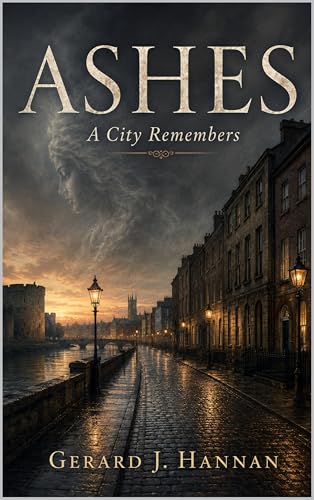
Cover of Ashes

Ashes

The Ashes Trilogy, Book One

Ashes begins the story of a group of children growing up in the streets and lanes of Limerick, where poverty and hardship are balanced by humour, imagination and fierce friendship. Their city is more than a setting: it watches, remembers and gives voice to lives often absent from official history. As the children explore their neighbourhood, they encounter family pressures, faith, hunger, danger and the first signs of a changing world. Through their adventures and loyalties, the novel captures the resilience of ordinary people and introduces the characters whose lives will unfold across the three volumes of The Ashes Trilogy.

All Books Available As Instant E-Books, Paperbacks & Hardbacks Worldwide.

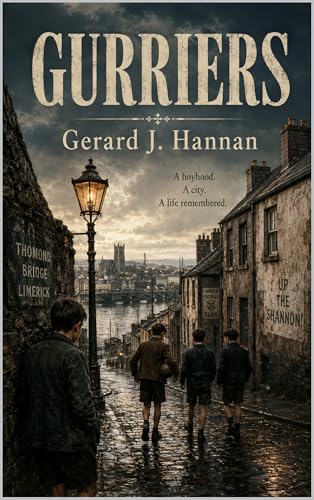
Cover of Gurriers

Gurriers

The Ashes Trilogy, Book Two

Gurriers continues the lives of the Limerick children introduced in Ashes as childhood freedom begins to give way to work, responsibility and harsher choices. Their friendships remain strong, but poverty, family expectations, faith and the pressures of growing older test loyalties once taken for granted. The streets and lanes still offer humour, adventure and belonging, yet the wider world increasingly intrudes upon their lives. Through vivid dialogue, memorable characters and the watchful voice of Limerick itself, the novel explores resilience, identity and change while showing how even the closest companions can be drawn towards futures by circumstances beyond their control.

All Books Available As Instant E-Books, Paperbacks & Hardbacks Worldwide.

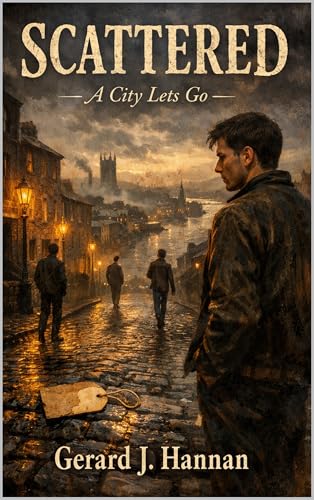
Cover of Scattered

Scattered

The Ashes Trilogy, Book Three

Scattered concludes The Ashes Trilogy as the friends who once shared Limerick’s streets and lanes face adulthood, work, hunger, faith, family duty and emigration. Time has altered their ambitions, tested their loyalties and carried some beyond the city that formed them. Yet memory continues to bind Louie, Seamus, Joe, Sean, Peter, Tony, Bardy, Maura, Eileen, Nora, Lingo and the mysterious Gleamer. Narrated through the enduring presence of Limerick itself, the novel explores separation, sacrifice and survival while recognising the humour and affection that remain. Together, their scattered lives complete a moving portrait of friendship, community and change across changing generations.

All Books Available As Instant E-Books, Paperbacks & Hardbacks Worldwide.

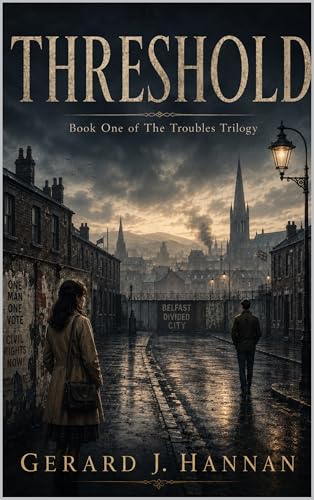
Cover of Threshold

Threshold

The Troubles Trilogy, Book One

Threshold opens in Belfast in 1968, where the Catholic Devlins and Protestant Morrows confront a city divided by religion, memory and fear. Civil rights marches, police violence, riots and internment transform ordinary streets into dangerous frontiers while political conflict enters homes, workplaces and schools. At the centre are Aileen Devlin and Thomas Morrow, whose relationship challenges the boundaries their families regard as essential to survival. As loyalty hardens into suspicion, both must decide whether inherited allegiance excuses injustice. Through family arguments, upheaval and private courage, the novel explores love, conscience, division and survival during the opening years of the Troubles.

All Books Available As Instant E-Books, Paperbacks & Hardbacks Worldwide.

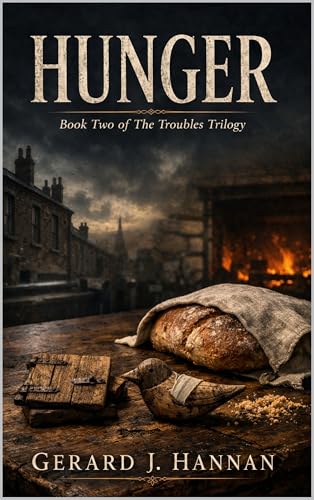
Cover of Hunger

Hunger

The Troubles Trilogy, Book Two

Hunger is Book Two of The Troubles Trilogy, set in Belfast during the 1980s. Aileen Devlin and Thomas Morrow have built a fragile life across the city’s sectarian divide, but the conflict threatens the home they created for their daughter, Claire. As hunger strikes, the Anglo Irish Agreement and violence reshape Northern Ireland, republican Declan and loyalist Billy exploit fear, grief and vulnerable young men. Against them stand Aileen, Kathleen and Elsie, whose quiet strength keeps their families human. This is a story of love, survival and the courage to place people before causes in a divided society under pressure.

All Books Available As Instant E-Books, Paperbacks & Hardbacks Worldwide.

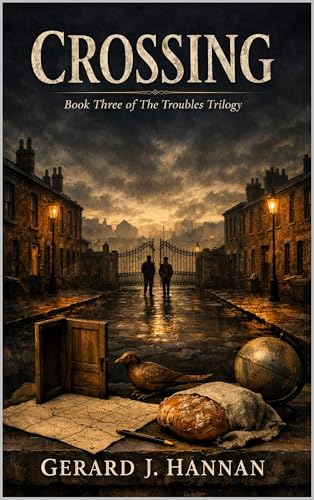
Cover of Crossing

Crossing

The Troubles Trilogy, Book Three

Crossing concludes The Troubles Trilogy during the decade from 1990 to 2000, as Belfast moves from violence towards negotiation, ceasefires and uncertain peace. The Devlin and Morrow families face political change alongside grief, ageing, divided loyalties and the consequences of choices made across three decades. Relationships once threatened by religious boundaries are tested by memory, mistrust and the fear that compromise may betray the dead. As the peace process gathers momentum, ordinary people must decide whether reconciliation is possible. The trilogy closes with a story of endurance, forgiveness, loss and hope beyond inherited division, proving that peace begins with courage.

All Books Available As Instant E-Books, Paperbacks & Hardbacks Worldwide.

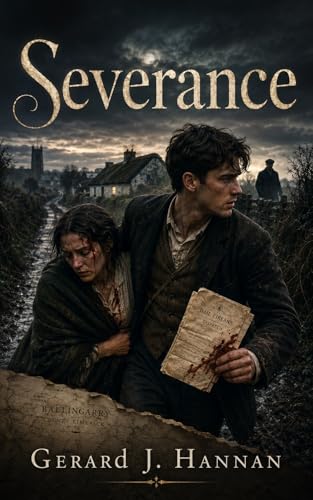
Cover of Severance

Severance

Historical Novel

Severance is a historical novel set in Ballingarry, County Limerick, during Ireland’s struggle for independence. A torn and bloodied dispatch passes through fields, kitchens, lofts and hidden routes, placing everyone who handles it in danger. Michael Enright carries the burden of trust, while Mary, Molly and their neighbours struggle to preserve the message and protect one another. Against them, Captain Edward Harcourt studies every delay, wound and fragment for clues. As loyalty, fear and betrayal tighten around the hidden network, ordinary people must decide what they are willing to risk when history enters their homes and silence itself becomes dangerous.

All Books Available As Instant E-Books, Paperbacks & Hardbacks Worldwide.

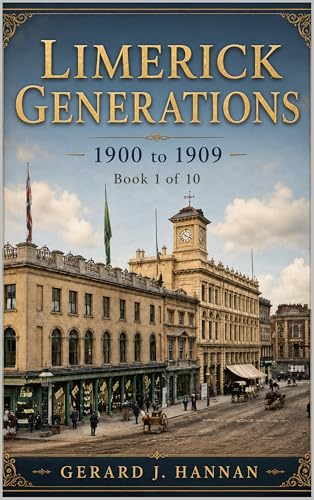
Cover of Limerick Generations: 1900 to 1909

Limerick Generations

1900 to 1909

Limerick Decalogy, Book One

Limerick Generations: 1900 to 1909 opens the decade by documenting a city and county entering the twentieth century amid political debate, commercial activity, poverty, faith and technological change. Month by month, the book connects major Irish developments with local events, institutions, streets and communities. Public meetings, labour, transport, education, sport, business and everyday life reveal how national questions were experienced in Limerick. Historical reports and carefully reconstructed narratives bring forgotten moments and ordinary people into focus. As Book One of Limerick Decalogy, it establishes the foundation for a ten volume journey through one hundred years of local history and memory.

All Books Available As Instant E-Books, Paperbacks & Hardbacks Worldwide.

Cover of Limerick Generations: 1910 to 1919

Limerick Generations

1910 to 1919

Limerick Decalogy, Book Two

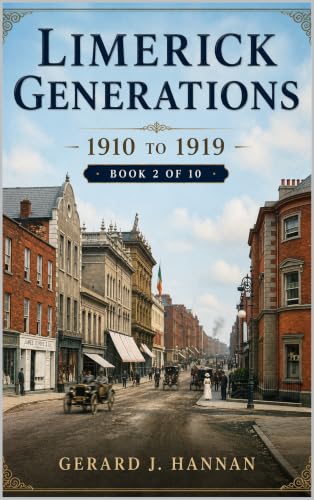
Limerick Generations: 1910 to 1919 traces a decade of political transformation, labour conflict, war, revolution and social change across Limerick city and county. Home Rule, unionist resistance, trade union organisation and the First World War entered streets, farms, schools, workplaces and family life. The Easter Rising, conscription crisis, influenza pandemic and general election altered public loyalties and expectations. The decade culminated in the Limerick Soviet of 1919, when workers challenged military restrictions through organised collective action. As Book Two of Limerick Decalogy, the volume preserves local experiences of hardship, courage, grief, endurance and change during years of intense historic upheaval.

All Books Available As Instant E-Books, Paperbacks & Hardbacks Worldwide.