The Destruction of Kincora1088 CE
In 1088, Muirchertach Ua Briain’s Munster faced renewed rivals after his father’s death. While he campaigned in Leinster, Connacht forces defeated Munster fleets, and his brother Diarmait’s coastal raid ended disastrously after relics were seized. Leinster’s attack on Waterford failed, while southern townsmen suffered defeat near Cork. Domnall Ua Lochlainn secured Connacht’s submission from Ruaidrí Ua Conchobair, then led a northern-Connacht invasion deep into Munster, devastating settlements and destroying Kincora, the Ua Briain stronghold. Raiding damaged cattle-based rural livelihoods, while ports supplied maritime power. Scholarly and dynastic deaths reflected Ireland’s fractured kingship and interlinked political, ecclesiastical, commercial and agricultural worlds.
Dateline
The year opened in a kingdom unsettled by the death, in 1086, of Tairdelbach Ua Briain. His son Muirchertach had secured the kingship of Munster, but not the commanding position his father had exercised across much of Ireland. Leinster resisted him, Connacht was recovering its independence, and Domnall Ua Lochlainn of Cenél nÉogain was emerging as the strongest northern ruler. The events firmly recorded for 1088 reveal these rivalries becoming connected: naval warfare on the Shannon and Atlantic coast, campaigning around Waterford and Cork, and a northern-Connacht invasion that penetrated deep into Munster.
The annals provide unusually rich coverage, but they remain selective. They report royal expeditions, deaths of leading churchmen and poets, the seizure of relics and the destruction of cattle. They rarely describe ordinary households directly. Everyday conditions must therefore be approached through the consequences of warfare and through broader archaeological evidence for eleventh-century settlement, farming, crafts and trade.
A Contest Without a High King
Muirchertach Ua Briain entered 1088 as Munster’s dominant king and the heir to a powerful political tradition. He was also facing resistance from Donnchad, son of Domnall Remar, a leading Uí Chennselaig claimant in Leinster. The previous year Muirchertach had defeated Donnchad’s forces at Ráith Étair, near Dublin, yet Leinster had not been reduced to obedience.
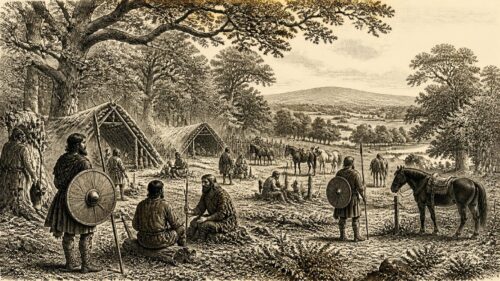
In 1088 Muirchertach again led a hosting into Leinster. Such a hosting was not simply a battle force. It was a public demonstration of kingship, assembling subordinate rulers and their followers while demanding supplies, hospitality and political recognition along its route. Its effectiveness depended upon the king’s ability to protect his own territories while campaigning elsewhere. Muirchertach’s enemies exploited precisely this weakness.
Connacht was ruled by Ruaidrí na Saide Buide Ua Conchobair, who had formerly been constrained by Muirchertach’s father. Ruaidrí now moved aggressively against Munster. At Inis Adharcach, identified with Incherky in the Shannon near Athlone, his forces blocked a Munster fleet from advancing upstream and inflicted a serious defeat. Another Munster naval force, which had sailed around the western coast to plunder Connacht, was also attacked and its crews slaughtered. The record does not permit a reliable total for the dead, but it presents the reverses as substantial.
War Along the Southern Coasts
Muirchertach’s brother Diarmait Ua Briain also undertook a naval circuit during the year. According to the Annals of Inisfallen, his force plundered Cluain Uama, modern Cloyne, and removed relics associated with St Barre from Cell na Clérech in County Cork. The raiders were overtaken, and the annalist gives a death toll of 200. Exact medieval casualty figures should be treated cautiously, but the entry clearly records a disastrous pursuit.
The taking of relics was more than ordinary looting. A saint’s shrine, bell, staff or bodily remains embodied the prestige and protection of a church. Relics could attract pilgrims, validate oaths and strengthen claims to ecclesiastical property. Their removal injured both the material wealth and public standing of the community that guarded them. The episode also shows that membership of a royal dynasty offered no guarantee of unity: Diarmait had previously challenged Muirchertach and remained an independent political actor.
Meanwhile, Donnchad son of Domnall Remar led Leinstermen towards Waterford. The fortress was defended by Énna son of Diarmait and nobles from Desmond. Donnchad failed to take it and was defeated at Inis Teimle, probably Great Island in the estuary of the Suir, Barrow and Nore. Control of this waterway mattered because it connected Waterford’s harbour with inland routes and marked a strategic meeting point between Leinster and Munster interests.
A separate annalistic notice records that the Uí Echach of Munster inflicted a great slaughter on men from Dublin, Wexford and Waterford when the combined townsmen attempted to plunder Cork. The report is a reminder that the Hiberno-Norse ports did not form a single permanent alliance. Their fleets could serve Irish kings, pursue their own interests or combine for a profitable expedition. Their inhabitants were culturally mixed, and by this period the boundary between Scandinavian and Irish identities was often indistinct.
The Northern Invasion
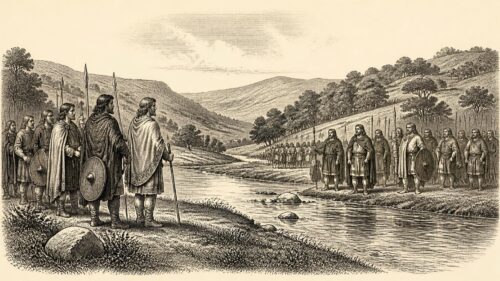
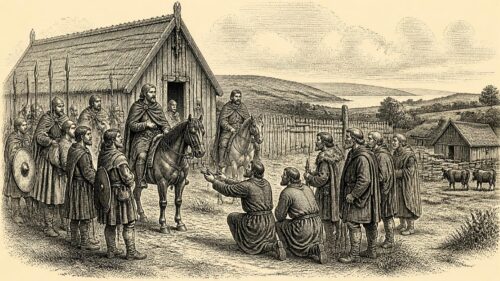
The decisive political development came when Domnall Ua Lochlainn marched into Connacht. Ruaidrí Ua Conchobair gave him the hostages of Connacht, formally acknowledging his superior position. One Clonmacnoise-related account adds that Ruaidrí quartered Domnall and the forces of Cenél Conaill and Cenél nÉogain for a fortnight. Billetting such an army imposed a heavy burden of food, fodder and shelter, but it prepared the coalition for a much larger operation.
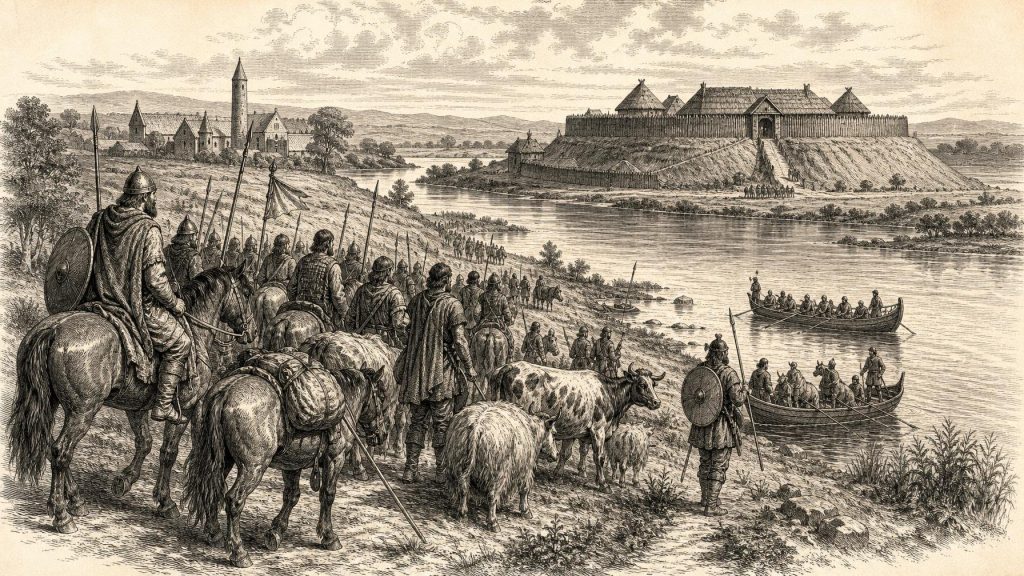
The northerners and Connachtmen then invaded Munster while Muirchertach was occupied in Leinster. They struck Limerick and Mungret and devastated a broad corridor through the province. The places named by different annals include Emly, Lough Gur, Bruree, Dún Aiched and Druim Uí Chléirchín. This was not a raid confined to a border district. It reached the central plain of Munster and threatened important royal, ecclesiastical and agricultural centres.
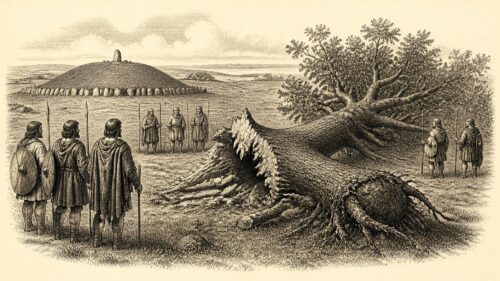
Kincora, the Ua Briain royal stronghold beside the Shannon at Killaloe, was broken down or levelled. Probably composed largely of earthwork and timber defences, halls and associated buildings, Kincora was both a practical base and a statement of dynastic authority. Its demolition proclaimed that the prestige inherited by Muirchertach from Brian Bóruma and Tairdelbach Ua Briain could be challenged at home.
The Annals of Ulster confirm the central outline of the invasion. The Four Masters, drawing upon later compilations, add that 160 Irish and Hiberno-Norse warriors were taken as hostages or pledges. They name several prominent captives and state that Muirchertach ransomed them with cattle, horses, gold, silver and meat. Although the elaboration and numbers require caution, the forms of payment are historically revealing. Wealth existed in precious metal, but cattle, horses and stored provisions remained essential measures of power.
Raiding and Rural Life
Ruaidrí also raided Corco Modruad, approximately the Burren and adjoining north Clare districts, three times. The annalists employ stark language, claiming that scarcely a cow or person escaped destruction. This is rhetorical rather than a literal census of devastation, yet repeated raiding could cause profound hardship. Cattle supplied milk, meat, hides, traction and social wealth. Their loss threatened both elite revenues and the survival of farming households.
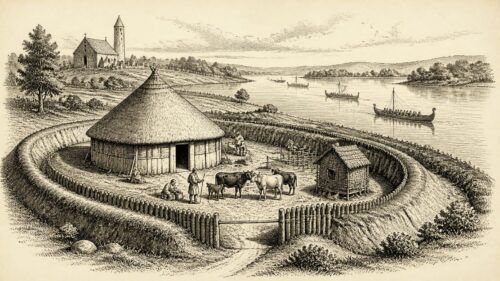
Most people lived in dispersed rural settlements, commonly enclosed farmsteads, and worked within a mixed agricultural economy. Herding was particularly important, while grain cultivation, dairying, woodland resources and seasonal movement also supported communities. Armies damaged this system by taking livestock, consuming food stores, trampling crops and carrying away captives. The victims named in the annals are usually nobles, but the burden fell heavily upon tenants, herders, craftspeople and dependants whose names were not recorded.
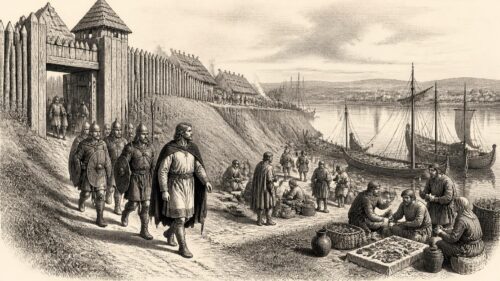
The towns presented a different concentration of life. Dublin, Waterford, Wexford, Cork and Limerick contained merchants, sailors and specialised craftspeople working in materials including leather, wood, bone, antler and metal. Archaeology shows long-distance exchange with Britain and continental Europe, together with the use of silver, imported pottery and other goods. In 1088 these commercial settlements were also military assets. Their ships transported raiders, controlled river approaches and linked royal warfare to maritime experience.
Churchmen, Poets and Dynastic Women
Several important learned figures died during the year. Cormac Ua Finn, chief lector of Dál gCais, and Máel Ísu Ua Máel Giric, described as Ireland’s chief poet or ollamh, appear in the record. The high status given to them reflects a society in which professional learning served both church and court. Poets preserved genealogies, praised rulers and interpreted political legitimacy, while lectors directed advanced study of scripture and related learning.
Cathalán Ua Forreidh, remembered for wisdom and piety, died at Emly on a Sunday associated by the annalists with the feast of Ciarán of Saigir. Tigernach Ua Bráein, a senior office-holder and scholar of Clonmacnoise, also died. A later manuscript note credited Tigernach with writing annals up to 1088, giving his name to the Annals of Tigernach. Modern scholarship is more cautious: he may have copied or continued part of the chronicle, but the compilation contains much older material and cannot safely be treated as his sole work.
Clonmacnoise itself was more than an isolated monastery. Its position beside the Shannon and major east-west routes made it a centre of pilgrimage, political influence, craftsmanship and learning, with a considerable lay population. The production of manuscripts, including annals, genealogies, poetry and narrative literature, belonged to this broader learned environment.
The deaths of two royal women also exposed the family connections beneath the warfare. Dubchoblaig, daughter of Áed Ua Conchobair and wife of the king of Munster, died, as did Mór, daughter of Tairdelbach Ua Briain and wife of Ruaidrí Ua Conchobair. Such marriages joined rival dynasties without permanently ending their disputes. Mór’s son Tairdelbach Ua Conchobair was born in 1088, apparently at or near the time of her death. He would later become king of Connacht and one of the most formidable claimants to the high-kingship of twelfth-century Ireland.
A Turning Point
No single battle settled Ireland’s leadership in 1088. Muirchertach remained king of Munster and would recover from these blows, while Ruaidrí demonstrated Connacht’s revived strength and Domnall Ua Lochlainn showed that northern power could reach the Shannon and beyond. The capture of hostages, destruction of Kincora and repeated defeat of Munster fleets nevertheless made the year a severe test for Ua Briain authority.
More broadly, the year reveals an interconnected Ireland. River islands and estuaries shaped strategy; port towns supplied ships and warriors; monasteries guarded relics and historical learning; and cattle linked subsistence, tribute and ransom. The annals remember kings, churchmen and poets, but behind their notices lay communities repeatedly required to feed armies, rebuild settlements and restore herds after the campaigns had passed.
Primary Sources
- The Annals of Ulster: Year U1088
- Annals of Inisfallen: Annal AI1088
- Annals of the Kingdom of Ireland by the Four Masters
- The Annals of Tigernach
- Chronicon Scotorum: Annal CS1088
- Ua Briain, Muirchertach
- Ua Lochlainn (Mac Lochlainn), Domnall
- Ua Conchobair, Ruaidrí na Saide Buide
- Ua Conchobair, Tairdelbach (O'Conor, Turlough)
- Ua Bráein, Tigernach
- Ua Briain, Tairdelbach
- Ua Máelshechlainn, Conchobar
- Viking
- Early Medieval
- Vikings in Mayo and Connacht
- Viking Videos
- Irish School of Illumination, c. 650–1100
- Clonmacnoise Visitor Guide
- High Crosses
- General: Vikings in Ireland
- The Leinster Marshal Thesis
- Early Medieval Settlement and Lake-Dwelling Research
- Peritia 16 (2002): Journal of the Medieval Academy of Ireland
- Logainmneacha na hÉireann: Cá Bhfuil a dTriall?
- The Definite Article in Irish Place-Names
- National Museum of Ireland: Kildare Street Guide