

Hyenahall’s Open Range
Although 31,242 BCE is a modern filing date rather than a datable Irish event, evidence from surrounding millennia depicts a volatile Late Pleistocene environment. Derryvree, County Fermanagh, preserves tundra wetland deposits between tills, proving an ice-free interval with freshwater habitats, plants and insects before later glaciation. Castlepook Cave, County Cork, contains Ireland’s richest cold-stage vertebrate assemblage, including mammoth, giant deer, reindeer, hyaena and wolf, but accumulated over thousands of years. A marked reindeer femur may indicate brief human butchery around 33,000 years ago, though disturbed context prevents stronger claims. No evidence supports permanent settlement, institutions, agriculture or continuous population there.
View Record
Crag Cave’s Thawwater
31,243 BCE is not a recoverable Irish year but an interval within Marine Isotope Stage 3, when climate and ice limits changed. Later glaciation destroyed evidence, leaving environmental archives rather than social history. Derryvree sediments, sealed between tills, indicate cold, open tundra-like wetlands during an interstadial interval. Crag Cave speleothems show episodes of infiltration, implying local thaws and absence of continuous ice or permafrost. Southern cave fauna confirms Pleistocene mammals, though deposits are mixed across time. A cut-marked Castlepook reindeer bone may suggest human presence, but cannot establish settlement, culture or occupation. Evidence therefore depicts a fragmented, dynamic Ice-Age landscape.
View Record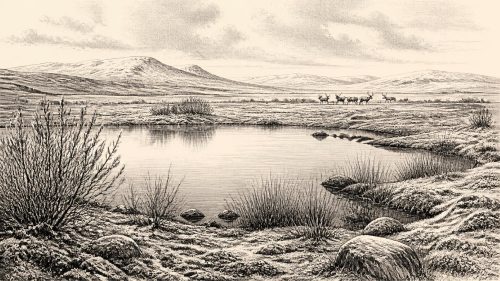
Fermanagh’s Buried Pond
Around 31,244 BCE, Ireland was a climatically unstable glacial frontier, not a historically observable society. Organic sediments at Derryvree, County Fermanagh, dated broadly to later Marine Isotope Stage 3, preserve evidence of cold freshwater wetlands, open vegetation and arctic-alpine species between glacial advances. Kerry speleothems indicate intermittent above-freezing conditions, while cave finds demonstrate occasional presence of reindeer, mammoth, horse, giant deer, bear and hyena. A cut-marked reindeer bone from Castlepook Cave may indicate human butchery, but no secure settlement evidence exists. Falling sea levels altered access routes before expanding ice sheets reshaped landscapes and destroyed much earlier evidence across Ireland.
View Record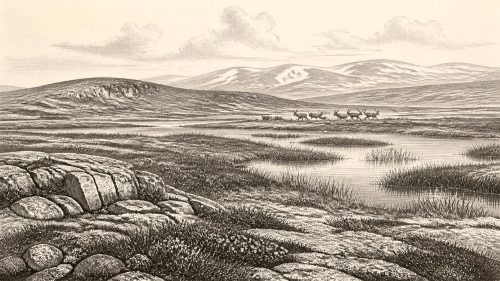
The Castlepook Reindeer Fragment
Around 31,245 BCE, Ireland was an unstable MIS 3 Ice Age landscape, not a datable historical year. Open tundra, wetlands and intermittent ice supported reindeer, mammoth, giant deer, predators and other fauna, while changing sea levels and ice margins affected access. Castlepook Cave in County Cork preserves varied Pleistocene remains, including a reindeer femur fragment dated to about 33,000 years ago with a possible stone-tool cut mark. If confirmed, it may indicate an early human visit, but not settlement or continuous population. Environmental deposits at Derryvree and Aghnadarragh show cold, treeless habitats. Evidence remains fragmentary, requiring cautious interpretation by researchers.
View Record
Derryvree’s Muskeg Horizon
31,246 BCE is not a recoverable Irish calendar year, but an approximate Late Pleistocene MIS 3 horizon. At Derryvree, County Fermanagh, freshwater organic sediments between glacial tills indicate an ice-free, treeless cold wetland before renewed ice advance. Castlepook Cave, County Cork, preserves reindeer, mammoth, hyaena and other fauna, demonstrating open habitats and broad north-west European ecological connectivity. A cut-marked reindeer femur may indicate human butchery, but its old, insecure context prevents claims for settlement or permanent occupation. Growing British-Irish ice sheets later transformed habitats. Evidence permits environmental reconstruction and cautious possibilities, not political, social or annual history at this depth.
View Record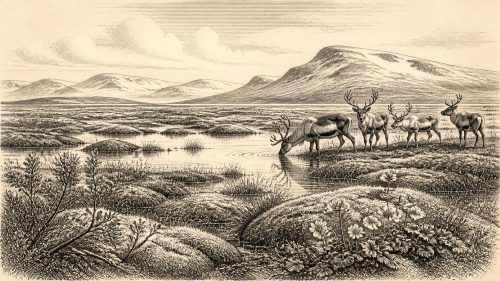
BIRM-166’s Radiocarbon Interval
Around 31,247 BCE, Ireland lay within the climatically unstable Late Pleistocene MIS 3, although this date represents a broad calibrated radiocarbon range rather than a precise year. Derryvree, County Fermanagh, preserves freshwater sediments beneath a drumlin, revealing ice-free periglacial tundra with pools, mosses, sedges, dwarf shrubs and cold-adapted insects. Castlepook Cave, County Cork, contains MIS 3 fauna including mammoth, reindeer, giant deer, predators and lemmings, indicating ecological connectivity. Ice-sheet growth was underway but maximum glaciation followed later. No secure settlement evidence exists. A possibly butchered reindeer bone suggests only tentative human presence. Evidence supports dynamic ecosystems, not societies or chronologies.
View Record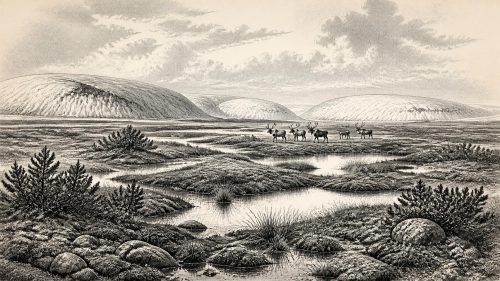
Derryvree’s Trifoliate Record
At the notional date of 31,248 BCE, Ireland’s evidence cannot support an annual history, but illuminates a broad, variable Late Pleistocene interval. Derryvree, County Fermanagh, preserves freshwater sediments between glacial tills, dated broadly to 36,900–31,700 years BP, indicating locally ice-free, open wet tundra with sedges, mosses, juniper and bogbean. Ice-sheet extent and sea levels varied regionally before the later Last Glacial Maximum. Castlepook Cave, County Cork, contains cold-climate fauna, including reindeer and mammoth. A cut-marked reindeer femur may indicate human carcass processing, but cannot prove settlement. Glaciation and erosion have left Ireland’s ecological past clearer than its human history alone.
View Record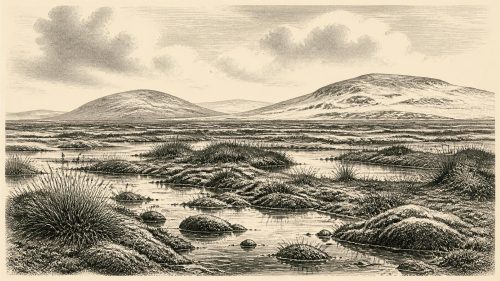
Crag Cave’s Thaw Pulses
31,249 BCE is a modern label for a broad MIS 3 horizon, not a precise Irish event. Ireland experienced unstable cold-stage conditions, with shifting ice, permafrost, meltwater and sparse vegetation before the Last Glacial Maximum. Derryvree’s sediments preserve a treeless freshwater wetland between glacial advances, while Crag Cave calcite indicates episodic thaw and water infiltration in south-west Ireland. Castlepook Cave fauna show cold-adapted mammals, including reindeer, mammoth and hyena, reached the island. A marked reindeer femur may indicate early human butchery, but remains unconfirmed. Changing coastlines allowed ecological connections, though routes remain uncertain; political or cultural history is largely unrecoverable.
View Record
Derryvree and the Reindeer
31,250 BCE is a modern label within variable Marine Isotope Stage 3, not a precisely dated Irish event. Ireland experienced fluctuating cold conditions, with ice, periglacial terrain and occasional ice-free habitats. At Derryvree, Fermanagh, an interglacial wetland deposit, dated broadly to 36,900–31,700 calibrated BP, preserves tundra-like plants and insects between glacial advances. Castlepook Cave, Cork, contains fauna accumulated over millennia, including reindeer, mammoth, predators and other cold-country species, indicating ecological connections with north-west Europe. A cut-marked reindeer femur may record Upper Palaeolithic butchery, but proves neither permanent settlement nor wider society. Together sites reveal changing environments and possible human visits.
View Record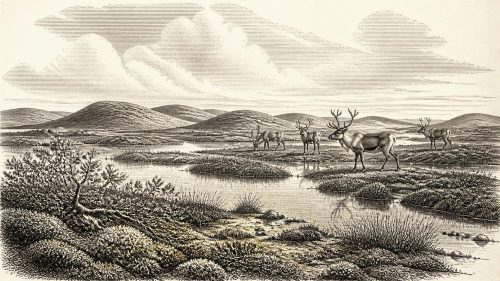
Castlepook’s Reindeer Scar
Around 31,251 BCE, Ireland cannot be described through precise calendar dating or written history. Evidence from Derryvree, County Fermanagh, records an ice-free Middle Midlandian interval, with wet, treeless tundra vegetation between glacial advances. MIS 3 climates fluctuated, while the British–Irish Ice Sheet was expanding and changing coastlines and routes. Castlepook Cave, County Cork, preserves diverse Ice Age fauna, including a reindeer femur bearing a scar possibly made by a stone tool. This may indicate brief human carcass processing, but old excavation methods and disturbed cave deposits prevent proof of hunting, occupation or settlement. Ireland’s earliest human presence therefore remains unresolved.
View Record