Brookeborough and the Curragh1957 CE
In 1957, Ireland faced economic decline, emigration and renewed border violence. The IRA’s failed Brookeborough attack killed Seán South and Fergal O’Hanlon, while subsequent violence prompted de Valera’s Fianna Fáil government, elected in March, to intern republicans at the Curragh. Despite constitutional commitment to unity, Dublin prioritised state authority. T. K. Whitaker’s analysis of protectionism, weak exports and unemployment initiated preparation for economic reform, alongside IMF and World Bank membership. Social legislation addressed health insurance, mental treatment, married women’s legal status and Gaeltacht employment. The Fethard-on-Sea boycott exposed religious intolerance, while theatre censorship and railway closures reflected rural contraction nationwide.
Dateline
Ireland in 1957 was pulled between two sharply contrasting pressures. The Republic’s economy was losing people and confidence, while republican violence on the border made partition an immediate security question rather than a distant constitutional aspiration. A change of government brought Éamon de Valera, the dominant figure of an earlier political generation, back to office. Yet the same year also began to produce institutional and intellectual responses to economic failure that would point beyond the protectionist assumptions of the past.
Brookeborough’s Deadly Opening
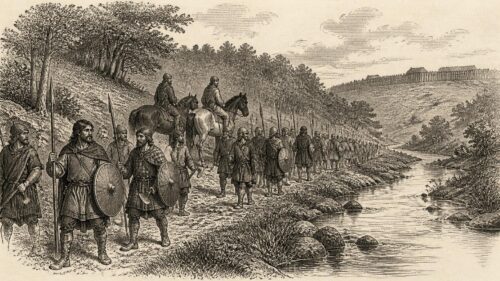
The year began in violence. On 1 January, an Irish Republican Army column attacked a Royal Ulster Constabulary barracks at Brookeborough, County Fermanagh, during the IRA’s Border Campaign, which had begun in December 1956. The assault failed. Two IRA volunteers, Seán South of Limerick and Fergal O’Hanlon of County Monaghan, died of wounds sustained in the operation. Their deaths immediately acquired a powerful republican resonance, while demonstrating the campaign’s practical weakness: a lightly supported armed effort could alarm governments and communities on both sides of the border without being capable of achieving its stated political purpose.
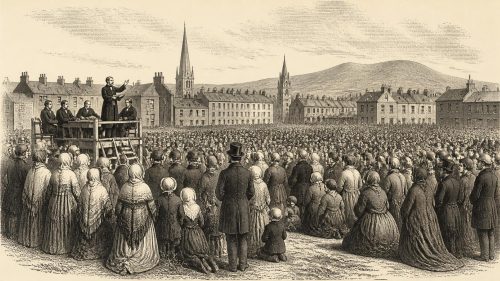
South’s funeral in Limerick drew a very large crowd, and O’Hanlon’s death was similarly commemorated in Monaghan. These public displays did not amount to a popular mandate for a renewed war, but they helped give the campaign an emotional charge. For the authorities in Belfast, London and Dublin, the raid was evidence that an apparently limited guerrilla campaign could produce wider instability. Northern Ireland had already used its Special Powers machinery to detain republicans. In the Republic, the outgoing inter-party administration prosecuted suspected participants under the Offences against the State legislation.
The political difficulty for Dublin was acute. The State asserted a constitutional claim to national unity, but it could neither accept an armed organisation making war in its name nor risk a confrontation with Britain and Northern Ireland. That tension would become more severe during the summer.
An Election in a Depressed Republic
Economic distress was central to the general election of 5 March. The coalition headed by Fine Gael’s John A. Costello had governed since 1954, alongside Labour and Clann na Talmhan, but it faced unemployment, fiscal retrenchment and the relentless departure of young people for Britain and elsewhere. The preliminary results of the 1956 census, published during 1957, reinforced an already sombre public mood: the population of the Republic had fallen markedly since 1951. In a European decade generally associated with recovery and growth, independent Ireland seemed to many observers to be standing still or slipping backwards.
Fianna Fáil won 78 of the 147 Dáil seats, sufficient for a single-party majority. Fine Gael took 40; Labour, Clann na Talmhan and independents were reduced in strength. Sinn Féin also returned four abstentionist TDs, its strongest electoral showing for decades, an outcome shaped in part by the Border Campaign and by voters dissatisfied with the established parties’ handling of partition. The result did not mean that the electorate endorsed IRA violence: Fianna Fáil’s victory rested principally on the coalition’s economic difficulties and on de Valera’s continuing political authority.
On 20 March the Sixteenth Dáil nominated de Valera as Taoiseach, defeating Costello in the House by 78 votes to 53. At seventy-four, de Valera was beginning his last period as head of government. Seán Lemass became Tánaiste and Minister for Industry and Commerce, while James Ryan took the Department of Finance. The cabinet thus joined an ageing national leader to ministers who would have decisive roles in reframing economic policy. The new government inherited not prosperity but a sense that the existing model had reached its limit.
Security Before Republican Romance
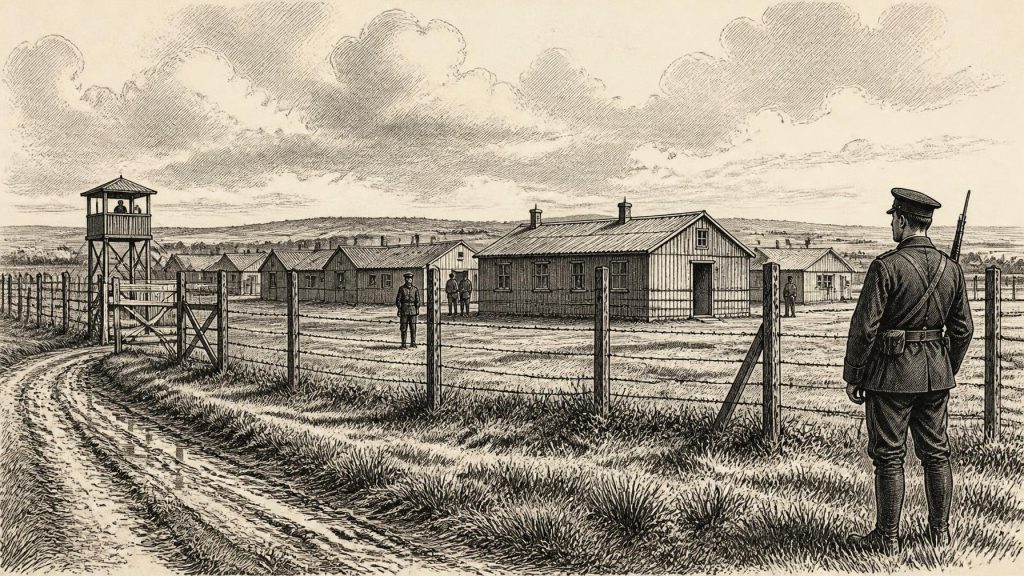
The Border Campaign continued after the election. On 4 July, following the killing of an RUC constable near Forkhill in County Armagh, the Irish government moved against the IRA leadership and activated detention without trial under the emergency powers available through the Offences against the State framework. A proclamation dated 5 July was published on 8 July, and arrests followed rapidly. The Curragh camp, so associated with earlier Irish conflicts, again became a place of internment.
This was a consequential choice for a Fianna Fáil government led by a veteran of the revolutionary generation. Ministers insisted that no private body could claim the right to wage war independently of the State, and warned that continued actions could create both international conflict and a damaging civil confrontation. Republicans and their supporters instead condemned internment as an abandonment of the national cause. A Dáil debate in November exposed the constitutional and moral controversy: detainees were being held without ordinary trial, while the government argued that extraordinary action was required to contain an organisation conducting armed operations.
Internment did not settle the partition question, and it did not remove republican feeling. It did, however, show that the Republic’s government placed state authority and public order above any implication that its constitutional aspiration to unity licensed the IRA campaign. That distinction was fundamental. Dublin’s official nationalism remained rhetorically committed to the whole island, but it would not permit a military campaign launched from, or sustained through, the Republic.
Economic Crisis and New Openings
The year’s most important long-term development was not a published plan but the preparation of one. T. K. Whitaker, Secretary of the Department of Finance from 1956, produced a memorandum known as The Irish Economy, 1957. Its diagnosis was severe. A small domestic market, high protection, weak exports, agricultural underemployment and heavy emigration could not provide a viable future. Whitaker’s warning was framed in stark national terms: prolonged economic failure could undermine the substance of independence itself.
It is important not to project the later transformation backwards too neatly. Whitaker’s public report, Economic Development, and the First Programme for Economic Expansion belonged to 1958. Nor had the Republic suddenly abandoned protection in 1957. But the new government did authorise further interdepartmental work in December, allowing Whitaker to draw on other departments and state bodies. That administrative decision was a genuine turning point in preparation, if not yet in visible economic results. It helped create the machinery from which the policy shift of the following years would emerge.
Ireland also joined the International Monetary Fund on 8 August 1957 and entered the World Bank system that summer. These steps were modest in their immediate effect, but symbolically important. The State was engaging more formally with international financial institutions at the very moment its officials were reassessing the sustainability of an inward-looking economy. This did not cure unemployment or halt emigration. It did widen the range of advice, information and potential finance available to policymakers.
Legislation passed during the year reveals both continuity and tentative adaptation. Prize Bonds regulations put a new savings instrument into operation in March. The Voluntary Health Insurance Act created a statutory basis for a voluntary health-insurance scheme, though the scheme’s practical development lay ahead. The Health and Mental Treatment Act came into force on 1 September, replacing earlier arrangements in an area of care long shaped by large institutions. Such measures did not alter everyday life overnight, but they show a state extending and reorganising parts of its social and financial apparatus while under intense economic pressure.
Language, Law and Unequal Citizenship
The Gaeltacht Industries Act received assent on 18 December. It established the legal basis for a board intended to manage rural industries and productive employment schemes in Irish-speaking districts, while also encouraging the preservation and extension of Irish as a vernacular language. The board itself was to be established in 1958, so it would be misleading to portray 1957 as the year of a functioning industrial revival in the Gaeltacht. Nonetheless, the Act acknowledged a hard reality: language policy could not be separated from employment, migration and the survival of communities in the west.
Another statute, the Married Women’s Status Act of 30 April, consolidated and amended the law on married women’s legal position. It affirmed a married woman’s capacity to acquire and dispose of property, contract, sue and be sued in her own right. This was a meaningful formal clarification of legal personality. Yet it must not be mistaken for full social equality. Married women still faced deeply restrictive expectations, including the marriage bar in parts of public employment, and Irish family law and social policy remained strongly centred on male breadwinning and the home.
The limits of religious pluralism were made painfully visible at Fethard-on-Sea in County Wexford. In the spring, Sheila Cloney, a Church of Ireland woman in a mixed marriage, left the village with her daughters after a dispute over their religious upbringing. Under the Catholic Church’s Ne Temere rules, a non-Catholic spouse marrying in the Church had been required to promise that children would be raised Catholic. On 12 May, the local Catholic curate called for a boycott of Protestant-owned businesses and farms. The boycott became a national controversy, and the Dáil discussed it on 4 July.
Fethard-on-Sea should not be reduced to a simple story of an entire country acting with one mind; there were local differences, public criticism and national unease. But the episode exposed the insecurity felt by the Protestant minority and the social power which clerical authority could exercise in a small community. It placed the private subjects of marriage, schooling and children at the centre of a public argument about citizenship, conscience and belonging in the Republic.
Culture and a Contracting Island
Irish cultural life also registered pressures against conformity. On 13 January Samuel Beckett’s radio play All That Fall, set in a fictionalised version of Foxrock, was first broadcast by the BBC Third Programme. Its medium was British, but its sounds, speech and suburban setting were unmistakably connected to Dublin. In May, the Pike Theatre’s production of Tennessee Williams’s The Rose Tattoo was visited by Gardaí, and director Alan Simpson was prosecuted after an allegation that the production constituted a lewd entertainment. The affair became an emblem of the restrictive climate confronting adventurous theatre.
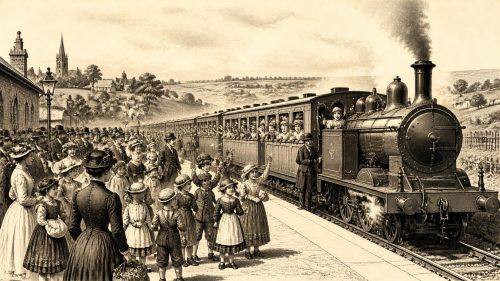
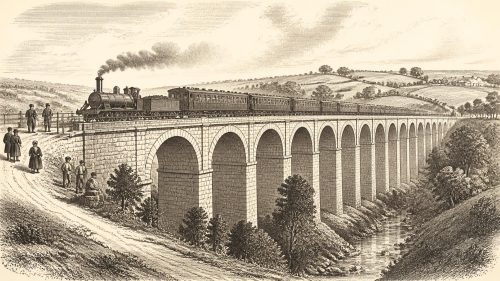
Meanwhile, transport decisions altered the physical map of the island. On 30 September, Northern Ireland-directed closures ended services on several Great Northern Railway branches and on the Sligo, Leitrim and Northern Counties Railway. Closures on connected sections within the Republic followed in October. For passengers in border counties and rural districts, the loss of rail connections meant more than timetable changes: it narrowed access to towns, markets, work and social networks. At a time when emigration was already draining smaller communities, reduced local connectivity added to the feeling of contraction.
By December 1957, Ireland had not escaped its crisis. The border remained divided and dangerous; the Republic remained poor by western European standards; and the forces pushing people abroad still shaped family decisions and village life. But the year was more than a catalogue of decline. De Valera’s return restored a familiar political figure, while Whitaker’s work, the Bretton Woods membership, Gaeltacht legislation and new social statutes indicated that the institutions of the State were beginning, unevenly, to reconsider how Ireland might endure and develop.
Primary Sources
- Nomination of Taoiseach, Dáil Éireann debate, 20 March 1957
- Dáil and Seanad Election Results
- Committee on Finance: Internees under the Offences Against the State Acts—Motion, Dáil Éireann debate, 6 November 1957
- Ceisteanna—Questions: Fethard-on-Sea Boycott, Dáil Éireann debate, 4 July 1957
- Irish Statute Book: Public Acts of 1957
- Offences Against the State (Amendment) Act, 1940
- Offences Against the State (Amendment) Act, 1940 (Detention) Regulations, 1957
- Married Women’s Status Act, 1957
- Health and Mental Treatment Act 1957
- Gaeltacht Industries Act, 1957
- Prize Bonds Regulations, 1957
- Census of Population of Ireland, 1956, Volume I
- Census 1956 Reports
- Address by Professor Cormac O’Gráda to the Central Bank Whitaker Lecture
- T. K. Whitaker: Financial Policies for the State
- Irish Emigration History: 1950s
- Ireland and the IMF
- Ireland Joins Fund and Bank, World Bank Group Timeline
- CAIN: Chronology of Key Events, 1800 to 1967
- Irish Railway Factsheet: Great Northern Railway (Ireland)
- Notice of Closing Down of Rail and Road Services, Sligo Leitrim & Northern Counties Railway
- Mixed Marriage, ‘a Grave Injury to Our Church’: An Account of the 1957 Fethard-on-Sea Boycott
- The Boycott at Fethard-on-Sea, 1957: A Study in Catholic-Protestant Relations in Modern Ireland
- The Correspondence of Harold Pinter and Henry Woolf
- Minister Advised to Close Dublin Run of The Rose Tattoo
- The State, Public Policy and Gender: Ireland in Transition, 1957–1977