A Year of Fracture1070 CE
In 1070, Ireland’s fragmented political order was reshaped by dynastic losses, regional expansion and recurrent violence. Murchad, Diarmait mac Maíl na mBó’s heir and Dublin’s ruler, died, while Diarmait’s son Glún Iairn was killed, weakening Leinster’s succession. Tairdelbach Ua Briain of Munster secured hostages in Leinster and eastern Ireland, and Osraige’s king submitted to him. Killings, executions and blinding affected rulers and heirs across Ulster, the midlands and Connacht. Churches remained influential but vulnerable to conflict, notably at Termonn Da-Beóc. Clerical deaths and Clonmacnoise improvements reveal active religious networks. Despite warfare, farming, trade and urban life in Dublin continued there.
Dateline
In 1070 Ireland had no single government, fixed capital or uncontested high king. Power rested with provincial rulers, lesser kings, dynastic kindreds and major churches, all connected by warfare, fosterage, marriage, tribute, gift-giving and the exchange of hostages. The year’s annalistic record is unusually revealing. It combines the death of a major Leinster prince with campaigns of submission, killings within ruling families, attacks upon church lands and practical work at Clonmacnoise. Yet the sources are terse and sometimes contradictory. What can be securely described is not a neat national story, but a political order being reshaped by several sudden losses.
Leinster’s Lost Heir
The most consequential firmly recorded event was the death at Dublin of Murchad, son of Diarmait mac Maíl na mBó. Contemporary annalistic traditions call him king of Leinster and of the foreigners, meaning the Hiberno-Norse inhabitants of Dublin and associated forces. The later Annals of the Four Masters describe him more cautiously as lord of both under his father. Either wording reflects his position as the active lieutenant and probable principal heir of Diarmait, then the strongest ruler in southern Ireland.
The Four Masters place Murchad’s death on a Sunday during a winter feast of the Virgin Mary, but it is safer not to convert that description into an exact modern date. Their entry preserves a lament portraying Dublin as bereft of its leader and praising Murchad for distributing horses and cattle. Although literary and celebratory, the poem conveys important political values. A successful king was expected to lead warriors, defend dependants, reward poets and followers, give generously to churches and turn captured or collected wealth into loyalty.
Murchad’s death mattered far beyond personal grief. He had governed Dublin for his father and had recently campaigned aggressively in Mide. In the previous year his army had burned Granard, Fore and Ardbraccan, including ecclesiastical places. Annalists interpreted the suffering that followed in religious terms, but they do not establish that it caused his death. What is clear is that Diarmait lost the experienced son who had connected the Leinster heartland with Dublin’s military and commercial resources.
A second son of Diarmait, Glún Iairn, was also killed in 1070. The Annals of Ulster say that he died while raiding in Luigne, whereas other traditions attribute his death more generally to the men of Mide. Such differences warn against excessive precision. Politically, however, the result is unmistakable: two sons of the ageing Diarmait disappeared in one year. The succession within Uí Chennselaig became less secure, helping to create the Leinster disputes visible in 1071 and after Diarmait’s own death in 1072.
Ua Briain Moves East
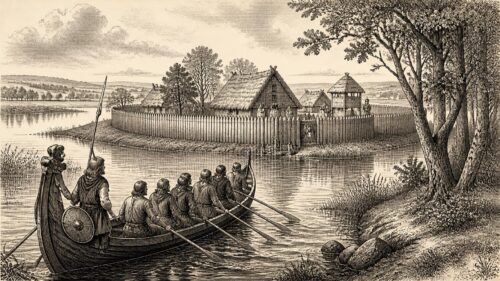
Tairdelbach Ua Briain, king of Munster and grandson of Brian Bóruma, was still formally Diarmait’s ally. Diarmait had helped him overcome rivals in Munster, but Tairdelbach was now building an independent sphere of influence. The Munster-centred Annals of Inisfallen report that he went into Leinster, carried away valuables and obtained hostages from Leinster and eastern Ireland. Among them was a son of Domnall Remar, a member of Diarmait’s wider dynasty.
Hostages were not merely captives taken for punishment. They were guarantees that agreements, tribute and political submission would be honoured, and their identity reflected the standing of the people who gave them. Tairdelbach’s collection of hostages therefore advertised authority while also placing him in a strong position to influence Leinster’s approaching succession struggle. His action could be presented as assistance to Diarmait, but it also ensured that Munster’s king possessed leverage of his own.
Domnall Ua Gilla Pátraic, king of Osraige, separately submitted to Tairdelbach and received what the Inisfallen annalist calls a very large stipend of valuables and riches. This was diplomacy conducted through wealth. By accepting gifts from a more powerful ruler, a king acknowledged a relationship of dependence, while the giver gained an ally without having to occupy his territory. Osraige, lying between Munster and Leinster, was strategically vital, and Domnall’s submission demonstrated that Tairdelbach’s influence had crossed Munster’s traditional frontier.
Violence Across the Kingdoms
The year’s northern and midland entries show how unstable lesser kingships could be. Ua Eochaidén, king of Dál Araide, was killed by his own people. Muirchertach Ua Loingsigh was beheaded by his people, while the rulers of Tethba and Cairbre also died violently. The Four Masters associate the death of the Tethba king, Conn grandson of Conn, with a victory won by Donnchad Ua Ruairc and the Uí Briúin. This points to pressure from Bréifne and its neighbours upon the central territories around the Shannon.
Connacht’s succession was likewise narrowed by assassination. Two men described as royal heirs, Conchobar son of the cleric Ua Conchobair and Murchad Liathanach Ua Conchobair, were treacherously killed. The annals disagree over whether the Conmaicne or Uí Fallamain were responsible for each death, so assigning the individual killings with confidence is impossible. Their shared significance lies in the removal of plausible royal candidates. In Uí Failge, meanwhile, Muirchertach Ua Conchobair was blinded by his brother Conchobar. Blinding could permanently disqualify a rival because an unblemished body was traditionally expected of a king.
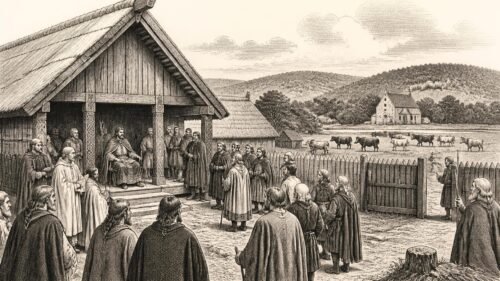
These incidents were not evidence of general chaos so much as products of competitive dynastic politics. Irish kingdoms were usually governed by extended royal kindreds rather than strict father-to-eldest-son succession. Several adult relatives might possess credible claims, and supporters could abandon one candidate for another. Assemblies, negotiated settlements and church mediation remained important, but ambush, mutilation and killing were recurring means of resolving disputes when accommodation failed.
Churches, Learning and Sanctuary
The ecclesiastical record is especially full. Ailill Ua hAirretaich, successor of Ciarán at Clonmacnoise, died while on pilgrimage at Clonard. Donngal son of Gormán, remembered as a distinguished lector and sage, also died. Different annals connect him with Kells and Clonmacnoise, illustrating how leading scholars could belong to networks extending across several major foundations. Cathasach son of Cairpre, superior of Mungret near Limerick, died as well; the Four Masters later praised him as head of the clergy of Munster.
Fergal Ua Laidcnén, superior of Othain, and Máel Brigte son of Cathasach, an ecclesiastical office-holder at Armagh, also died. At Iona, the abbot identified through descent from Baethéne was killed by the son of another abbot. These notices undermine any simple division between peaceful monasteries and violent secular society. Important churches held estates, treasures, dependants and hereditary offices. Their leaders often came from powerful families and participated in the same regional rivalries as kings, even while monasteries provided worship, education, hospitality, sanctuary and arbitration.
The plundering of Termonn Da-Beóc by Ruaidrí Ua Canannán was treated with particular condemnation. A termonn was protected church land, in this case associated with the religious settlement of Dabheoc near Lough Derg. The Ulster annalist declared that God and the saint took vengeance within a year. This was theological interpretation rather than neutral reporting, but it shows how violations of sanctuary were remembered: an attack upon ecclesiastical property could be presented as an offence against the patron saint personally.
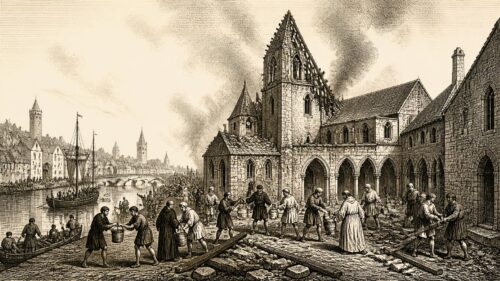
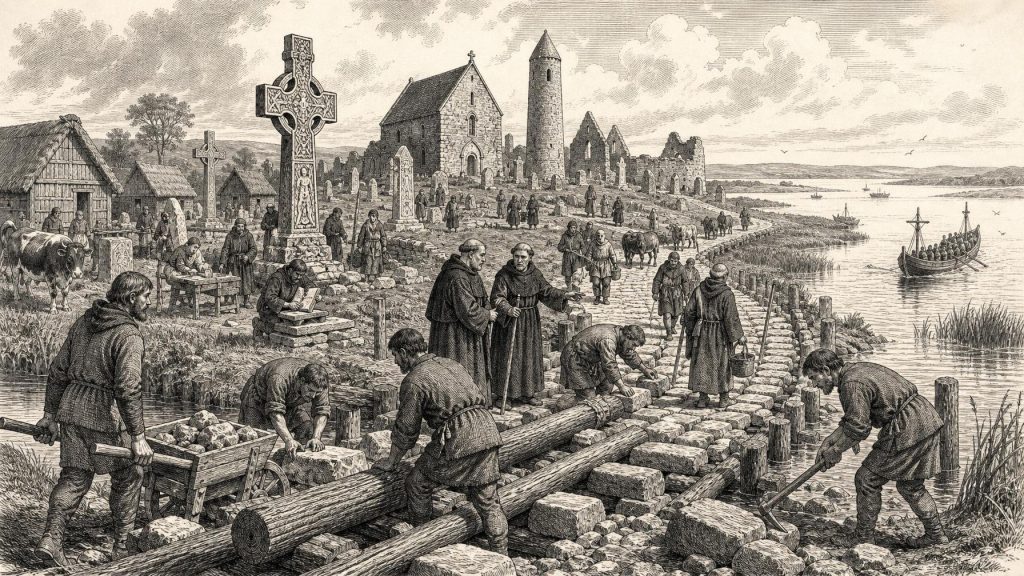
At Clonmacnoise, the Four Masters record a more constructive development. Máel Ciaráin Mac Cuinn na mBocht made causeways linking crosses, sacred areas and the entrance to the settlement’s street. Since this notice survives in a later compilation, its precise details should be treated carefully, but it plausibly reflects organised investment in movement through a crowded monastic centre. Clonmacnoise was not simply a group of churches. It was a riverine settlement of clergy, craftspeople, students, pilgrims, tenants and visitors, requiring maintained routes across low, sometimes wet ground.
Work, Wealth and Dublin
The annals concentrate on elites, yet their language opens a window onto ordinary economic life. Cattle and horses appear as gifts, booty and measures of generosity because livestock remained fundamental to rural wealth. Most people lived in dispersed farmsteads, tending cattle, sheep and pigs while cultivating oats, barley and other crops. Dairy produce was especially important. Raiding damaged households not only through immediate violence but by removing breeding animals, food reserves and the means of meeting rents or supporting dependants.
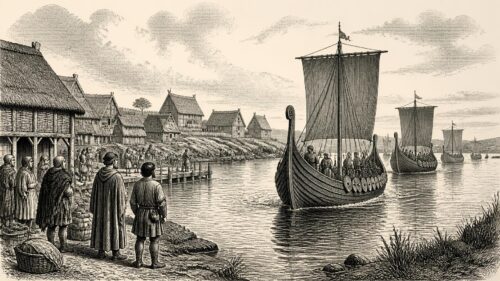
Dublin offered a different, though connected, environment. Archaeology cannot isolate changes belonging solely to 1070, but eleventh-century deposits reveal timber houses, wattle paths, fenced plots, hearths, workshops and intensive metalworking. The town’s Hiberno-Norse population participated in trade with Britain and continental Europe, while maintaining close political and economic relations with Irish rulers and inland communities. Silver and coin circulated there alongside an economy still heavily expressed in livestock, textiles and valuable objects.
Murchad’s death did not bring Dublin’s commercial life to an end, nor did Tairdelbach’s expedition create an immediate Munster empire in the east. The year was nevertheless a turning point. Leinster lost two prominent sons of its dominant ruler, Ua Briain influence reached into Leinster and Osraige, and several regional dynasties were weakened by battle or internal killing. The roads built at Clonmacnoise and the continued work of Dublin’s households offer a quieter counterpoint: while rulers competed, Ireland’s religious centres, farms and towns continued to sustain the society over which they fought.
Primary Sources
- The Annals of Ulster: Year U1070
- Annals of the Four Masters
- Annals of Tigernach
- Annals of Inisfallen
- Chronicon Scotorum: Annal CS1070
- Diarmait (Diarmait mac Maíl na Mbó)
- Ua Briain, Tairdelbach
- Donnchad Máel Na Mbó
- Pre-Norman Dublin: Capital of Ireland
- Viking Collection
- DCAA.01.27 Temple Bar West, Dublin 2
- The 18th Annual Sir John T. Gilbert Lecture: Transcript
- Dublin's Foundations: A Viking Legacy
- Irish School of Illumination, c. 650–1100
- Clonmacnoise Monastic Site
- Clonmacnoise Visitor Guide
- Kingship, Society, and Sacrality: Rank, Power, and Ideology in Early Medieval Ireland
- Changing Human-Cattle Relationships in Ireland: A 6000-Year Isotopic Perspective
- Reflections on Kingship, the Church, and Viking Age Silver in Ireland
- The Practice of Irish Kingship in the Central Middle Ages
- Emerging from the Mist: Ireland and Man in the Eleventh Century
- History of Lough Derg
- Sanctuary and Termon of Cranfield