Connacht Ascendant1122 CE
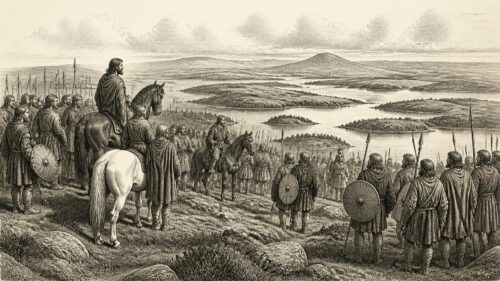
In 1122, Tairdelbach Ua Conchobair of Connacht emerged as Ireland’s foremost overking, exploiting northern weakness after Domnall Ua Lochlainn’s death. He secured Munster’s division through submission, capture and installation of rival rulers, campaigned in Mide and towards Lough Erne, and received Leinster-Dublin recognition. Nevertheless, northern raids, Ulaid dynastic conflict and midlands warfare showed authority remained contested. Annals also record cattle raiding’s human and economic burden, revealing rural wealth and royal logistics. Ecclesiastical life saw relic discovery at Lann, prominent clerical deaths, pilgrimage, learning and gradual reform alongside older offices. Connacht’s ascendancy was influential, but Ireland remained politically fragmented in practice.
Dateline
The surviving Irish annals make 1122 unusually visible, but they do not provide a continuous national story. Their brief notices preserve royal expeditions, cattle raids, deaths and ecclesiastical successions, while saying little directly about harvests, households or ordinary work. They also disagree over which events deserved inclusion. Read together, however, they depict a year in which Tairdelbach Ua Conchobair extended Connacht’s influence across Ireland, Munster’s political division hardened, and the north entered a less stable period after the death of Domnall Ua Lochlainn in 1121.
A New Political Balance
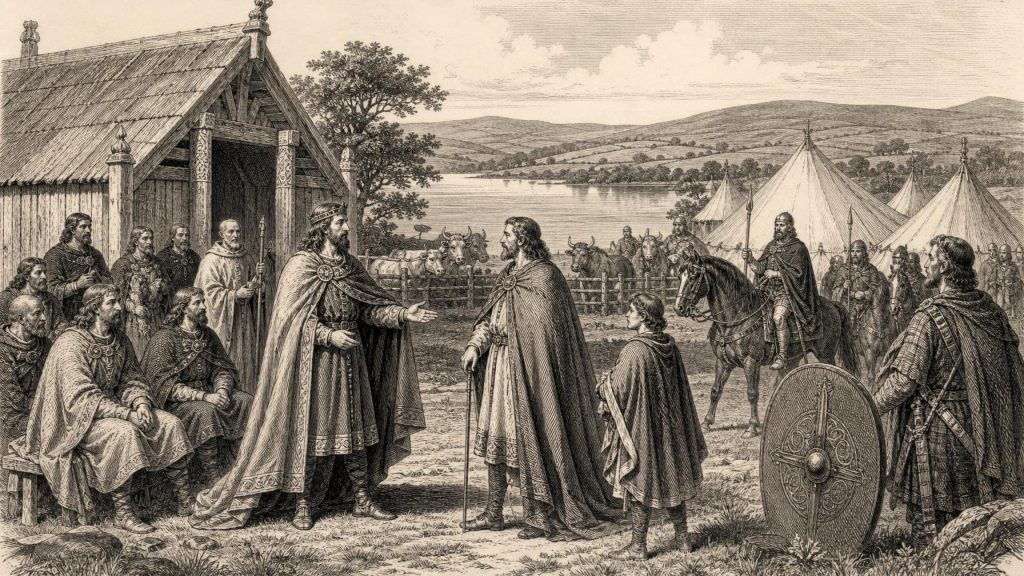
Tairdelbach Ua Conchobair, king of Connacht, was now the leading claimant to the kingship of Ireland. This did not make him monarch of a unified state. Irish overkingship depended upon military reach, hostages, tribute, alliances and the submission of lesser kings, all of which required constant renewal. Nevertheless, the disappearance of Domnall Ua Lochlainn removed the most formidable northern counterweight to Tairdelbach’s ambitions. The Annals of Tigernach consequently call the Connacht ruler “king of Ireland” when describing the year’s affairs.
Marriage formed part of this political system. Tairdelbach’s wife Mór, daughter of Domnall Ua Lochlainn, died in 1122. Her marriage had connected the ruling houses of Connacht and Cenél nEógain during her father’s lifetime, helping to contain direct conflict between two expanding powers. Her death did not immediately cause war, but it marked the passing of a personal bond that had supported the previous balance between Connacht and the north.
Munster Brought to Terms
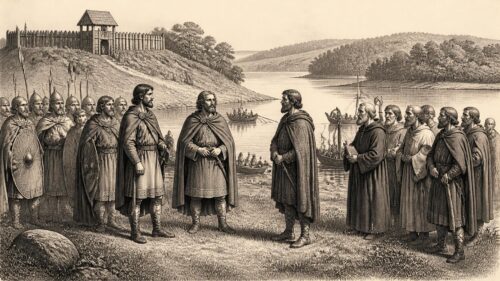
The Annals of Inisfallen record peace between Connacht and Desmumu, the southern kingdom of Munster ruled by the Meic Carthaig. Another tradition supplies a more forceful political background: Tadc Mac Carthaig submitted to Tairdelbach, while Tairdelbach Ua Briain was captured and the kingship of Tuadmumu, or Thomond, was assigned to the captive ruler’s full brother, Tadc Ua Briain. These details reflect Tairdelbach Ua Conchobair’s established policy of preventing the restoration of a single, powerful Munster kingship.
The division between Mac Carthaig power in Desmumu and Ua Briain power in Tuadmumu was therefore not simply geographical. It was an instrument of Connacht strategy. Tairdelbach could recognise, remove or restore regional rulers while presenting himself as arbiter above them. The peace noted by the Munster-based Annals of Inisfallen may have been valuable to communities recovering from his destructive campaigns of 1121, including the plundering of Lismore. Yet it was a peace founded upon submission and intervention rather than equality.
Raiding Through the Midlands
In the midlands, Áed Ua Ruairc was killed by the men of Mide while carrying away their cattle. The sources variously style him king of Conmaicne or of eastern Connacht, while later scholarship identifies him as the reigning Ua Ruairc ruler of Bréifne. The Annals of Inisfallen specifically credit Murchad Ua Máelshechlainn, king of Mide, and interpret the killing as vengeance encouraged by offended saints. Such language shows how churches could frame warfare morally, especially when raiders had violated ecclesiastical property or protection.
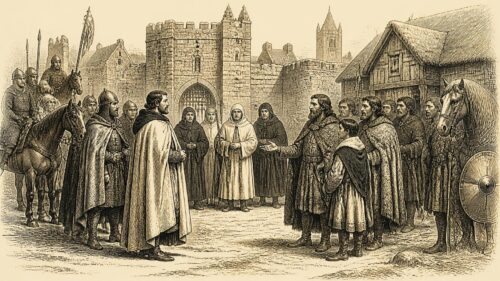
Áed’s death weakened an important dynasty on Connacht’s eastern approaches and helped clear the way for the later prominence of Tigernán Ua Ruairc. Tairdelbach also led an army to Loch Silech in Mide. There the ruler described by the Annals of Ulster as the “son of Murchad”, king of Leinster and the foreigners, entered his house. This was probably Énna Mac Murchada. Entering a superior king’s household normally conveyed submission, alliance or recognised dependence, linking Leinster and Hiberno-Norse Dublin more closely to Tairdelbach’s political network.
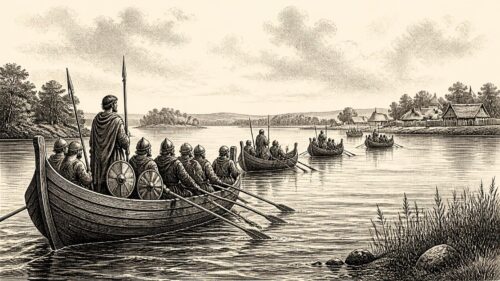
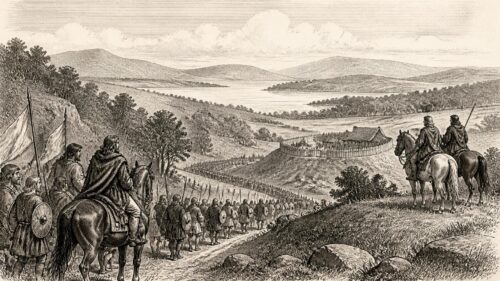
The Annals of Tigernach add that Tairdelbach raided as far as Lough Erne and returned with numerous cattle and captives. Whether this expedition formed part of the same campaign cannot be proved. Its direction was significant, however. From Connacht, an army could press through the midlands towards Fir Manach and the waterways of the Erne, demonstrating that Tairdelbach’s reach extended beyond his provincial heartland.
A Contested North
Domnall Ua Lochlainn’s son Conchobar succeeded to leadership among Cenél nEógain but lacked his father’s commanding position. In 1122 Conchobar and his people made a major raid into Ulaid, reaching Cell Ruaid and carrying away what an annalist called an innumerable cattle-spoil. The Annals of Inisfallen also report a battle between Cenél nEógain and Fir Manach in which the latter fled. These notices suggest vigorous attempts to preserve northern supremacy despite the change of ruler.
Ulaid was itself divided. The Annals of Tigernach and Chronicon Scotorum record that Áed son of Donn Sléibe Ua hEochada, king of Ulaid, was killed in battle by Ua Mathgamna. This was not merely an external invasion but part of the recurring contest among Ulster dynasties. Authority in the north was consequently fragmented: Cenél nEógain could raid deep into Ulaid, Fir Manach could resist, and rival Ulaid houses fought for kingship. Tairdelbach Ua Conchobair had no uncontested command there.
Saints, Shrines and Succession
The most precisely dated Irish event of the year occurred on Spy Wednesday, 22 March. The shrine or relic deposit of Colmán son of Luachán was discovered at Lann, apparently about a cubit beneath the earth. Colmán was the patron of Lann Mhic Luacháin, now Lynn near Mullingar. The discovery would have enhanced the community’s prestige and may have encouraged renewed interest in the saint. A substantial Middle Irish Life of Colmán was composed during the twelfth century, although it cannot be dated securely to 1122 itself.
Relics were devotional objects, but they also embodied a church’s history, rights and protective power. Their discovery could attract pilgrims and offerings while strengthening claims to land and exemption from secular dues. The annalists’ decision to preserve the weekday and date indicates that Colmán’s recovery was regarded as more than a local curiosity.
Several important churchmen died during the year. Conchobar Ua Lígda, successor of Ailbe at Emly, was followed by Máel Mórda grandson of Clothna. Emly remained one of Munster’s foremost ancient churches, although Cashel was gaining primatial importance under the diocesan arrangements promoted at the Synod of Ráith Bressail in 1111. At Armagh, Bishop Máel Coluim Ua Brolcháin died while on pilgrimage in the hermitage of Derry. Gofraid, lector of Armagh, also died, while the Four Masters record the deaths of learned or administrative churchmen associated with Monasterboice, Coleraine and Clonard.
Learning and Reform
The titles attached to these men reveal a church still combining older monastic offices with the developing diocesan order. A coarb represented succession to a founding saint; an airchinneach or erenagh managed lands and temporal affairs; a lector directed advanced teaching and textual study. The deaths of lectors from Armagh and Clonard, and the report that Congal of Clonard died while on pilgrimage at Glendalough, show that Ireland’s ecclesiastical centres remained connected by travel, scholarship and devotion.
Church reform was an important background rather than a single event of 1122. Cellach of Armagh and his younger associate Malachy were seeking greater conformity with wider Latin Christian practice, including stronger episcopal government, canonical liturgy and sacramental discipline. Older institutions did not simply disappear. The year’s record instead captures diocesan bishops, saintly coarbs, hereditary interests, scholars, pilgrims and hermits existing within the same changing religious landscape.
Wealth and Everyday Life
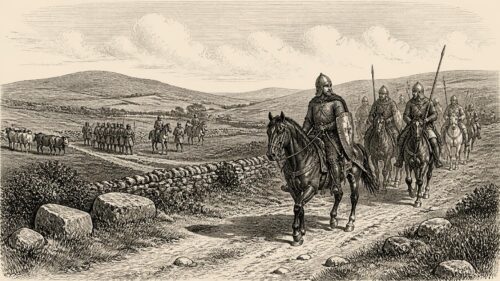
The annals repeatedly mention cattle because livestock represented food, rent, status and transferable wealth. A successful raid damaged an enemy’s ability to feed dependants and reward followers while enriching the victorious king. It could also seize people: the Lough Erne campaign explicitly produced captives as well as kine. Behind these terse reports stood frightened herders, displaced families and the laborious movement of animals over roads, bog margins and river crossings.
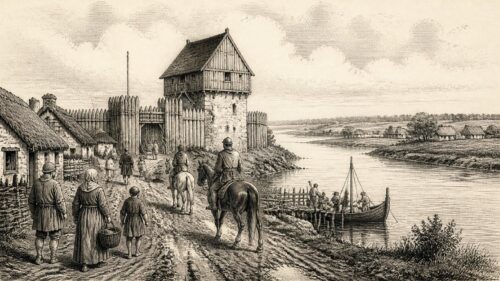
Most people lived in a rural landscape of dispersed farmsteads, fields, pasture and ecclesiastical settlements. Cattle, especially dairy animals, were central, but sheep, pigs and cereals also contributed to subsistence. Churches acted as landholders, markets, schools, sanctuaries and places of burial. Royal armies depended upon the produce of this countryside, and prolonged hosting could impose a severe burden even where no battle occurred.
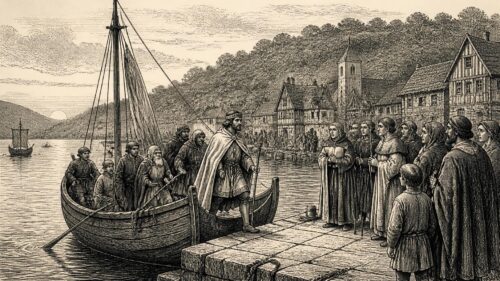
Dublin, Waterford, Wexford, Cork and Limerick formed a different environment of streets, workshops, quays and maritime commerce. Dublin’s inclusion under the “foreigners” ruled alongside Leinster shows that its Hiberno-Norse political identity remained recognisable. Archaeology demonstrates continuing craft production and trade in timber goods, textiles, metalwork, imported pottery and silver. Coinage circulated in Dublin, although much of Ireland’s taxation and exchange still operated through livestock, food renders, precious objects and personal obligations.
An Unfinished Ascendancy
The celebrated Cross of Cong belongs to the immediate setting of this year but requires caution. The National Museum associates Tairdelbach’s acquisition of a True Cross relic with 1122 and dates the reliquary’s making from 1123, while the Annals of Tigernach place the relic’s arrival under 1123. It should therefore not be described as a completed object of 1122. It nevertheless illustrates the combination of kingship, international Christianity and skilled Irish metalwork that Tairdelbach’s court was beginning to command.
By year’s end, Connacht had become the principal centre of island-wide royal ambition. Tairdelbach had intervened in Munster, campaigned through Mide and towards Lough Erne, and received recognition from a Leinster ruler connected with Dublin. Yet cattle raids, dynastic killings and regional resistance exposed the limits of his authority. Ireland in 1122 was not unified, but its competing kingdoms were increasingly drawn into a political contest shaped by one exceptionally energetic king.
Primary Sources
- The Annals of Ulster: Year U1122
- The Annals of Inisfallen
- The Annals of Tigernach
- Annals of the Four Masters: Annal M1122
- Chronicon Scotorum
- Ua Conchobair, Tairdelbach (O'Conor, Turlough)
- Ua Lochlainn (Mac Lochlainn), Domnall
- Ua Máelshechlainn, Murchad
- Mac Carthaig, Cormac
- Ua Briain, Tairdelbach
- Cellach (Celsus)
- Malachy (Máel-M'áedóc) Ua Morgair
- Ailbe
- The Life of Colman Son of Luachan
- The Cross of Cong
- Why the Cross was Made
- Viking
- 950–1450: Vikings, Normans and Medieval Mints
- Early Medieval Ireland: Archaeological Excavations, 1930–2009
- The Archaeology of Livestock and Cereal Production in Early Medieval Ireland, AD 400–1100
- The Zooarchaeology of Medieval Ireland
- The Practice of Irish Kingship in the Central Middle Ages
- An Ecclesiastical Institution in Medieval Munster: A Study of Emly to c. 1100
- The Transformation of the Irish Church in the Twelfth Century
- Have There Been Synods in Ireland in the Past?