De Valera’s Passing Torch1959 CE
In 1959 Éamon de Valera left the Taoiseachship to become Ireland’s third president after defeating Seán Mac Eoin, while Seán Lemass succeeded him without an election. A simultaneous referendum to replace proportional representation was rejected. Lemass inherited emigration, unemployment and rural decline, but advanced economic expansion, industrial exports, infrastructure and skills training, including the Apprenticeship Act. Trade unions reunited as the all-island Irish Congress of Trade Unions. The IRA Border Campaign continued amid weak republican electoral support. Cultural life featured John B. Keane’s Sive and George Morrison’s Mise Éire. The year combined revolutionary memory and partition with tentative social modernisation.
Dateline
In 1959 Ireland experienced a conspicuous transfer of authority at the summit of public life. Éamon de Valera, the defining political figure of the revolutionary generation and the dominant head of government since the 1930s, left the office of Taoiseach and became President of Ireland. Seán Lemass, his long-serving deputy and ministerial colleague, succeeded him. The change did not bring an election or an immediate reversal of policy: Fianna Fáil retained its parliamentary majority and its government. Yet it altered the tone of Irish politics. The old leader moved to the largely ceremonial presidency while a successor associated with industry, economic planning and a more outward-looking outlook took charge during a decade still marked by emigration, limited employment and regional decline.
Two Votes in June
The pivotal date was Wednesday, 17 June. Voters chose a president and considered a proposed constitutional change on the same day. De Valera, Fianna Fáil’s candidate, defeated Fine Gael’s Seán Mac Eoin in the presidential election. De Valera received 538,003 votes to Mac Eoin’s 417,536, on a turnout of 58.4 per cent. The result placed the eighty-six-year-old veteran of 1916, the War of Independence and the foundation of Fianna Fáil in Áras an Uachtaráin, ending his active leadership of the government.
The accompanying referendum produced a different verdict. The government’s proposal would have replaced proportional representation by the single transferable vote in Dáil elections with single-member constituencies and a single non-transferable vote. It was rejected: 486,989 voted against and 453,322 in favour. The result preserved the electoral system established in the Constitution. It also demonstrated that de Valera’s personal victory did not automatically carry the government’s institutional programme. The campaign mattered to organised labour as well: the newly reunited trade-union movement worked for retention of proportional representation, a system thought more favourable to political minorities and smaller parties.
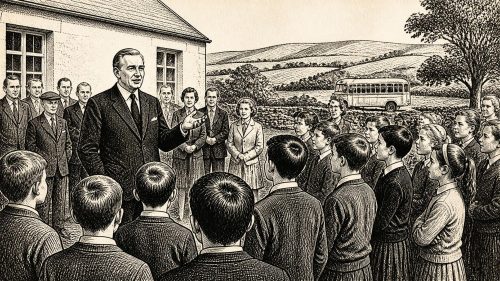
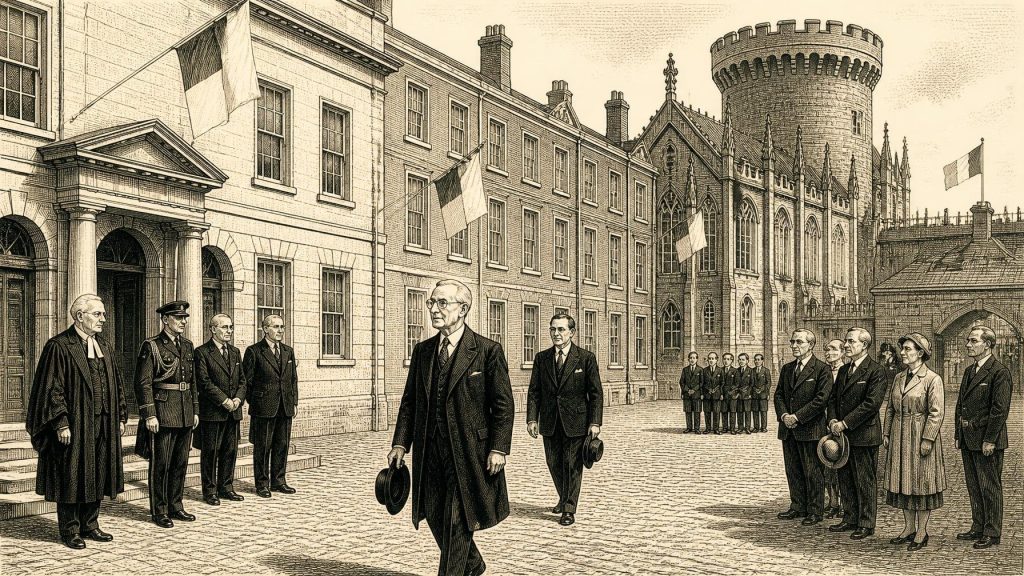
De Valera resigned as Taoiseach after his election, though he remained in office until a successor was appointed. On 23 June the Dáil nominated Seán Lemass as Taoiseach. There was no general election and no interruption to Fianna Fáil’s single-party administration. On 25 June de Valera was inaugurated at Dublin Castle as Ireland’s third president, succeeding Seán T. O’Kelly. His inaugural address warmly acknowledged Lemass as head of government. The ceremony was therefore more than a constitutional formality: it visibly joined the departing revolutionary leader to the man expected to direct the State’s future.
Lemass and the Unfinished Economic Turn
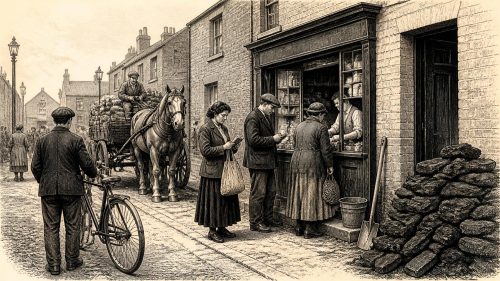
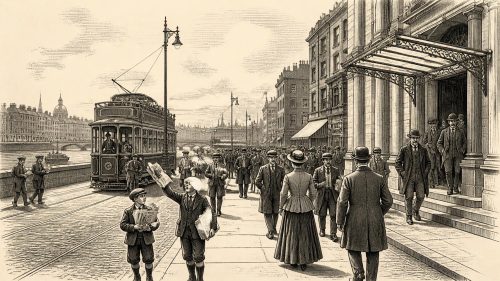
Lemass inherited a country in which the promise of independence had not removed hard economic constraints. Throughout the 1950s, outward migration was an everyday fact for many families, particularly in poorer rural districts and towns with few industrial jobs. Young men and women continued to leave for Britain and elsewhere; letters, remittances and occasional returns tied households in Ireland to destinations across the Irish Sea. The population loss of the decade, weak domestic demand and insecurity of work formed the social setting of the political handover.
It is important not to project the better-known expansion of the 1960s backwards into 1959. That transformation had not yet occurred. However, the direction of policy was already changing. T. K. Whitaker’s Economic Development, published in late 1958, had made a powerful case for growth through productive investment, more efficient agriculture, industrial exports and engagement with the wider world rather than reliance upon long-standing protection. The First Programme for Economic Expansion supplied the new government with a framework, but its effects would be gradual and uneven. In 1959, the point was less a completed boom than an official recognition that the economic practices of the previous decades were inadequate.
Lemass was especially well positioned to give this shift political force. He had served for many years as Minister for Industry and Commerce and was familiar with state companies, industrial policy and the practical shortcomings of a small protected market. His accession did not erase ideological differences within Fianna Fáil or solve the immediate shortage of opportunities. It did, however, give the programme of expansion a Taoiseach who regarded industrial development, education and new export markets as connected national questions. The new administration also created a Department of Transport and Power in July, separating those responsibilities from the older departmental structure and signalling the importance attached to infrastructure and energy.
Legislation at the end of the year reflected a related concern with skilled work. The Apprenticeship Act, enacted on 15 December, replaced the 1931 law and provided for An Cheard-Chomhairle, apprenticeship committees, recognised training arrangements, examinations and certificates in designated trades. Its immediate reach was limited: agriculture, dairying, professional work and clerical occupations lay outside its definition of a trade. Nevertheless, it was a tangible attempt to regulate entry, training and standards in sectors that a modernising economy would need. For school-leavers seeking a route into building, engineering or craft employment, apprenticeship remained far more immediately relevant than the later expansion of higher education.
Labour Across the Border
Another firmly dated development came within the labour movement. In February, after years of division, the Irish Trades Union Congress and the Congress of Irish Unions reunited as the Irish Congress of Trade Unions (ICTU). The new body again claimed an all-island role, organising workers in both the Republic and Northern Ireland despite the different legal and political systems created by partition. At its inaugural conference in September it criticised the Northern Ireland government for failing to recognise the organisation. The episode illustrated both the persistence of cross-border social institutions and the limits imposed upon them by Stormont’s authority.
For workers, reunion did not mean that the conditions of the decade disappeared. Low incomes, insecure employment and emigration continued to shape wage bargaining and union organisation. But the formation of ICTU gave organised labour a more coherent national voice at the very moment the State was considering economic development rather than retrenchment. It also created an institutional link between workplaces north and south at a time when political relations across the border were tense and narrow.
Partition and the Border Campaign
Northern Ireland remained directly relevant to the Republic’s political atmosphere. The IRA’s Border Campaign, begun in December 1956 and not ended until 1962, continued through 1959. Its declared objective was to end British rule in Northern Ireland, but it did not secure the mass support its organisers required. The campaign nevertheless kept the border, security policy and competing claims to Irish sovereignty before the public in both jurisdictions.
The British general election of September 1959 provided one measure of republican electoral weakness in Northern Ireland. Sinn Féin failed to retain the Westminster seats it had won in 1955, and its share of the vote fell. This was not a settlement of the constitutional question; rather, it showed the limited electoral return available to abstentionist republicanism while the armed campaign continued. In the Republic, Lemass’s government had to balance constitutional claims to national unity with the practical duties of maintaining order and developing a state whose citizens faced pressing economic problems of their own.
Culture, Language and Rural Memory
Irish cultural life in 1959 offered striking, but very different, images of the country. Early in the year John B. Keane’s Sive was first staged by the Listowel Drama Group in Walsh’s Ballroom, County Kerry; it later reached Dublin at the Queen’s Theatre. Its story of a young woman pressured into marriage exposed poverty, authority, sexual double standards and the constraints of rural life. Keane’s setting was not a statistical description of every village, but the play’s impact came from its recognition of social pressures familiar to many audiences. Its success also showed the continuing importance of local amateur drama as a route from provincial performance to a national stage.
In Cork, the 1959 film festival gave the first public screening of George Morrison’s Mise Éire, made for Gael Linn. Constructed from archival newsreel and other contemporary moving images, with an Irish-language commentary and Seán Ó Riada’s score, it traced revolutionary nationalism from the late nineteenth century to Sinn Féin’s 1918 election victory. It was a landmark in Irish-language cinema and in the preservation and re-use of film archives. Its appearance in the same year as de Valera’s elevation to the presidency was resonant, though not accidental proof of a single official cultural programme: it drew audiences back to the revolutionary past while the State’s leadership was visibly passing to a younger generation.
Thus 1959 was neither a clean break with the 1950s nor merely a prelude to the 1960s. Firmly dated events—the June election and referendum, the appointment of Lemass, the union reunification, the Apprenticeship Act and important theatrical and cinematic premières—gave it its own character. They unfolded amid older realities: a predominantly rural society, continuing migration, partition and a strong public memory of revolution. The year’s central significance lay in the coexistence of those realities with new institutional and political energies. Ireland had not yet become the more prosperous and internationally engaged country promised by economic planning, but its direction of travel had become clearer.
Primary Sources
- Sixteenth Dáil
- Nomination of Taoiseach. – Dáil Éireann (16th Dáil) – Tuesday, 23 June 1959
- 17 June 1959 Presidential Election
- Inauguration Address by President Eamon de Valera
- Éamon de Valera
- Referendum on the Third Amendment of the Constitution Bill, 1958 – Voting System
- A Short History of Congress
- Apprenticeship Act, 1959
- Irish Statute Book: Statutory Instruments, 1959
- Speeches of Seán Lemass as Taoiseach
- The Lemass Era
- Emigration from Ireland to Britain
- The Economic and Social Research Institute: Emigration from Ireland
- Unemployment and Emigration: Motion of No Confidence – Dáil Éireann, 29 October 1958
- CAIN: Chronology of Key Events, 1800 to 1967
- CAIN: A Note on the History of Violence at the Border
- 1959 Cork Film Festival Programme Content
- Mise Éire
- Heritage – Gael Linn
- Papers of John B. Keane
- Sive | Abbey Archives
- Sive | PlayographyIreland
- An Overview of the Years 1941–1959
- The Irish Border and North-South Relations