Connacht Transplantation1675 CE
In 1675, Ireland remained shaped by unresolved consequences of Cromwellian conquest and Restoration land legislation. On 22 September, Charles II appointed commissioners to decide individual Connacht transplanters’ claims, addressing disputed assignments without reversing Protestant property gains. Lord Lieutenant Essex left for England amid conflict over revenue farming, military finance and Dublin’s dependence on Whitehall; Boyle and Forbes governed as lords justices. Catholic clergy faced continuing, uneven pressure under banishment policy, while parallel Protestant and Catholic hierarchies endured. English restrictions on Irish cattle trade encouraged commercial redirection towards continental and Atlantic markets. Together, these issues exposed an incomplete post-conquest settlement still.
Dateline
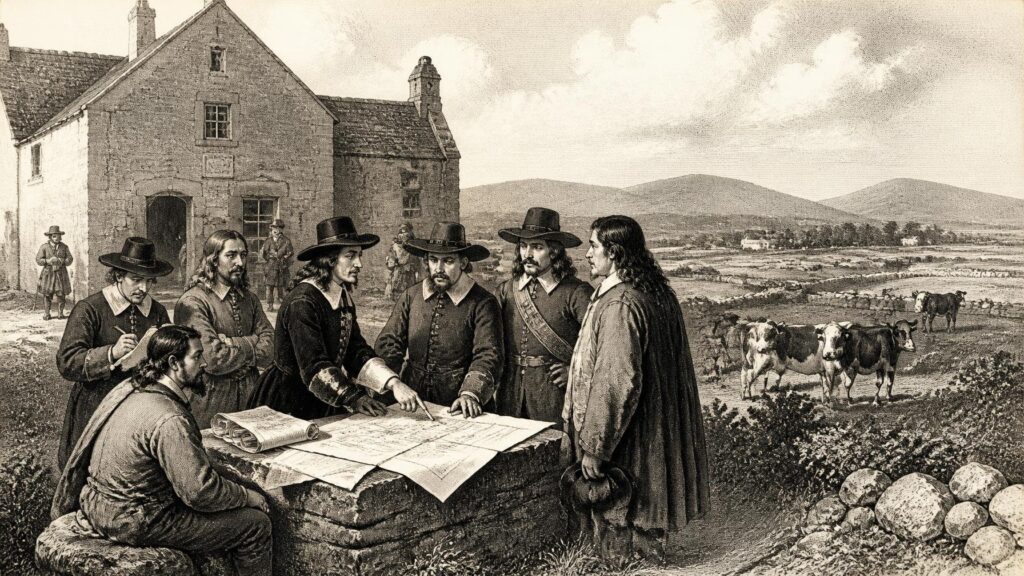
For Ireland, 1675 was not marked by a battle, a parliamentary session or a dramatic change of ruler. Its importance lay instead in the persistence of unfinished business from the wars and confiscations of the previous generation. The firmest date is 22 September, when Charles II ordered a commission to determine the cases of Connacht transplanters. That administrative decision concerned people whose homes, estates and legal standing had been unsettled since the Cromwellian conquest. It reveals a kingdom still being governed through surveys, claims, certificates, rents and exceptions: the paperwork of dispossession had become one of the main instruments of power.
A Commission for the Transplanters
The word “transplanter” carried a long and painful history. Under the Cromwellian settlement of the 1650s, many Catholic landholders and their dependants had been compelled, or pressured, to leave lands in Leinster, Munster and Ulster for assignments in Connacht and County Clare. The slogan commonly associated with that policy, “To Hell or Connacht”, oversimplifies a complicated process, but it captures the coercive geography behind it. Families had to establish rights to new holdings, while soldiers, adventurers, Protestant purchasers, restored royalists and old proprietors advanced overlapping interests elsewhere.
By 1675, restoration legislation had already modified some of the harshest consequences of conquest without undoing the new land order. The Acts of Settlement and Explanation of the 1660s confirmed a broad transfer of property towards Protestant interests and left many Catholic claimants with reduced, uncertain or displaced holdings. Connacht was therefore not a blank western refuge. It was a province in which transplanted families, earlier inhabitants, landlords, tenants and grantees lived amid competing titles and memories of removal.
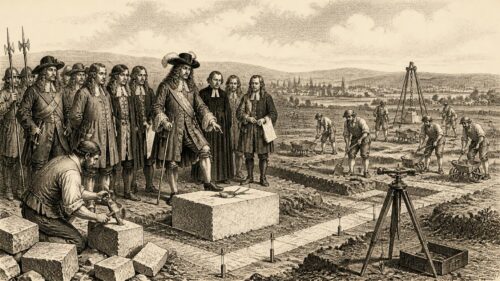
Charles II’s order of 22 September did not amount to a general restoration of land. It authorised commissioners to hear and determine individual cases. That distinction matters. A commission could correct errors, validate assignments or settle particular disputes, but it worked within the Restoration settlement rather than overturning it. For those involved, however, an individual ruling might decide whether a household could keep the land on which its livestock, crops, tenancy arrangements and future inheritance depended. In a rural society where land supplied status as well as subsistence, such inquiries had consequences far beyond the courtroom.
Essex Leaves Dublin
The commission came during a year in which the direction of Irish government was itself unsettled. Arthur Capel, earl of Essex, had been lord lieutenant since 1672. He was an energetic administrator, concerned with expenditure, patronage, military organisation and the authority of Dublin Castle. Yet he governed a kingdom whose major financial decisions were increasingly shaped in London. In 1675 he pressed for an Irish parliament, partly because he believed that revenue questions required a constitutional remedy. No parliament was summoned that year.
In late June and early July, Essex crossed to England, arriving in London early in July. He expected a temporary absence, but did not return to Ireland until May 1676. During his absence Archbishop Michael Boyle, Church of Ireland archbishop of Dublin, and Sir Arthur Forbes acted as lords justices. Their appointment preserved the formal machinery of government, but it also demonstrated the limits of viceregal independence. Decisions affecting Irish revenue, grants and policy could be managed from Whitehall while the lord lieutenant remained across the Irish Sea.
Essex’s surviving correspondence makes the atmosphere unusually visible. Letters travelled between Dublin, London and provincial officials; memoranda passed through secretaries; court alliances mattered as much as formal office. The administrative language could be dry, but it dealt with urgent matters: land titles, revenue, army pay, judicial appointments and the credibility of the crown. Ireland was a separate kingdom with its own institutions, yet its executive government was bound tightly to Charles II’s court and ministers.
Revenue, Soldiers and Authority
The sharpest political dispute concerned money. Richard Jones, Viscount Ranelagh, and his partners had undertaken to receive Irish revenue and meet civil and military charges, while also promising a substantial fixed payment to the king. The arrangement effectively placed much of the Irish exchequer in private hands. Its existing term was due to end in December 1675, making this a decisive year for arguments over accounts, obligations and renewal.
Essex distrusted the arrangement, not merely because it diminished his own authority but because he believed it endangered public administration. The issue was not an abstract quarrel between grandees. Customs, excise, quit-rents, hearth money and other impositions eventually bore upon merchants, householders, tenants and consumers. If revenue was collected aggressively, local communities felt it; if it was withheld or misdirected, garrisons, officials and suppliers went unpaid. Correspondence from May 1675 shows Ranelagh defending rules that increased the English lord treasurer’s control over Irish revenue, while Essex’s associates feared that the viceroy was being bypassed.
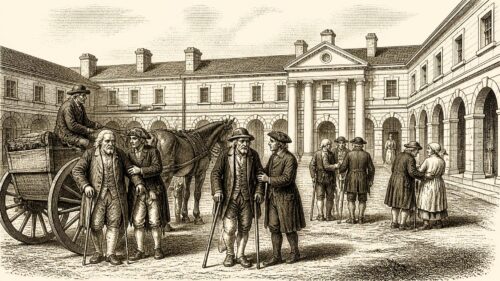
The army made the danger especially plain. Ireland remained heavily militarised after the mid-century wars, and the crown regarded a paid standing force as essential to order. Yet payment and supply were recurring problems. Later evidence from the Essex administration records soldiers dispersing to seek livelihoods when arrears became intolerable. That specific crisis belongs chiefly to 1676, but the financial weakness was already embedded in the system contested during 1675. The year’s political struggle was therefore also a struggle over whether the state could reliably support the men expected to enforce its decisions.
Catholic Life Under Pressure
Religion remained inseparable from security. The Church of Ireland was established and closely entwined with government, landholding and civic office. Most of the population, however, remained Catholic. The official policy inherited by Essex included a proclamation ordering Catholic bishops, other ecclesiastical office-holders and regular clergy to leave the kingdom. Implementation was uneven, and Catholic worship, pastoral care and clerical networks continued. It would be misleading to describe 1675 as either unrestricted toleration or uniform persecution.
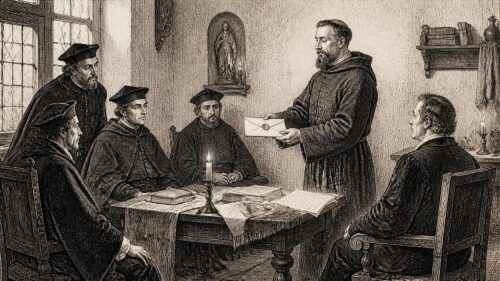
There is firm evidence of anxiety in the year itself. A manuscript letter of 4 June 1675 from the Franciscan controversialist Peter Walsh concerned the banishment of Roman Catholic clergy. Walsh, who had long promoted a Catholic declaration of civil loyalty to the crown, sought protection for clergy associated with his position. His intervention exposes divisions within Irish Catholicism as well as pressure from the state. Government officials sometimes valued informants and divisions among clergy; Catholic communities, meanwhile, had to sustain religious life under rules that rendered important parts of their hierarchy vulnerable.
Two episcopal deaths also punctuated the year: Daniel Witter, Church of Ireland bishop of Killaloe, died on 16 March, and Patrick Duffy, Catholic bishop of Clogher, died on 1 August. Neither death by itself transformed policy, but together they illustrate the parallel ecclesiastical worlds of Restoration Ireland: an established Protestant hierarchy recognised by the state, and a Catholic hierarchy surviving through a mixture of local support, overseas links and discretion.
Ports, Provision and Everyday Exchange
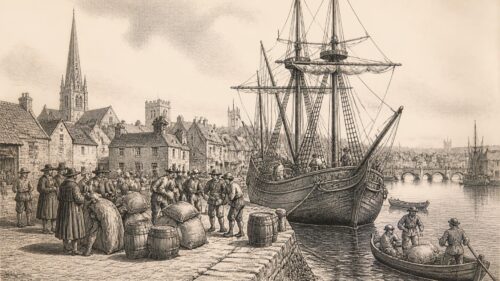
Ireland’s economy was being reshaped by English commercial restrictions, especially the Cattle Acts, which limited the import of Irish livestock and certain provisions into England. The damage to established markets was real, but Irish merchants and producers did not simply stop trading. They sought outlets in continental Europe, the Atlantic world and direct overseas commerce. Contemporary observers had already noted growth in Irish shipping and building in port towns during the early 1670s. By 1675, older patterns of dependence upon England had been weakened, even though England remained politically dominant.
For farmers and graziers, the consequences varied by region and by access to market. Cattle, hides, butter, beef, wool and grain linked rural production to coastal towns; merchants, carriers, sailors, coopers, brewers and labourers depended on those flows. The redirection of trade did not make prosperity universal. Transport costs, credit, harvest conditions and taxation all mattered. But it encouraged a more outward-looking commercial culture in ports such as Dublin, Cork, Waterford, Limerick and Galway, while the Irish Sea remained vital for the movement of people, goods and official news.
Thus 1675 should not be reduced to an obscure commission. The Connacht inquiry, Essex’s departure, the contest over revenue and the insecurity of Catholic clergy all belonged to the same post-conquest order. Government was trying to turn confiscation into settled property, taxes into dependable authority and religious conformity into political security. The effort was incomplete. In Connacht especially, the crown’s decision of 22 September acknowledged that the human consequences of transplantation could not simply be filed away as old history.

Primary Sources
- Capel, Arthur
- Jones, Richard
- Walsh, Peter
- Copy of a Letter of Peter Walsh on the Banishment from Ireland of the Roman Catholic Clergy, 4 June 1675
- Stowe MS 200–217: Essex Papers
- Letters Written by His Excellency, Arthur Capel, Earl of Essex, Lord Lieutenant of Ireland, in the Year 1675
- Letters Written by Arthur Capel Earl of Essex, Lord Lieutenant of Ireland, in the Year 1675
- Selections from the Correspondence of Arthur Capel, Earl of Essex, 1675–1677
- The Irish Viceroyalty in the Restoration Period
- Essex Papers (1675–77)
- CAPELL, Arthur (1632–83)
- From Cromwell to the Boyne
- History of Parliament in Ireland
- Part 4 of History of the Commercial and Financial Relations between England and Ireland from the Period of the Restoration
- Part 10 of History of the Commercial and Financial Relations between England and Ireland from the Period of the Restoration
- State Formation in Seventeenth-Century Ireland: the Restoration Financial Settlement, 1660–62
- Calico to Whiskey: A Case Study on the Development of the Distilling Industry in the Naas Revenue Collection District, 1700–1921
- Catholic Education in Restoration Ireland, 1660–1685
- Warrant to Audit the Accompts of Lord Ranelagh and his Partners, as Farmers of the Revenue in Ireland, 18 June 1675
- Irish History Online: Letters Written by Arthur Capel, Earl of Essex, Lord Lieutenant of Ireland, in 1675