Connacht Usurpation1342 CE
In 1342, Connacht was convulsed by a dynastic war that displaced King Toirrdelbach Ó Conchobair. Conchobar Mac Diarmata, Edmund Burke and rival Ó Conchobairs formed a coalition, humiliating Toirrdelbach at Elphin, destroying crops, fighting over fords and fortresses, and exploiting captivity and assassination. Aed Ó Conchobair became king, though Toirrdelbach regained power in 1343. Elsewhere, Conchobar Ó Domnaill was murdered in Tír Conaill, while raids caused deaths in Oriel. Dublin government abandoned contested reforms amid local resistance. Annalistic notices also record the deaths of poets, historians and clerics, revealing overlapping political, military, ecclesiastical and learned worlds during the year itself.
Dateline
In 1342, the most consequential Irish crisis unfolded in Connacht, where a dispute between leading dynasties grew into a provincial war and briefly overturned a king. The year is unusually well illuminated by Annála Connacht, whose entry opens with a calendrical notice placing 1 January on a Tuesday and then follows the conflict in detail. Its narrative must still be read as an annalistic account rather than a modern campaign history: it preserves vivid incidents and named participants, but seldom supplies precise dates, troop numbers or the experiences of ordinary people. What it does show unmistakably is the destructive reach of political competition across central and western Ireland.
A Connacht Kingship in Crisis
Toirrdelbach Ó Conchobair was king of Connacht when the year began. His authority, however, rested upon the cooperation—or at least acquiescence—of other powerful kindreds. Conchobar Mac Diarmata, king of Moylurg around Lough Key, broke with him. Mac Diarmata gained substantial allies: Edmund Burke, a leading figure of the increasingly autonomous Burke power in Connacht; Aed, son of Feidlim Ó Conchobair; and Donnchad Ó Birn, chief of Tír Briúin na Sinna. This was not a simple contest between ‘Gaelic’ and ‘English’ interests. Burke lords, descended from Anglo-Norman settlers, were embedded in Connacht’s politics and fought beside Gaelic allies and rivals. The alignment of 1342 crossed inherited labels, centred instead on lordship, kinship, access to land and the control of dependants.
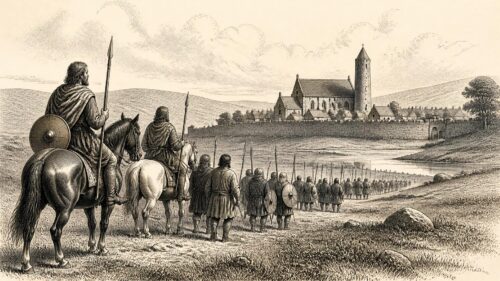
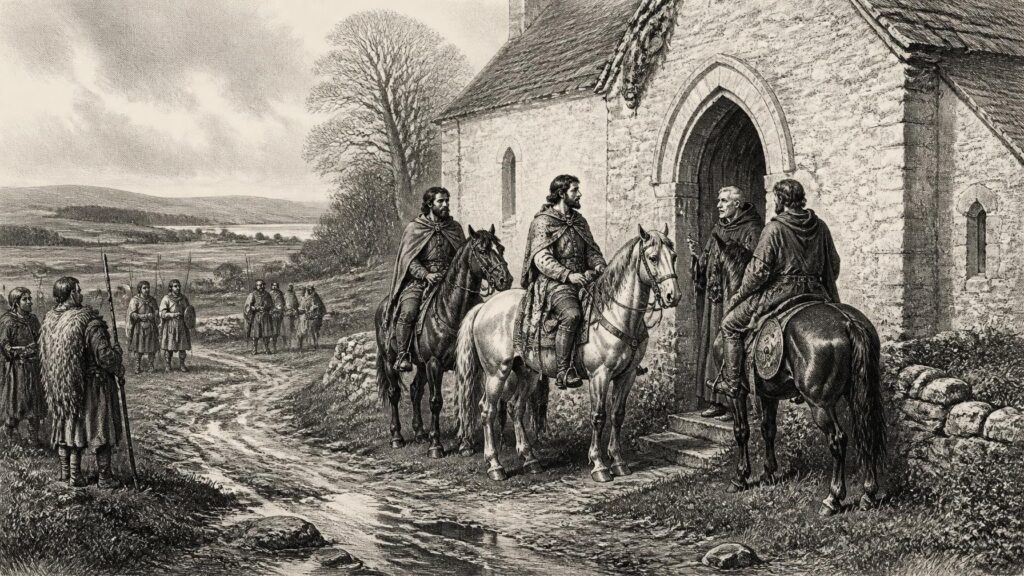
The immediate occasions recorded by the annalist reveal the practical business of power. Ó Birn’s people had carried off a prey from Hobert Burke. When Toirrdelbach came to obtain security or redress, his opponents drove him into the church at Elphin. There, as he passed the doorway, Cathal Ó Birn struck him on the shoulder with a stick and taunted him. Some of Toirrdelbach’s gallowglasses, including their constable Mac Ruaidri, were killed. The episode was humiliating precisely because the king had sought the protection of a church. It also shows that sanctuary did not remove a dispute from politics: church doors, causeways and fords could all become theatres of authority.
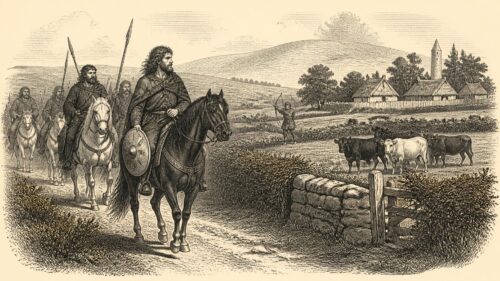
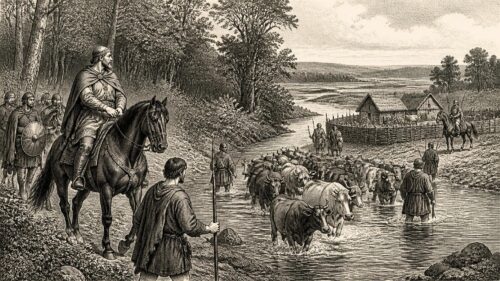
The conflict rapidly widened. The annals say that ‘general war and great evil’ followed in Connacht. Clann Muircheartaigh, a branch of the wider Ó Conchobair dynasty, joined the anti-royal side with Aed and Cathal, sons of Aed Bréifnech, and Tadc, son of Ruaidrí. Their first recorded act was the destruction of corn crops. This is among the year’s most important notices for everyday life. Warfare did not depend solely on battles between mounted nobles and professional soldiers. It struck at stores and standing grain, threatened food supplies, weakened households’ capacity to support fighters, and made political allegiance an immediate material question for farming communities.
Ford, Fortress and Flight
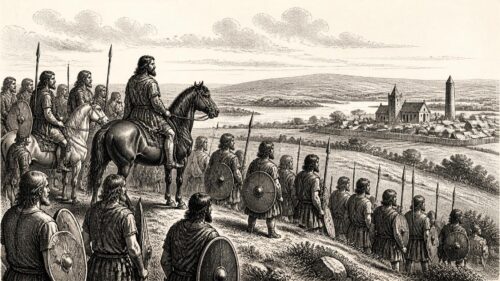
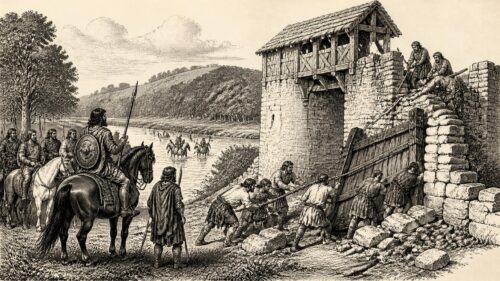
Violence was accompanied by calculated betrayal. Thomas Burke was killed at an assembly of Clann Muiris, while Seoinín Burke was killed by Clann Ricard, both acts said to have been undertaken at Toirrdelbach’s instigation. The annalist’s language is condemnatory, but its underlying point is clear: apparently protected meetings could be fatal, and Burke kindreds were themselves divided. Other deaths followed, including Cathal Mac Diarmata and Fergal Mac Cormaic. In a heavy encounter at Bellaslishen, Mac Diarmata’s force assaulted and crossed a ford held by Toirrdelbach. Diarmait Ó Fergail, described as the foremost man of the Conmaicne of his age, a son of Hobert Burke, and Conchobar Ó hEilide were slain. Holding a river crossing mattered; it governed movement of raiding parties, livestock, supplies and reinforcements through a landscape without modern roads or fixed frontiers.
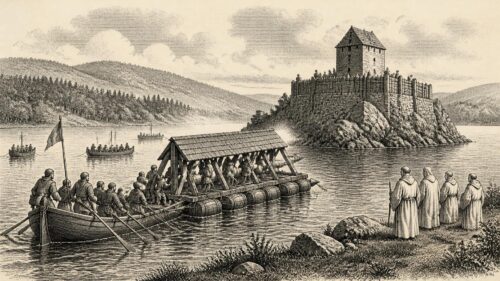
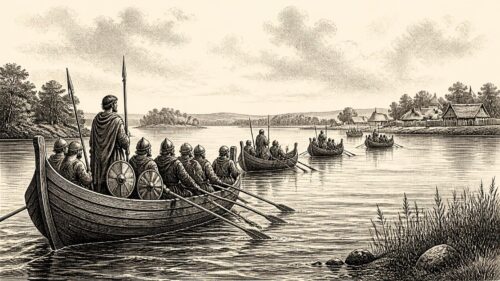
Captivity became another instrument of the struggle. Cormac, son of Ruaidrí Ó Conchobair, was taken by rival members of his own dynasty. Conchobar, son of Tadc, was then captured in turn by Brian, son of Ruaidrí, and handed to Mac Diarmata. The prisoner was sent to the Rock of Lough Key for safekeeping. The island stronghold was not merely a defensive structure: it was a place where a lord could hold a politically valuable captive beyond the immediate reach of his kin. Such exchanges indicate that war did not automatically mean indiscriminate killing. Prisoners could be hostages, bargaining counters, potential allies or threats to a succession.
By the later part of the year, the scale of opposition had become overwhelming. The annals state that all Síl Muiredaig—willingly or unwillingly—renounced Toirrdelbach’s allegiance. The coalition included Edmund Burke, Mac Diarmata and his council, several Ó Conchobair claimants, the forces of Bréifne and Conmaicne, and Aed son of Feidlim. Toirrdelbach was expelled from his lands. Yet even at this point loyalties were not fixed beyond repair. Advised to seek terms at Mac Diarmata’s house, he travelled by night with only two or three horsemen, evaded men placed at dangerous passes, and forced his way through an attack at the causeway. Mac Diarmata rescued him within the stronghold, sent him onward to the Rock, and finally conducted him to Roscommon Castle when peace proved impossible. The former king was defeated, but not eliminated.
A New King, Not a Settlement
On the first Monday of Winter, the men of Connacht and Mac William Burke made Aed, son of Aed Bréifnech Ó Conchobair, king. The same settlement assigned the tanistry of Connacht to the son of Feidlim Ó Conchobair and granted Tírerrill to Fergal Mac Diarmata and Tadc Mac Donnchada. These arrangements show kingship as a negotiated distribution of offices, territories and expectations among competing elites, not an automatic inheritance by the eldest son. The record firmly dates this installation within 1342, but it should not be mistaken for a lasting resolution: Toirrdelbach recovered the Connacht kingship in 1343. The new order was an achievement of the year, not a durable peace.
Killings in the North
Elsewhere, 1342 brought sharp changes of lordship. In Tír Conaill, Conchobar Ó Domnaill was killed during a night attack on his residence at Findros. The house was burned over him; when he emerged, he was killed at the doorway, along with many of his household. Niall Ó Domnaill, his half-brother, was then made king by some of the chiefs of Tír Conaill. The qualification matters. His elevation rested on only part of the political community, and the annals do not present it as unanimous consent. Dynastic murder could change the holder of a title overnight, but could not itself create secure obedience.
In Oriel, Seoan Mac Mathgamna died after setting out on a raid against Roalb Mac Mathgamna. He and his gallowglasses were caught in the rear of the prey; the annals emphasise both killing and drowning. Gilla Dub Mag Uidir was likewise drowned in Lough Erne while in the rear of a raid. These terse notices are reminders that raiding was a routine but dangerous form of political and economic action. Cattle, horses and portable goods were resources as well as symbols of dominance, while rivers and lakes were obstacles, escape routes and places of death. The losses of retainers mattered as much as those of chiefs, since gallowglasses supplied the hard military core of many lordships.
Dublin Government and Learned Memory
The Dublin-based lordship of Edward III was facing a different, though related, problem of authority. John Morice, deputy justiciar for John Darcy, had inherited the backlash against royal measures issued in 1341. Those measures had attempted to favour office-holders with English connections and to review grants of lands and liberties made since 1307. Anglo-Irish magnates and communities answered with concerted petitions and resistance. By May 1342 the king had withdrawn the contentious policy and dismissed most of the administration, while retaining Morice. His military activity against Irish opponents in Leinster and Meath during 1341–42 did little to transform the situation. The retreat showed the limits of Westminster’s ability to remake government in Ireland by decree when it lacked money, military force and local consent.
This did not mean that the lordship was irrelevant beyond its core towns, castles and lordly estates. Its officers, revenues, legal records and military demands connected Ireland to Edward III’s wider dominions, then committed to war in Brittany and France. But the Connacht war demonstrates how much politics beyond that administrative zone was decided through regional alliances, fostered relationships, raiding and control of fortified places. The island contained overlapping jurisdictions rather than a single operative system of government.
The year also preserves evidence of a learned and religious world living alongside warfare. Flann Ó Domhnalláin, described as Ó Conchobair’s ollam in poetry, died. Domnall Ó Cuindlis, called an eminent historian, was killed by the Uí Diarmata. Master Tomás Mac Gilla Coisclid also died. Such notices do not permit a full reconstruction of schools or manuscripts in 1342, but they show that poets, historians and masters were recognised public figures whose loss merited record. The scene at Elphin similarly underlines the continuing moral and practical importance of ecclesiastical places, even when armed conflict pressed directly against their thresholds.
Thus 1342 was not one Irish national event but a year of linked regional upheavals. In Connacht, grain was destroyed, alliances shifted and a king was driven from power before another was installed. In Donegal and Oriel, lordship changed through assassination and raiding. In Dublin, the king of England’s government retreated from an ambitious and divisive programme. Elphin’s church doorway captures the year’s central reality: established authority could still command reverence, but it could also be cornered, mocked and forced to seek shelter.
Source References
Hover over a number to see the source. Select it to open the source.

- [1] Annála Connacht: Annal 1342
- [2] Annals of the Four Masters: Annal M1342
- [3] Annals of Ulster: Year U1342
- [4] Annales Hiberniae
- [5] Annalium Hiberniae Chronicon ad annum MCCCXLIX
- [6] O'Connor (Ó Conchobair), Toirrdelbach
- [7] O'Donnell (Ó Domhnaill), Conchobhar
- [8] Morice (Moriz), John
- [9] O'Connor (Ó Conchobhair), Cathal
- [10] John Morice, Named 1281 to 1485
- [11] Calendar of the Close Rolls Preserved in the Public Record Office: 1341–1343
- [12] Calendar of the Patent Rolls, Preserved in the Public Record Office: Edward III
- [13] Medieval Source Material on the Internet: Chancery Rolls
- [14] The Gascon Rolls Project: C 61/54, 16 Edward III (1342–1343)
- [15] Printed Primary Sources
- [16] Inquisitions and Extents of Medieval Ireland
- [17] Exploring the Irish Annals
- [18] Annals of the Kingdom of Ireland: Table of Contents
- [19] Annála Connacht
- [20] CELT Project: Annals of the Four Masters
- [21] CELT Project: Annals of Ulster
- [22] Annales Hiberniae: File Description
- [23] A History of the Franciscan Order in Ireland
- [24] The English Way of War, 1360–1399
Primary Sources
- Annála Connacht: Annal 1342
- Annals of the Four Masters: Annal M1342
- Annals of Ulster: Year U1342
- Annales Hiberniae
- Annalium Hiberniae Chronicon ad annum MCCCXLIX
- O'Connor (Ó Conchobair), Toirrdelbach
- O'Donnell (Ó Domhnaill), Conchobhar
- Morice (Moriz), John
- O'Connor (Ó Conchobhair), Cathal
- John Morice, Named 1281 to 1485
- Calendar of the Close Rolls Preserved in the Public Record Office: 1341–1343
- Calendar of the Patent Rolls, Preserved in the Public Record Office: Edward III
- Medieval Source Material on the Internet: Chancery Rolls
- The Gascon Rolls Project: C 61/54, 16 Edward III (1342–1343)
- Printed Primary Sources
- Inquisitions and Extents of Medieval Ireland
- Exploring the Irish Annals
- Annals of the Kingdom of Ireland: Table of Contents
- Annála Connacht
- CELT Project: Annals of the Four Masters
- CELT Project: Annals of Ulster
- Annales Hiberniae: File Description
- A History of the Franciscan Order in Ireland
- The English Way of War, 1360–1399