Archived: 21 October 2026
Abstract
In 1376, Sir William Windsor’s recall from Ireland followed resistance to his taxation and administration, as communities defended their customary right to consent. Maurice FitzGerald and then James Butler replaced him, but weakness persisted there. Warfare continued: English forces raided Annaly, whose O’Farrell lord retaliated with destructive incursions; Bran Ó Broin regained Wicklow and Newcastle castles; and northern lords faced captivity and death. Tadhg Ó Ruairc of West Breifne died, succeeded by his brother Tighearnán. Annals also recorded deaths among distinguished Gaelic historians, poets and ollamhs, underscoring the resilience of learned institutions amid fragmented authority, frontier conflict and contested lordship.
Read Article
Archived: 21 October 2026
Abstract
In 1375, Ireland’s fragmented political order was revealed through warfare, succession, negotiation and administration. Niall Ó Néill defeated the English or Anglo-Irish of Downpatrick, killing Sir James of Malahide and others, demonstrating northern Gaelic strength. In Leinster, Donnchad Caemánach Mac Murchada was treacherously killed, opening the way for Art Mór’s later rise. Connacht rivals exchanged Roscommon and Ballintober castles, while Thomas succeeded Sir Edmund Albanach Mac William Burke. Raids, betrayals and kin killings exposed local insecurity. Annals recorded religiously framed deaths and poet Máel Sechlainn Ó Domhnalláin. William de Windsor’s cash-strapped administration operated as Edward III sought support at Westminster.
Read Article
Archived: 22 October 2026
Abstract
In 1371, Ireland remained politically fragmented, with royal, urban, Anglo-Irish, Gaelic and ecclesiastical authorities competing through law, warfare, patronage and local alliances. Dublin successfully petitioned Edward III against exactions imposed by lieutenant William de Windsor. In Ormond, Murchadh Ó Madden was killed by an exceptional arrow-shot, while Brian Ó Cennétig died amid regional conflict. Tadhg Óg Ó Conchobair was murdered after captivity in Sligo Castle. Annals associate Domhnall Ó Dubhda with capturing north Connacht castles and redistributing land. Archbishop John Ó Gráda died, plague claimed musician Amlaim Mac Senaig, and obituaries stressed hospitality, learning, patronage and genealogical memory across Ireland.
Read Article
Archived: 22 October 2026
Abstract
In 1366 Lionel of Antwerp, Edward III’s lieutenant, summoned a parliament at Kilkenny to reinforce the weakening English lordship of Ireland. Its Statutes sought to separate English and Irish inhabitants by restricting intermarriage, fosterage, language, dress, law, ecclesiastical office and cultural exchange. They also regulated warfare, military service, abuses, markets, land, sport and church authority, exposing anxieties about defence and administration. The measures chiefly targeted the lordship rather than Gaelic Ireland and indicate cultural contact rather than achieved control. Contemporary annals record regional conflicts and shifting lordships beyond royal reach. Lionel’s November departure demonstrated the statute’s limits amid Ireland’s diversity.
Read Article
Archived: 22 October 2026
Abstract
In 1364, Ireland experienced interconnected transitions rather than a single crisis. Aodh Reamhar Ó Néill, influential king of Tír Eoghain, died and was succeeded by Niall Mór, whose position rested on dynastic support and military power. Diarmait Ó Briain of Thomond and several regional lords, heirs, women and learned figures also died, altering local networks. Lionel of Antwerp campaigned in Laois before returning to England; James Butler of Ormond governed temporarily amid tensions between English-born and Irish-born settlers. Annals, some uncertainly dated, record raids, alliances and mercenary warfare in western regions, revealing power sustained through lordship, kinship, resources and learning.
Read Article

Archived: 22 October 2026
Abstract
In 1363, Ireland comprised overlapping political worlds rather than a unified realm. Lionel of Antwerp, Edward III’s lieutenant, received English money, troops and lordship revenues to sustain royal authority, while regulation of purveyance and weights addressed administrative abuses. Dublin remained crucial: Lionel granted civic liberties on 26 September, confirmed by Edward in November, strengthening the Guildhall’s jurisdiction and commercial governance. Elsewhere, annals recorded deaths of Magnus Ó Domhnaill and Áed Mag Uidir, killings, captivity and inter-kindred conflict in Connacht and neighbouring regions. A severe windstorm damaged churches and houses and sank vessels, disrupting communities, trade and transport networks across waterways.
Read Article
Archived: 22 October 2026
Abstract
In 1362, Ireland was divided among competing Gaelic and English authorities. Cathal Óg Ó Conchobair and King Aodh of Connacht captured Ballintober Castle, an important former de Burgh stronghold, then led a major raid into Meath, burning churches and causing extensive damage before returning safely. Meanwhile, Lionel of Antwerp held parliament in Dublin, oversaw administration, including the exchequer’s move to Carlow, and received the title duke of Clarence. Cathal Óg later died of plague at Sligo. Annals also recorded deaths among churchmen and learned families, revealing continuing religious, legal and scholarly institutions amid warfare, epidemic and unstable regional power relations.
Read Article

Archived: 22 October 2026
Abstract
In 1361, Lionel of Antwerp, Edward III’s son and earl of Ulster, arrived in Ireland as royal lieutenant with troops to reinforce the threatened English lordship. Landing at Dublin in September, he campaigned in Leinster, where Gaelic rulers remained powerful. Irish annals recorded the deceptive seizure and subsequent custodial deaths of Art Mac Murchadha and Domnall Riabach, though details remain uncertain. Lionel transferred the Exchequer to fortified Carlow, creating a forward administrative and financial base without displacing Dublin’s importance. Meanwhile, the widespread epidemic Cluiche an Rí, probably pestis secunda, intensified economic and military pressures, demonstrating the limitations of royal intervention.
Read Article
Archived: 23 October 2026
Abstract
In 1358, Edward III protected masters, scholars and clerks travelling to Dublin, reinforcing the university associated with St Patrick’s Cathedral. The petition exposed poverty, hazardous sea crossings and inadequate educational resources. Annals recorded fragmented politics: Áed Ó Néill defeated Airgialla and Fermanagh forces; Ó Mórdha overcame men identified with Dublin in Leinster; and Clann Cathmhaoil killed Manus Maguire. Bishop Brian Mac Cathmhaoil and Gaelic rulers also died. A Carbury hailstorm illustrated environmental uncertainty, while disease reports cannot be precisely dated. Together, these events reveal contested authority alongside continuing learning, religious institutions, warfare and local seasonal vulnerability across late medieval Ireland.
Read Article
Archived: 23 October 2026
Abstract
In 1357, Ireland’s surviving records reveal overlapping worlds rather than national unity. Art Mór Mac Murchadha Caomhánach was born amid unstable Leinster alliances linking Gaelic rulers, settler lordships and Dublin government. Royal administration issued commissions and relied on magnates, notably Maurice FitzGerald, Earl of Kildare, whose military resources supported authority. Annals record deaths of rulers, an earl drowned during a crossing, executions, killings and a peace, illustrating contested lordship. They also commemorate scholars, clerics and musicians. An English chronicler reported renewed pestilence devastating Gaelic communities, though its scale remains uncertain. Ireland combined political fragmentation, cultural networks, negotiation, violence and mortality.
Read Article
Archived: 23 October 2026
Abstract
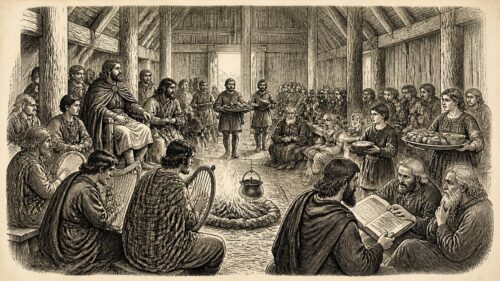
In 1351, Irish politics combined unstable lordship, royal administration, warfare and cultural patronage. Aodh Ó Conchobhair regained Connacht’s kingship through hostages and support, but conflict following Aodh Ó Ruairc’s capture devastated Moylurg. Other deaths and killings reflected continuing regional feuds. Thomas Rokeby’s October ordinances sought to reinforce English law, frontier security, labour regulation and land recovery, revealing the lordship’s weaknesses after plague and war. A Franciscan foundation at Ross Errilly was traditionally dated to this year, though evidence is late. At Christmas, Uilliam Buide Ó Ceallaigh hosted Ireland’s learned classes, using hospitality to proclaim wealth, authority and cultural prestige publicly.
Read Article
Archived: 23 October 2026
Abstract
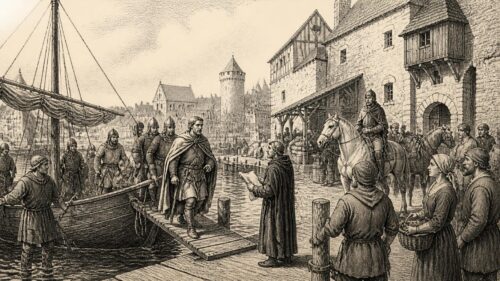
In 1344, Ralph d’Ufford became justiciar of Ireland, landing at Dublin with Maud of Lancaster and pursuing stronger royal oversight of grants, revenues, frontier defence and officials. His inquiries in Cork, administrative changes and Leinster campaign signalled intervention, though not restored island-wide control. Royal military demands also linked Irish magnates to Edward III’s French war. Elsewhere, annals recorded killings, imprisonments and rapid successions among Gaelic lordships in Mide, Airgialla, Breifne, Connacht and Ulster. Church affairs included James Bermingham’s appointment as bishop of Killala. Notices of Finnguala Ó Duibhgeannáin and Cill Rónáin illustrate cultural patronage and the uncertainties of medieval chronology.
Read Article
Archived: 23 October 2026
Abstract
In 1342, Connacht was convulsed by a dynastic war that displaced King Toirrdelbach Ó Conchobair. Conchobar Mac Diarmata, Edmund Burke and rival Ó Conchobairs formed a coalition, humiliating Toirrdelbach at Elphin, destroying crops, fighting over fords and fortresses, and exploiting captivity and assassination. Aed Ó Conchobair became king, though Toirrdelbach regained power in 1343. Elsewhere, Conchobar Ó Domnaill was murdered in Tír Conaill, while raids caused deaths in Oriel. Dublin government abandoned contested reforms amid local resistance. Annalistic notices also record the deaths of poets, historians and clerics, revealing overlapping political, military, ecclesiastical and learned worlds during the year itself.
Read Article
Archived: 23 October 2026
Abstract
In 1341, Toirrdelbach Ó Conchobair, king of Connacht, captured Roscommon Castle, a royal English fortress, with annals differing over the role of his imprisoned rival Áed. The seizure strengthened him temporarily amid continuing Connacht dynastic conflict. Meanwhile, Edward III’s administration ordered investigations, resumed grants and proposed replacing locally connected officials, provoking resistance from the English of Ireland. Parliaments at Dublin and Kilkenny petitioned the king, defending lands, liberties and consultation while affirming loyalty. Elsewhere, violence and rapid successions marked Meath, Oriel and Connacht. Ecclesiastical deaths reflected institutional continuity. The year exposed fragmented, negotiated authority across overlapping Gaelic and settler societies.
Read Article

Archived: 23 October 2026
Abstract
In 1340, Connacht lordship was contested through dynastic intervention, captivity, raiding and negotiated settlement. Toirdelbach Ó Conchobair installed a ruler in Uí Maine, but resistance killed his appointee; his imprisonment of a nephew provoked Mac Diarmata opposition and a peace at Ballymote. Breifne warfare over cattle killed Domnall Ó Ruairc, while prisoners were exchanged to restore political advantage. Other kin-group killings exposed fragile local rule. Edward III pardoned Edmund Albanach and Reymund de Burgh, seeking accommodation and military service. Cill Rónáin burned, and learned men died. Sources caution against misdating Ulster entries and a supposed Franciscan foundation in later annals.
Read Article
Archived: 23 October 2026
Abstract
In 1337, Ireland remained politically fragmented, with Anglo-Irish, Gaelic and royal authorities pursuing alliances, rents and warfare. William, son of the Earl of Ulster, reached a rent-based settlement with Brian Bán Ó Briain, while Aodh Reamhar Ó Néill made northern peace. In Connacht, Toirdelbach Ó Conchobair established a military position at Athleague against Edmund Burke, but Clann Cheallaig defeated and captured him. Feuds in Dartry and Breifne brought killings, raids, captivity and succession. Domnall Ruadh Ó Máille and his son were murdered. Dublin received royal governors, while bishops, scholars and poets died, illustrating the interdependence of power, church and learning.
Read Article
Archived: 23 October 2026
Abstract
In 1335, Ireland was divided among competing Gaelic lordships, settler families, church jurisdictions, towns and royal officials. On 4 May, Lysaght Ó Mórdha’s household killed Sir Raymond le Ercedekne, relatives and allies at a meeting near Claregalway, an exceptional blow memorialised at Kilkenny. Connacht suffered raids, plunder and uneasy reconciliation amid de Burgh fragmentation after 1333. Sir John Darcy mobilised Irish ships, nobles and taxation for Edward III’s Scottish war, raiding Arran and Bute. Local warfare, captures and church disputes continued. Heavy spring snow harmed birds throughout Ireland, while devotional practices and hereditary learning, including physician Gilla-na-nAingel Ó Casaide, persisted.
Read Article
Archived: 23 October 2026
Abstract
In 1329, John de Bermingham, earl of Louth, was killed at Braganstown near Ardee by Louth’s English gentry, exposing divisions within the lordship rather than an ethnic revolt. His disputed authority, kern’s alleged depredations, and weak local roots fuelled resentment. Parliament in Dublin sought to curb magnate feuds, while rivalries persisted. The killers received pardons, Bermingham’s earldom lapsed, and Mortimer acquired Louth’s liberty. Political conflict also embroiled Bishop Ledrede. Campaigns and killings in Wicklow, the midlands, Breifne and Connacht revealed continuing warfare and shifting alliances. Wet weather delayed harvests, intensifying insecurity across Ireland for tenants, townspeople, and landed communities alike.
Read Article

Archived: 24 October 2026
Abstract
In 1328 Ireland endured crop damage, illness, destructive winds and scarcity, recorded across annalistic traditions. Political authority remained fragmented: William de Burgh returned to his Ulster inheritance, while royal orders sought to restrain magnates and an attempted Scottish-Irish peace meeting failed. De Burgh, Connacht and Thomond allies suffered defeat against Brian Bán Ó Briain; violence also killed John de Bermingham, earl of Louth. Obituaries reveal losses to legal, ecclesiastical and musical culture, amid church factionalism. On 2 November Edward III created James Butler earl of Ormond, granting Tipperary’s liberty and strengthening royal influence through territorial, judicial and commercial patronage networks.
Read Article





