Saint Ita of Killeedy
Saint Ita, also known as Ita of Killeedy, remains one of the most venerated figures in early Irish Christianity. Born in County Waterford during the sixth century, tradition identifies her as the daughter of Cenn-fáelad of the Déissi, suggesting she originated from a noble background. Her life is characterised by a transition from her native Waterford to the plains of Limerick, where she established a lasting spiritual legacy. Ita is most renowned for founding a significant church and school at Killeedy in West Limerick. The location, known in Irish as Cell Ídde, literally translates to the church of Ita.
Dateline
Saint Ita, also known as Ita of Killeedy, remains one of the most venerated figures in early Irish Christianity. Born in County Waterford during the sixth century, tradition identifies her as the daughter of Cenn-fáelad of the Déissi, suggesting she originated from a noble background. Her life is characterised by a transition from her native Waterford to the plains of Limerick, where she established a lasting spiritual legacy.
Religious Foundation
Ita is most renowned for founding a significant church and school at Killeedy in West Limerick. The location, known in Irish as Cell Ídde, literally translates to the church of Ita. According to traditional accounts, a local chieftain provided her with a grant of land to support the establishment of the convent, which she subsequently cultivated. This foundation served as more than a sanctuary for women; it became a vital training ground for young boys, many of whom later became distinguished churchmen within the Irish ecclesiastical landscape.
Spiritual Mentorship
The tradition often refers to Saint Ita as the “Foster Mother of the Irish Saints” due to her role in nurturing future religious leaders. Most notably, she is said to have received Saint Brendan the Voyager when he was only a year old, caring for him until the age of six. She is also credited with caring for her nephew, Saint Mochaemhoch, in his infancy. In her role as a spiritual guide, she provided counsel to many and is believed to have practised some degree of medicine. Her teachings emphasized the importance of a pure heart, a simple religious life, and the practice of charity over the pursuit of riches.
Hagiographic Tradition
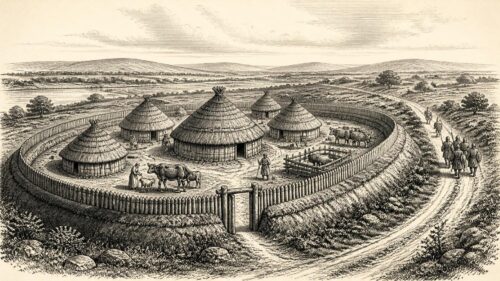
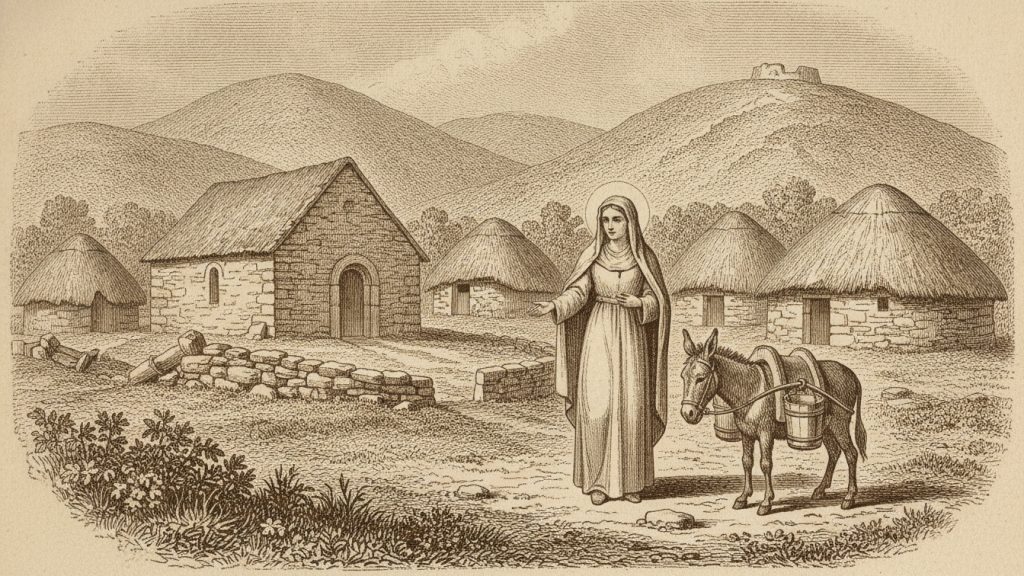
The historical record of Saint Ita is intertwined with various legends. Folk tradition in West Limerick associates her with a special donkey that transported milk from a dairy, referred to as Boolaveeda, to the nuns at Killeedy. This dairy was traditionally located at a ringfort on the northern slope of Seeconglass. Other accounts link her to miraculous intercessions, such as the tradition that the Corcu Óche were defeated through her prayers in 553. While these stories reflect the deep local devotion to her memory, historians distinguish between these legendary acts and established contemporary facts.
Historical Reach
The influence of Saint Ita appears to have extended beyond the borders of Limerick. References to her have been found in Cornwall and within the poetry of Alcuin, suggesting her fame reached far across the early medieval world. She is also associated with the poem Ísucáin, although scholars suggest this work was inspired by her legend around the year 900 rather than being authored by the saint herself.
Death Dates
Precise dates for the life of Saint Ita are subject to some uncertainty, though traditional accounts typically place her activity in the sixth century. Various sources cite her death as occurring in either 570 or 577. Her feast day is observed on 15 January, and her memory continues to be honored through the local holiday in the Killeedy district and the persistence of her name in Irish culture.
Source References
Hover over a number to see the source. Select it to open the source.