Ashes Trilogy
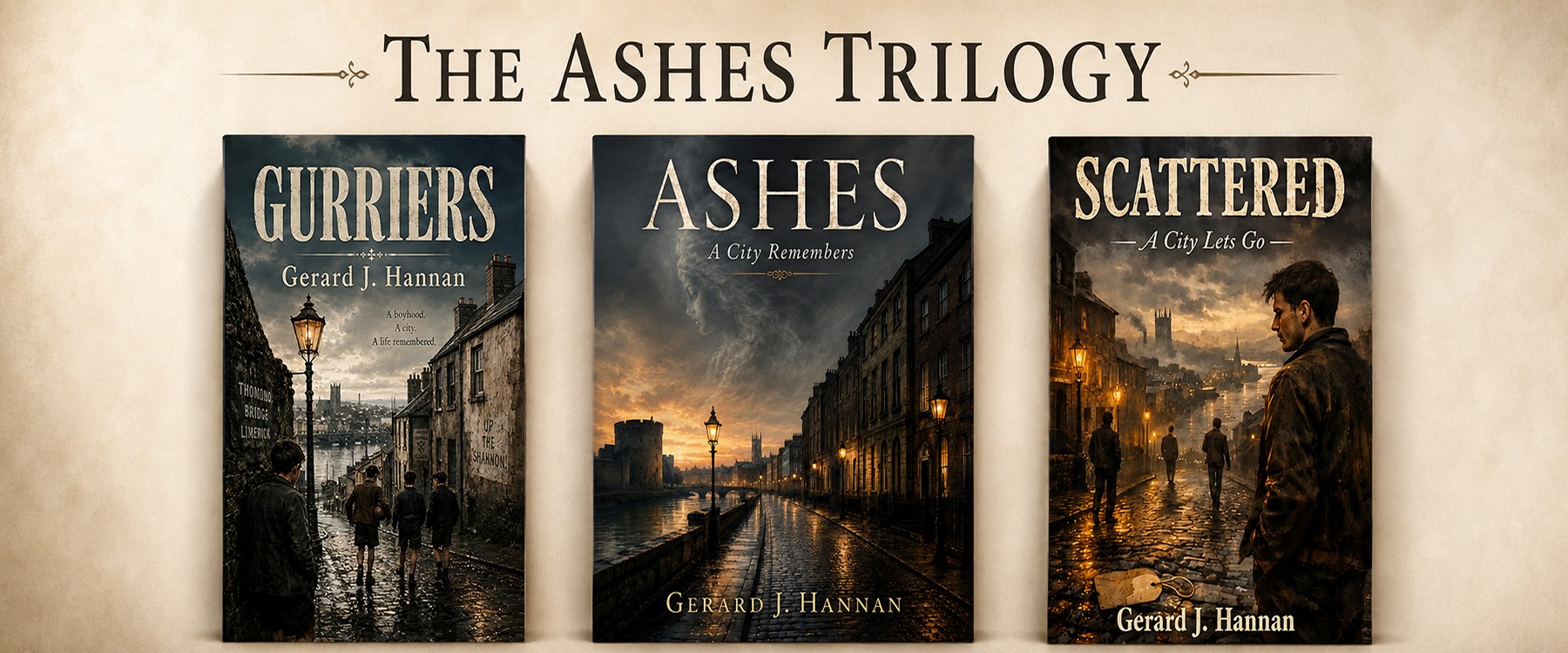
Book 3 of 3 : Scattered
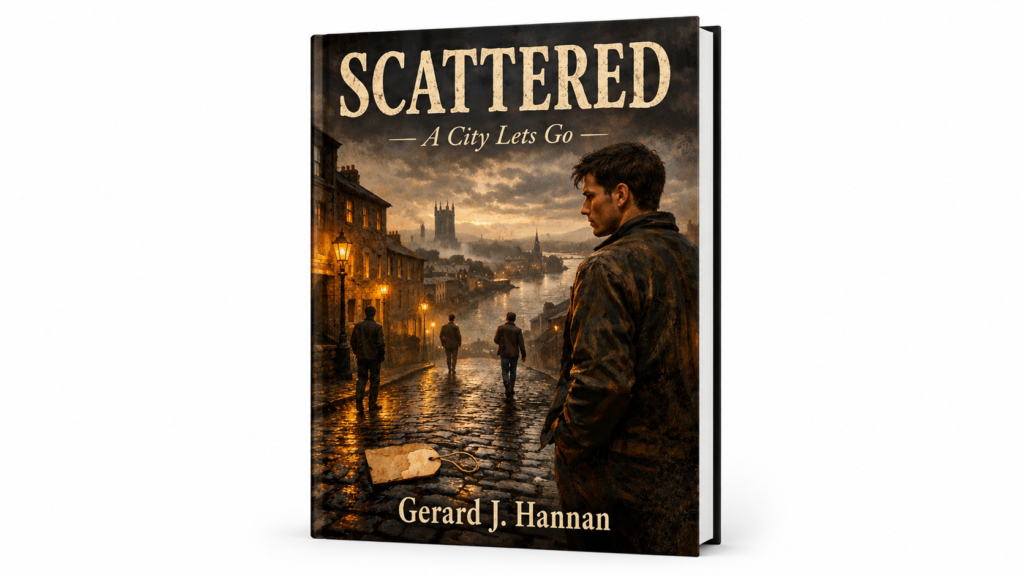
SCATTERED is the third and final book in Gerard J. Hannan’s Ashes Trilogy, carrying the boys of Gurriers into the difficult years between childhood and adulthood. They once ran Limerick’s lanes with reckless confidence, fierce loyalty, and more courage than judgement. Now work, hunger, responsibility, desire, and disappointment begin to close around them. Childhood has not ended cleanly; it has frayed into factory whistles, Mass, dance halls, railway platforms, and letters from England. The boys remain bound by memory, but the world is already pulling them apart, teaching them that friendship cannot keep every life beside the same streets forever.
Louie, Seamus, Joe, Sean, Peter, Tony, Bardy, Maura, Eileen, Nora, Lingo, and the mysterious Gleamer move through a city suspended between old hardship and uncertain change. Their lives overlap in kitchens, factories, churches, streets, dance halls, workplaces, and crowded rooms where privacy is scarce and expectations are heavy. Each character carries a different burden: family duty, loneliness, wounded pride, ambition, grief, love, faith, or the desire to escape. Together they form a portrait of a generation learning that adulthood offers no single path, only choices shaped by class, circumstance, opportunity, and the loyalties they cannot easily abandon behind them completely.
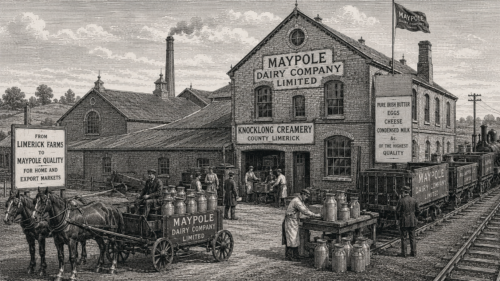
Limerick itself narrates SCATTERED, remembering its own people with deep affection, sorrow, humour, and an honesty that refuses easy consolation. The city watches boys become men, girls enter factories, mothers stand at thresholds, fathers wait for work, and families measure survival through shop credit, borrowed coins, and meals stretched beyond possibility. Church bells organise the day, bacon factories mark the rhythm of labour, and damp rooms hold arguments, prayers, secrets, and dreams. Limerick speaks not as a distant historian, but as a witness that has absorbed every departure, humiliation, kindness, quarrel, and small victory into its long and troubled memory.
The 1950s bring no sudden escape from poverty. Work remains uncertain, wages remain narrow, and family duty continues to govern choices that might otherwise have belonged to the individual. Men queue, wait, labour, and conceal fear behind pride. Women carry households through shortage while also entering factories, shops, laundries, and offices, their earnings often essential but their sacrifices rarely honoured. Children grow up quickly because necessity allows little delay. SCATTERED gives these pressures human faces, showing how class enters every decision: who may study, who must work, who leaves, who stays, and who quietly abandons a cherished hope for others.
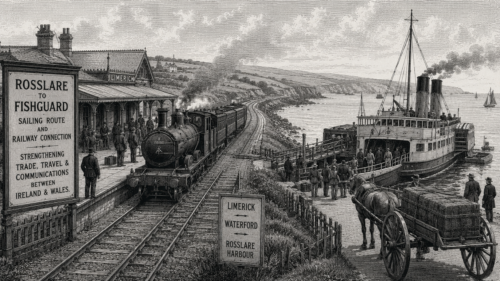
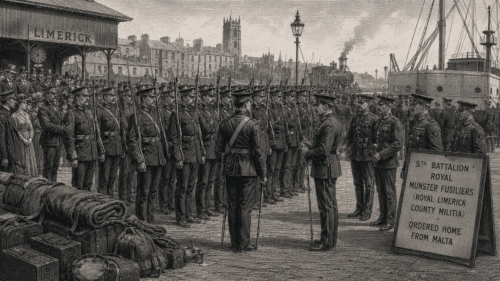
Emigration runs through the novel as both promise and wound. Letters from England bring news of wages, rooms, hardship, loneliness, and possibilities unavailable at home. Railway platforms become places of separation, where families gather around suitcases and controlled grief. Some departures are temporary in intention and permanent in consequence. Sons and daughters leave believing distance may offer freedom, yet carry Limerick within their speech, habits, humour, and longing. Those who remain live among absences, waiting for letters, money, visits, or returns that may never come. SCATTERED remembers emigration not as adventure alone, but as a division of families and memory.
Beyond the old quays, however, Shannon begins to suggest a future. New industry offers the possibility of work closer to home and challenges the belief that survival must always depend upon departure. The promise is fragile, uneven, and incomplete, yet it alters the imagination of a generation. For the first time, some can picture a life in Ireland that does not require exile. SCATTERED treats this hope carefully, without pretending that modernisation erases poverty or inequality. Change arrives slowly, mixed with doubt, but even uncertainty can matter when people have spent years assuming that every road towards opportunity leads away.
Friendship remains at the heart of SCATTERED, though it changes under the pressure of adulthood. The loyalties of boyhood are tested by work, romance, pride, distance, resentment, and unequal fortune. Some friendships deepen through sacrifice; others weaken through silence or separation. Old companions discover that affection does not always prevent hurt, and shared memories cannot guarantee shared futures. Yet the bonds formed in the lanes continue to shape who they become. Even when scattered across neighbourhoods, jobs, countries, and disappointments, they carry one another within them. The past remains a language they share, though they no longer speak it daily.
Love enters the story in forms tender and painful. Young men struggle to express vulnerability in a culture that prizes toughness, while young women balance desire against reputation, family expectation, work, and limited independence. Dance halls offer music, glamour, possibility, jealousy, and heartbreak beneath the watchful eyes of community judgement. Relationships become places where class, faith, gender, and ambition collide. Some characters reach towards happiness and find it; others discover that timing, poverty, or fear can defeat affection. SCATTERED treats love not as rescue, but as another human risk, capable of giving courage, inflicting wounds, and altering every future choice.
Faith remains woven through daily life, shaping conscience, guilt, comfort, routine, and belonging. Mass, confession, priests, church teaching, and family expectation influence decisions even when belief becomes uncertain. For some, religion offers structure and consolation; for others, it deepens fear or restricts possibility. The novel allows these contradictions to stand without judgement. Faith can inspire kindness, reinforce authority, sustain endurance, or sharpen shame. Like Limerick itself, it is neither wholly shelter nor wholly burden. SCATTERED explores how people negotiate inherited belief while entering a changing Ireland, where old certainties remain powerful even as new desires begin to challenge them openly.
Lyrical, intimate, and deeply humane, SCATTERED concludes the Ashes Trilogy as a story of memory, survival, humour, sorrow, and the ordinary people history so often leaves behind. Following Ashes and Gurriers, it completes Gerard J. Hannan’s portrait of Limerick by tracing a generation from childhood hardship into adulthood, work, love, exile, and change. The characters do not conquer poverty or escape every wound, but they endure, adapt, leave, return, remember, and hope. Their lives remain scattered across streets, factories, families, countries, and time, yet Limerick gathers them once more, refusing to let their courage, foolishness, sacrifice, and tenderness disappear completely.