
Fermanagh’s Silt Interval
Around 31,868 BCE, Ireland lay in the unstable later Marine Isotope Stage 3, as the British–Irish Ice Sheet expanded unevenly. Derryvree, County Fermanagh, preserves freshwater silts between tills, recording an ice-free, sedge-rich tundra wetland later buried by advancing ice. Castlepook Cave, County Cork, contains a complex fauna including mammoth, giant deer, reindeer, predators and cold-adapted species, indicating productive open landscapes during favourable intervals. Butchery marks on a reindeer femur may represent Ireland’s earliest human activity, but cannot prove settlement or continuity. Changing climate, sea levels and ice margins made access and survival precarious. Evidence supports intermittent opportunity, not permanent occupation.
View Record
Celtic Shelf Horizons
Around 31,869 BCE, Ireland was a cold Late Pleistocene landscape, not a precisely datable historical moment. Before the Last Glacial Maximum, parts of the island remained ice-free, supporting open tundra wetlands, sedges, grasses, mosses and shallow freshwater habitats. Derryvree and Greenagho deposits in Fermanagh demonstrate these conditions, while cave evidence records climatic fluctuations and diverse fauna including mammoth, reindeer, giant deer, predators and smaller cold-adapted animals. Castlepook Cave suggests wider ecological links with north-west Europe, but its disturbed deposits limit precision. Human visits remain possible, yet no secure contemporary settlement exists. Expanding ice later reshaped and obscured much earlier evidence.
View Record
Doneraile’s Reindeer Threshold
The label 31,870 BCE denotes an approximate Late Pleistocene, Marine Isotope Stage 3 horizon, not a datable Irish year. Ireland experienced cold, periglacial conditions and growing ice, with open tundra-like landscapes and changing routes to Britain and Europe. Castlepook Cave near Doneraile preserves fauna including reindeer, mammoth, giant deer, hyaena, wolves and bears, accumulated over separate episodes. A reindeer femur, possibly cut by a stone tool about 33,000 years ago, may indicate brief Upper Palaeolithic human activity. However, disturbed cave deposits and limited evidence preclude claims of settlement, society or continuous occupation. Climate, ice and faunal movement dominate the record.
View Record
Reindeer Bone at Mammoth Cave
About 31,871 BCE is not a meaningful historical year but an approximate label for later MIS 3, roughly 34,000 calibrated years ago. Castlepook, or Mammoth, Cave in County Cork yielded a reindeer femur reportedly bearing stone-tool butchery marks. If confirmed, it may indicate a brief Upper Palaeolithic visit, not permanent settlement. Early excavation, mixed deposits and dating uncertainty require caution. The cave’s fauna, including reindeer, mammoth, giant deer, predators and lemmings, demonstrates a cold, open, changing landscape supporting animals before the glacial maximum. Ireland’s earliest secure human evidence remains a cut-marked bear bone from Clare, dated about 12,810–12,590 calibrated BP.
View Record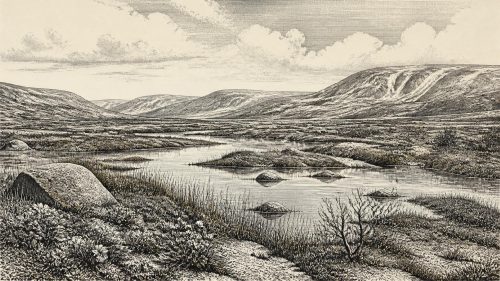
Dryas at Derryvree
Nominally dated to 31,872 BCE, this period in Ireland belongs to the climatically volatile Late Pleistocene, not a precisely identifiable year. Derryvree, County Fermanagh, preserves freshwater silts between glacial tills, indicating open, treeless tundra with cold-adapted plants including mountain avens. Castlepook Cave, County Cork, contains time-mixed MIS 3 remains of mammoth, giant deer, reindeer, carnivores and smaller cold-stage fauna, but cannot represent one moment or island-wide conditions. A possibly cut-marked reindeer femur suggests human visitation, though disturbed context and absent tools, hearths or settlements prevent confirmation. Lower sea levels changed geography, while ice, habitats and possible access routes remained variable.
View Record
Crag Cave’s Interstadial Drips
Around 31,873 BCE, Ireland lay within the unstable MIS 3 phase of the last Ice Age, not a precisely recoverable calendar year. Ice, sea levels, rivers and vegetation changed repeatedly as conditions alternated between milder interstadials and severe stadials. Fermanagh sediments indicate treeless, cold freshwater wetlands with mosses, sedges and northern insects, while southern caves preserve remains of reindeer, giant deer, bears, hyaenas, foxes and hares. Crag Cave speleothems record episodic milder conditions permitting calcite growth. Human presence remains unproven: a possibly cut-marked Castlepook reindeer bone suggests a contested brief visit, whereas later secure evidence does not establish permanent settlement.
View Record
Fermanagh’s Freshwater Silts
About 31,874 BCE, Ireland lay within the climatically unstable Late Pleistocene, not a date recoverable as a discrete historical year. At Derryvree, County Fermanagh, freshwater silts between till layers indicate an ice-free interval marked by treeless, periglacial terrain, cold-adapted insects, mosses and sedges. The last British–Irish Ice Sheet was building towards its later maximum, while conditions varied regionally and abruptly. Cave remains show a wider Pleistocene fauna, although assemblages cannot define contemporaneous communities. Secure evidence for human settlement is absent; possible early contact remains unproven. This period is understood through fragmentary environmental archives, not political, social or cultural history alone.
View Record
A Femur in North Cork
Around 31,875 BCE, Ireland was entering a colder, increasingly glaciated Late Pleistocene landscape, not yet at the Last Glacial Maximum. Ice, low sea levels, permafrost and open tundra-like habitats shaped a changing island supporting reindeer, horse, mammoth, giant deer and predators. Later glaciation destroyed or disturbed much earlier evidence. Castlepook Cave, County Cork, preserves a reindeer femur, reportedly about 33,000 years old, with possible stone-tool butchery marks. It may indicate a brief pre-glacial human visit, but poor early excavation contexts prevent certainty. No securely dated settlement, tools, hearths, burials or enduring population are known. The date chiefly illustrates evidence's limits.
View Record
The Castlepook Reindeer Question
Circa 31,876 BCE, Ireland was a cold, unstable Late Pleistocene landscape, not a historically documented country. Ice-free freshwater environments in Fermanagh, evidenced at Derryvree and Greenagho, show that later glaciation had not yet covered all regions. Castlepook Cave in Cork preserves remains of mammoth, giant deer, reindeer and other cold-adapted fauna, although deposits represent multiple episodes. A cut-marked reindeer femur may indicate brief human butchery or handling, but cannot prove settlement or continuity. Lower sea levels altered coasts without establishing certain migration routes. Expanding ice later transformed and obscured the landscape, leaving sediments and cave bones as the principal archive.
View Record
Awbeg Valley Reindeer
31,877 BCE is a modern approximation for a broad later Pleistocene interval, not a recoverable Irish year. Before the Last Glacial Maximum, Ireland contained regionally varied, cold, open tundra and wetlands, evidenced by Derryvree deposits in Fermanagh. Castlepook Cave Cork’s Awbeg valley preserves fauna, including reindeer, mammoth, giant deer, predators and, accumulated across different times rather than one moment. A dated reindeer femur may bear human cut marks, suggesting brief Upper Palaeolithic visitation, but disturbed contexts prevent certainty. No settlements, tools, identities or social institutions are securely known. The evidence portrays active Ice Age ecosystems and possible early human presence.
View Record