
Awbeg Valley Reindeer
31,877 BCE is a modern approximation for a broad later Pleistocene interval, not a recoverable Irish year. Before the Last Glacial Maximum, Ireland contained regionally varied, cold, open tundra and wetlands, evidenced by Derryvree deposits in Fermanagh. Castlepook Cave Cork’s Awbeg valley preserves fauna, including reindeer, mammoth, giant deer, predators and, accumulated across different times rather than one moment. A dated reindeer femur may bear human cut marks, suggesting brief Upper Palaeolithic visitation, but disturbed contexts prevent certainty. No settlements, tools, identities or social institutions are securely known. The evidence portrays active Ice Age ecosystems and possible early human presence.
View Record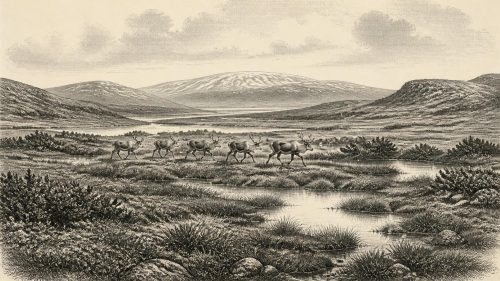
The Awbeg Faunal Window
Around 31,878 BCE, Ireland lay within the unstable cold conditions of Marine Isotope Stage 3, before the Last Glacial Maximum. Derryvree, County Fermanagh, preserves freshwater sediments indicating an ice-free, treeless wet-tundra landscape of sedges, grasses, mosses and juniper. Castlepook Cave, County Cork, yielded late Pleistocene fauna including reindeer, mammoth, giant deer, horse, bear, wolf, arctic fox and hyaena. These sites demonstrate surviving habitats and grazing land before major ice-sheet expansion. Possible butchered bones raise, but do not prove, human presence. No secure evidence supports settlement, farming, communities or specific events. Dating ranges, disturbed deposits and later glaciation require cautious interpretation.
View Record
Derryvree’s Buried Fen
Derryvree in County Fermanagh preserves freshwater sediments beneath later glacial till from a broad period spanning the nominal date of 31,879 BCE. Mosses, herbaceous pollen and invertebrates indicate open, treeless tundra with cold wetlands during climatically unstable Marine Isotope Stage 3. Southern caves, especially Castlepook in Cork, contain reindeer, mammoth, hyaena and lemming remains supporting cold-adapted ecosystems. A cut-marked reindeer femur may indicate human butchery around 31,000 BC, but disturbed deposits and absent associated artefacts prevent claims of settlement. Ireland was intermittently ice-free and perhaps occasionally visited before the British–Irish Ice Sheet expanded towards its Last Glacial Maximum much later.
View Record
North Cork’s Single Incision
Around 31,880 BCE, Ireland was a cold, changing landscape on the north-western fringe of Upper Palaeolithic Europe, approaching but preceding the Last Glacial Maximum. Calendar precision is impossible; evidence consists chiefly of cave remains, sediments and glacial landforms. Castlepook Cave, north County Cork, contains Ireland’s richest pre-maximum vertebrate assemblage, including reindeer, mammoth, giant deer, bears and hyenas, indicating habitats able to sustain Ice Age fauna over millennia. Ice was advancing unevenly, though the extent of ice-free ground remains uncertain. A possibly cut-marked reindeer femur suggests a human visit, but lacks secure context. No evidence proves Palaeolithic settlement, society or continuity.
View Record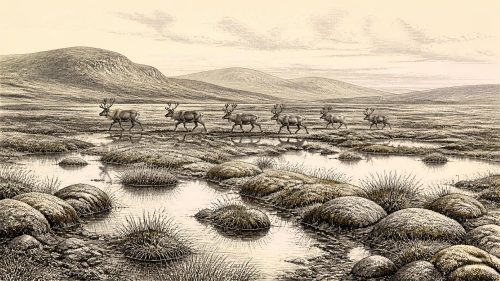
Greenagho’s Tundra Basin
About 31,881 BCE, Ireland lay within the unstable cold conditions of Marine Isotope Stage 3, rather than a precisely datable historical year. Buried freshwater deposits at Derryvree and Greenagho, County Fermanagh, show that north-central areas were periodically ice-free before later glacial advances, supporting treeless, waterlogged tundra of mosses, sedges and shallow pools. Cave remains at Castlepook, County Cork, demonstrate intermittent connections to wider European fauna, including reindeer, mammoth, horse, predators and lemmings. Possible stone-tool marks on a reindeer bone suggest brief human visits, but cannot prove settlement. Expanding ice subsequently covered most of Ireland, preserving only valuable fragmentary environmental evidence.
View Record
Shandon’s Red-Deer World
Around 31,882 BCE, Ireland was a climatically unstable Late Pleistocene landscape, not a settled or historically documented society. Calibrated radiocarbon evidence from Shandon Cave, County Waterford, indicates red deer were present during a broad period overlapping this date. Derryvree sediments in Fermanagh suggest cold, open, seasonally wet tundra habitats, while cave assemblages reveal changing communities of large herbivores, predators and small mammals. Later glaciation destroyed much evidence. Claims for early human visits, including a possibly cut-marked Castlepook bone, remain unproven. No secure Palaeolithic dwellings, tools or burials exist. Ireland’s record instead documents intermittent Ice Age ecological opportunity and fragmented survival.
View Record
Derryvree’s Buried Lakebed
Around 31,883 BCE, Ireland lay within the unstable cold conditions of Marine Isotope Stage 3, rather than a documented historical era. Derryvree, County Fermanagh, preserves buried freshwater silts dated broadly to this period, demonstrating an ice-free, open tundra landscape before later glaciation. Climatic fluctuations occasionally created milder local conditions. Cave deposits, especially at Castlepook, record varied cold-adapted fauna, including reindeer, mammoth, giant deer and predators, but accumulated over millennia rather than simultaneously. A possibly cut-marked reindeer bone may indicate brief human activity around 33,000 years ago, though no settlement evidence exists. Subsequent ice expansion buried, eroded and obscured sparse record.
View Record
Shandon Cave’s Bear Horizon
31,884 BCE is a modern, uncertain calendar conversion within Marine Isotope Stage 3, preceding the Last Glacial Maximum. Ireland experienced variable cold conditions, with shifting ice, periglacial terrain and habitable ice-free areas. Shandon Cave, County Waterford, contains a brown-bear bone whose calibrated range overlaps this period, demonstrating late-Pleistocene animal presence but not exact-year occupation. Cave finds from Shandon and Castlepook indicate intermittent access for mammals including reindeer, horse, mammoth, predators and bears across open, sparsely vegetated habitats. Possible cut marks on a Castlepook reindeer bone suggest, but cannot prove, a brief human visit. No evidence supports settlement or migration routes.
View Record
Elephant Hall’s Bone Archive
31,885 BCE is a modern calendar equivalent, not a precisely datable Irish event, and belongs to fluctuating cold conditions of Marine Isotope Stage 3. Ireland’s advancing glaciers, exposed terrain and low sea levels created a changing landscape without a continental land route. Castlepook Cave in County Cork preserves Late Pleistocene remains including reindeer, mammoth, giant deer, hyaena and Arctic fox, indicating cold open habitats. A reindeer femur bearing possible stone-tool marks may suggest a human visit around 33,000 years ago, but disturbance, carnivore damage and absent finds prevent confirmation. No evidence establishes settlement, farming or continuous population; further work required.
View Record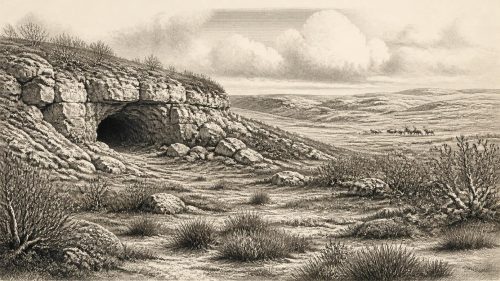
Elephant Hall’s Pleistocene Ledger
31,886 BCE is an imprecise modern label for a fluctuating MIS 3 Ice Age interval around 34,000 calibrated years ago, not a recorded Irish date. Ireland lacked known settlement, states and documentary history, but supported changing cold-adapted fauna. Castlepook Cave, County Cork, particularly Elephant Hall, preserves bones accumulated over millennia, including mammoth, reindeer, giant deer, bears, hyaenas and smaller mammals. Pollen and insect records indicate open, harsh, patchy landscapes. A reportedly cut-marked reindeer femur may signal Upper Palaeolithic butchery, yet remains unconfirmed and cannot demonstrate settlement. Later ice-sheet expansion destroyed or buried evidence, leaving ecological history clearer than human history.
View Record