Archived: 9 September 2026
Abstract
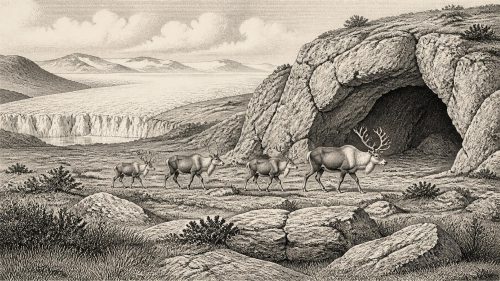
Around 31,948 BCE, Ireland lay within the climatically unstable Late Pleistocene, before the Last Glacial Maximum. Ice growth was substantial but regionally uncertain, while lower sea levels transformed coastlines without guaranteeing easy land connections. Geological landforms, offshore sediments and caves preserve fragmentary evidence of glaciation and changing fauna, including mammoth, reindeer, giant deer, bear and hyena. Later ice erosion and sea-level rise destroyed or submerged much evidence. No securely dated human artefacts, occupations or communities are known; possible transient visits remain unproven. Agriculture, villages, politics, trade and ritual belong to later periods. Ireland’s significance lies in its glacially reshaped environment.
Read Article
Archived: 9 September 2026
Abstract
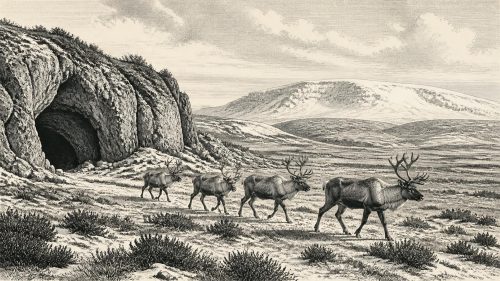
Around 31,949 BCE, Ireland lay in the climatically unstable Late Pleistocene, approaching maximum glaciation but retaining intermittently ice-free terrain in the south. Crag Cave speleothems indicate changing conditions, while lower sea levels reshaped coasts. Castlepook Cave’s mixed deposits preserve cold-adapted fauna, including reindeer, mammoth, lemmings, predators and giant deer, suggesting open steppe-tundra habitats. A possibly butchered reindeer bone dated about 33,000 years ago offers tentative evidence of human visitation, not settlement. No contemporary Irish tools, hearths, burials or communities are securely known. Environmental change, cave evidence and uncertainty therefore define this remote period, preceding later proven Upper Palaeolithic occupation there.
Read Article

Archived: 9 September 2026
Abstract
Around 31,950 BCE, Ireland lay within the Midlandian cold stage of the Late Pleistocene, before the Last Glacial Maximum. Its treeless, periglacial landscapes comprised tundra, grasses, sedges, dwarf shrubs, unstable rivers and frost-shattered ground, while lowered seas altered coastlines without necessarily providing easy land routes. Cave deposits, especially Castlepook in Cork, preserve evidence of mammoth, reindeer, giant deer, predators and Arctic-adapted mammals, though accumulated remains cannot reconstruct one ecosystem. A possibly cut-marked reindeer bone, dated near 33,000 years ago, may indicate human butchery. Yet no settlement, tools, hearths or continuous occupation are established. It represents environmental change and tentative presence.
Read Article

Archived: 9 September 2026
Abstract
Around 31,951 BCE, Ireland lay in the Late Pleistocene, before the Last Glacial Maximum, experiencing increasingly cold, unstable conditions rather than uniform ice cover. Southern areas may initially have remained ice-free, while changing sea levels and ice margins altered connections with Britain and Europe. Cave fauna, particularly from Castlepook, demonstrates reindeer, mammoth, hyaena, bears, wolves and other cold-adapted animals during this broad period. A marked reindeer bone may indicate brief Upper Palaeolithic butchery, but cannot prove settlement or continuous occupation. Glacial erosion, drowned landscapes and disturbed cave deposits explain the sparse record, leaving environmental change as the clearest documented development.
Read Article

Archived: 8 September 2026
Abstract
Around 31,952 BCE, Ireland lay in the unstable Late Pleistocene climate of Marine Isotope Stage 3, as the British–Irish Ice Sheet expanded. Southern raised-beach and marine deposits reveal shifting relative sea levels, while Castlepook Cave in County Cork preserves remains of mammoth, reindeer, giant deer, bears, wolves, hyaenas and fauna, indicating varied open, cold habitats. Cave deposits are disturbed and span long periods, limiting precision. A reportedly cut-marked reindeer bone, dated near 33,000 years ago, suggests possible Upper Palaeolithic visitation, but lacks secure context. Settlement remains unproven. This date represents ecological richness and uncertain human possibility before later glacial maximum.
Read Article

Archived: 8 September 2026
Abstract
Around 31,953 BCE, Ireland lay within the climatically unstable later Ice Age, approaching expanded glaciation. Evidence from Castlepook, or Mammoth, Cave in County Cork confirms a diverse Marine Isotope Stage 3 fauna, including reindeer, mammoth, giant deer, bears, wolves and Arctic species. A reindeer femur, dated about 33,000 years ago, has a possible stone-tool butchery mark, perhaps indicating Ireland's earliest human activity. However, disturbed cave deposits and lack of associated tools or habitation prevent conclusions about settlement. Ice later damaged much archaeological evidence. No local polities, warfare, art or culture can be established; human presence remains possible, fleeting and uncertain.
Read Article

Archived: 8 September 2026
Abstract
31,954 BCE is a notional date within MIS 3, not a recorded Irish year. Ireland then comprised volatile Late Pleistocene environments supporting cold-adapted fauna, including reindeer, mammoth, giant deer and carnivores, before the Last Glacial Maximum. Castlepook Cave, County Cork, provides a possible earliest human trace: a reindeer femur with a mark plausibly made by a stone tool during butchery. Poorly recorded early excavations, disturbed cave deposits and uncertain dating prevent stronger conclusions about settlement, hunting or access routes. No evidence supports communities, culture or politics. Later glaciation obscured evidence; secure sustained settlement begins only in the Mesolithic millennia later.
Read Article
Archived: 8 September 2026
Abstract
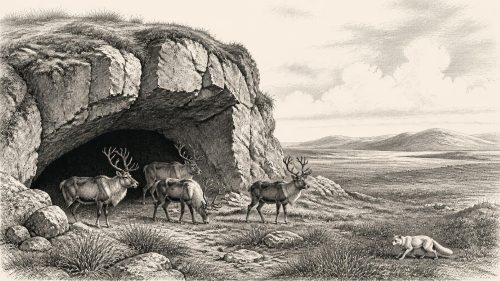
Around 31,955 BCE, Ireland was an unstable Late Pleistocene landscape approaching major glaciation, not a documented historical society. Castlepook Cave, County Cork, preserves important MIS 3 animal remains, including mammoth, reindeer, giant deer, predators and cold-adapted species. A reportedly stone-tool-marked reindeer femur, dated broadly around 33,000 years ago, suggests a possible fleeting human presence, but cannot establish settlement or a specific event. Disturbed deposits, uncertain dating and carnivore activity require caution. As the British–Irish Ice Sheet expanded, changing climates, sea levels and routes shaped animal movement. Future excavation, dating, taphonomic study and ancient-DNA research may clarify Ireland’s earliest human evidence.
Read Article

Archived: 8 September 2026
Abstract
Around 31,956 BCE, Ireland lay within the variable cold conditions of Marine Isotope Stage 3, before the Last Glacial Maximum. Its landscapes included tundra-like open vegetation, periglacial environments and regionally uncertain ice cover, while lower seas did not guarantee human access. Castlepook Cave in County Cork preserves Ireland’s pre-maximum vertebrate assemblage, including mammoth, reindeer, giant deer, hyaena and predators. A possibly cut-marked reindeer bone, dated near 33,000 years ago, may indicate brief human activity, but remains unconfirmed and cannot establish settlement. No secure Palaeolithic habitation, tools, burials or art date to this period. Evidence instead depicts changing environments and fauna.
Read Article

Archived: 8 September 2026
Abstract
Ireland around 31,957 BCE lay within Marine Isotope Stage 3, a cold, changing Late Pleistocene period lacking written history or proven settlement. Castlepook Cave in County Cork yielded reindeer and other cold-stage fauna. A marked reindeer femur, interpreted as stone-tool butchery, may indicate brief human presence, but lacks securely associated tools or occupation evidence. Radiocarbon dates require calibration and cannot establish an exact year. Cave deposits were disturbed, while later glaciers erased or rearranged much evidence. Growing ice eventually covered Ireland at the Last Glacial Maximum. The find suggests possible early, discontinuous contact, but future excavation and dating remain necessary.
Read Article
