The Irish Sea Threshold
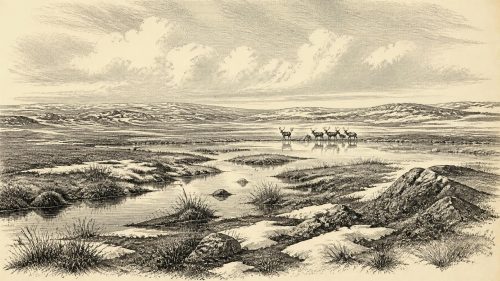
31,675 BCE is a modern label, not a datable Irish event, representing late Pleistocene Marine Isotope Stage 3 as the British–Irish Ice Sheet began sustained growth. Ireland contained ice-free tundra, wetlands and freshwater habitats, preserved beneath glacial deposits at Derryvree and Greenagho. Castlepook Cave's imperfect bone assemblage records reindeer, mammoth, giant deer and predators, indicating an ecologically active landscape. A cut-marked reindeer femur may signal Ireland's earliest human activity, but cannot prove settlement, culture or continuity. Glacial erosion, uncertain radiocarbon dates and changing sea geography limit conclusions. The period is an environmental threshold, illuminated by fragmentary evidence rather than events.
View Record
Mammoth Cave’s Cold Corridor
At the notional date of 31,676 BCE, Ireland lay within the climatically unstable later Marine Isotope Stage 3, before the last British–Irish Ice Sheet reached maximum extent. Derryvree sediments in County Fermanagh record a cold, open, waterlogged interval between glaciations, supporting sparse wetland vegetation. Castlepook Cave in County Cork preserves diverse cold-stage fauna, including mammoth, reindeer, giant deer, lemmings, predators and hyenas, though its bones accumulated across long periods. A cut-marked reindeer femur may indicate brief human presence, but remains contested and isolated. No evidence establishes settlement or society. Subsequent ice advance buried, disturbed and destroyed much of this record.
View Record
The Castlepook Carcass
“31,677 BCE” is a modern chronological label, not a year that can be recovered from...
View Record
The Maguiresbridge Freshwater Series
31,678 BCE is a modern label for a broad Late Pleistocene interval, reconstructed from environmental evidence rather than recorded events. At Derryvree, County Fermanagh, freshwater deposits between glacial tills reveal an ice-free or largely ice-free, periglacial tundra landscape with pools, sedges, mosses and sparse vegetation before renewed glaciation. Castlepook Cave, County Cork, preserves MIS 3 remains of reindeer, giant deer, mammoth, hyaena and other fauna, though accumulated over time. A possibly cut-marked reindeer bone suggests brief human presence, but occupation remains unproven. These archives show dynamic, regionally varied Ice Age Ireland, later extensively reshaped by expanding ice sheets over millennia.
View Record
Fermanagh Between the Tills
Around 31,679 BCE, Ireland lay within a cold, unstable Late Pleistocene interval, rather than a precisely datable historical year. Evidence from Derryvree, County Fermanagh, shows freshwater sediments, tundra-like vegetation and insects preserved between glacial tills, demonstrating local ice-free conditions before later ice advance. Castlepook Cave, County Cork, contains remains of mammoth, reindeer, bears, wolves, foxes and hyenas, indicating changing open-country fauna. A cut-marked reindeer bone may suggest human activity around 33,000 years ago, but remains inconclusive. No secure evidence establishes permanent Palaeolithic settlement, political societies, farming, language or culture. Ireland’s record is geological, ecological and fragmentary in character and scope.
View Record
Bogbean and Reindeer
Around 31,680 BCE, Ireland lay within the climatically unstable MIS 3 cold stage, where ice margins and habitats changed repeatedly. Derryvree in Fermanagh preserves freshwater deposits indicating open, waterlogged tundra, with sedges, mosses, dwarf willow and bogbean. Castlepook Cave in Cork contains MIS 3 remains of mammoth, reindeer, giant deer, predators and cold-adapted species, showing Ireland’s place in a wider Ice-Age ecosystem. A marked reindeer femur may indicate butchery by people, but lacks secure context. No evidence establishes permanent settlement, communities, political life or cultural practices; the period’s history is chiefly environmental, fragmentary and cautiously interpreted from sparse surviving evidence.
View Record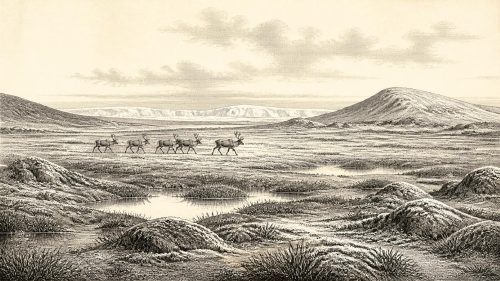
Derryvree’s Tundra Waterline
31,681 BCE is not a recoverable Irish historical date but falls within a broad Late Pleistocene, Marine Isotope Stage 3 timeframe. Derryvree, County Fermanagh, preserves freshwater sediments between tills, indicating severe periglacial yet tundra-like wetlands with sedges, dwarf shrubs and cold-adapted insects. Ireland was climatically and geographically variable before the Last Glacial Maximum, with changing ice, sea levels and access routes. Castlepook Cave, County Cork, contains fauna including mammoth, reindeer, giant deer and hyaena, accumulated over long periods. A marked reindeer bone tentatively suggests human processing, but confirms neither settlement nor continuous occupation. Evidence supports environmental history, not year-specific events.
View Record
Derryvree’s Frostwater Flora
Around 31,682 BCE, Ireland was an unstable later-MIS 3 Ice Age landscape, not a documented human society. Derryvree, County Fermanagh, preserves freshwater organic sediments between glacial tills, indicating an ice-free interval with tundra-like wetlands, mosses, sedges, aquatic plants and cold-adapted insects. Cave evidence and speleothems show environmental variation, while advancing ice sheets increasingly reshaped the island before the later Last Glacial Maximum. Castlepook Cave fauna, including reindeer, mammoth and hyena, reflects changing Pleistocene ecosystems rather than a single community. A possibly cut-marked reindeer bone suggests early human activity, but lacks corroborating archaeological context. Evidence remains fragmentary and interpretations necessarily cautious.
View Record
Derryvree’s Inter-Till Flora
Around 31,683 BCE, Ireland cannot be described through a precise calendar year, but through unstable MIS 3 conditions. Derryvree, County Fermanagh, preserves freshwater sediments between glacial tills, indicating open tundra, wet hollows, mosses, sedges and sparse vegetation during an ice-free interval. Castlepook Cave, County Cork, contains a long-accumulated fauna including reindeer, mammoth, giant deer, bear and hyaena, reflecting cold open landscapes. A marked reindeer femur may indicate brief human activity, though its interpretation remains contested and proves neither settlement nor occupation. Changing ice margins, lowered seas and uncertain routes shaped Ireland as it approached renewed extensive glaciation during this period.
View Record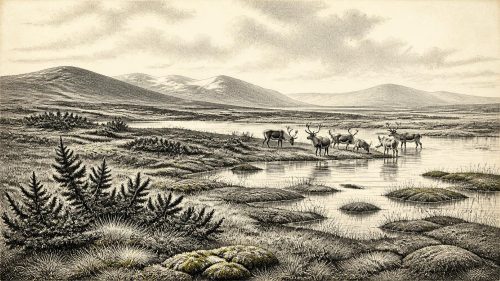
Derryvree’s Marsh Ledger
About 31,684 BCE, Ireland lay within the unstable Late Pleistocene, though no precise event can be dated to that year. Sediments at Derryvree, County Fermanagh, preserved between glacial tills, record an ice-free interval of freshwater marsh, open tundra-steppe vegetation and seasonal productivity. Comparable northern deposits reveal repeated climatic and ecological shifts. Castlepook Cave, County Cork, contains mammoth, reindeer, giant deer, predators and scavengers, indicating rich cold-country fauna. A cut-marked reindeer bone may provide Ireland’s earliest evidence of human butchery, but proves neither settlement nor continuous occupation. Later expansion of the British–Irish Ice Sheet erased or buried Ireland’s fragile archaeological evidence.
View Record