
Derryvree’s Greenland Six
Around 31,685 BCE, a notional date within Marine Isotope Stage 3, Ireland's evidence records changing Ice Age environments rather than a datable event. Organic silts at Derryvree, Fermanagh, preserved between glacial tills, indicate an ice-free, cold, treeless wetland of grasses, sedges, herbs, mosses and pools, later overridden by ice. Ireland was approaching, not experiencing, the Last Glacial Maximum. Castlepook Cave's mixed fauna demonstrates cold-stage animal diversity, but accumulated over separate periods. A possibly tool-marked reindeer femur may indicate an early human visit, yet lacks secure context. No settlement, culture or continuous population can be inferred; later glaciation further obscured evidence.
View Record
Derryvree’s Hidden Silt
About 31,686 BCE, Ireland lay in the fluctuating cold conditions of Marine Isotope Stage 3, though no evidence can date events to that single year. At Derryvree, County Fermanagh, freshwater sediments between glacial tills record a treeless, wet-tundra environment during an interval between ice advances. Castlepook Cave, County Cork, preserves MIS 3 remains of reindeer, bear, arctic fox, hare, hyaena, giant deer and mammoth, demonstrating episodic ecological links with north-west Europe. Possible human modification of a reindeer bone remains unconfirmed and cannot prove settlement. The evidence instead reveals shifting ice, wetlands, open vegetation and mobile fauna, while interpretations remain provisional.
View Record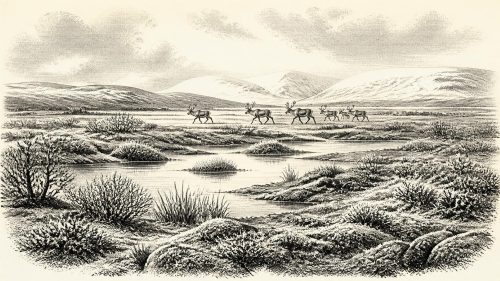
Fermanagh’s Frost Mosses
31,687 BCE is not a recoverable Irish year, but falls within later Marine Isotope Stage 3, before the Last Glacial Maximum. Derryvree, County Fermanagh, preserves freshwater sediments dated broadly to 36,900–31,700 cal BP, indicating an intermittently ice-free tundra wetland of mosses, sedges, grasses and shrubs. Castlepook Cave, County Cork, contains diverse Ice Age fauna, including mammoth, giant deer, reindeer, bear and hyaena, accumulated over millennia. A modified reindeer femur may record early human butchery, yet remains unconfirmed. No settlements or social institutions are evidenced. Ireland was a climatically unstable, variably habitable landscape of advancing ice, wildlife and possible human visits.
View Record
Hyaena Hall’s Bone Traffic
Around 31,688 BCE, a retrospective label rather than a recoverable Irish year, Ireland lay within the climatically unstable Marine Isotope Stage 3, before the Last Glacial Maximum. Castlepook Cave in County Cork preserves bones of mammoth, giant deer, reindeer, bears, wolves, Arctic foxes, lemmings and Ireland’s only known spotted hyaenas, indicating varied cold, open habitats. Disturbed excavations and revised radiocarbon dates prevent treating these remains as a single contemporaneous fauna. Hyaena evidence suggests den use. A marked reindeer femur may indicate Palaeolithic butchery, but no associated tools, settlement, or human remains exist. Environmental change, mobility and uncertainty define deep past.
View Record
Castlepook’s Hyaena Accumulation
31,689 BCE is a modern label for a broad MIS 3 interval, not a datable Irish event. Castlepook Cave in north Cork preserves bones and sediments indicating a cold, open landscape inhabited intermittently by reindeer, mammoth, hyaenas, wolves and other fauna. Hyaenas probably accumulated much material, complicating interpretations of human activity. A marked reindeer femur, dated broadly to MIS 3, may bear a stone-tool incision and suggests a possible early human visit, but lacks secure excavation context or corroborating artefacts. Changing sea levels and approaching ice affected access and preservation. Castlepook therefore illuminates Ice Age ecology while leaving settlement unproven.
View Record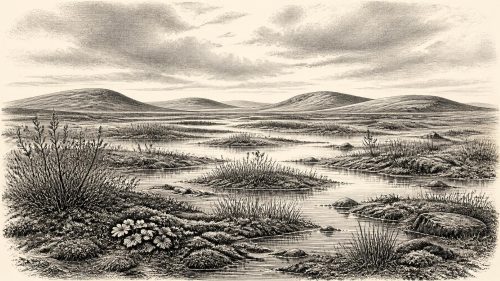
The Birm-166 Horizon
“31,690 BCE” is a modern chronological label, not a year that anyone in prehistoric Ireland...
View Record
The Castlepook Hindleg
31,691 BCE is a modern label for a broad Late Pleistocene interval, not a recoverable Irish date. Evidence from Derryvree indicates locally wet, treeless tundra with cold-adapted plants and insects, while Castlepook Cave preserves a mixed, poorly stratified fauna including reindeer, mammoth and hyaena. A reindeer femur, possibly cut by a stone tool, may indicate brief Upper Palaeolithic human activity, but cannot establish hunting, settlement or continuity. Lower seas altered access, as habitats and ice margins shifted. Subsequent ice expansion likely destroyed evidence. Ireland was an intermittently habitable frontier, understood through uncertain environmental fragments rather than political or social history.
View Record
Derryvree’s Trifoliate Seed
At roughly 31,692 BCE, Ireland lay within the fluctuating cold conditions of Marine Isotope Stage 3, although dating cannot identify a single-year event. Derryvree, County Fermanagh, preserves freshwater organic beds between glacial tills, indicating local ice-free or ice-marginal intervals amid changing ice-sheet conditions. Pollen, plants and insects reveal treeless wetlands of mosses, sedges, herbs and dwarf shrubs. Castlepook Cave fauna demonstrates cold-stage animal presence, including reindeer, mammoth and hyaena, but its deposits are chronologically complex. A modified reindeer femur may suggest brief Upper Palaeolithic human activity, yet no settlement evidence exists. Ireland’s record reveals dynamic environments, not recoverable political history.
View Record
Derryvree’s Arctic Mosses
31,693 BCE denotes a broad Late Pleistocene interval, rather than a recoverable Irish year. At Derryvree, County Fermanagh, freshwater sediments between glacial tills reveal an ice-free episode with mosses, sedges, pools and sparse Arctic-alpine vegetation on treeless periglacial ground. Castlepook Cave, County Cork, preserves mixed MIS 3 animal remains, indicating connections with north-west European cold-stage ecosystems, though specimens cannot form a contemporary census. A possibly tool-marked reindeer bone raises, but does not prove, early human visitation. Expanding regional ice later overwhelmed habitats. Lower sea levels altered routes, while glaciation and coastal change destroyed evidence. Ireland was environmentally varied and uncertain.
View Record
Castlepook’s Incised Femur
The nominal date 31,694 BCE cannot describe an event, but denotes a broadly dated MIS 3 interval of climatic instability. Ireland was a changing glacial frontier, with shifting ice, water and open terrain. Derryvree sediments record cold, treeless freshwater tundra between glacial advances; Crag Cave indicates episodic milder conditions. Castlepook Cave preserves diverse Ice Age fauna, though bones accumulated over time and are not contemporaneous. An incised reindeer femur may indicate stone-tool butchery and Ireland’s earliest human presence, but lacks secure contextual evidence. The article concludes that mobile hunter-gatherers may have visited, without proof of settlement, continuity or social details.
View Record