Explore
Each page shows 5 articles and 5 images from 203 articles and 544 images
Explore the Archives
Munster Migration
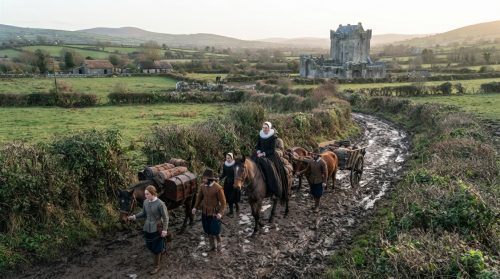
Lady Elizabeth Dowdall’s Limerick story began before Kilfinny Castle, with the Southwell family’s movement from England into Ireland. Born in England during the 1590s, Elizabeth was the daughter of Sir Thomas Southwell and the poet Anne Southwell. Sir Thomas was knighted in 1603, after which the family settled in County Cork during the seventeenth century. That relocation placed Elizabeth within Munster’s developing networks of landholding, marriage and administration. Her later union with Sir John Dowdall carried her northwards into County Limerick, where Kilfinny became her household and, eventually, the setting for the episode that preserved her name in Irish history.
Read Article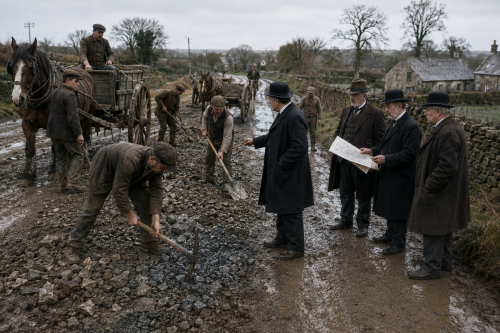
Labour Sanctioned
The Local Government Board approved Limerick County Council’s decision to undertake certain road works by direct labour where contractors had failed to tender. The ruling, reported on 5 January 1900, allowed the Council to place such roads under the County Surveyor and employ labourers without relying upon the customary contracting system. Approval did not introduce direct labour across every county road. It applied to works for which satisfactory private tenders had not been received, giving the newly established local authority a practical means of maintaining routes that might otherwise remain neglected.
Read Article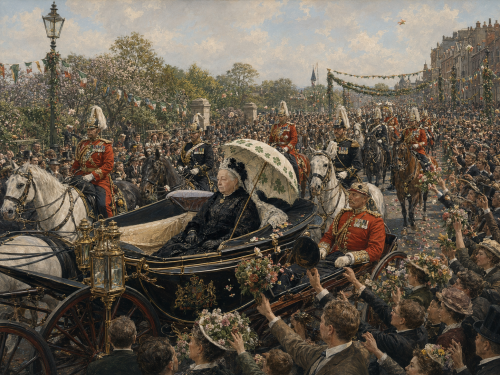
Hidden Discontent
Advanced nationalists have rejected claims that Queen Victoria’s public reception demonstrates widespread Irish loyalty, arguing that the decorations and official ceremonies conceal deep political discontent. Dublin’s principal streets have been covered with garlands, ceremonial arches and symbols of imperial authority, while military escorts, civic addresses and organised celebrations have presented an image of national harmony. Separatist critics insist that this display was created by government departments, loyal institutions and commercial interests rather than by an Ireland content with British rule. In Limerick, their argument will appeal to nationalists who see Home Rule delayed, poverty unresolved and political authority retained at…
Read Article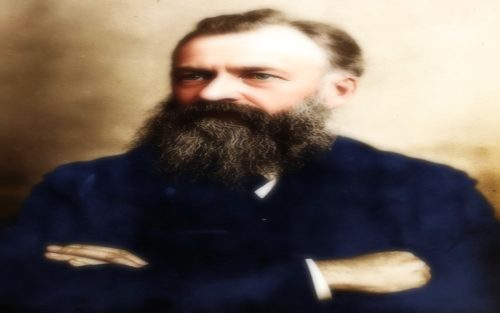
Statistician Dies
Thomas Wrigley Grimshaw, physician, public-health reformer and former registrar-general for Ireland, died at his residence in Carrickmines, County Dublin, on 23 January. Born near Belfast in 1839, he had spent much of his professional life examining the relationship between disease, poverty, housing and mortality. His death removed one of the country’s most influential medical statisticians at a time when Irish towns still faced recurring epidemics, tuberculosis, overcrowding and poor sanitation. Grimshaw believed that accurate records of births, deaths and illnesses could reveal conditions that anecdote, prejudice and political argument often concealed.
Read Article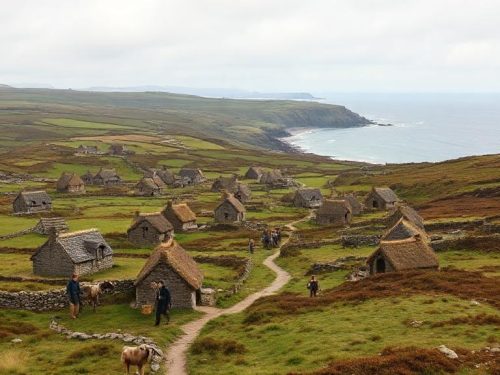
Western Hardship
Congestion, fragmented holdings and poor soil continue to govern the lives of thousands of families throughout western Ireland. In large districts of Galway, Mayo, Roscommon, Donegal, Kerry and western Cork, households depend upon small and scattered plots that cannot reliably support those working them. A family may cultivate several separate strips divided by neighbours’ land, bog or rocky ground, making improvement difficult and wasting valuable time. Similar hardship is familiar in poorer coastal and upland parts of Munster, where limited employment and uncertain harvests leave communities dependent upon fishing, seasonal labour, credit and remittances from relatives abroad. The official meaning…
Read Article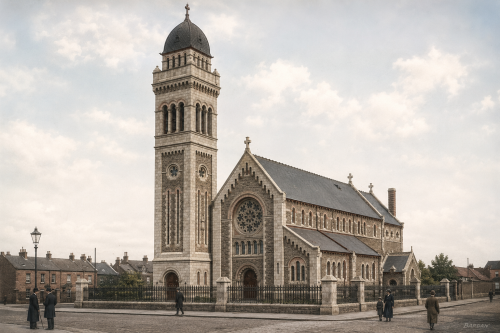
Mary’S Church
St Mary’s Church stands on Athlunkard Street in Limerick, occupying a site associated with Catholic worship since the eighteenth century. The present church opened in 1932, replacing an earlier chapel where Mass was first celebrated on December 10, 1749. Designed by Ashlin and Coleman of Dublin, the building reflects the scale and ambition of parish church architecture in early twentieth-century Limerick. Its tower, façade, railings and street setting mark an important local landmark, while the surviving holy water font from the former chapel links the modern church with the long religious history of St Mary’s parish community today.
View Image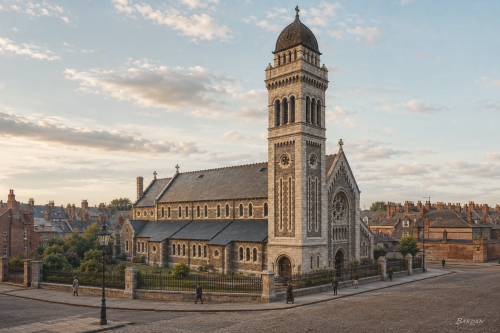
Mary’S Church
St Mary’s Church stands on Athlunkard Street in Limerick, occupying a site associated with Catholic worship since the eighteenth century. The present church opened in 1932, replacing an earlier chapel where Mass was first celebrated on December 10, 1749. Designed by Ashlin and Coleman of Dublin, the building reflects the scale and ambition of parish church architecture in early twentieth-century Limerick. Its tower, façade, railings and street setting mark an important local landmark, while the surviving holy water font from the former chapel links the modern church with the long religious history of St Mary’s parish community today.
View Image
Origin Jpeg
Tom O’Donnell and Paschal O’Grady, Limerick’s celebrated comedy duo, are pictured visiting Westport House in October 1967. Known simply as Tom and Paschal, they entertained Irish audiences nationwide for nearly five decades with sharp humour, memorable characters and remarkable stage chemistry. In 1961, they became the first comedy act to appear on Telefís Éireann’s opening-night broadcast. Their popular “Cashy and Noni” routines and annual Christmas Crackers revues made them beloved local favourites. Beyond entertainment, they toured towns and villages raising funds for schools, GAA clubs and churches, leaving an enduring legacy of laughter, generosity and affection throughout Limerick and beyond.
View Image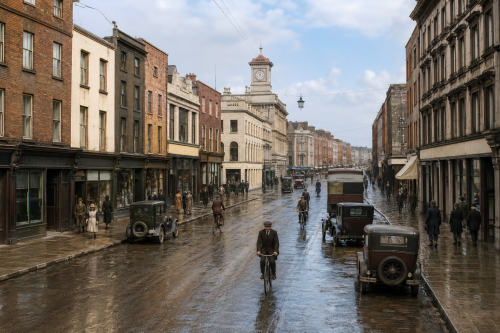
O’Connell Street
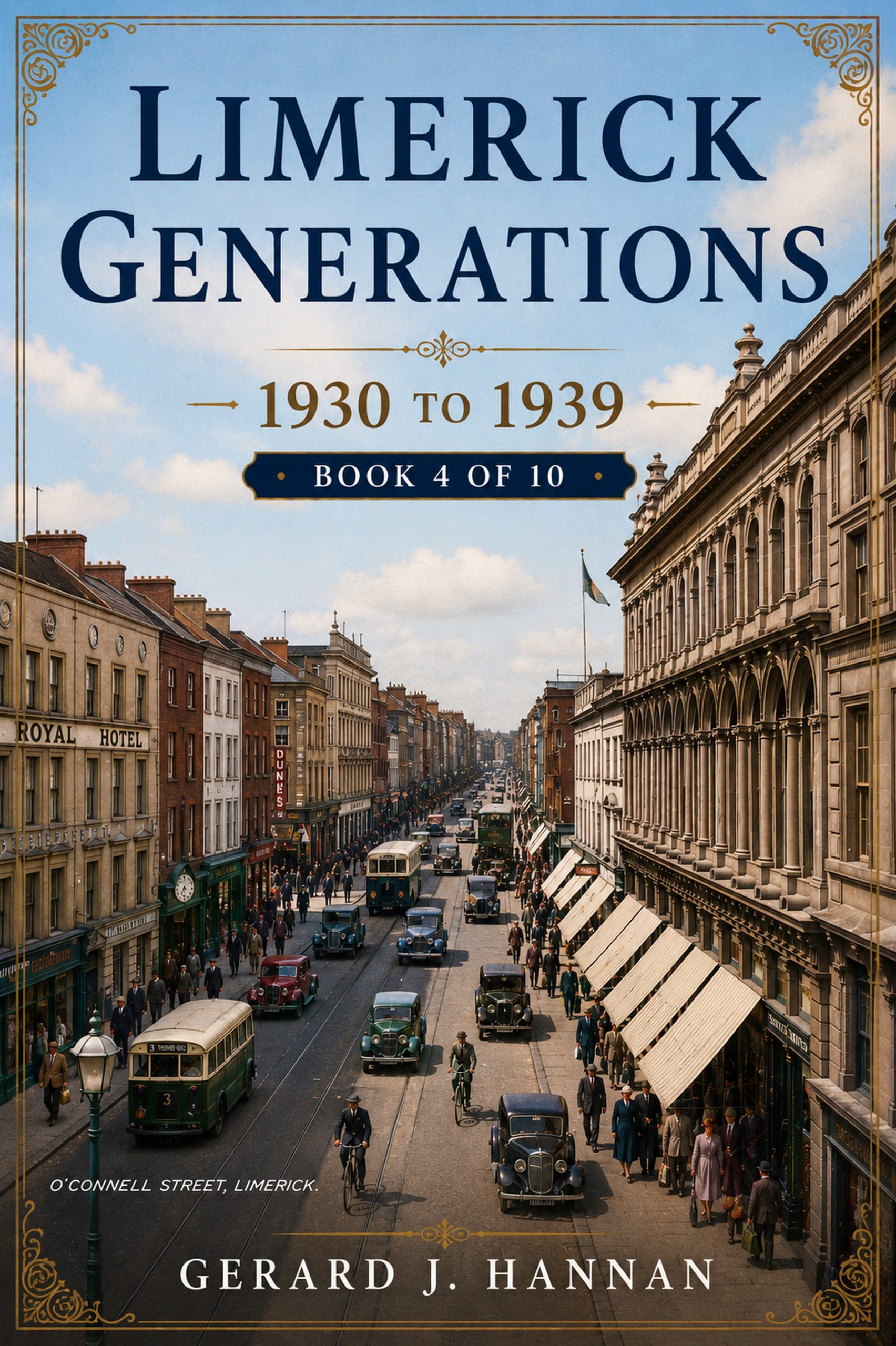
This 1937 view of O’Connell Street, historically known as George’s Street, captures Limerick’s principal commercial thoroughfare during a period of urban transition. Georgian façades, prominent shopfronts and the landmark clock tower frame a busy scene of pedestrians, cyclists, motorcars and public transport. Heavy coats and formal dress reflect everyday life before the Second World War, while traditional businesses line both sides of the street. Several buildings and upper storeys shown here were later altered or demolished during redevelopment. Despite extensive modernisation and pedestrianisation, O’Connell Street remains central to Limerick’s commercial, architectural and social identity within the changing modern city today.
View Image
House Splendour
Mountshannon House, near Castleconnell in County Limerick, was one of Ireland’s grandest eighteenth-century mansions. Built around 1750, it later gained a monumental Ionic portico during an 1813 remodelling by architect Lewis Wyatt. Tradition claimed the house contained 365 windows, while its vast entrance hall could accommodate a horse-drawn carriage. Surrounded by a 900-acre demesne between the River Shannon and Mulkear River, its celebrated gardens were designed by John Sutherland. Home to the powerful FitzGibbon family, including John “Black Jack” FitzGibbon, 1st Earl of Clare, the mansion became a renowned centre of political influence, hospitality, wealth, political power, and aristocratic life.
View Image