Rivals Reconcile(c.1890s)
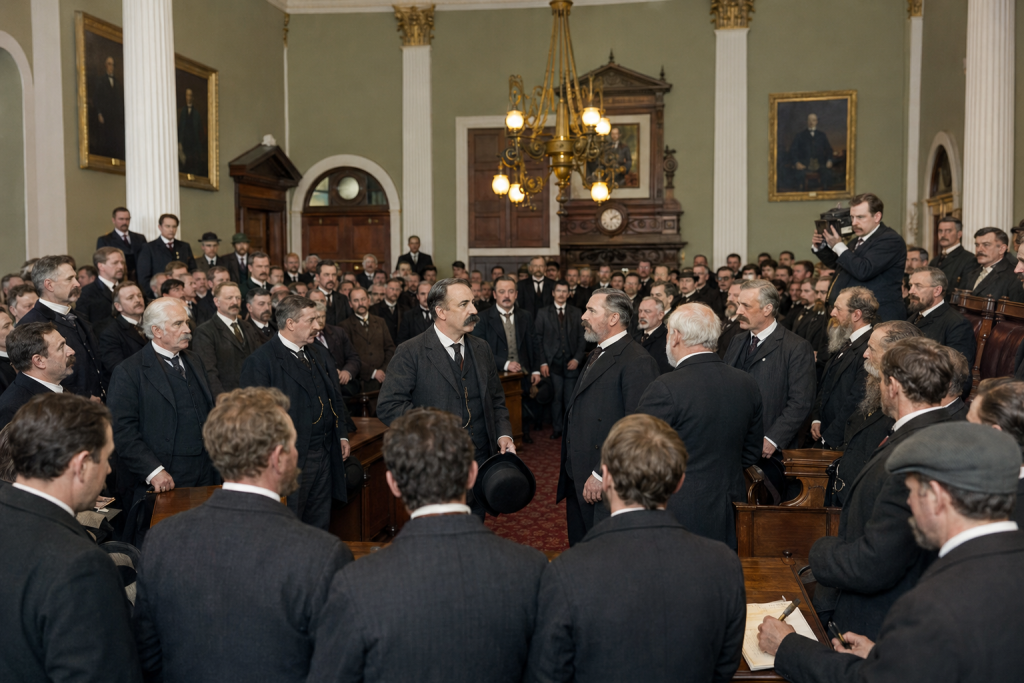
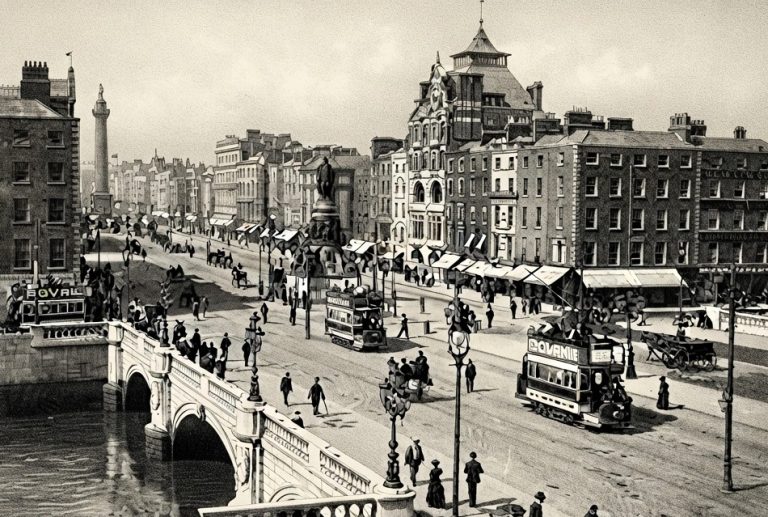
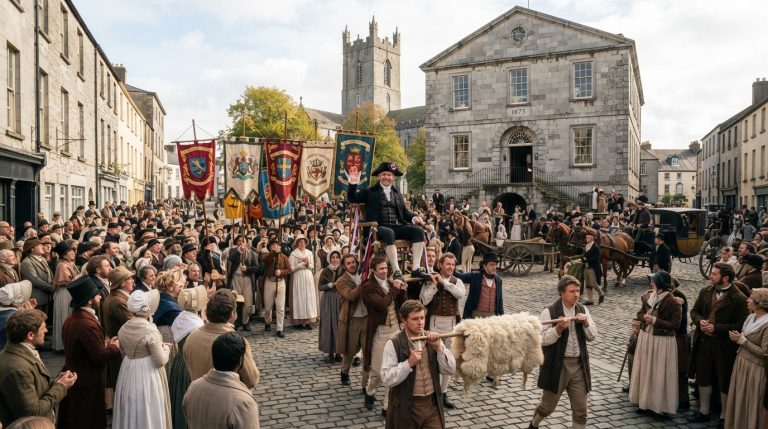
Parnellite and anti-Parnellite representatives appeared together at Dublin’s Mansion House on 17 January in the most important public demonstration of nationalist reconciliation since the political rupture of 1890. Men who had spent nearly a decade attacking one another from platforms, newspapers and election committees now entered the same civic chamber under intense public scrutiny. Their presence did not erase the bitterness created by the fall of Charles Stewart Parnell, but it offered supporters visible evidence that reunion had become possible. The gathering converted private discussions and cautious approaches into a public acknowledgement that continued division was damaging the wider nationalist cause.
The split had produced competing parliamentary factions, rival political organisations and repeated contests between candidates who professed the same commitment to Irish self-government. John Redmond led the principal Parnellite group, while John Dillon remained influential among the anti-Parnellites and Timothy Healy commanded a separate following. Their disagreements involved leadership, clerical influence, parliamentary discipline and personal loyalties that had hardened through years of controversy. Appearing together therefore required more than ceremonial courtesy. Each faction risked criticism from supporters who regarded reconciliation as surrender, betrayal or an attempt to conceal unresolved disputes beneath a temporary display of unity.
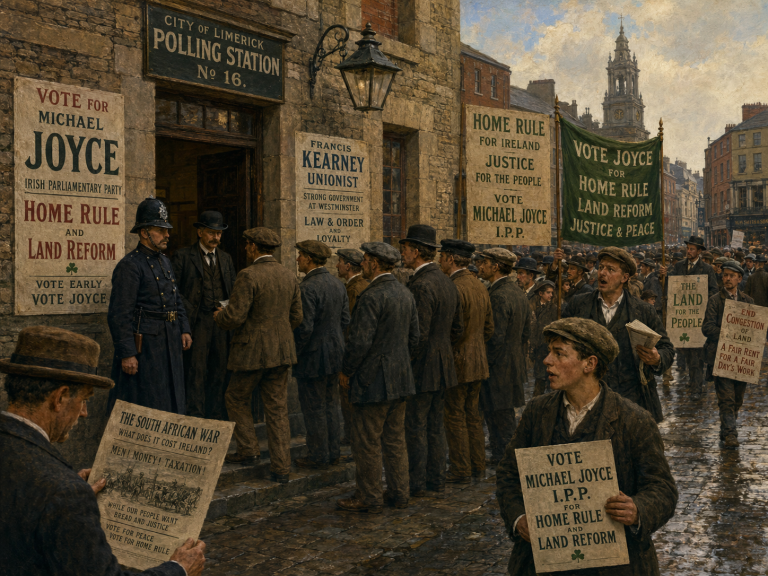
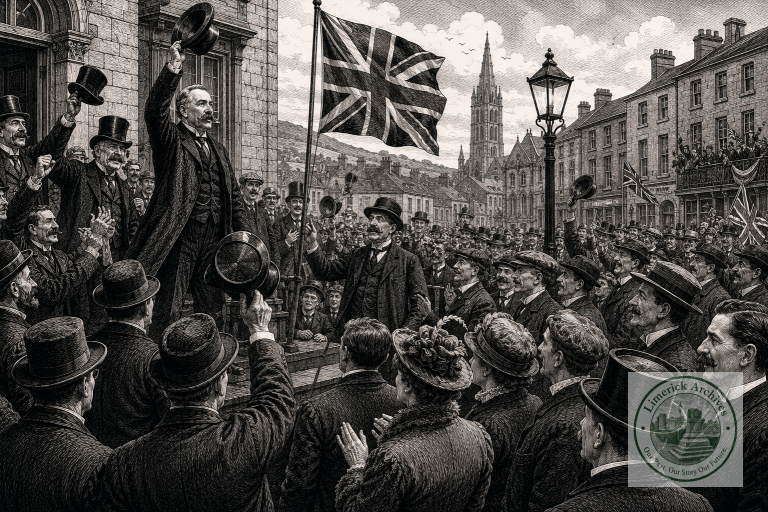
The public character of the gathering carried significance beyond the formal negotiations. Nationalist voters throughout Ireland had grown weary of quarrels that weakened representation at Westminster and diverted attention from Home Rule, tenant purchase and land redistribution. Reports that former opponents had met peacefully allowed local organisers to argue that the divisions were finally being overcome. The Mansion House supplied an appropriately prominent setting, linking the reconciliation effort with Dublin’s civic life and ensuring that newspapers could present the encounter as a national political event rather than another private consultation among parliamentary leaders.
William O’Brien’s United Irish League had created much of the pressure behind the display. Its rapid growth demonstrated that nationalist organisation was reviving outside the established parliamentary factions, particularly among tenant farmers and rural communities demanding action on the land question. League supporters wanted representatives to cooperate rather than preserve disputes inherited from the Parnell crisis. The appearance of the rival groups together suggested that parliamentary leaders understood the danger of becoming separated from popular opinion. Reconciliation offered them an opportunity to reconnect Westminster activity with the expanding network of local branches, public meetings and agrarian campaigning.
The demonstration did not guarantee that every disagreement had been settled, nor did it restore the authority once exercised by Parnell over a disciplined parliamentary movement. It nevertheless marked an unmistakable change in public behaviour. Politicians who had defined themselves through opposition to one another now accepted that national unity required visible cooperation. Their joint appearance helped prepare the formal reunion completed shortly afterwards under the compromise leadership of John Redmond. For supporters who remembered the recriminations of the previous decade, the scene at the Mansion House offered the first convincing public evidence that constitutional nationalism could again act through a common parliamentary organisation.
Primary Sources
- Freeman’s Journal, 18 January 1900, reports concerning the Mansion House conference and the joint appearance of Parnellite and anti-Parnellite representatives.
- Irish Daily Independent, January 1900 editions, reports and political commentary concerning nationalist reconciliation and parliamentary reunion.
- John Redmond Papers, National Library of Ireland, correspondence and political material relating to negotiations for reunion in January 1900.
- Philip Bull, “The United Irish League and the Reunion of the Irish Parliamentary Party, 1898–1900,” Irish Historical Studies, volume 26, number 101, May 1988, pages 51–78.
- F. S. L. Lyons, The Irish Parliamentary Party, 1890–1910, London, 1951, discussion of the Parnell split, competing nationalist factions and the reunion of January 1900.