Inside Gurranmore Police Cabin

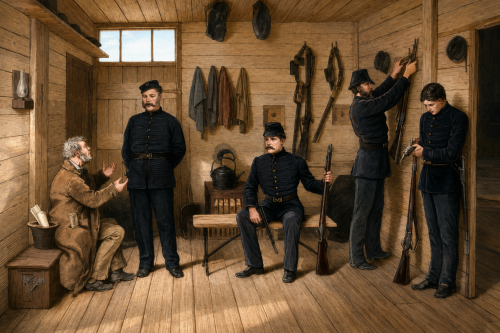
Around 1880, the interior of a police cabin at Gurranmore, near Pallas in County Limerick, reveals the modest conditions in which rural constables lived and worked. The small room is sparsely furnished, with simple wooden fittings, basic household utensils and few comforts. Uniformed officers occupy the cramped space, suggesting that the cabin served as both workplace and living quarters. Published in The Graphic in 1880, the image offers a rare glimpse of everyday policing in nineteenth-century Ireland. It preserves not only the appearance of the station, but also the disciplined, isolated life experienced by men posted in rural communities nearby.
Claims Approved

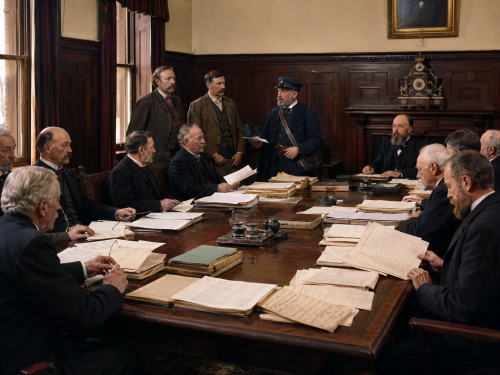
The Treasury approved compensation claims submitted by two former deputy cess collectors whose employment had been affected by the transfer of local administration from the Grand Jury system. The decision, reported on 13 January 1900, reached Limerick County Council by telegram. Councillors had previously concluded that they possessed no legal authority under the Local Government (Ireland) Act of 1898 to compensate deputies who had not been formally appointed by the Grand Jury. The successful applicants therefore carried their cases beyond the Council, asking the Treasury to recognise the financial loss created when the older machinery of county taxation was replaced.

Battalion Arrives

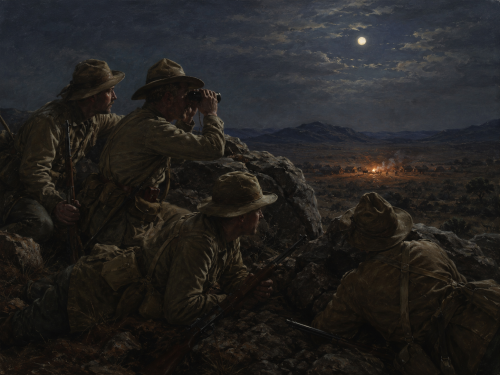
The 1st Battalion of the Royal Irish Regiment reached the Cape aboard the troopship Gascon on 7 January, completing a voyage that had begun on 14 December. Its arrival formed part of Britain’s accelerating military reinforcement of South Africa after the serious reverses suffered during the opening months of the war. The soldiers disembarked into an unfamiliar summer climate after spending more than three weeks at sea, carrying rifles, uniforms, personal kit and the expectations of a campaign whose duration remained uncertain. Their landing transformed the battalion from a home-based regiment into an active component of Britain’s expanding field army.

Civic Defiance

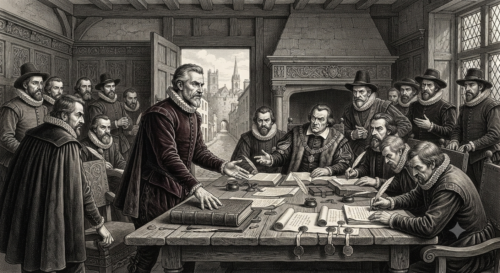
Edmond Sexten inherited his family’s extensive Limerick property around 1594 and became one of the most powerful, persistent and controversial figures in the city’s early seventeenth-century government. A grandson and namesake of the Tudor mayor who had acquired the former lands of St Francis’s and St Mary’s religious houses, Sexten served as an alderman, held the mayoralty several times and repeatedly occupied the office of high sheriff. His municipal service did not produce harmony with Limerick Corporation. Instead, much of his adult life was consumed by arguments over whether his inherited lands stood inside or beyond the authority of the city’s mayor and council.

Harvest Journeys

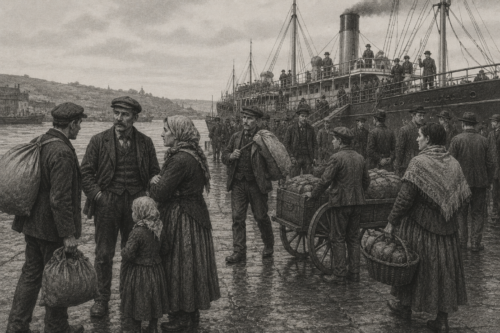
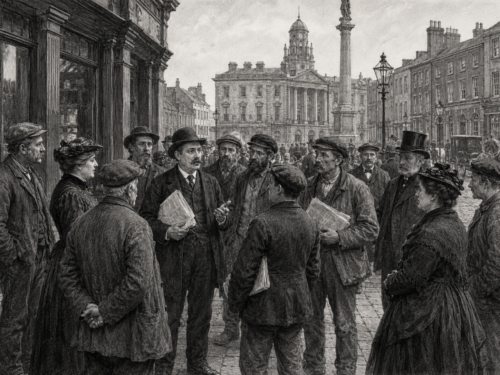
Seasonal migration remains essential to many small farming and labouring households across western Ireland and the poorer districts of Munster. Each year, men and women leave holdings incapable of supporting a family and travel towards districts offering temporary employment during sowing, haymaking or harvest. Others cross the Irish Sea to work on farms in Britain before returning home with wages needed to pay rent, settle shop debts, purchase seed and maintain relatives through the winter. What appears to be an individual search for work has become an established part of rural survival.

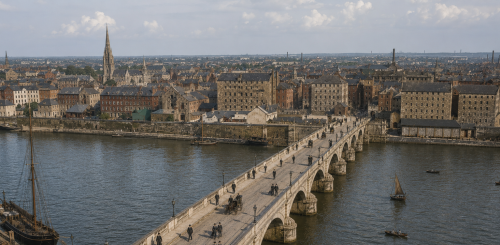
Wellesly Bridge, Limerick (c.1840s)

A sweeping view of Wellesley Bridge, now Sarsfield Bridge, crossing the River Shannon in Limerick City. The elegant 1835 structure rises with restrained neoclassical grace, its stone arches carrying traffic between the historic city centre and Thomondgate on the northern shore. Calm river water reflects the bridge’s pale masonry, while quays, rooftops, and distant activity suggest a city expanding beyond its old boundaries. Maritime details, mooring points, and riverside movement evoke Limerick’s trading past. The scene should feel dignified, atmospheric, and historically grounded, presenting the bridge as both active crossing and enduring architectural landmark.

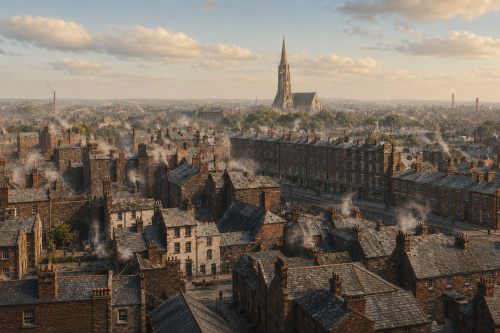
Aerial View Of Limerick (c.1920s)

A hazy bird’s-eye view of Limerick in the 1920s stretches across rooftops, chimneys, lanes, and terraces fading into mist. Smoke rises from houses and workshops, softening the city skyline and giving the scene a wintery industrial atmosphere. A tall church spire dominates the distance, standing above packed streets and modest dwellings, while long rows of buildings suggest dense urban life along the Shannon. The elevated perspective captures Limerick as a working city of faith, labour, and close-knit neighbourhoods. Though blurred by age and weather, the photograph preserves a rare panoramic impression of everyday Limerick between war, industry, and memory.

Purchase Delayed

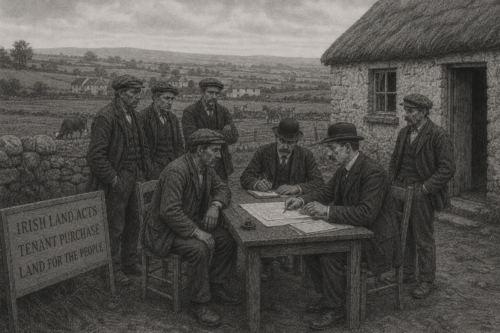
Tenant purchase continues under the existing Irish Land Acts, allowing some farmers to replace rent payments with annual instalments towards ownership of their holdings. The principle has won broad support among tenants who believe possession of the soil would provide greater independence, security and confidence in improving their farms. Yet the number of completed sales remains insufficient to satisfy many rural communities. In County Limerick, farmers continue to wait upon negotiations between landlords, tenants, the Irish Land Commission and the Treasury, while political organisers argue that a reform intended to settle the land question is proceeding far too slowly.

Barricades In Limerick

At Thomond Bridge in Limerick in 1923, a soldier stands guard beside a rough barricade near the Treaty Stone, a symbolic landmark now overshadowed by civil conflict. The scene evokes the tense aftermath of the Treaty split, when Anti-Treaty IRA forces and pro-Treaty National Army troops fought for control of the city. Sandbags, timber, stone, and street debris suggest hurried urban fortification, while the soldier’s watchful posture conveys danger and uncertainty. The bridge becomes both military checkpoint and historic threshold, linking Limerick’s medieval memory with the bitter street warfare that marked the Irish Civil War in the city that summer.

Redmond Chosen

Nationalists throughout the city and county are today considering the election of John Redmond as chairman of the reunited Irish Parliamentary Party. His appointment follows the agreement that brought Parnellites and anti-Parnellites together after almost ten years of damaging division. Local supporters of Home Rule hope the choice will restore authority, discipline and purpose to Ireland’s representation at Westminster. Redmond, long identified with the Parnellite cause, now assumes responsibility for men who recently stood in opposing camps. His success will depend upon persuading Limerick voters and nationalists elsewhere that old quarrels can finally yield to common political action.

Now Sharing: Articles (154) Images (259) Total Items Archived (413)
Our Mission: 100,000 Items Total Percentage Achieved (0.41%)