
Archived: 19 October 2026
Abstract
In 1489, Ireland experienced a severe epidemic, recorded by the annals among ruling, learned, military and ecclesiastical households, though its precise nature and scale remain unknown. A November royal order demanded Dublin remove refuse, dung and swine, reflecting fears that polluted air caused pestilence and harmed commerce and government. Northern lordships remained violent: Conn Ó Néill raided Ó Catháin territory and seized hostages, while dynastic deaths altered regional politics. After harvest, Aodh Ruadh Ó Domhnaill campaigned eastwards, raided the Route, captured Belfast Castle and reportedly demolished it. Despite disaster and conflict, civic, religious, learned and lordly institutions continued functioning precariously.
Read Article
Archived: 19 October 2026
Abstract
In 1488 Sir Richard Edgecombe secured renewed allegiance to Henry VII after Ireland’s leaders had supported Lambert Simnel. At Kinsale, Waterford, Dublin, Drogheda and Trim, towns and magnates received pardons and swore fealty. Gerald FitzGerald, earl of Kildare, negotiated rather than submitted unconditionally, taking a solemn oath at St Thomas’s while retaining his regional power; royal control was reinforced through Dublin Castle. Beyond the Pale, warfare, succession disputes, hostage-taking and alliances shaped Gaelic and Anglo-Irish lordships. Religious reform flourished at Donegal, while deaths from smallpox, losses among learned figures and destructive weather exposed insecurity. The settlement restored cooperation, not rule.
Read Article
Archived: 19 October 2026
Abstract
In 1486 Ireland remained politically fragmented, with Kildare dominating the English lordship around Dublin while Gaelic and Anglo-Irish powers contested local authority. Ulster saw raids, killings, captures and burnings among Maguire, MacMahon, Ó Néill and allied groups, including the capture of a castle at Belfast. Connacht experienced disputed kingship, lordship successions and a significant battle involving Aodh Ruadh Ó Domhnaill and Mac William. Archbishop Octavian de Palatio convened a northern synod at Drogheda, while Roland FitzEustace founded an Observant Franciscan friary near Kilcullen. Abundant apples contrasted with severe salt scarcity and high horse prices, linking conflict, markets and everyday life.
Read Article
Archived: 19 October 2026
Abstract
In 1485, Ireland comprised competing lordships, towns and ecclesiastical jurisdictions, while Kildare dominated the English administration. His Trim parliament defended corporate privileges, funded frontier defence, Castledermot’s construction and plague relief, anticipating England’s uncertain succession. Henry VII’s accession after Bosworth altered calculations without immediately displacing Kildare. In Connacht, Uilleag Burke succeeded violently, with annals differing over his campaign and Tulsk Castle’s destruction. Successions, killings and raids reshaped Connacht and Ulster, where O’Neill and O’Donnell forces fought then made peace. Breifne conflicts involved castles, cattle and Kildare’s intervention. Church appointments, chantries, scholarship, hospitality, disease and hardship reveal communities facing persistent insecurity throughout.
Read Article
Archived: 19 October 2026
Abstract
In 1484, Ireland comprised the English lordship, autonomous towns, Anglo-Irish magnates and Gaelic dynasties, each governed through distinct but connected powers. Under Richard III, Gerald FitzGerald, earl of Kildare, dominated Dublin administration, while parliament regulated coinage, revenues, religious property, fortification and urban affairs. Galway strengthened its position when St Nicholas’s became collegiate and Richard granted the town a mayoralty. Elsewhere, insecurity persisted: northern war between O’Neill and O’Donnell coincided with a violent Maguire succession dispute in Fermanagh, involving murder, raids, captives and church attacks. Annals also record deaths, imprisonment and pastoral wealth, revealing fragmented political and social life across Ireland.
Read Article
Archived: 19 October 2026
Abstract
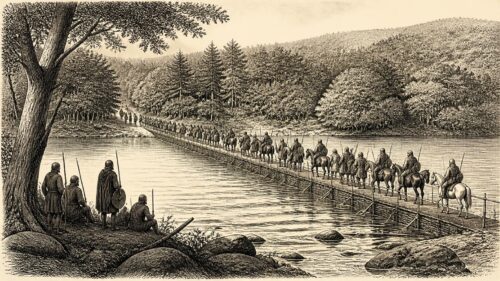
In 1483, Conn O’Neill was released from captivity, inaugurated lord of Tír Eógain, and entered a major conflict with Aodh Ruadh O’Donnell. O’Donnell’s coalition, including Clandeboye forces, raided the Dundalk district, burned Traghbhaile and Baile-Lugh-mhaigh, defeated Kildare’s pursuing army, and exacted protection payments. Returning through Tír Eógain, it cleared woodland and built a wicker bridge across the Abhann Mór, escaping pursuit. Other conflicts occurred across Ireland, while bishops and learned hereditary officials died or succeeded. English dynastic change brought Richard III’s accession, but Kildare remained deputy. The annals depict interconnected lordships, warfare, landscape, church institutions, learning, and local livelihoods alike.
Read Article
Archived: 19 October 2026
Abstract
In 1481, Ireland’s annals recorded conflict, patronage and administration across politically fragmented lordships. On 5 October, Toirdelbach Mag Uidhir was treacherously killed by kinsmen in his Fermanagh castle, alongside several companions; his learning, hospitality and bardic generosity were widely mourned. Tír Eógain endured warfare among O’Neill factions, producing raids, killings, captures and the mutilation of Patrick Savage. Other deaths commemorated aristocratic patrons, poets and clerics, demonstrating the importance of learning, pilgrimage and religious institutions. Killings in Wexford reflected local rivalries, while the English lordship’s 1481–82 business addressed lands, castles, church property, revenues and urban privileges, revealing uneven but governmental authority.
Read Article

