1900

Chalice Replica

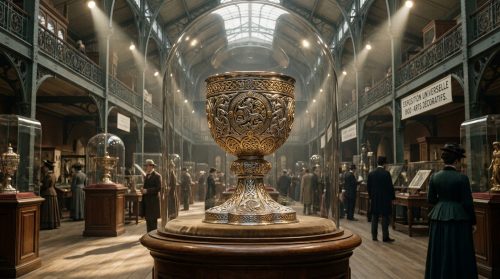
An elaborate reproduction of the Ardagh Chalice, rather than the original early medieval vessel, brought County Limerick’s artistic inheritance before the public in April 1900. The copy formed part of a collection assembled by the Goldsmiths’ and Silversmiths’ Company for the Exposition Universelle in Paris and was shown at the firm’s London premises before travelling to France. Contemporary coverage therefore does not support the claim that the object received a preliminary display in Limerick. Its relevance to the county remained unmistakable, however, because the celebrated original had been discovered at Reerasta, near Ardagh, in 1868.
Yeomanry Depart

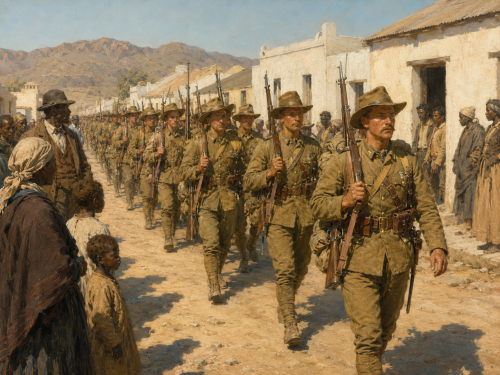
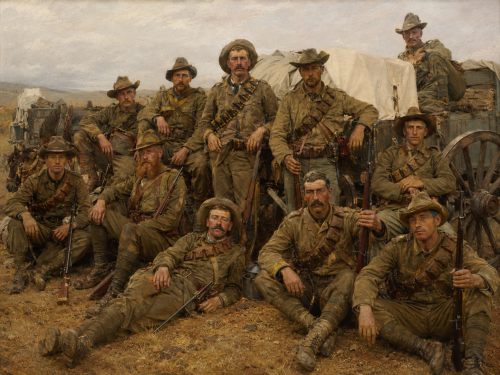
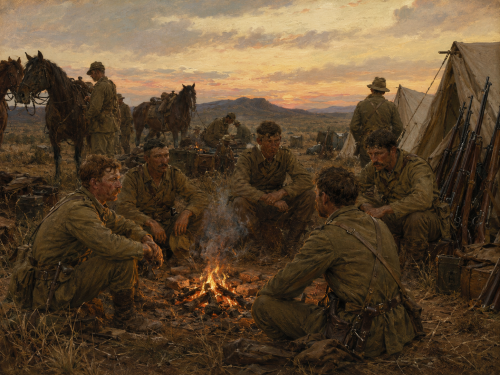
Reports from Cape Town in early March 1900 carried the movement of the Leicestershire Yeomanry into Limerick homes already preoccupied with the South African War. The 7th (Leicestershire) Company of the 4th Battalion, Imperial Yeomanry, had reached the Cape near the end of February and was ordered inland with its battalion on 4 March. Although this county contingent had not been recruited in Limerick, its departure held local meaning because the Royal Munster Fusiliers drew heavily from Limerick city and county, while their 1st Battalion was already serving in South Africa.

Tenancy Dispute

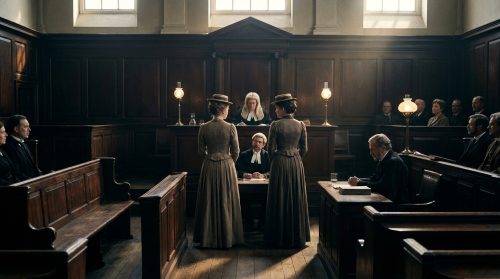
A tenancy dispute involving a Limerick woman came before Cheltenham County Court in March 1900, revealing the uncertainty that could accompany rented accommodation far from home. The proceedings concerned Mrs J. Lestbah and Mrs J. M. Harnett, whose disagreement arose from the letting of two rooms at 2 Queen’s Parade. The tenancy had begun in September 1899, several months before the hearing. For Limerick people living in Britain, such cases formed part of the less visible experience of migration, in which securing rooms, meeting rent and establishing responsibility could become matters for formal legal judgement.

Divided Welcome

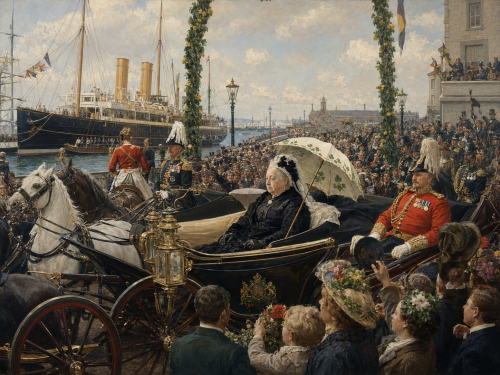
Queen Victoria’s final visit to Ireland in April 1900 became a matter of immediate political argument in Limerick before the royal party entered Dublin. Patrick Fidelis Kavanagh, a Franciscan friar and president of the Limerick Young Ireland Society, received a circular from the county’s High Sheriff inviting him to a meeting intended to organise an address of welcome. Kavanagh declined and sent a lengthy reply attacking both British rule and the South African War. His refusal provides direct evidence that the proposed civic greeting was not a simple expression of shared enthusiasm, but an occasion on which Limerick’s competing loyalties were sharply exposed.

Shamrock Resolve

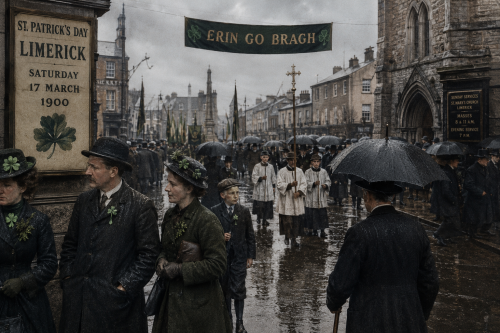
Limerick observed St Patrick’s Day on Saturday, 17 March 1900, beneath dark skies, persistent rain and an unwelcome chill. The difficult weather reduced the comfort of those moving through the city but did not erase the feast from public life. Residents attended religious services, wore shamrock and gathered wherever music, companionship and shelter could be found. The occasion belonged less to the organised civic spectacle familiar in later generations than to churches, families, neighbourhoods and voluntary associations. Its importance lay in the determination to honour Ireland’s patron saint despite conditions that might otherwise have emptied the streets.

Rockbarton Burning

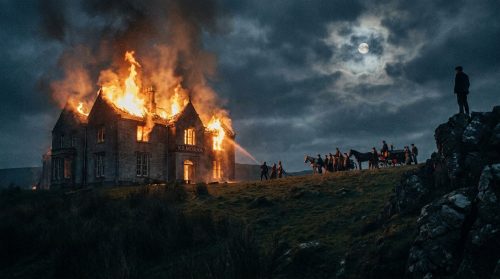
Limerick society was disturbed in 1900 by reports of a suspicious fire at Rockbarton, the imposing country residence near Bruff associated with wealth, landownership and titled families. Contemporary reporting described the outbreak as an alleged act of arson, but the surviving evidence presently available does not establish who started it, what motive was involved or whether anyone was prosecuted. The distinction matters. The fire was a serious incident at one of County Limerick’s best-known estate houses, yet suspicion cannot be treated as proof, and the language of accusation must remain separate from any confirmed judicial finding.

Summit Disaster

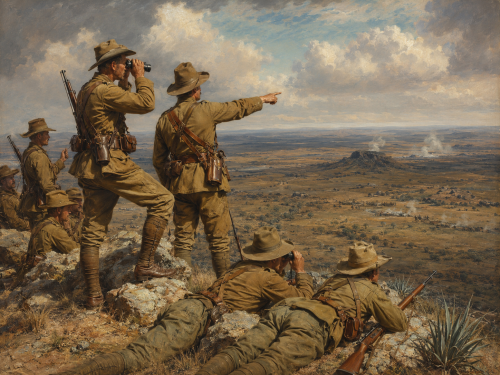
For Limerick, whose city and county belonged to the recruiting region of the Royal Munster Fusiliers, reports from Spion Kop carried immediate human significance even though that regiment did not fight upon the summit. During the night of 23–24 January 1900, British troops commanded by Major-General Edward Woodgate climbed the steep hill in Natal as part of Sir Redvers Buller’s renewed attempt to relieve besieged Ladysmith. The attackers surprised a Boer outpost and secured part of the summit before dawn, but mist and darkness concealed the true shape of the ground and the stronger positions lying beyond them.

Tabanyama Assault

News of the fighting on the Tabanyama ridges carried particular weight in Limerick, where families with connections to British Army service followed the Natal campaign and the fortunes of Irish regiments abroad. Between 20 and 22 January 1900, Lieutenant-General Sir Charles Warren’s force attempted to break the Boer defensive line west of Spion Kop and open a route towards besieged Ladysmith. Major-General FitzRoy Hart’s 5th, or Irish, Brigade formed part of the attacking army, alongside Major-General Edward Woodgate’s Lancashire Brigade. The operation placed Irish soldiers within a difficult imperial campaign whose conduct and purpose remained politically contentious at home.

Roberts Arrives

Field Marshal Lord Roberts arrived at Cape Town on 10 January 1900 and assumed supreme command of British forces in South Africa. He travelled aboard the Dunottar Castle with Lord Kitchener, who became his chief of staff. Their appointment followed the defeats of “Black Week,” when British reverses at Stormberg, Magersfontein and Colenso exposed serious weaknesses in command, intelligence and battlefield preparation. Roberts received a formal welcome at the harbour, but the ceremony could not conceal the gravity of his task. British garrisons remained besieged, casualties were rising and reinforcements arriving from across the Empire required organisation.

Ladysmith Assault

Boer commandos launched a major assault upon the British defensive line south of besieged Ladysmith before dawn on 6 January 1900. Their principal targets were Wagon Hill and Caesar’s Camp, two positions on the ridge known locally as the Platrand. Advancing through darkness and broken ground, the attackers surprised several forward posts and gained parts of the crest before the defenders could organise effective resistance. Confused close-range fighting followed, with British and colonial troops struggling to distinguish friend from enemy among rocks, scrub and unfinished defensive works.